
Can a Whole Continent Have Its Own Philosophy?
A Question That Started a Movement

In 1968, the Peruvian philosopher Augusto Salazar Bondy (1925–1974) posed a question that shook classrooms across Latin America: Is there a Latin American philosophy? It wasn’t a trivia question. It was an accusation. Salazar Bondy’s own answer was no — not yet. He argued that Latin America had spent centuries under intellectual colonialism. Its thinkers had been trained to copy European ideas, never to trust their own. A colonized mind, he said, cannot produce authentic philosophy.
The Mexican philosopher Leopoldo Zea (1912–2004) pushed back. He agreed that Latin America had suffered under colonial power, but he insisted that a tradition of original thought had been growing all along. From the first protests against the Spanish conquest to 19th-century calls for independence, Latin American writers and activists had asked deep questions about identity, justice, and freedom. Zea argued that those voices were philosophy — just not the kind Europe chose to recognize.
Their debate lit a fire. Within a few years, a group of thinkers gathered in Argentina and gave the movement a name: philosophy of liberation. In 1971, at the Second Argentine National Congress of Philosophy in Córdoba, they declared that philosophy must start from Latin America’s own wounds and hopes — not from a European script. A new chapter began.
The Heavy Weight of Dependence
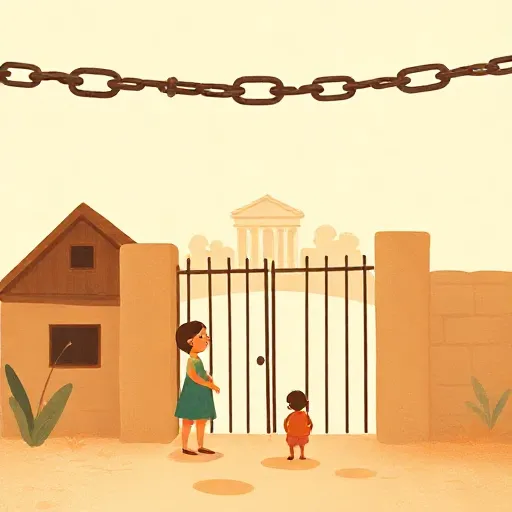
Why did Salazar Bondy think the mind of a whole continent had been colonized? To answer that, the philosophers of liberation turned to a new way of looking at economics and history. In the 1960s, a group of Latin American economists developed dependency theory. They showed that the underdevelopment of countries like Peru, Brazil, and Bolivia was not a natural early stage on the road to becoming rich. Instead, it was a direct result of how Europe and the United States had extracted resources and set up unequal trade. Wealth flowed north; poverty was locked in.
The philosophers extended that idea from money to the mind. They called it mental dependency: Latin American universities, books, and debates were dominated by European fashions. Teachers taught Kant, Hegel, and Marx as if philosophy could only happen in Berlin or Paris. Thinking from your own soil seemed second-rate. The philosophy of liberation said that this was a form of neo-colonialism — control without armies, but still powerful.
This critique didn’t grow in isolation. The 1960s also saw liberation theology, a movement in the Catholic Church that insisted God has a “preferential option for the poor.” The Brazilian educator Paulo Freire (1921–1997) wrote Pedagogy of the Oppressed, arguing that true education must help people become the authors of their own lives, not passive vessels. Economists, pastors, teachers, and artists all seemed to be circling the same idea: the people needed to stop being objects and become subjects. The philosophy of liberation was the philosophical voice of that shared awakening.
The Many Faces of “the People”
If philosophy was going to serve liberation, it had to answer a fundamental question: who exactly is being liberated? The movement’s thinkers all used the Spanish word el pueblo — the people. But they meant different things by it, and those differences split the movement into several currents.
One group, sometimes called the ontologicist current, looked for the people in deep cultural roots. They argued that Latin America’s true identity is mestizo — a mix of Indigenous, African, and European heritages. The Spanish language itself, they noted, has two verbs for “to be”: ser and estar. To be in the Latin American way, they claimed, is not ser (a fixed essence) but estar (being placed in a particular landscape, community, and history). Authentic philosophy must begin from this distinct way of existing.
A second current, led by thinkers like Enrique Dussel (born 1934), took a different approach. Dussel argued that the true people are the ones history silences: the poor, the Indigenous, the landless, the exploited. They exist, he said, outside the system — invisible to those in power. The philosopher’s job is not to hand them wisdom, but to listen. Their cry for justice is the starting point of real thought. Dussel called this perspective analectical, from the Greek ana- (beyond), because it reaches beyond what the system can see.
Still others, the historicist current, warned against treating the people as a mystical whole. They said a people is always being made and remade by concrete historical struggles. There is no pure, unchanged essence to return to — only the messy work of building freedom across generations.
The movement never settled on one definition. That tension became part of its creativity.
Philosophy as a Tool, Not a Trophy

Despite their disagreements, all the philosophers of liberation shared a conviction: philosophy is not a spectator sport. They used the word praxis — critical thought tied to action. A philosophy that merely describes the world while leaving injustice untouched is, in their eyes, part of the problem.
This meant rejecting a powerful myth. For centuries, European philosophy had presented itself as universal — the view from nowhere, true for all humans in all times. Liberation thinkers answered that there is no view from nowhere. Every thinker thinks from somewhere: a particular body, a particular language, a particular history. The European claim to “universal truth,” they argued, was often a mask for cultural power. By pretending to speak for everyone, European ideas were made to seem like the only serious ones.
The philosophy of liberation made a deliberate choice about where to stand: on the side of the dominated, not the dominators. Its goal was conscientização — a term borrowed from Freire meaning consciousness-raising, or learning to see the structures that shape your life. It aimed to turn people from spectators into agents of their own freedom. This was not just a Latin American project. The method, they believed, could be taken up by any group that had been told its thinking didn’t count.
Why It Still Matters: Whose Thoughts Count?

You may never have heard of the philosophy of liberation before. That makes sense. The movement itself would say that the same old power structures decide whose ideas fill textbooks and whose are ignored. For a long time, philosophy was taught as if it traveled only from Athens to Berlin to New York. The philosophy of liberation insists that there are stories, arguments, and traditions elsewhere worth wrestling with.
This matters not just because it is fairer. It matters because where you think from shapes what you can see. If you grew up in a place that was colonized, or if your family’s experience includes poverty or displacement, the questions that feel urgent to you might be very different from the questions that felt urgent to an 18th-century German professor. Those questions are not less philosophical. They may be philosophy of the most honest kind — thought that begins from life as it is actually lived.
The movement’s legacy is an invitation. You don’t have to be Latin American to try its method. You just have to start noticing where ideas come from, whom they serve, and whose voices they leave out. You might even ask whether a philosophy worth its name should help build a freer world — and if so, freer for whom.
Think about it
- If you had to create a philosophy grounded in your own life and community, what urgent question would it start with?
- Can you think for yourself if nearly every book and teacher you encounter comes from a single, powerful country? Why or why not?
- Is a philosophy more “real” if it is completely original, or is all thinking a remix of what came before? If mixing is inevitable, what makes one mix feel like a copy and another feel like a new voice?