Why Science Wasn’t the Hero Latin America Hoped For
When Science Was the Solution to Everything
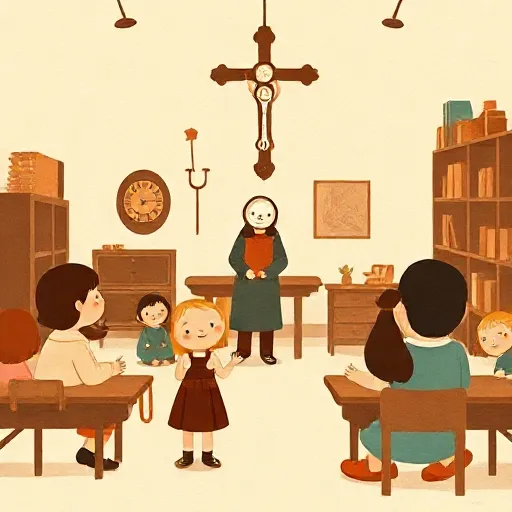
In 1867, a Mexican chemist and doctor named Gabino Barreda (1818–1881) did something shocking. As the head of the new National Preparatory School in Mexico City, he threw religion and traditional philosophy right out of the classroom. In their place he put the sciences — chemistry, biology, physics — and the idea that only careful observation and logic could produce real knowledge. Barreda was not alone. All across Latin America, many bright minds were convinced that scientific thinking could finally rescue their countries from centuries of poverty, war, and unsteady governments.
The intellectual hero behind them was the French thinker Auguste Comte (1798–1857). He called his teaching Positivism — the belief that real knowledge comes only from observable facts and science, never from guesswork or religious faith. Comte promised that if people used scientific methods in every part of life, humanity would march steadily toward order and progress. That slogan was so powerful that when Brazil became a republic in 1889, it placed the words “Order and Progress” right on its new flag.
Between about 1870 and 1910, Positivism swept through much of Latin America. In Argentina, scientists, doctors, and teachers pushed for a modern system of public education built on facts. In Chile, brothers Jorge and Enrique Lagarrigue preached Comte’s ideas like a secular religion. In Peru and Bolivia, writers translated Darwin and other naturalists, eager to replace superstition with the latest discoveries. The dream was bright: if every child learned to think like a scientist, societies would become calm, prosperous, and just.
The Miracle That Never Arrived
But the big transformation didn’t come. By the early 1900s, Latin American countries still battled poverty, inequality, and political chaos. Then the First World War exploded in Europe in 1914. The same science that had been celebrated as a force for good was used to build poison gas and machine guns. Faith in Positivism crumbled. If science couldn’t guarantee progress, what could?
In the 1920s and 1930s, many Latin American thinkers abandoned the old dream and turned to more radical ideas, like Marxism, or to philosophies that mistrusted cold logic and celebrated intuition and spirit. University lecture halls filled with high, abstract metaphysics — big claims about reality that often ignored scientific evidence and logical rules. A small group of philosophers, however, refused to give up on the idea that clear, careful reasoning about science still mattered enormously.
The Analytic Warriors Arrive

In the 1940s and 1950s, a new wave of thinkers brought the sharp tools of analytic philosophy — the tradition of using logic and exact language to solve problems — to Latin America. Two names stood out in Argentina: Mario Bunge (1919–2020) and Gregorio Klimovsky (1922–2009). They had studied the work of the Vienna Circle, a group of European philosophers who wanted to rebuild philosophy on the solid ground of science and mathematics. Bunge and Klimovsky introduced mathematical logic and set theory into university courses and insisted that every philosophical claim had to survive hard argument.
Bunge’s landmark book, Causality (1959), became a classic across the world. He argued that many earlier thinkers had muddled up the idea of a cause — mixing up the simple law that same causes produce same effects with deeper questions about determinism and chance. By separating those threads, Bunge showed that science didn’t need to pretend everything was predictable; it just needed to be honest about different kinds of determination. He was also a born fighter: he spent his whole life pushing back against what he called “woolly” thinking that, in his view, made philosophy lazy and useless.
But the political ground was shaky. In 1966, Argentina’s military cracked down on universities, and many of the country’s best minds fled abroad. Bunge himself left for Canada in 1963. Klimovsky stayed and kept teaching through the dangerous years of military rule, passing the torch to a new generation. Despite the constant disruptions, a stubborn network of seminars, journals, and graduate programs began to grow — not just in Argentina, but in Brazil, Mexico, and beyond.
Neutral Facts or Political Tools?

One of the fiercest debates in Latin American philosophy of science broke out in 1971 between two Argentine thinkers. Oscar Varsavsky, a mathematician turned social critic, argued that there is no such thing as neutral science. Every research project, he said, carries hidden political choices: who pays for it, what questions get asked, whose problems get solved. So scientists should openly choose their values and direct their work toward building a fairer society.
Gregorio Klimovsky disagreed sharply. He believed that basic science — the search for laws of nature — is free of politics. Ideology enters only when we apply scientific knowledge, he said. A formula for gravity doesn’t belong to any party; it belongs to everyone. This wasn’t just a local squabble. It was part of a broader Latin American worry: should countries at the “periphery” of the scientific world simply copy the research agendas of rich nations? Or should they develop their own science, aimed at local needs — clean water, public health, sustainable farming?
That tension never went away. Later philosophers built on it, asking how the very concepts of science could be shaped by the societies they grow in. Some, like León Olivé, studied how technology molds our values. Others, like Hebe Vessuri, investigated how scientific knowledge circulates unevenly between powerful centers and poorer regions, and what that does to the people who live there.
Why It Still Matters

You probably live in a world where science feels unstoppable: phones predict what you’ll type, satellites map the planet, vaccines save millions of lives. But the Latin American story reminds you of something important. Science isn’t a magic wand that automatically makes things better. It’s a human activity, run by people with limited time, money, and often very specific interests.
When you hear that a new algorithm decides who gets a loan, or that a government is cutting funds for environmental research, you are brushing up against the same questions that Barreda and Bunge and Varsavsky wrestled with. Who chooses what counts as progress? Whose problems does science try to solve? And who gets to decide?
Today, the philosophy of science in Latin America is a lively, global conversation — one that grew up despite decades of political storms. Its thinkers taught the world that being careful about facts and being thoughtful about values are not enemies. They go together. And that is a lesson every twelve-year-old future scientist, citizen, or dreamer might want to carry around.
Think about it
- If a country is short of money, should it fund research on the distant stars, or on how to purify drinking water for its villages? Who should make that choice?
- Can a scientific fact ever be completely “neutral,” or does every fact exist because someone paid to look for it?
- Imagine you invent a new app that can either help students study or track their private messages. Do you have a responsibility to think about both uses before you release it?