The Philosopher Who Put 'Order and Progress' on a Flag
A Flag’s Secret Code

If you ever look closely at the flag of Brazil, you’ll see a starry sky and a white banner with two words: “Ordem e Progresso.” That means “Order and Progress.” Those words weren’t chosen by accident. They come straight from the philosophy of a French thinker named Auguste Comte (1798–1857). More than a century after his death, his motto still flies over a nation. But Comte didn’t just want a catchy slogan. He wanted to rebuild all of society using science. To understand why, we have to travel back to a chaotic moment in history.
A Plan to Fix a Broken World
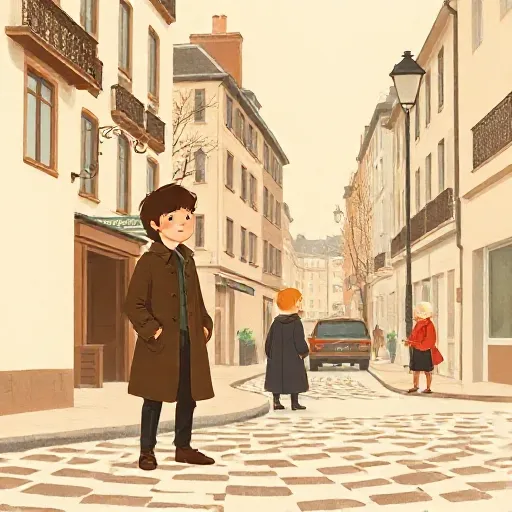
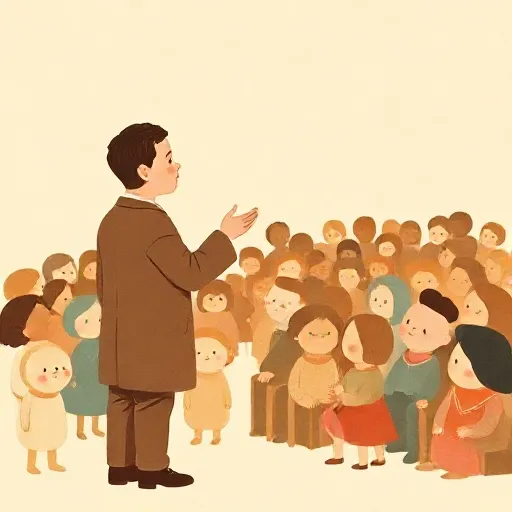
Imagine Paris in 1817. The French Revolution had shaken the country to its core. Kings, churches, and old traditions had been torn down, but nobody knew what to put in their place. A young student named Auguste Comte walked those streets and asked a huge question: how do you reorganize human life when you can no longer rely on God or a king?
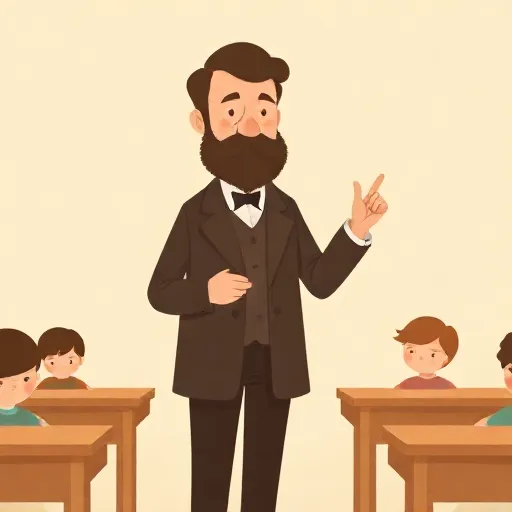
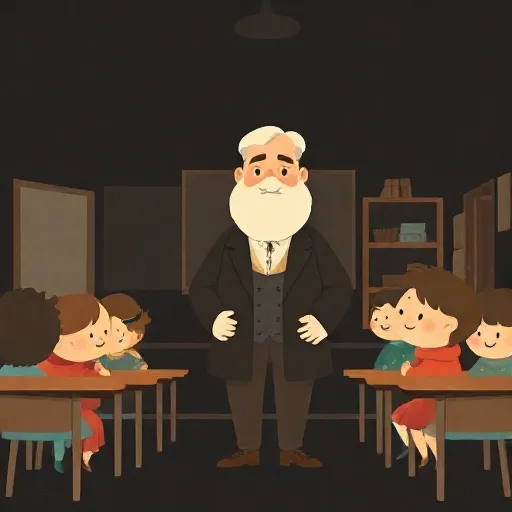
Comte was brilliant at math and science. He studied at the École Polytechnique, one of the best scientific schools in Europe. But he wasn’t content to just study equations. He wanted to find a way to fix society. He took a job as secretary to an older philosopher, Henri de Saint-Simon (1760–1825), and absorbed big ideas: history swings between periods of stability and upheaval, a new industrial age was replacing old military empires, and society needs a “spiritual power” — a group of wise guides who shape shared beliefs. But Comte soon broke away. He was convinced he had discovered the blueprint himself.
In 1822, at just 24 years old, he published a daring essay: Plan for the Scientific Work Necessary to Reorganize Society. He called his approach positivism. Positivism, for Comte, was a political philosophy that united science and society. It wasn’t a blind worship of facts; it was a plan to place scientific thinking at the heart of how we live together. The first step was to understand how the human mind itself had grown up.
The Law of Three Stages: How Our Thinking Grows Up
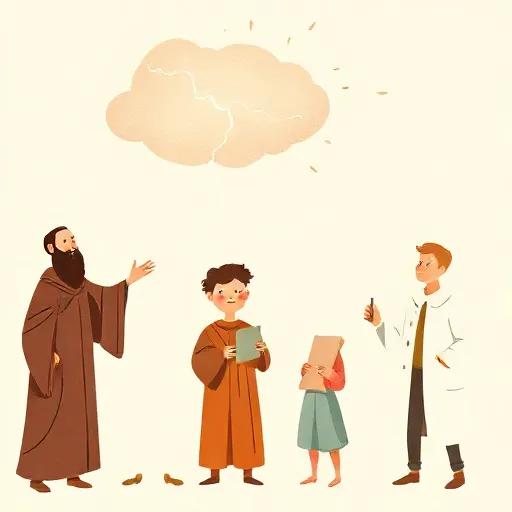
Comte believed that human thinking, both in individuals and in whole societies, evolves through three main stages. He called this the law of the three stages.
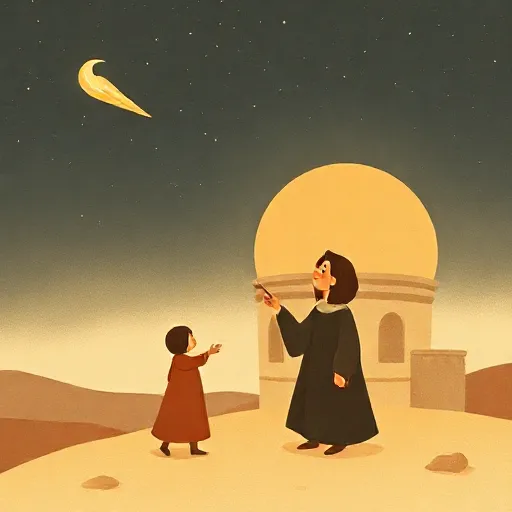
The first is the theological stage. In this stage, people explain the world by imagining supernatural agents — gods, spirits, or magic. If thunder booms, they say an angry god is throwing lightning. Everything is personal and full of intention.
The second is the metaphysical stage. Here, abstract forces replace gods. Thinkers stop saying “Zeus is angry” and start saying “Nature has a violent power.” But they’re still looking for hidden essences and ultimate causes, not testable explanations.
The third is the positive stage. At last, the mind stops chasing absolute truths and hidden causes. It limits itself to describing regular patterns — scientific laws. Thunder isn’t a divine temper or a mysterious force; it’s a sudden expansion of air caused by electrical discharge. We can predict it, even if we never grasp its “ultimate” nature. Comte insisted that in the positive stage, knowledge is always approximate — it gets closer and closer to truth but never reaches a final, unquestionable fact.
Comte applied this law not just to ideas but to whole societies: the theological age was military, ruled by warriors and priests; the metaphysical age was a time of lawyers and debates; the positive age would be industrial, peaceful, and organized by scientific experts. Today, many historians and philosophers find the idea of inevitable historical stages too rigid. But the core insight — that our explanations tend to move from supernatural to natural — still shapes how we think about the growth of science.
A Tower of Sciences: From Stars to Society
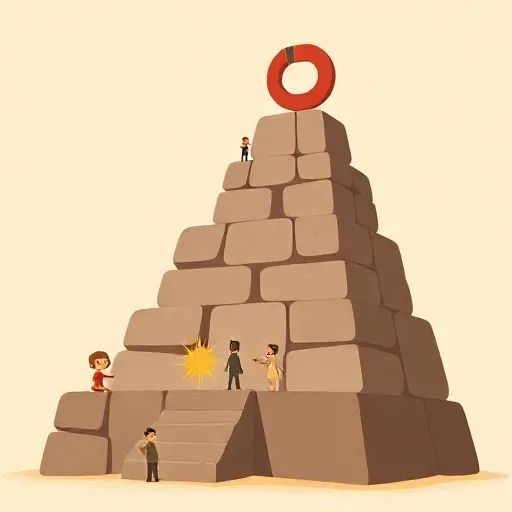
If the mind develops in stages, the sciences themselves have an order. Comte’s second big idea was the classification of the sciences. He organized all knowledge into a tower, or “encyclopedic scale,” from the simplest and most general to the most complex and specific.
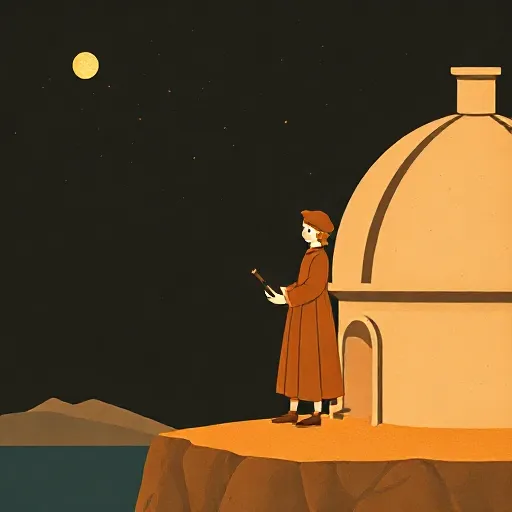
At the base sits mathematics — the most abstract tool, used by every other science. Then comes astronomy, then physics, then chemistry, then biology. At the very top, he placed sociology, a brand-new science he invented the name for. Comte reasoned that each science depends on the one before it: you need math to do astronomy, and you need knowledge of living bodies before you can study human societies. But a higher science is never just a result of the lower one. Biology isn’t just chemistry with more steps, and sociology isn’t just biology plus politics. Each level has its own laws.
This classification did two things. First, it showed why you can’t reduce everything to physics — a mistake Comte called “materialism.” Second, it explained the historical order in which sciences reached the positive stage. Mathematics and astronomy got there first; sociology would be the last, because it deals with the messiest, most tangled subject of all: us.
Comte’s classification is still widely admired. Even today, when people talk about a “hierarchy of sciences,” they are echoing his pyramid.
The Science of Society: Can We Engineer a Better World?
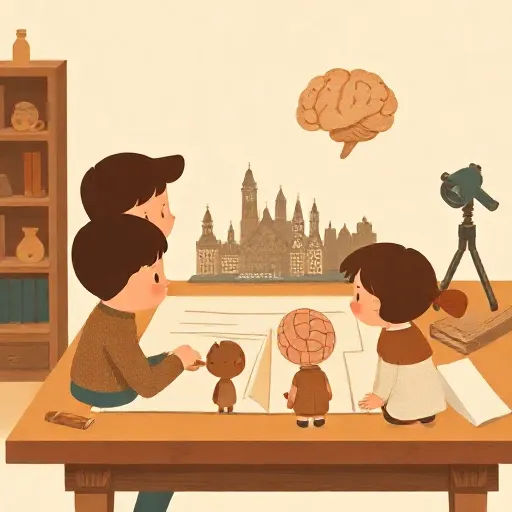
For Comte, sociology wasn’t just one science among many. It was the queen of the sciences. Because it comes last, it can look back and coordinate all the others. It answers the big question: how should we live together?
But sociology also has a double job. It must explain how society actually works and how it should work. This is where things get tricky. Comte observed that societies have a kind of spontaneous order — the division of labor, for example, where people specialize in different jobs. That order is natural but fragile. Specialization can tear people apart. So you need a government to hold society together and channel everyone’s efforts toward common goals.
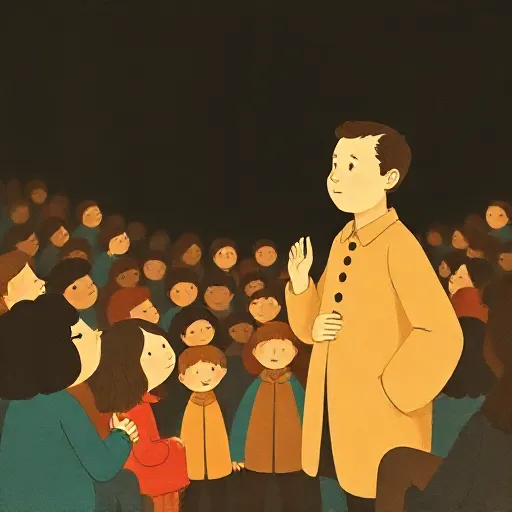
Crucially, Comte argued that you also need a second power, separate from the government: a spiritual power. This wasn’t about priests and gods. It was about a class of scientific and moral experts — thinkers who would guide public opinion, teach shared values, and check the power of politicians. Comte thought that without such a power, society would drift into chaos or selfishness.
His friend and later critic, the English philosopher John Stuart Mill (1806–1873), was deeply impressed by these ideas — until Comte started turning them into something far more rigid. Mill worried that Comte’s system would give a small elite total control over people’s thoughts and lives. He later called Comte’s mature plan “the completest system of spiritual and temporal despotism which ever yet emanated from a human brain.” The question was whether organizing society scientifically could ever truly respect freedom.
From Science to a Religion of Humanity
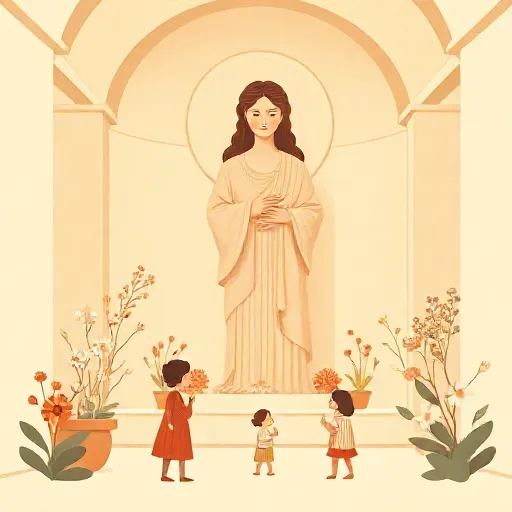
After a life-changing love affair with a woman named Clotilde de Vaux, Comte added a surprising new layer to positivism. He declared that the heart, not the brain, must rule. His original motto “Order and Progress” now became “Love as principle, order as basis, progress as end.” He called this complete version the Religion of Humanity.
This was a religion without God, without supernatural miracles, and without the afterlife. Instead, it worshiped Humanity itself — the collective of all the best human beings, past, present, and future. Comte designed a whole calendar of heroes (great scientists, artists, and moral leaders) to replace saints’ days. He created rituals, hymns, and even a priesthood of positivist intellectuals. He coined the word altruism to describe living for others rather than yourself.
Many of his early admirers were horrified. They thought he had gone from a tough-minded scientist to a dreamy cult leader. Mill and the French scholar Émile Littré broke with him, and the idea of a “good Comte” (the early one) and a “bad Comte” (the later one) was born. But Comte saw it differently. He believed that a society held together only by cold facts would fall apart. It needed a shared moral heart. The Religion of Humanity was his answer to the question, “What comes after the death of God?”
Why a 19th-Century Dream Still Echoes Today

Comte’s direct movement faded after World War I. But his fingerprints are everywhere. Brazil’s flag still waves with his words. Turkey’s modern secular identity was shaped by his followers. The pyramid of sciences he drew is still used to organize university departments. And every time we argue about whether a panel of scientists, not politicians, should make decisions on climate, health, or technology, we are replaying his central question.
Comte got plenty wrong. The idea that history marches through fixed stages now seems crude. His worship of Humanity often tipped into a cult. Mill’s fear that a “spiritual power” could become a despotism was not unfounded. Yet Comte forced the modern world to face a problem we haven’t solved: if traditional religion and monarchy no longer hold society together, what does? He took science seriously not just as a tool for making gadgets, but as a possible foundation for a shared way of life — and then he realized that even the most rigorous science needs love, memory, and moral purpose to keep a community alive.
The next time you see a flag, a school curriculum, or a debate about who should be in charge, remember: a 24-year-old in a torn coat once tried to answer those same riddles, and his answers, for better and worse, are still with us.
Think about it
- Comte thought experts should guide society because they understand the facts. But who gets to decide which facts matter most? Can you think of a modern situation where science and people’s values clashed?
- Comte believed humanity moves through stages, always getting better at understanding the world. Do you think our understanding always improves, or can we take wrong turns? Give an example.
- Comte wanted a religion built on love for humanity, with no gods or afterlife. Is it possible for a community to share deep purpose and ritual without the supernatural? What might be missing?