What Makes a Nation? A Shared Past or a Daily Choice?
A Question That Echoes Through History
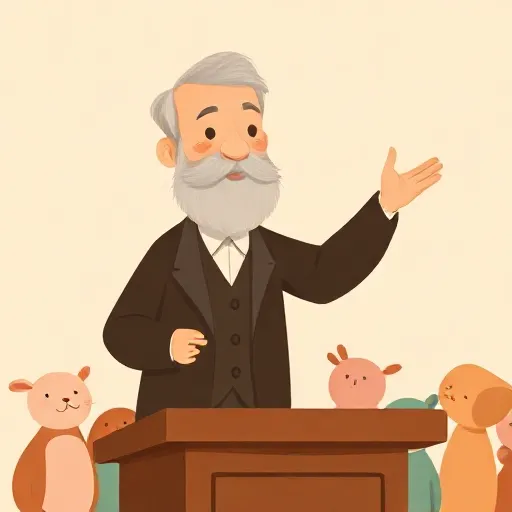
It is a spring evening in 1882. In a crowded hall at the Sorbonne in Paris, a gray‑bearded man in a dark frock coat steps up to speak. His name is Ernest Renan (1823–1892), and he is about to ask a question that still divides people today: What is a nation?
Renan’s short answer became famous. “A nation’s existence,” he said, “is an everyday plebiscite.” A plebiscite is a vote. So a nation is a group of people who silently vote every day to stay together. But Renan didn’t stop there. He gave a longer answer with two ingredients.
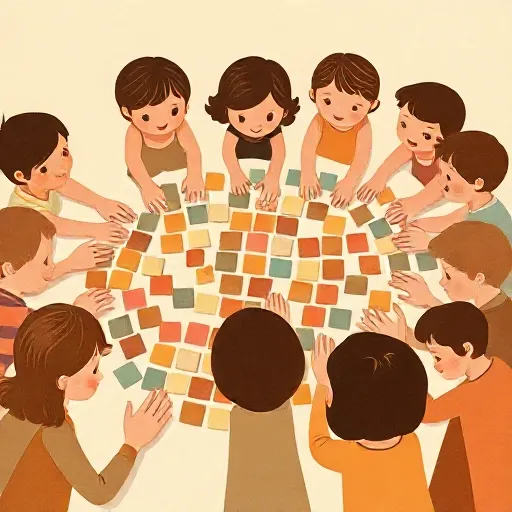
First, the people must share a rich legacy of memories — triumphs and disasters, pride and regret. Second, they must have a present desire to live together and to pass their shared heritage on to the future. Without both, a nation cannot exist, no matter how alike people look or sound. Because of that, Renan set aside things many people had thought made a nation: race, language, religion. They are not the real glue, he argued.
That was a huge challenge. Many thinkers believed that a nation was simply a group of people who shared a common ancestry or spoke the same tongue. Renan was telling them they were wrong. The fight over what truly holds a nation together was on.
The Ingredients That Bind a Nation

If shared memories and a continuing will to associate are required, are they enough? Not quite. Other groups, like the Amish, also have shared memories and a strong desire to live together. Yet we don’t call them a nation. So what else must a nation have?
It matters why people believe they should stick together. That belief cannot be completely false, even if it exaggerates the differences between groups. For example, if a group believes it has a distinct national history, that history must have at least some grain of truth.
But which distinguishing features matter? The philosopher John Stuart Mill (1806–1873) listed several sources that can spark a national feeling: common ancestry, language, religion, geography, and — strongest of all — “identity of political antecedents,” meaning a shared history, collective pride, and common memories of the past. Yet Mill insisted that none of these, by itself, is necessary or sufficient. You can share a language with another group without being part of the same nation. You can lack a shared religion and still be one people.
So nationality is a puzzle. It needs a cultural story that feels true, but no single ingredient is indispensable. And always there is the work of wanting to stay together. That desire to decide your own future is what makes a nation a political group, not just a club.
Wanting to Run Your Own Show
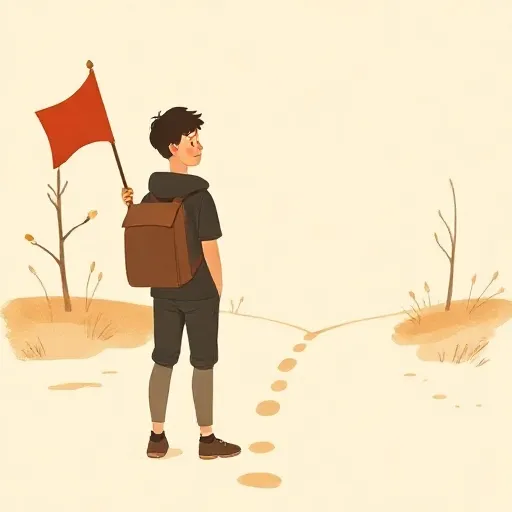
The wish to be self‑determining — to control your own affairs — is built into the idea of a nation. If you genuinely want to preserve a heritage, you need some power over the rules of your group’s life.
But does that mean every group that demands self‑rule automatically counts as a nation? That seems too easy. If a large majority of Texans voted for independence tomorrow, we wouldn’t say “Well, that settles it — Texas is a nation now, case closed.” We’d still ask whether Texans have a culture, memories and ways of life that make them different enough from other Americans to justify a separate government.
Philosophers have noticed an important split here. Cultural nationalists think the main point is protecting a shared culture across generations. An independent state is only one possible tool — maybe a multinational federation would work just as well. Statist nationalists think the opposite: for a state to be democratic, fair and economically just, all its citizens must share a single national culture. That makes the tie between nation and state much tighter.
So national self‑determination doesn’t always mean “give us our own country.” The demand can be expressed in other ways — special rights, regional parliaments, or control over schools and language. It’s the desire itself that helps pick out a nation from other kinds of groups.
Patriotism Is Not the Same as Nationalism
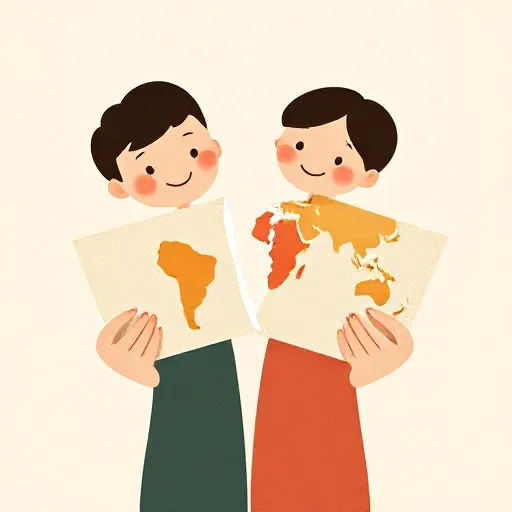
People often mix up patriotism and nationalism, treating one as the nice older sibling and the other as the angry younger one. But they are different ideas.
Patriotism is mainly a character trait: a loyalty to your country and a readiness to feel pride, shame or concern about it. You can be a patriot even if you believe your country is best ruled by a foreign king, so long as he rules well. Nationalism, by contrast, is a set of beliefs. The core belief is that the nation, understood as a community of equals, is the ultimate source of political authority and therefore has the right to be self‑determining. A nationalist cannot accept being ruled by outsiders forever, however well they govern.
Of course, both patriotism and nationalism come in gentler and harsher forms. An egalitarian version says each people deserves equal respect and loyalty. A morally bounded version says the favoritism you show to your compatriots must never involve serious harm to outsiders. But merely calling yourself a patriot does not guarantee you hold these benign forms — history is full of patriots who did not.
Do We Owe Special Duties to Our Countrymen?
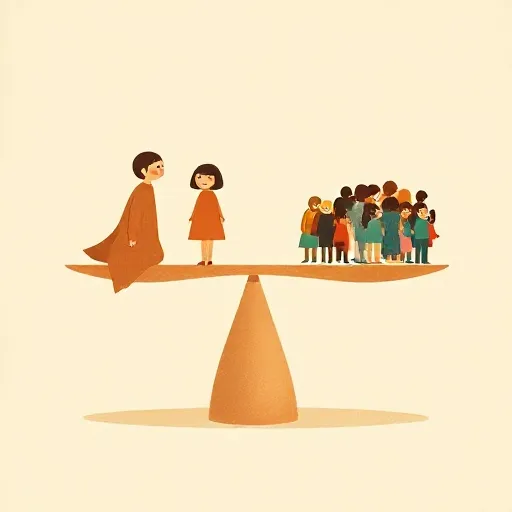
If nations are ethical communities, then being French, or Japanese, or Nigerian might come with special obligations. You might owe your fellow nationals something you don’t owe to everyone on Earth. But is that reasonable?
Many critics find it strange. How could belonging to a giant, anonymous group — most of whose members you’ll never meet — create real duties? Unlike a family, nations are not held together by direct knowledge of each other. The idea of a “national character” that everyone shares seems exaggerated, even fake.
Defenders reply that a nation can be intrinsically valuable: your life goes better simply because you belong to an intergenerational community that has produced things of worth over time — laws, hospitals, stories, a sense of home. But critics point out that the benefits you receive from a nation (roads, schools) are mainly useful tools, not the kind of good that friendship gives you. The real test is whether being cut off from your compatriots would be a deep personal loss, not just an inconvenience.
There is also the problem of global justice. Even if national duties exist, they must be weighed against duties to all human beings. Imagine a pandemic with a limited supply of vaccine. A cosmopolitan view says the sickest people anywhere should receive it first. A nationalist view might say all seriously at‑risk compatriots should be vaccinated before doses are sent abroad. Philosophers disagree sharply about which duty wins — and how much partiality is ever fair.
When a Nation Wants Its Own State
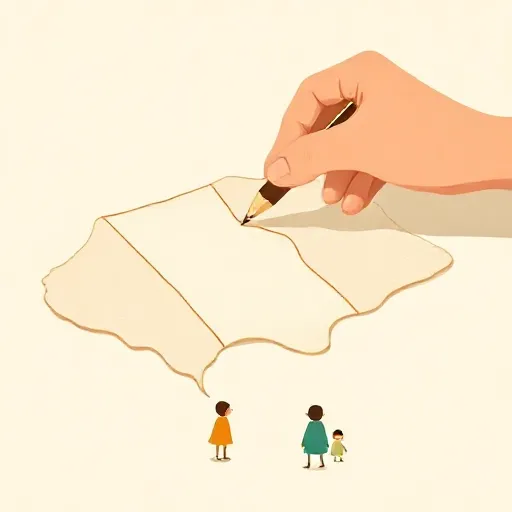
The desire to be self‑determining often leads to demands for an independent state. But statehood is not always the right answer.
Self‑determination is valuable for practical reasons: the people closest to a culture usually know best what it needs. But some philosophers say it also has intrinsic worth. Being part of a group that governs itself is a way of showing respect for the people’s capacities — as long as the group genuinely wants to do the work of governing.
Yet self‑determination does not automatically give every nation a right to secede. Even if the Scots are a nation, that doesn’t settle whether they should leave the United Kingdom. Doing so would affect not only Scots but also a minority within Scotland that wants to stay, as well as everyone else in the UK. Secessions are rarely “clean.” They raise messy questions about territory, resources, and who gets to vote.
That is why many states respond to nationalist demands with nation‑building — trying to make the existing national identity more inclusive — or with devolution, giving a minority nation its own parliament within the larger state, as happened in Canada, Belgium and Spain. These paths can sometimes satisfy the hunger for self‑rule without redrawing borders and risking civil war.
The Stories We Tell Ourselves

Benedict Anderson (1936–2015) called nations imagined communities. You will never meet most of your fellow nationals, yet in your mind lives an image of your communion — a shared story that makes you feel connected. That story often includes national myths.
Take the American Revolution. We now know the Liberty Bell wasn’t really rung on July 4, 1776, and Paul Revere didn’t actually ride all the way from Lexington to Concord. Yet these stories keep being told. They help unite people around a shared past, even when people suspect they’re not literally true. That doesn’t automatically make them dangerous — unless the myth excludes some of the nation’s present members, say by erasing the role of Black Americans in the Revolution.
Critics say that clinging to national myths is irrational. They worry that people use the nation’s achievements to feel better about their own ordinary lives, a kind of group narcissism. But the evidence suggests something more complex: some people are uncritical nationalists who swallow every myth whole, but many others are thoughtful, critical patriots who value their country while also wanting it to improve.
And that is why Renan’s question still matters for you. When you cheer for your country in a soccer match, or feel a sting when someone insults its history, you are dipping into that rich legacy of memories and the daily vote of togetherness. The stories you inherit shape what you owe to strangers inside your borders — and to those far beyond them. They are never neutral, and they can always be rewritten. The question of what makes a nation is never fully settled, because every generation gets a say.
Think about it
- If your family moved to a new country when you were a baby, would you feel more part of your parents’ nation or your new home? What would make the difference?
- Imagine your school decides to secede from the district. What would be the fairest way to decide whether to stay or leave — a vote by all students, a vote by a special council, or something else? Should everyone have to agree?
- People often feel angry when someone burns a national flag, even if they believe in free speech. Why might a piece of cloth carry so much weight? Does it matter whether the anger comes from patriotism or nationalism?