Can Water Turn Into Wine and Really Count as a Miracle?
A Story You Just Can’t Believe

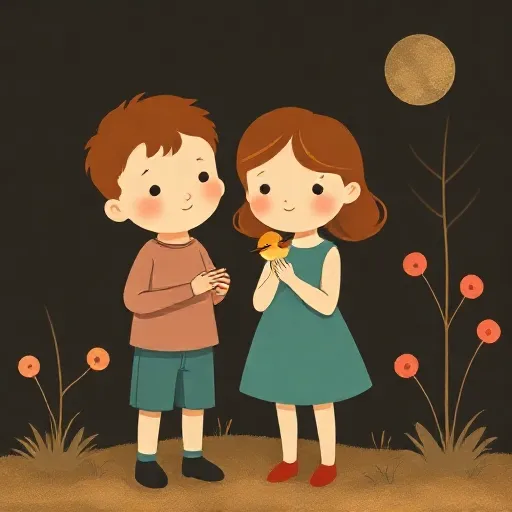
One afternoon, your friend runs up to you, eyes wide. She holds out her hands: a tiny sparrow that had been lying motionless earlier is now chirping and fluttering. “It was dead,” she insists, “and now it’s alive again!” You stare at the bird. You want to trust your friend, but something inside you pushes back. Dead things don’t just come back to life. How could you ever decide whether to believe her?
That’s exactly the kind of dilemma philosophers have wrestled with for centuries when they think about miracles—events that seem to break the normal course of nature. Is it ever reasonable to believe a miracle really happened? Can eyewitness testimony ever be strong enough to overcome the enormous odds against it? The fight over these questions is still alive, and it touches everything from ancient religious stories to wild claims you might see on social media today.
What Exactly Is a Miracle? (Breaking Nature’s Rules)
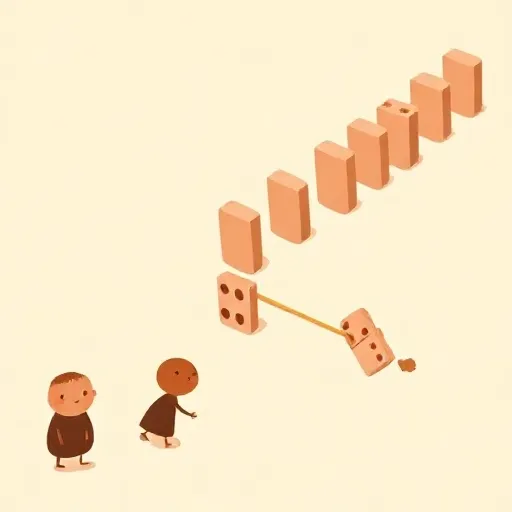
Before you can argue about whether a miracle happened, you need a clear idea of what a miracle even is. The simplest idea is that a miracle is an interruption of the regular order of nature. Think of nature as a giant chain of dominoes: one event causes the next, which causes the next, all following predictable patterns. A miracle would be like a hand reaching in from outside the chain and knocking a domino in a new direction, or stopping one from falling altogether. The philosopher William Adams (1706–1789) put it plainly: you can’t even talk about something “extraordinary” unless there’s an ordinary course for it to break.
Many thinkers go further and define a miracle as an event that exceeds the productive power of nature—something that could not happen if the universe were left to itself. This includes not just weird or surprising events but ones that require a cause beyond the natural world. Later, David Hume (1711–1776) gave a famous definition: a miracle is a violation of the laws of nature. The laws of nature are the basic, dependable rules that scientists discover—like gravity or the conservation of energy. If someone really walked on water without any support, that would violate a natural law.
But this “violation” definition turned out to be tricky. For one thing, if natural laws are simply summaries of how things always behave, then a single exception would just mean we were wrong about the law—not that a supernatural force stepped in. Some philosophers, like J. L. Mackie (a 20th-century thinker), redefined natural laws as “The laws of nature … describe the ways in which the world—including, of course, human beings—works when left to itself, when not interfered with.” Then a miracle is an intrusion by something outside the natural order. That brings us close to the older definition: an event nature couldn’t produce alone.
Most discussions also insist that a miracle needs a religious meaning. A single grain of sand jumping oddly in a desert doesn’t count as a miracle that anyone would care about. The really interesting miracle claims—water turning into wine, a dead man rising—are the ones that carry a message or seem to point to a divine agent.
Hume’s Big Challenge: Why Miracles Can Never Be Believed

David Hume didn’t just define miracles—he launched an all-out attack on the idea that we could ever reasonably believe one. His argument goes like this. All our knowledge comes from experience. We know that heavy objects fall because we’ve seen it happen over and over. The “proof” against a miracle—built on the entire weight of human experience—is as strong as any argument from experience can be. A miracle, by definition, goes against that uniform experience.
Now add testimony. Testimony is also a form of evidence from experience: we’ve learned that people sometimes tell the truth, sometimes lie or are mistaken. Hume says that even the best human testimony is never as strong as the uniform experience of nature. So when someone claims a miracle happened, you have to compare two things: the probability that the event really occurred, and the probability that the witness is wrong—either lying or deceived. Hume’s famous maxim is: you should only believe a miracle report when the falsehood of the testimony would be even more miraculous than the event itself. In practice, he thought, that never happens. The miracle is always the bigger wonder.
Hume also added a bundle of practical doubts. He pointed out that miracle stories often come from times and places full of ignorance and superstition. People love wonder and are easily swept up by religious excitement. And he noted that no miracle in history had ever been attested by enough educated, trustworthy witnesses in a public setting where detection would be unavoidable. So, on all counts, Hume concluded that belief in reported miracles is never justified.
Fighting Back: The Case for Believing Miracles
Hume’s argument rocked the intellectual world, but critics quickly pushed back. One of them, Charles Leslie (1650–1722), offered a set of four simple tests. If a reported event passes all four, he argued, we can be as certain of it as we are of any historical fact. The tests: (1) the event must be something people’s own senses—eyes and ears—can judge; (2) it must happen publicly, in plain view; (3) some public monument or memorial must be set up at the time to remember it; and (4) some outward actions or ceremonies must start right then and continue as a living remembrance. Leslie applied these to the Christian claim that Jesus rose from the dead. The first Easter morning was public, the disciples could see and touch him, the weekly worship day shifted from Saturday to Sunday at the very start, and the Last Supper gave a commemorative meal. To Leslie, that passed the test with flying colors.
William Paley (1743–1805) built a different kind of argument. He pointed to the lives of the earliest witnesses. The apostles and other followers went around telling people a man had risen from the dead, and they stuck to that story through beatings, prison, and death. Paley argued that no one would endure such suffering for a known lie. Even Hume himself had written that when people’s actions go against all natural human motives, that is powerful evidence something unusual is happening. The disciples’ behavior, Paley said, is exactly that kind of marker.
Another critic, George Campbell (1719–1796), turned Hume’s own point about religious passion upside down. Yes, religious feelings can make people believe too easily. But they can also make people resist a claim that goes against everything they already believe. The first followers of a new religion often face fierce opposition. If they convert anyway, that’s stronger evidence in favor of the miracle than if they had no prejudice against it. So the emotional factor cuts both ways.
These defenders didn’t claim miracles are easy to accept. But they insisted that a well-attested miracle—one that passes public tests and is backed by witnesses who had everything to lose—can be supported by enough evidence to make belief reasonable.
What a Miracle Would Mean—and Why It’s So Hard
Let’s assume, for the sake of argument, that a miracle really did happen. What follows? Many have argued that a miracle, especially one with clear religious significance, would point directly to God as its cause. If nature can’t produce such an event, something outside nature must have done it. Paley went further: if God wanted to give humans an unmistakable message, there is no other way to do it except by breaking the normal course of nature. A miraculous sign would carry God’s stamp in a way no ordinary speech could.
But some philosophers have challenged even that. One objection says that if God is orderly and wise, breaking his own rules would look like a flaw, not a proof. Paley answered that a miracle isn’t a flaw—it’s a deliberate signal, like a teacher clapping hands to get a noisy classroom’s attention. Another worry is about the cause: could a miracle be performed by a lesser spirit instead of God? The discussion then shifts to what else we know about the event’s context and message.
The bigger picture is that no single miracle claim, no matter how well supported, settles the question of whether God exists. Your background beliefs about the world matter a lot. If you already think there is strong evidence for a wise creator, a miracle might fit neatly into that picture. If you think the universe is a closed system with no room for outside intervention, you will almost always look for a natural explanation. The miracle debate is only one piece of a much larger puzzle.
Why This Still Matters for You

Today you hear wild claims every day: a friend swears she saw a ghost, a video online seems to show an impossible feat, a message claims a new cure breaks science. The same question that drove Hume and Leslie now sits in your own mind: How much weight should you give to someone’s story when it clashes with everything you think you know about how the world works?
The debate over miracles teaches us not to dismiss extraordinary claims automatically—but also not to swallow them without careful thought. Every piece of evidence, from the reliability of the witness to the presence of public checks, must be weighed. And in the end, your whole view of the world plays a part. You might never see water turn into wine, but you will have to decide when, and whether, trust should override doubt. That’s a skill philosophy sharpens like nothing else.
Think about it
- If a friend tells you they saw something that broke the laws of physics, what would it take for you to believe them?
- Is it ever fair to refuse to believe someone just because their claim sounds too extraordinary—even if they seem honest?
- If a miracle really happened but no one believed it, would it still count as a miracle?