
The Tricycle-Riding Philosopher Who Said Time Isn’t Real
The Boy Who Lied in the Football Field

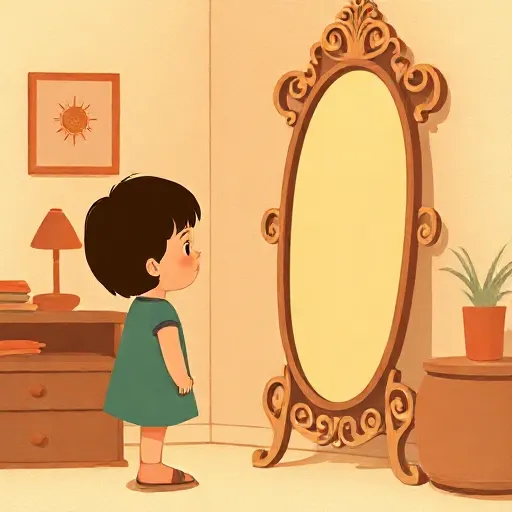
John McTaggart Ellis McTaggart (1866–1925) was not like other boys. At his prep school, he made himself so unpopular that the other children bullied him. At his next school, he refused to play football. Instead, he lay down in the middle of the field while the game went on around him. He was already reading Immanuel Kant’s Critique of Pure Reason — one of the hardest philosophy books ever written.
He grew up to be one of the most unusual thinkers you could meet. He rode a tricycle around Cambridge, walked down corridors with his back pressed against the wall (as if expecting a kick), and saluted every cat he passed. A student newspaper published a poem about him that ended, “Philosopher, your head is all askew … Philosopher, you are a funny beast.” McTaggart loved it.
But behind the shy, quirky man was a philosopher with a terrifyingly clear mind. He devoted his life to a question so big it sounds like science fiction: Is time real? His answer — a careful, step‑by‑step “no” — has been debated for over a hundred years.
Armchair Philosopher: Thinking Without Leaving Your Chair

McTaggart practiced metaphysics — the study of what reality is like at its most fundamental level. While scientists used telescopes and microscopes, McTaggart did most of his work from an armchair. He thought that careful reasoning, not experiments, was the best way to find out what the universe is really made of.
He had his reasons. First, he argued that the statement “science tells us the ultimate truth about reality” is itself not a scientific statement — it’s a metaphysical one. Deciding whether science can answer all the big questions is a job for philosophy, not for a lab. Second, he pointed out that scientists who disagree deeply about what exists — materialists, dualists, idealists — often accept exactly the same scientific observations. The real disagreement is about how to interpret those observations, and that interpretation is metaphysical.
So McTaggart sat down, sharpened his logic, and set out to prove that time is an illusion. He didn’t think this because he had a strange feeling. He claimed he had a knock‑down, purely logical argument.
Two Ways of Ordering Time: The A‑Series and the B‑Series

Imagine a film reel. Every frame exists at once, sitting in a can. Some frames come earlier in the story, some later. That order — earlier, later, or simultaneous with — is what McTaggart called the B‑series. It’s a fixed, unchanging sequence. If you say “The Battle of Hastings came before the moon landing,” that’s a B‑series fact, and it’s always true.
But you don’t experience life as a frozen reel. You feel a current “now” that moves. You were born (past), you are reading this (present), and there are events yet to happen (future). That shifting sense of past, present, and future is what McTaggart called the A‑series. For him, both series are needed for time to be real — and he thought the A‑series was the deeper one, because it’s what makes change possible.
Why does change need the A‑series? Think of a metal poker that starts off hot and later cools down. You might say the poker changes. But McTaggart pointed out that it is always true that the early part of the poker’s history is hotter than the later part. That fact never alters. The only thing that could really change is which moment is present — which moment has that special quality of being now. Real change, he insisted, is an event moving from future to present to past. If nothing is ever truly present, then nothing genuinely changes.
The Contradiction That Breaks Time
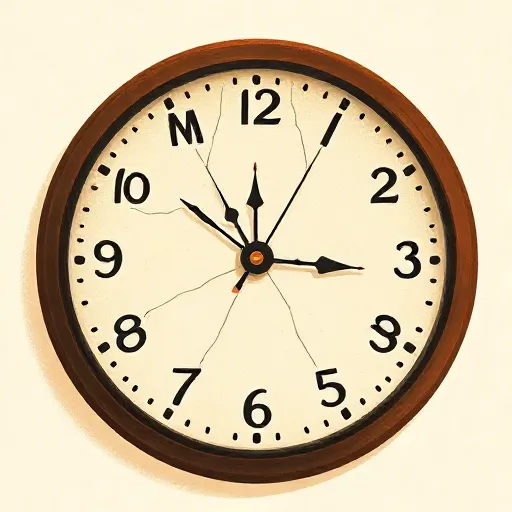
Here is the heart of McTaggart’s argument, step by step:
- Time is real only if real change occurs.
- Real change occurs only if the A‑series exists.
- The A‑series does not exist — because its existence would create a logical contradiction.
Why a contradiction? Think about a single event, like the moment you first learned to ride a bike. From your current perspective, that moment is past. But from the perspective of that moment itself, it was present — and your life now was future. If the A‑series is real, then every event genuinely has all three incompatible properties: pastness, presentness, and futureness. But nothing can be simultaneously past, present, and future. That would be like a single dot being red, blue, and green all over at the same time.
You might want to say: “Wait — it’s past, was present, and was future at different times.” But McTaggart would reply that you’re just pushing the problem back. The words “was” and “will be” already smuggle in another A‑series to explain the first one, and you end up in an infinite loop. The only escape, he concluded, is to admit that there is no A‑series at all. And if there is no A‑series, there is no real change, and therefore time itself is not ultimately real.
So What Is Real? A Universe of Loving Spirits

If time isn’t real, what is? McTaggart didn’t think our experience of order is a total delusion. He believed there is a real, non‑temporal ordering of events — what he called the C‑series. The C‑series is what gives rise to the illusion of the B‑series and, consequently, the appearance of time. But what is that C‑series made of?
McTaggart was an ontological idealist: he held that everything that exists is a person or a part of a person — a mind, a spirit. There are no material objects, no atoms, no matter at all. The C‑series, he eventually decided, is generated by an “inclusion” relation among misperceptions, but the fundamental reality consists of timeless, immaterial selves.
These selves are not isolated. They perceive one another, and they stand in the relation of love. Love, for McTaggart, was not just a nice feeling; it was the supreme good — an emotion so valuable that a sufficient amount of it could outweigh any amount of other goods, even of suffering. He was an optimist: he believed reality as a whole is overwhelmingly good, filled with loving spirits who know each other directly. And because time is unreal, he thought there is a sense in which we never truly die — our existence is eternal.
He came to these views partly through mystical experiences — intense moments when he felt the world as a harmonious unity of spirits. He didn’t expect anyone else to believe him just because of those experiences. He insisted that philosophy must offer arguments, not feelings. Only clear reasoning could show that the universe is, as he put it, a harmony between ourselves and everything else.
Why It Still Matters: Time After McTaggart

McTaggart’s argument didn’t settle the matter — far from it. Many philosophers have tried to find flaws in his reasoning. Some say he was wrong about what change requires. Others argue that the A‑series can be described without contradiction. Still others accept his logic but reinterpret what a C‑series must be. The debate about the reality of time, and about whether the “present” is a genuine feature of the world, is one of the liveliest in contemporary metaphysics.
His influence reached far beyond philosophy of time. His former students G.E. Moore and Bertrand Russell became two of the most important philosophers of the twentieth century, and they both credited McTaggart with teaching them to ask relentlessly, “What does this mean?” Moore once said that McTaggart was “clear‑headed in a very unusual degree,” and that the most valuable lesson he taught was how hard it is to get truly clear about what you believe.
When you feel the present moment slip into the past, you’re touching a mystery that McTaggart wrestled with. Is that flow the deepest fact about reality, or is it a trick played by minds like yours? The answer isn’t settled. McTaggart’s strange, careful, tricycle‑riding life reminds us that sometimes the most ordinary things — Tuesday afternoon, a ticking clock, a memory — can hide the most extraordinary puzzles.
Think about it
- If a scientist could prove that time doesn’t really pass, would you live your life any differently? Why or why not?
- McTaggart thought love was so valuable that a world of loving spirits is better than any other kind of world. Would you want to live in a timeless universe where nothing ever changes, as long as you were surrounded by love?
- Can you think of a way to prove that the present moment is real without using any words that already assume the present (like “now”)? If not, does that mean time might be an illusion?