
Why the Bold Guess Is Better Than Being a Skeptic
The Birdwatcher’s Dilemma

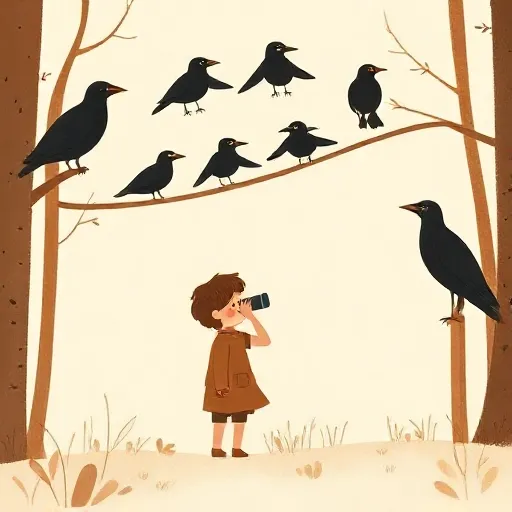
It’s a chilly morning in 1950, and you’re a bird scientist determined to settle the question: are all ravens black? You pick up your binoculars and spot your first raven. It’s black. The next one is also black. A hundred sightings later, every single one has been black.
Now you face a choice. You could adopt the bold method: after seeing even one black raven, declare that all ravens are black. You hold on to this guess unless a nonblack raven appears. Or you could use the skeptical method: never go beyond what the evidence strictly shows. If you see only black ravens, the skeptic refuses to make any guess about “all ravens”; only when a nonblack raven shows up do you conclude that not all ravens are black.
An inductive method is any rule for forming beliefs from observations. Learning theorists—philosophers who study how we can reliably learn from data—ask which inductive methods actually work. They judge methods by whether they eventually settle on the right answer and stick to it, no matter what the world throws at them. This is called being reliable.
Which of our two birdwatchers is reliable?
When Being Bold Pays Off
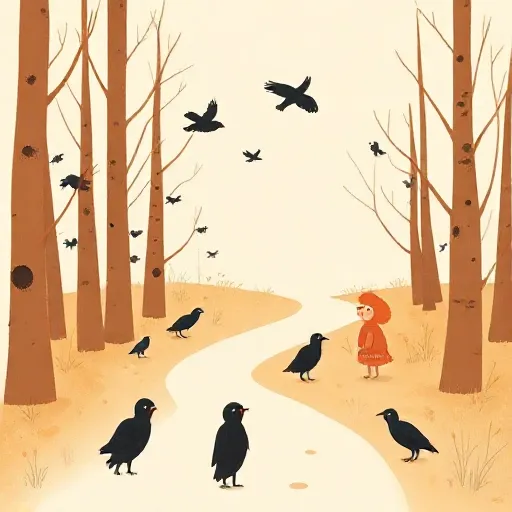
Suppose the world is such that only black ravens are ever seen. The bold guesser will forever hold the idea that all ravens are black, and never be wrong. The skeptic, however, never commits to the generalization. So the skeptic fails to give the right answer when the right answer is “yes, all are black.”
Now suppose instead that eventually a white raven appears. The bold method sees the white raven and immediately switches to “not all ravens are black,” and never changes again. That’s the correct answer. The skeptic also gets it right, just at the same moment. So the bold method gets the truth in every possible world; the skeptic fails in one.
That makes the bold method reliable. It eventually settles on the correct answer, no matter what evidence arrives. As the philosopher William James (1842–1910) noted, there’s an important catch: “no bell tolls” when we’ve found the truth. We may never be absolutely certain that our current guess is right. But we can be certain that the method itself will land on the truth if we keep watching.
So bold guessing beats skepticism—not because we can prove the future will resemble the past, but because refusing to guess can leave you permanently wrong.
The Sneaky Riddle of Green and “Grue”

Nelson Goodman (1906–1998) invented a famous puzzle that makes the choice even trickier. Imagine you’re studying emeralds. You’ve examined hundreds, all green. Should you conclude that all emeralds are green?
Goodman introduced a strange new word: grue. Something is grue if it is examined before a certain time t and is green, or examined after that time and is blue. So all emeralds could be grue(3), meaning they look green until the third observation, then all future ones are blue. Every sample of green emeralds you have right now is equally consistent with “all emeralds are green” and “all emeralds are grue(t)” for some t.
We can again compare two methods. The natural projection rule says: as long as you keep seeing green emeralds, guess “all emeralds are green.” If a blue one ever appears at time t, switch to “all emeralds are grue(t).” The gruesome rule tries to stay one step ahead: it keeps guessing the next grue predicate that fits the data, never settling on plain green.
The natural rule is reliable. If all emeralds are truly green, it stays right forever. If they are grue(t) for some t, then a blue emerald at that moment makes it flip to the correct grue(t) guess and hold it. The gruesome rule fails: if all emeralds are actually green, it never admits it, constantly hopping from one grue guess to another. So the natural, “simple” rule wins again.
The Number of Mind Changes Matters

So far we only cared about getting the right answer in the end. But normally we also want our beliefs to be stable. A mind change is when you abandon one guess and adopt another. The bold raven-guesser changes its mind at most once: if a white raven appears, it flips from “all are black” to “not all,” and that’s it. The natural emerald rule also changes its mind at most once—if a blue emerald shows up at time t, it flips to the correct grue(t) guess and never moves again.
Now imagine a gruesome emerald rule that keeps jumping among different grue predictions as more green emeralds appear. It might change its mind many times before (or if) it ever lands on the truth. That flailing isn’t just irritating; it can keep you from being reliable at all.
This connection runs deep. Philosophers call the rule “pick the simplest explanation that fits the facts” Ockham’s razor. A major result in learning theory, an Ockham theorem, shows that if you want to avoid unnecessary mind changes, you must pick the simplest hypothesis consistent with your evidence. Simplicity isn’t just a taste for tidiness—it’s a strategy that helps you reach the truth with the fewest flip-flops.
Why This Matters for Science—And You

Every time you learn from examples—whether guessing a video game’s secret pattern, figuring out how a plant grows, or testing a science fair hypothesis—you’re using an inductive method. The bold, simplicity-loving strategies that learning theory recommends aren’t just for birdwatching or gemstones. They’re the same ones that help scientists choose theories.
A particle physicist trying to discover a new conservation law, for instance, can follow a rule like: “conjecture the law that rules out as many unobserved reactions as possible, using the fewest extra particles.” That approach has been shown to recover actual laws, like the conservation of baryon number, and even to predict unseen particles like the electron antineutrino. The bold, simple guess pays off.
Of course, you never hear a victory bell. But you can trust that if you keep investigating, a reliable method will eventually land on the truth. And along the way, minimizing wild guess-flipping keeps your thinking sturdy. So the next time you’re tempted to stay a skeptic or to overcomplicate your explanation, remember the ravens and the emeralds. A well-placed bold guess, checked against the evidence, is one of the most powerful tools a curious mind has.
Think about it
- If a scientist tells you a method is guaranteed to eventually find the truth, but you might never know when you’ve found it, would you trust that method? Why or why not?
- Why might you sometimes prefer a simpler explanation even if a more complicated one fits the same facts equally well?
- In your own life, when have you made a bold guess that turned out to be right, and when has skepticism held you back?