

Is Your Knowledge a Domino Chain or a Spider Web?
What Makes You Sure? A Bird, Three Witnesses, and a Puzzle

Jane tells you, “Tweety is a bird.” Carl disagrees: “Tweety cannot fly.” You’re confused. Then Rick chimes in: “Tweety is a penguin.” Suddenly, everything fits: penguins are birds that can’t fly. Your brain naturally puts these three statements together and makes a tidy story. But are you justified in believing Tweety is a penguin? That’s the puzzle of epistemic justification—the study of when we have good reasons to believe something. For centuries, philosophers have wrestled with two very different answers: foundationalism and coherentism.
The Domino Theory: Foundationalism and the Never‑Ending “Why?”

If you keep asking “Why?” you’ll eventually run out of answers. Suppose you believe you’ll pass tomorrow’s exam because you studied hard. Why do you think studying helps? Because you remembered the material. Why trust your memory? Because it worked before. But why think past success means future success? This chain of reasons could go on forever. Foundationalists, inspired by René Descartes (1596–1650), try to stop the regress problem by claiming some beliefs are basic—self‑evident or rock‑solid, like “I am thinking” or “1+1=2.” All other justified beliefs must be built on that foundation, using logic.
The problem: hardly any everyday belief meets this high bar. Your belief that Tweety is a penguin isn’t self‑evident; it depends on trusting other people’s words. Even careful scientists don’t build everything from scratch. Foundationalism seems too strict, leaving most of what we think we know unjustified.
The Spider Web: How Coherentism Ties Everything Together
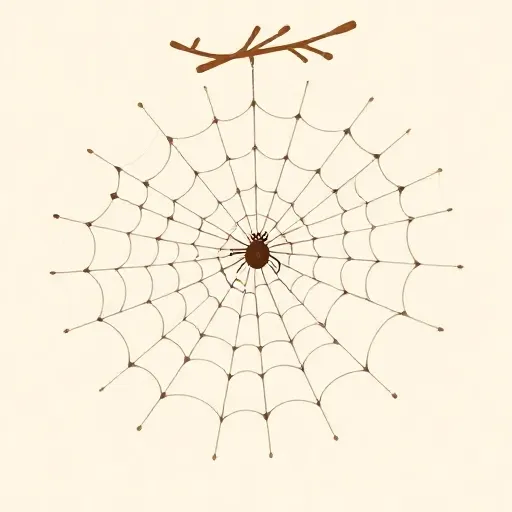
Coherentism says the domino picture is wrong. Knowledge isn’t a tower resting on a foundation—it’s more like a spider web. Every belief supports every other belief, and none is permanently “basic.” A belief is justified, coherentists argue, not because it traces down to an unshakable truth, but because it coheres—it fits into a consistent, mutually supportive system. The philosopher Laurence BonJour (born 1943) put it this way: it’s the whole web of beliefs that is justified, and individual beliefs get their justification by being part of that web.
This solves the regress problem: you don’t need an infinite line of “why” questions because justification is a circle—or rather, a network. But doesn’t circular reasoning cheat? If you try to prove A with B, B with C, and C with A, each step relies on a claim still in doubt. Coherentists reply that you’re not giving a step‑by‑step proof; you’re checking the harmony of the whole system. Like a spider web, strength comes from the overall pattern, not from any single thread.
Can Coherence Create a Belief from Nothing? The Lewis–BonJour Fight

Imagine a dozen witnesses who all claim they saw a white marble pulled from a giant jar filled with black marbles. If each witness is known to be a random guesser—no better than a coin toss—does their agreement make it likely the marble really was white? According to C. I. Lewis (1883–1964), the answer is no. Lewis, an early coherence theorist, used the witness analogy to make a key point: coherence can boost justification that’s already there, but it cannot create justification from zero. If witnesses have no individual credibility, their chorus is worthless.
BonJour disagreed. He argued that if witnesses are independent—each report comes from its own observation, not from copying others—their agreement itself makes the story probable, even if each witness alone carries no weight. This became a famous dispute.
In the 1990s and 2000s, philosophers turned to probability theory to settle the matter. They showed that if two reports are conditionally independent (meaning one witness’s report depends only on the truth of what they saw, not on the other witness) and each report alone gives no reason to believe the claim, then combining them adds exactly nothing. The math proved Lewis right: coherence needs at least a tiny seed of trust to grow anything. This view, called weak foundationalism, says some beliefs have a small amount of initial justification—like a spark—and coherence fans that spark into a flame.
The Truth Problem: Can a Coherent Story Ever Be Wrong?

Coherence feels trustworthy. When the three friends about Tweety gave you a neat package, you were tempted to believe. But notice: the set {“Tweety is a bird,” “Tweety cannot fly,” “Tweety is a penguin”} is much more coherent than just the first two statements alone. Yet the joint probability that all three are true is lower than the probability that only the first two are true, because adding more claims adds more ways the whole thing could be wrong. So more coherence can mean less likelihood.
Philosophers call this the question of truth conduciveness: does higher coherence guarantee a higher chance that the entire set of beliefs is true? In a famous debate, Peter Klein and Ted Warfield used exactly this Tweety example to argue it does not. They said coherence is not truth‑conducive.
Later research proved something even starker: no measure of coherence—no matter how cleverly defined—can be truth‑conducive in general, even under ideal conditions like independent witnesses with some credibility. This “impossibility result” shocked coherentists. But it doesn’t mean coherence is useless. If your beliefs are wildly inconsistent, that’s a good sign something is wrong—coherence works as a negative check. And when you already have some reason to trust your sources, coherence increases your confidence the way Lewis imagined.
Why It Still Matters: Sorting Fact from Fiction Every Day

You’re not a philosopher in a library. You’re a kid scrolling through social media, hearing rumors, deciding whether a friend’s excuse makes sense. Your mind automatically looks for coherence: does this story fit with what else I know? Is it internally consistent? That’s smart. But the lesson from philosophy is that coherence alone isn’t enough. You need some initial trust—in the source, in your own eyes, in basic background knowledge—before a coherent tale can carry weight. When that trust is missing, even a perfectly woven story might be a fairy tale.
Weak foundationalism captures this everyday instinct: we start with a small seed of justification from direct experience or reliable testimony, and then we strengthen that belief by weaving it into a larger coherent picture. So the next time you hear a suspiciously neat explanation, remember Tweety: the pieces may click together, but you still need a real reason to trust that first witness.
Think about it
- If two friends independently tell you the same unlikely story, does that make you more likely to believe it? What if you already know one of them often exaggerates—does their agreement still count the same?
- A detective has three clues: a muddy footprint, a missing umbrella, and a witness who heard a cough. They all point to the butler. If the detective has no other proof, is it reasonable to believe the butler did it? Why might a perfectly coherent set of clues still lead to the wrong person?
- Can you think of a movie or book where a character believes a story because all the pieces fit together, only to discover the truth was completely different? What made the coherent story so convincing, and why did it fail?