Why Do You Believe What You Believe? The Puzzle of the Basing Relation
The Puddle on the Sidewalk

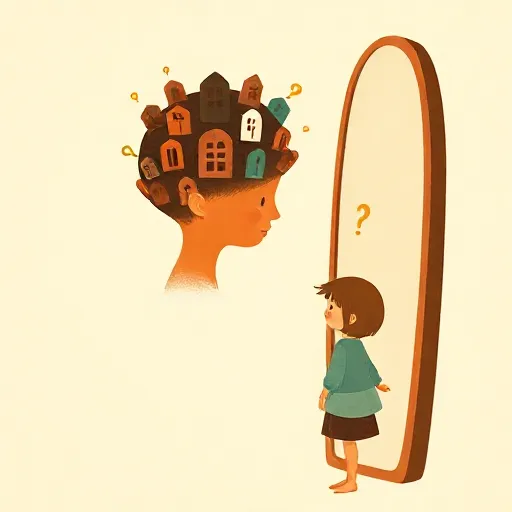
It’s a rainy afternoon. You step outside and see a puddle on the sidewalk. Right away you think, “It must have rained earlier.” The puddle is your reason. But what makes it true that you believe it because of the puddle, and not because you heard a weather forecast yesterday? The link between a reason and the belief it supports is called the basing relation.
Philosophers puzzle over this because having a good reason isn’t enough for knowledge. If your belief isn’t properly based on that reason, you might just be lucky. You could believe something true, and you could have a great reason for it, but if that reason didn’t actually lead you to form the belief, something important is missing. Figuring out what “properly based” means has kept thinkers busy for decades.
When a Reason Pushes Your Belief: Causal Theories

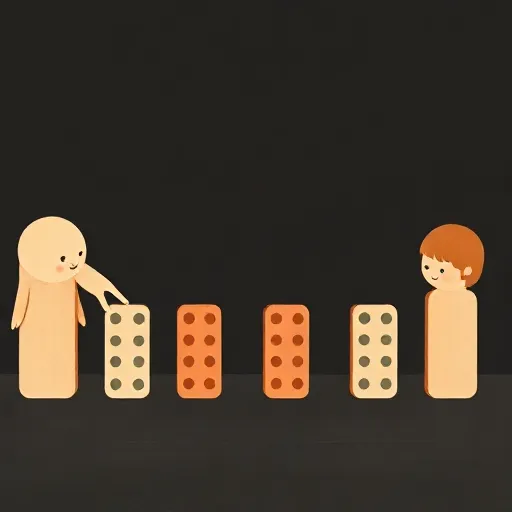
The most natural idea is that a reason must cause your belief, the way one domino knocks down the next. Philosopher Paul Moser, writing in 1989, proposed that a belief is based on a reason only when the reason causally sustains the belief in a nondeviant (normal, not weird) way, and you also have a direct awareness that the reason supports the belief. It’s like a rope holding up a hanging plant: the reason keeps the belief in place.
But causal theories run into trouble quickly. In 1993, philosopher Alvin Plantinga gave a famous example. Imagine you are sitting in a café. You see your friend Sylvia walk in. That sight causes you to become so rattled that you spill your tea, scalding your leg. You then form the belief “my leg hurts.” Seeing Sylvia caused that belief, yet it is not based on seeing Sylvia—it’s based on the pain in your leg. The causal chain took a wrong turn: it went through tea-spilling instead of directly supporting the belief. Philosophers call this a deviant causal chain, and it shows that not just any causal connection makes a belief “based” on a reason.
Some philosophers have tried to fix causal theories by demanding that the reason be a direct cause. Kevin McCain (2012) argued that if a reason is a direct cause, deviant chains get cut out. In the Sylvia case, the belief about the leg pain is directly caused by the pain, not by seeing Sylvia. A different path, from Ru Ye (2020), adds that the reason must cause the belief because you believe the reason supports the belief. Still, all causal theories face the question: can a belief ever be based on a reason that didn’t cause it at all?
The Lawyer, the Cards, and the Missing Cause
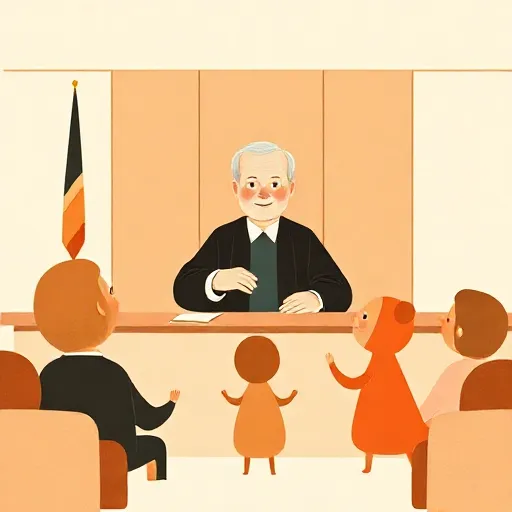
In 1971, Keith Lehrer devised a story that challenges the need for any actual cause. Imagine a lawyer defending a client accused of a series of grisly murders. All the evidence shows the client committed the first seven murders. Everyone—including the lawyer—deeply wants to believe the client is guilty of the eighth murder, too. But the lawyer is superstitious and has absolute trust in his tarot cards. The cards tell him the client is innocent of the eighth murder. Later, the lawyer re-examines the evidence and discovers a brilliant, complicated chain of logical reasoning that proves his client’s innocence. However, because his desire to see the client as guilty is so strong, this reasoning fails to cause his belief. Only his faith in the cards overpowers that desire and makes him believe his client is innocent.
Many philosophers feel that the lawyer does base his belief on the logical reasoning, even though the reasoning didn’t cause it. If so, pure causal theories are in trouble.
Marshall Swain (1981) proposed a counterfactual theory to handle such cases. The idea: a reason can be the basis of a belief if, were the actual cause removed, that reason would have caused the belief. Swain called such a reason a pseudo-overdeterminant—a kind of “would‑have‑been” cause. In the lawyer’s story, if the tarot cards hadn’t made him believe, the logical reasoning would have. So Swain says the belief is still based on that reasoning.
But counterfactual theories face their own puzzles. Joseph Tolliver (1982) described a physics student who measures a pendulum and learns its length is L. Using equations, she calculates that its period must be P—and she comes to believe it has period P. Her belief about the length is based on her measurement, not on her belief about the period. Yet, if her measurement hadn’t happened, her belief about the period (plus her knowledge of physics) would have caused her belief about the length. Swain’s theory would then count the period-belief as a basis for the length-belief, which seems backwards. The counterfactual link goes both ways, but real basing seems to have a direction.
Thinking About Your Thinking: Doxastic Theories

Perhaps the missing piece isn’t causation at all, but a special meta-belief—a belief about your reason. Joseph Tolliver (1982) offered a doxastic theory (from the Greek doxa, “belief”). Roughly, your belief is based on a reason if you believe three things: that the reason and the belief are true, that the reason is evidence for the belief, and that learning the reason would raise your confidence in the belief. This approach can explain the pendulum case: the student’s confidence in the length increases when she learns the measurement, but not the reverse—so only the measurement counts as a basis.
But doxastic theories create new difficulties. Young children and some animals seem to form beliefs for good reasons without ever having thoughts about “evidence.” If Tolliver’s theory is right, they would never genuinely base a belief on a reason. Another problem: imagine a member of a cult, Ezekiel, who slavishly believes whatever the leader says. One day the leader tells him, “Your belief in God is a good reason for everything else you believe.” Ezekiel accepts this meta-belief. Yet it seems wrong to say that suddenly his belief in God is the actual basis for his opinion about broccoli. Simply adding a second‑level belief does not magically create a basing connection.
Why It Still Matters: Swapped Reasons and the Debasing Demon

Why should any of this matter to you? Because the basing relation sits at the heart of when we really know something. Suppose you believe the right answer on a test, and you even have a good reason for it. But if that reason didn’t actually cause your belief—if your answer came from a lucky guess or a stray feeling—then you might not know it, even though what you believe is true. Epistemologists call this a problem of justification.
Philosopher Jonathan Schaffer (2010) imagined a debasing demon. Unlike a demon that plants false beliefs, this one simply rewires the connections between your reasons and your beliefs. You might think you believe there’s a table in the room because you see it, but the demon has swapped the wires: your belief is actually based on a random itch, while your visual experience does nothing. If the basing relation is purely causal, the demon might strip away your justification without you noticing.
Thinking about basing helps you notice your own mental wiring. When you catch yourself saying “I believe X because of reason Y,” you can ask: did Y actually move me, or did I just happen to have Y handy while something else pushed? Figuring out which reasons truly support your beliefs is a skill you’ll use every time you argue with a friend, puzzle over a news report, or wonder whether you really know what you think you know. The invisible link between reasons and beliefs isn’t just for philosophers—it’s part of being a careful thinker.
Think about it
-
You believe a new movie will be boring because you read a bad review. Later you realize you were already annoyed with your sibling and in a sour mood; the review was just the first thing you saw. Is your belief really based on the review? Why or why not?
-
A computer chess program analyzes a position and concludes it’s winning because of a deep calculation. If a hacker secretly reprogrammed the computer to always say “winning” when a certain piece is on the board, but the original calculation would also have said “winning,” does the computer base its conclusion on a good reason?
-
Your friend believes something true for a silly reason (like flipping a coin). Later, they give you an excellent, logical reason for the same belief. Do you now trust what they originally believed? Does the new reason change whether they knew it all along?