What If 2+2=5? The Wild Worlds Where Logic Takes a Break
The Detective with Two Different Wounds

In Sir Arthur Conan Doyle’s Sherlock Holmes stories, something impossible seems to happen. In The Sign of the Four, Dr. Watson limps because of a war wound in his leg. But read an earlier adventure, A Study in Scarlet, and you’ll find his wound is in his shoulder—and he doesn’t limp at all. How can the same character have a wounded leg and a perfectly healthy one?
This is not just a mistake. Philosophers use it to explore a strange but powerful idea: there are not only possible worlds (ways the world could be) but also impossible worlds (ways the world could not possibly be). In an impossible world, a cupola on a college building really could be both round and square at the same time. A mathematician might square the circle. Or 2+2 might equal 5.
Possible worlds are already a familiar tool. Philosophers say there is a world where Hillary Clinton won the 2016 election, a world where you are dancing on the ceiling, and a world where Fermat’s Last Theorem never got proved. These are just ways the world might have turned out. But what about ways the world absolutely couldn’t be? That’s where impossible worlds come in.
Ways the World Couldn’t Be

We often talk about ways things cannot be. If you tell me your school’s bell tower is both completely round and completely square, I will say, “That’s impossible.” We seem to have just as many ways the world could not be as ways it could be. Some philosophers argue that if we take “way‑talk” seriously enough to believe in possible worlds, then we should also believe in impossible worlds. After all, the talk goes both ways.
Not everyone agrees. Some point out that if possible worlds are already hard to swallow (most philosophers do not think possible worlds are real, concrete places like ours), then impossible worlds seem even weirder. They use this as a reason to reject both. But many defenders of impossible worlds say we should accept them not because ordinary language forces us to, but because they are incredibly useful for solving hard problems.
One of the biggest uses shows up when we ask “what if?” about impossible things. Suppose someone says, “If Hobbes (a famous philosopher) had squared the circle, then mathematicians would have been amazed.” That seems true. But the standard way of analyzing “if…then…” statements (called counterfactuals) runs into trouble here. Usually, we check: at the closest worlds where the “if” is true, is the “then” also true? But there are no possible worlds where a circle is squared—squaring the circle is mathematically impossible. So every possible world has the antecedent false, and the rule tells us the whole conditional is trivially true. That would also make “if Hobbes had squared the circle, mathematicians wouldn’t have been amazed” true—but that feels false. Impossible worlds allow us to have worlds where Hobbes really does square the circle, and we can then check what happens in those worlds. That way, some counterpossible conditionals come out non‑trivially true and others false, just as our intuitions say.
When Logic Takes a Holiday
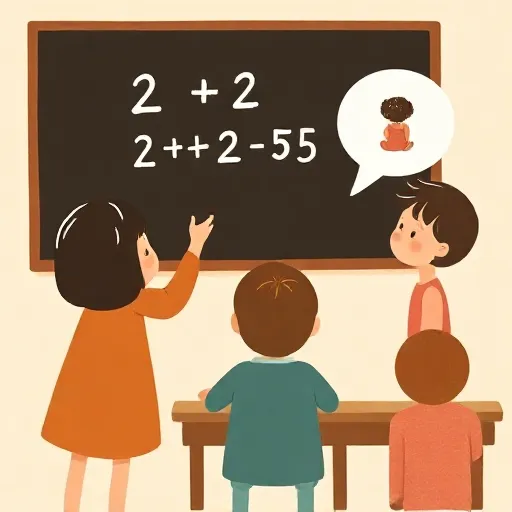
One place this sort of reasoning feels natural is when we imagine alternative logics or mathematics. Even if you think classical logic is the one true logic, you can still ask: “What if the Law of Excluded Middle were false?” (That’s the rule that says every statement is either true or false, with no middle ground.) From that impossible supposition, you might conclude that intuitionistic logic would work better than classical logic—but you would not conclude that scarlet is a shade of green. You can reason about impossible situations without everything becoming nonsense.
Philosophers call this counterpossible reasoning. To make sense of it, they often adopt Nolan’s Strangeness of Impossibility Condition (SIC): any possible world, however weird, is still closer to the actual world than any impossible world is. The world where the laws of physics are upside down is still more like our world than a world where a contradiction is true. So for ordinary counterfactuals about physically possible things, the old rules still work fine. But when we need to step into genuine impossibility, impossible worlds give us a stage.
This matters for debates about metaphysics, too. Picture a philosopher who wants to criticize Spinoza’s monism (the idea that there is only one substance). She can imagine a world where Spinoza is correct—an impossible world, if she thinks monism is necessarily false—and then ask what would follow from that. Without impossible worlds, her reasoning would be meaningless or trivially true no matter what.
Messy Beliefs and Impossible Museums

Impossible worlds don’t just help with logic and fiction. They also help us understand something much closer to home: our own messy beliefs and knowledge.
Think about what you believe. You probably believe that homework is important, and you might also sometimes feel that homework is a waste of time. Both attitudes can sit in your head together, even though they contradict each other. Standard possible‑worlds models of belief struggle with this. They usually say your beliefs are whatever is true in all the worlds you consider possible. But if you consider a world where homework is important and a world where it’s a waste of time both possible, then it’s hard to avoid saying you believe a contradiction outright. And worse, these models often give you logical omniscience: if you believe something, you automatically believe all its logical consequences. But we know real people don’t believe all the consequences of what they believe—we are finite, forgetful, and often miss obvious implications.
Philosopher Mark Jago and others have argued that our beliefs are best modeled using worlds that are not always logically perfect. Some of these worlds are impossible: they might contain a contradiction without containing every random sentence. For example, in such a world, both “pizza is healthy” and “pizza is unhealthy” can be true, but “it’s not the case that pizza is healthy” might also be true without everything collapsing—because the world is nonadjunctive. That means you can have A and B true without their conjunction (A and B) necessarily being true. This lets us represent inconsistent beliefs without making every belief totally unhinged.
Are Impossible Worlds Too Weird?
You might still wonder: if there really are impossible worlds, could a genuine contradiction spill out into reality? This is the exportation principle worry. If at impossible world w, “A and not‑A” holds, then it seems to follow that “at w, A” holds and “not at w, A” holds—which is a real contradiction. Most impossible‑worlds theorists avoid this by saying impossible worlds are not concrete places like our own. They are abstract objects, often called ersatz worlds. An ersatz world represents that A, but it doesn’t literally make A true the way our world makes “grass is green” true. For example, an ersatz impossible world might just be a set of sentences that includes both “Watson’s leg is wounded” and “Watson’s leg is not wounded” without thereby creating a real‑world contradiction. The representation stays safely inside the world.
Another challenge is defining possibility itself. If impossible worlds exist, you can’t simply say “it’s possible that A if and only if there is a world where A is true”—because that would count impossible worlds as making impossible things possible. The fix is to restrict the definition to genuine, possible worlds only, which fits easily with hybrid accounts that treat possible worlds as concrete and impossible worlds as abstract.
Some critics argue that impossible worlds break compositionality, the idea that the meaning of a complex sentence (like “not A”) should be built from the meaning of its parts. In an impossible world, “not A” might be true while A is also true, which seems to violate the usual rule. But defenders reply that compositionality can work differently: contents can be structured by syntax, not just by truth‑conditions. The debate is still lively.
Why This Matters for You

So why should any of this matter to you, sitting at home, not a professional philosopher? Because you already think in terms of impossible worlds without noticing it.
When you read a fantasy novel where magic breaks the laws of physics but the story still makes emotional sense, you’re visiting an impossible world. When you argue with a friend about what would happen if a rule in a video game suddenly didn’t apply, you’re doing counterpossible reasoning. When you hold two contradictory ideas in your head at once—“I want to stay up late” and “I need sleep to feel good tomorrow”—and somehow manage to function, your mind is behaving a bit like an impossible world that can tolerate contradiction without exploding.
Philosophers who work with impossible worlds are trying to build tools that match the way we actually think, imagine, and talk. They remind us that even the most rigorous logic sometimes needs a holiday, and that our weird, contradictory human minds are worth understanding—not just correcting.
Think about it
- If a story says a character is both alive and dead at the same time, is that a mistake or could the story still make sense? How?
- Can you imagine a world where up is down and fast is slow? What would it be like to reason about that world?
- If you believe two opposite things (like “homework is important” and “homework is a waste of time”), does that mean your beliefs are broken, or just that you sometimes think in impossible ways?