Is God a Prison or a Key? Feminists Argue About Religion
Two Voices, One Divide
In 1885, the activist Elizabeth Cady Stanton wrote that “the moral degradation of woman is due more to theological superstitions than to all other influences together.” To her, religion was a cage. Almost exactly one hundred years later, the French philosopher Luce Irigaray countered with a very different cry: “God alone can save us, keep us safe.” For Irigaray, the idea of the divine — reimagined — could be the key that unlocks women’s freedom.
These two statements set the stage for a whole field of thought: feminist philosophy of religion. It asks questions that traditional philosophy of religion often ignored. Why is God almost always described as male? What does that do to how we treat women, nonbinary people, and men? And is it possible to think about the divine without enshrining old systems of power? Feminists answer in sharply different ways, and the argument is still unfolding.
The Problem with a Male God
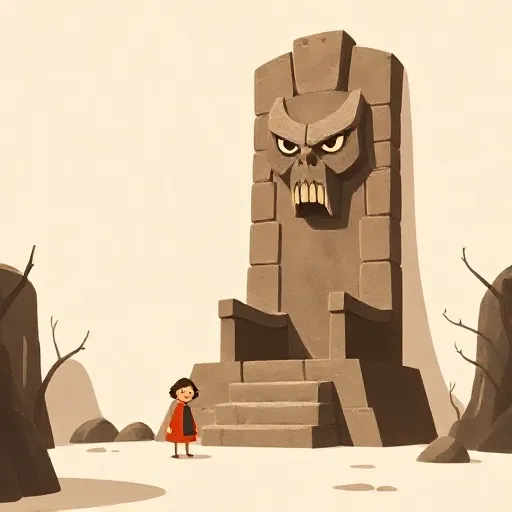
Feminist critics point out that the dominant images of God in Western religions are anything but neutral. The divine is called Father, King, Lord, and He. The omnipotence of this God — defined as perfect power — slides easily into images of domination: a ruler whose will nobody can resist. Even the more abstract language that philosophers use, like aseity (self-sufficiency, needing nothing outside itself), glorifies a kind of aloof independence. Critics argue this mirrors an idealized masculinity that values control and disconnection over relationship and care.
The bias runs all the way down. Feminist philosophers have shown how male-centered assumptions shape the classic puzzles of the field. The problem of theodicy — “how can an all-powerful, all-good God permit evil?” — is usually debated with examples of suffering that matter to powerful men, while misogyny and sexual violence rarely make the list. Arguments about the afterlife often focus on individual survival, what one early feminist Charlotte Perkins Gilman called a “posthumous egoism,” rather than on collective human flourishing. Even the very idea of religious reason has a gender history. From ancient Greece onward, mind, reason, and spirit were coded as masculine, while body, emotion, and matter were coded as feminine. When you picture God as pure mind, you naturally picture Him as male — and women as somehow less like the divine.
Rebuilding the Divine: Process, Spark, and Space
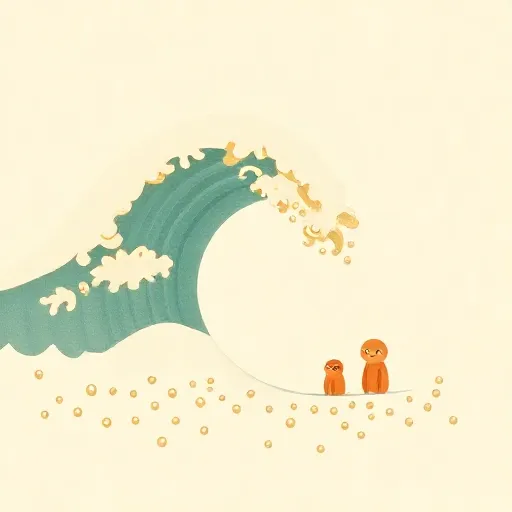
What if the divine isn’t a solitary male ruler at all? One powerful alternative comes from process philosophy. First developed by Alfred North Whitehead and later taken up by feminist thinkers, process thought rejects the idea of a God who stands above the world and controls it from the outside. Instead, it proposes panentheism: all things exist in God, and God is affected by everything that happens. In this view, God is not an all-powerful tyrant but a persuasive lure, luring the world toward justice and beauty. Creativity and relationship replace command and hierarchy.
A very different path was blazed by the American philosopher Mary Daly. In her early work, she described the ultimate reality as Be-ing: a dynamic, living verb, not a static noun. The divine spark, she said, is inside each woman’s own self. Later Daly went further, urging women to “spin” their own meaning out of their own “divine orbs” and to reclaim the power that patriarchy had stolen. The divine, in this radical vision, is not somewhere else; it is fully immanent — alive and present — within women.
Luce Irigaray took another tack. She invented the idea of the sensible transcendental, a phrase that tries to heal the split between body and spirit. For Irigaray, the divine is found not in a distant heaven but in the space between two people who meet face to face and recognize each other’s difference. When a woman can imagine a “god of her sex,” she can finally become a full subject, not just a supporting character in someone else’s story. Irigaray’s divinity is neither purely otherworldly nor simply psychological; it is the flesh-and-breath encounter where two freedoms touch.
The Body and the Unconscious
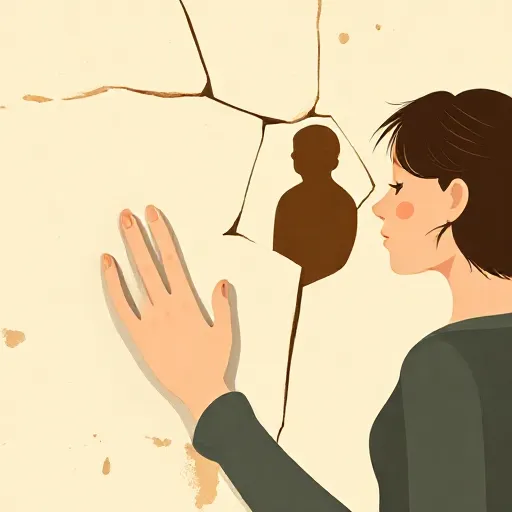
By the late 20th century, many feminist philosophers had moved the focus from God-talk to the hidden forces that shape belief. The British thinker Grace Jantzen argued that Western religion is saturated with an obsession with death and violence — crucifixes, sacrifice, mortality — which she traced to a deep cultural fear of the mother’s body. She called for a new symbolic order centered on natality, the fact that we are born, not just destined to die. Jantzen’s alternative was a philosophy of flourishing, where the divine is this world’s own horizon of becoming, not a guarantee of an afterlife.
Other thinkers, like Pamela Sue Anderson, insisted on a feminist standpoint epistemology. That’s a way of saying that what counts as knowledge depends on where you stand. A philosopher thinking from the lives of oppressed women will see different truths than one who assumes a neutral, all-knowing perspective. Anderson did not try to prove that God exists. Instead she studied the yearning — a desire for truth, justice, and love — that gives rise to religious belief in the first place. For her, you can’t understand faith without looking at the embodied, emotional, and social conditions that make it possible.
Even the most intimate male images get re-read. The scholar Howard Eilberg-Schwartz noticed a surprising problem: in ancient Israel, men worshipped a male God, yet were cast as God’s wife. That setup created a hidden homoerotic tension and forced a constant policing of gender roles. The point, for feminist philosophy of religion, is not just that a male God is bad for women; it’s that any single, fixed image of the divine traps both men and women in a cramped imaginary.
Why This Old Argument Still Matters Today

You might wonder what a 19th-century activist and a French philosopher have to do with you. The answer is simple. Every culture tells stories about where everything comes from and who matters most. Those stories get installed early. If the ultimate source of meaning is imagined as a solitary king, a warrior, or a father, then single rulers, domination, and male authority feel natural. If the divine can be imaged differently — as a living stream, as a spark within each person, as the space between faces, as a mother, as a friend, or as something that has no gender at all — then other ways of organizing our lives become thinkable.
Feminist philosophy of religion does not force you to pick a side. It insists that you pay attention to the ideas that fly under your radar. The field is still growing, drawing in queer, antiracist, and ecological thinkers who ask what happens when we take the divine out of one culture’s small box. The question is not just about religion. It’s about who gets to be seen as fully human — and what images of the ultimate make that seeing possible or impossible. And that remains as urgent now as it was in 1885.
Think about it
- If every picture of God you’ve ever seen is male, does that affect who you think can be wise, strong, or fully good? How could you test whether it does?
- Can you imagine a divine reality that isn’t a person at all — something more like a force or a process? What would change about your sense of right and wrong if you believed that?
- Some feminists say reclaiming religion is essential for freedom, while others say the best move is to walk away from it. What might be gained and what might be lost in each choice?