Can the Same Dance Happen Twice?
A Leap That Vanishes Before It Lands
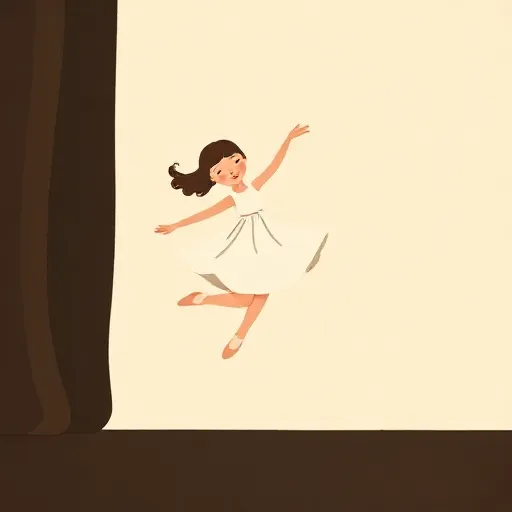
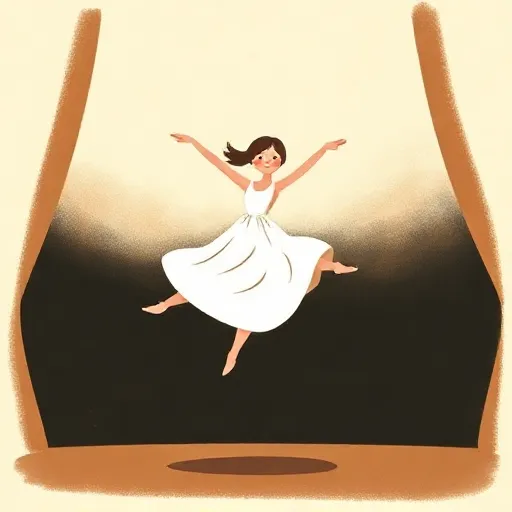
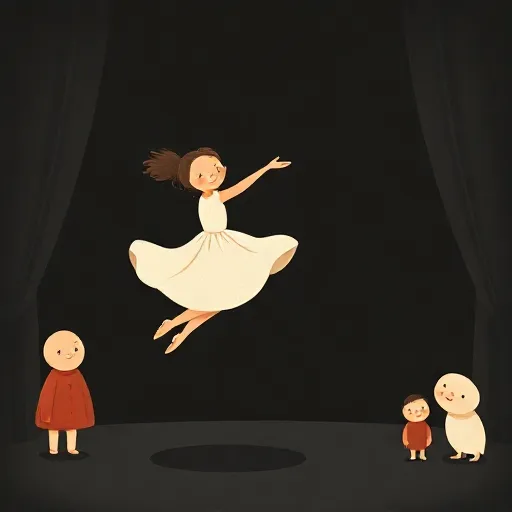
It is a Friday night in the 1970s. A packed theater falls silent as a dancer dressed in white runs across the stage and soars into a jump. The audience catches its breath. Then the leap is gone — it dissolves into memory before the dancer even touches the ground. The critic Marcia Siegel captured this when she wrote that dance “exists at a perpetual vanishing point.”
But if a dance vanishes the moment it happens, how can we say we have seen the same dance again tomorrow? And if we try to bring back a dance from a hundred years ago, what exactly are we bringing back? These questions are not just for dancers and critics. Philosophers who think about art have been worrying about them for decades. They want to know: what makes a moving body into a work of art, what kind of “thing” a dance is, and whether it can ever really be repeated.
What Makes a Movement a Dance?
Ordinary life is full of movement: walking to the bus, reaching for a book, tapping a foot to a beat. A dancer does many of those same things — walks, runs, jumps, turns. So what turns an everyday movement into dance?
One answer comes from the philosopher Monroe Beardsley (1915–1985). He noticed that a single action can change its very kind depending on the situation. If you run down the street to catch a bus, you are just running. But if you run across a stage, under the right conditions — with the right intention, the right music, the right context — that running becomes expressive. Beardsley borrowed an idea from the philosophy of action: one bodily action can sortally generate another kind of action. Under the right circumstances, running can become a dance movement. What makes it art, he argued, is its expressiveness — the way it communicates feeling or meaning through the performer’s body.
A different and more famous proposal came from Susanne K. Langer (1895–1985). She thought dance was a form of symbol-making. For Langer, dance does not just move; it creates an illusion of what she called virtual power. Words create a virtual world of meaning, music creates virtual time, and dance creates a world of gesture that seems to reach beyond the visible movement. When you watch a dancer sweep an arm through the air, you see more than a limb changing position. You see a gesture that feels charged with force and intention — even though no physical force is being thrown. That, Langer claimed, is the primary illusion of dance.
Both Beardsley and Langer were trying to solve a definitional question: what is the difference between dance and non-dance? Their answers focus on expression and symbolic meaning. But many later philosophers stepped back from the project of defining dance with one clean rule. They argued that dance styles are too varied — ballet, krump, butoh, contact improvisation — for any single definition to cover all of them without leaving something important out.
What Kind of Thing Is a Dance? Ontology and Scores
Even if we cannot perfectly define dance, we can still ask a different question: when we talk about “Swan Lake” or a piece by Martha Graham, what kind of thing are we talking about? Is a dance a physical object? A set of instructions? An event that happens one time only? Philosophers call this an ontological question — ontology is the branch of metaphysics that asks what sort of thing something really is.
Nelson Goodman (1906–1998) took a very clear position. He argued that a work of dance art is defined by a score — a written or notational plan that specifies the work’s essential features, rather like a musical score or a blueprint. If a performance follows that score in the right way, it counts as an instance of that work. If it does not, it is something else.
The contemporary philosopher Graham McFee builds on this idea but softens it. He thinks a dance work is a type — like the word “leap” — and each live performance is a token of that type, just as saying “leap” out loud is a token of the word. The rules of the type are set by an actual or in-principle possible score, a sort of “recipe” for the work. This view lets us explain why we say the same dance was performed on Tuesday and again on Friday: both performances are tokens of the same type.
Another contemporary philosopher, Noël Carroll, asks the question in a more practical way: what makes something a dance work? His answer is that it depends on the constitutive purposes of the choreographer — the goals that give the work its identity — as they would be understood by someone inside the dance community for which the work was created. On this view, what holds a dance together across performances is not a frozen set of steps, but a shared understanding of what the choreographer was trying to do.
All of these thinkers share a core idea: dance works are performables, artworks made to be performed more than once, and they assume that there is something stable enough to be repeated. But not everyone agrees.
Smoke You Cannot Catch: The Case for Ephemerality
Marcia Siegel’s remark that dance lives at a vanishing point points to a powerful intuition: a dance disappears as it is being made. The movements are not stored anywhere — they happen, and then they are gone. Many philosophers and critics embrace this as a central and even good feature of dance. They argue that the ephemerality of dance — its fleeting, disappearing nature — is not a problem to be solved, but part of what makes it special.
A number of facts support this view. Many dance creations have no written score at all. Even when a score exists, it is rarely used as a strict recipe. Choreographers and dancers constantly make adjustments — a turn gets sharper, a pause lengthens on a new stage, a dancer’s unique style changes the movement. Standardized dance notation systems are controversial, and none is used or accepted by everyone. If the recipe is always changing, what is the “work” we are trying to repeat?
The practical world of dance adds even more puzzles. Dancers and historians sometimes try to reconstruct a “lost” dance from old notes, videos, and personal interviews. Others attempt a revival — breathing life back into a work that has not been performed in a while. Some artists prefer reenactments, which revisit historical dance moments in a creative way rather than trying to copy them exactly. All these “re”-activities raise the same uneasy question: when we bring a dance back from the past, are we preserving the very same work of art, or are we making a new one that merely looks like the old one?
Defenders of the ephemeral view often turn this trouble into a strength. The philosopher Troy Jollimore (writing in 2019) suggests that we should appreciate rather than regret dance’s impermanence. A live performance gives you a vivid, unrepeatable “you had to be there” experience. Your body responds to the dancers in real time — your heart rate quickens, your muscles tense, you feel the movement in a way that no recording can give. That uniqueness, on this view, is exactly what makes dance matter.
Why This Matters When You Watch a Dance on Your Phone
You have probably watched a dance on a screen — maybe a ballet clip on a phone, a hip-hop routine on television, or a friend’s recital video. Streaming and recording are everywhere. This brings the philosophical debate right into your living room.
Thinkers who study dance and technology ask pointed questions. If a dance is recorded and watched later, are you having genuine commerce with the work of dance art, or just watching a trace of something that is already gone? Does the screen rob you of the visceral, bodily experience that makes live dance special? Or can a well-made film of a dance be a new kind of artwork itself — a Screendance, where the camera becomes part of the art?
Philosophers disagree, and there is no settled answer. But the debate traces directly back to the same tension we began with: is a dance a recipe you can faithfully reproduce, or a one-time event whose power lives in its vanishing? When a dancer leaps on your tablet, you are stepping into that ancient philosophical problem. The question is not just for academics — it is for anyone who has ever felt the difference between being in the room and watching through a screen.
Think about it
- If you and a friend both perform the exact same set of dance moves, but she feels sad and you feel joyful, are you performing the same dance?
- A lost dance from 100 years ago is pieced back together using old notes, sketches, and a grainy film clip. Is it still the same dance that the original audience saw, or a brand new one?
- Would you rather see a dance once, live, or own a perfect hologram of it that you could replay forever? What would you gain, and what would you lose?