Are You WEIRD? How Culture Builds Your Mind
The College Student Problem: The WEIRD Surprise

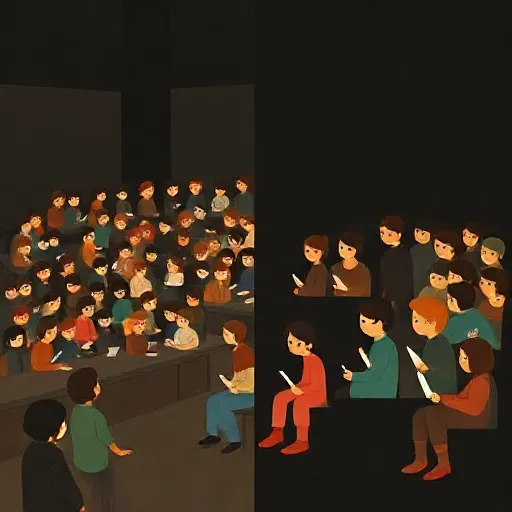
In 2010, three researchers—anthropologist Joseph Henrich, psychologist Steven Heine, and psychologist Ara Norenzayan—published a paper that made many psychologists squirm. They looked back at decades of studies on how humans think and feel. What they found was startling. Nearly all the participants—96%—came from societies that are Western, Educated, Industrialized, Rich, and Democratic. They gave this group a name: WEIRD.
The catch? WEIRD people are actually unusual from a historical and global perspective. Yet researchers had been treating them as if they revealed the universal operating system of the human mind. This created a huge blind spot. For example, many experiments assumed that people everywhere would punish a stranger who cheated in a game. But when researchers later traveled to small-scale societies, they found that people in some cultures didn’t much care about punishing an anonymous cheater—they focused on their own group. The way we think about fairness, blame, and even how we remember events can vary dramatically.
This wasn’t just a sampling mistake. It was a wake-up call that pushed cognitive scientists to ask: how deeply does culture mold the mind? And if we’ve been ignoring that, what else have we gotten wrong?
What Is Cognitive Science Doing with Culture?
Cognitive science is the joint effort of psychology, philosophy, linguistics, computer science, and neuroscience to understand minds. At its heart is a simple idea: the mind is not a mysterious substance but a kind of information processing. You can think of your brain like computer hardware and your mind like the software it runs. Mental states are like different functions that process incoming information and produce behavior.
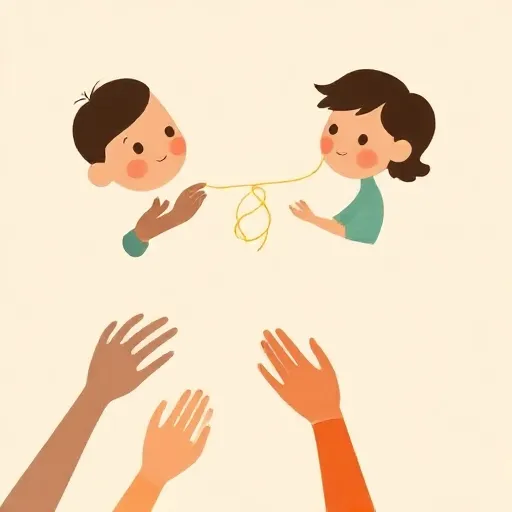
Culture, in this picture, isn’t just paintings or dances or ancient texts. The working definition that many cognitive scientists use today comes from philosopher Grant Ramsey: culture is information transmitted between individuals or groups, where this information brings about a lasting change in behavior. Notice what counts isn’t the content of the information—whether it’s a recipe, a story, or a rule about sharing. What makes it cultural is how it travels (from person to person via behavior) and what it does (produces durable changes). A song that you learn by listening to your grandmother and then teach your friend is a piece of culture. A habit you pick up from watching a popular classmate solve a puzzle counts too.
This framing helps explain why two people growing up in different places can end up with quite different mental software. The cultural information that flows into your mind from your family, your school, and your neighborhood literally shapes your internal programs.
Genes, Environment, or Something Else?
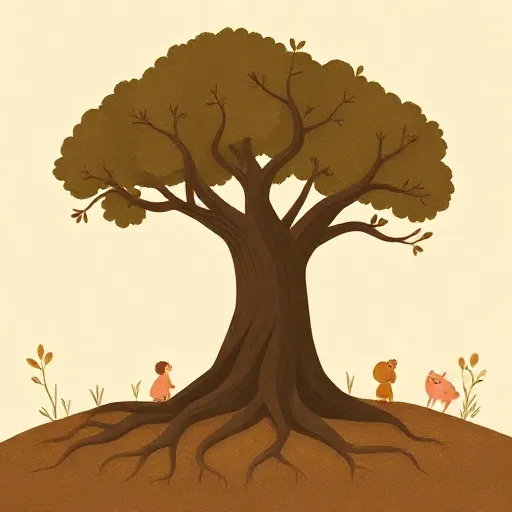
When scientists find a pattern of behavior that’s common in one group but rare in another, they ask why. For a long time, many blamed genetic differences. That explanation lost support when research showed that biological differences between human populations are tiny and superficial. So two other big families of explanation emerged.
One comes from Evolutionary Psychology. On this view, our minds contain a set of built-in switches shaped by evolution. The environment flips those switches on or off, calling forth different behaviors without any need for social learning. For instance, researchers have argued that when people grow up in places with lots of visible disease, a psychological mechanism gets triggered that makes them more wary of outsiders and more collectivist—not because anyone taught them that lesson, but because an ancient adaptive program sensed a threat and ran. This is called evoked culture: behaviors are “evoked” by the surroundings, not transmitted from mind to mind.
The other family insists on transmitted culture. Dual inheritance theory, developed by researchers like Robert Boyd and Peter Richerson, says that people are selective social learners. We copy the behaviors of successful or prestigious individuals, and those copied behaviors spread through groups just like genes—but much faster. The instructions for a fishing technique or a way of resolving arguments can leap from generation to generation without waiting for biological evolution.
A third approach, cultural epidemiology, adds a twist. When we learn from others, we don’t just photocopy what we see. Our minds reconstruct the information so that it fits how we already think. Think of a rumor that starts as “I saw a large dog” and ends up as “I saw a wolf.” Each reteller tweaks the story to make it more gripping, and the tale gets pulled toward a cultural attractor—a version that’s maximally attention-grabbing or easy to remember. The same thing happens with jokes, religious ideas, and even moral rules.
Why You Copy Even the Silly Steps
Many animals can learn from one another, but human culture has a unique feature: it accumulates. We don’t just pass down one trick; each generation can refine and build on the last, so a simple stone tool becomes a smartphone over thousands of years. This cumulative culture is sometimes called the ratchet effect: once a useful invention gets into the cultural stream, it tends to stick and get upgraded, like a ratchet that only clicks forward.
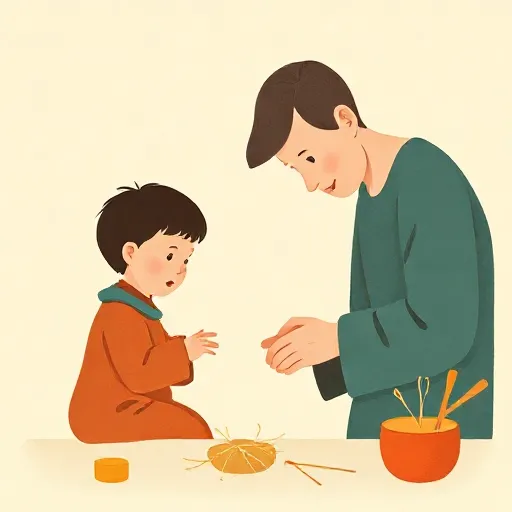
What makes this possible? One surprising candidate is over-imitation. When children watch someone perform a series of steps to get a reward—say, unlocking a box—they often copy all the moves, even those that are obviously pointless. At first glance, this looks like a mistake. But many researchers think this tendency is actually crucial. Many cultural traditions, like how to prepare certain foods or build a shelter, involve steps whose purpose is invisible to a learner. Copying the whole sequence, even the “wasteful” parts, ensures that the entire recipe—including the hidden beneficial parts—gets passed along faithfully.
Our social learning isn’t blind either. From a young age, we use clever shortcuts. We are more likely to copy someone who is successful, prestigious, or similar to us. We also tend to conform to what the majority does. These selective social learning strategies often help individuals avoid costly trial-and-error. But they can also create feedback loops: if everyone only learns from the most popular kid, the whole group converges on a single style, and alternative ideas disappear. The same dynamics that preserve useful traditions can also turn into echo chambers.
Some psychologists, like Cecilia Heyes, argue that even our ability to imitate is itself a culturally shaped skill—a cognitive gadget that each new generation learns from watching others, rather than a program pre-installed in our genes. On this view, we are born with powerful general learning abilities, and the specific tricks of being good copiers are themselves packaged and passed along as cultural information.
Why Your Friend’s Idea of Fair Might Be Different
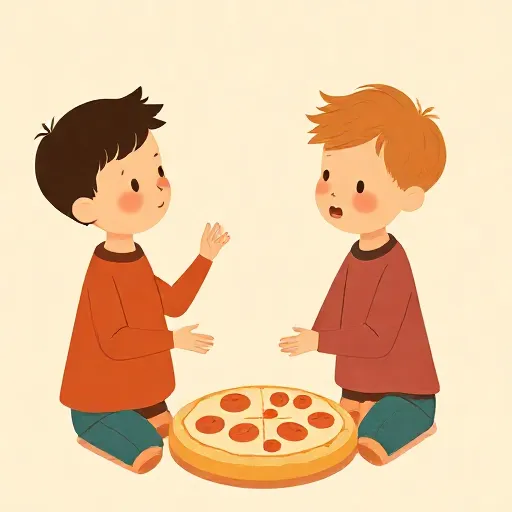
The discovery that culture reaches deep into the mind has shaken up several areas of philosophy. One of the most personal is moral psychology. Studies show that WEIRD people, compared to many others, are unusually individualistic and guilt-focused. They tend to judge actions more by the agent’s intentions. In some communities, by contrast, the outcome matters more than the state of mind. What counts as “fair” isn’t the same across the globe. Seeing this doesn’t mean that morality is made up; it does mean that philosophers must be careful not to mistake their local intuitions for universal moral truths.
Culture even shapes how mental distress shows up. For decades, Western psychiatry treated its own diagnostic categories as standard human hardware defaults and labeled disorders found only in other cultures as strange exceptions. But a condition like amok (a sudden frenzy followed by amnesiac violence, found in parts of Southeast Asia) or koro (an intense fear that one’s genitals are shrinking, reported in East Asian contexts) makes it hard to maintain that mental illness is just a broken biological mechanism. The mind that struggles is always a mind steeped in meaning and social expectations.
The WEIRD wake-up call also hit philosophical methods. Philosophers in the Western tradition often appeal to intuitions—the gut feelings we have when we hear about a case. But experimental philosophers have found that intuitions about knowledge, free will, and reference can differ depending on your cultural background. If your own “obvious” starting points are shaped by the social information you absorbed, then building a whole theory on them might be like building a house on sand you thought was rock. This doesn’t mean all intuitions are useless, but it forces us to listen to a wider set of voices.
Understanding these dynamics doesn’t just help scholars. The next time you feel certain that this is the only fair way to split a pizza, or that everyone would react the same way you do to a lie, you can pause. The programs running in your head came from somewhere—and the people around you helped write them. Recognizing that doesn’t weaken your mind. It makes you more curious about why others see things differently, and that’s the beginning of thinking for yourself.
Think about it
- If you had been born in a completely different culture, would you still be “you”? What parts of your personality or beliefs might stay the same, and why?
- Suppose a study claims to have found a universal rule about how humans make decisions, but all the participants were from one country. How would you test whether it’s really universal?
- Can a tradition be useful even if nobody remembers why it started? How would you figure out which old rules are worth keeping and which are just cultural fossils?