Philosophy for Kids

What Is Art, Really? Benedetto Croce's Strange and Radical Idea

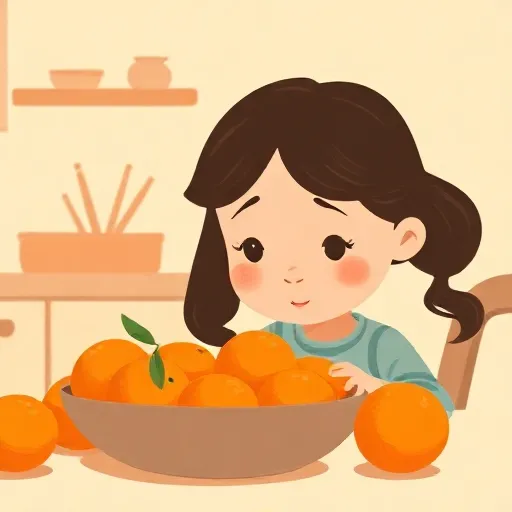
Imagine you’re looking at a bowl of fruit on your kitchen table. You see the curve of an apple, the dimpled skin of an orange, the way light catches a grape. Now imagine trying to draw it. Most of us can’t—not well, anyway. The drawing comes out clumsy, the proportions wrong, the shading flat.

But here’s a strange question: did you actually see the bowl of fruit in the first place? Or did you just glance at it, grab an apple, and move on?

The Italian philosopher Benedetto Croce (1868–1952) thought most of us go through life half-blind. We think we’re seeing things, but really we’re just registering enough to get by. A real intuition—a full, vivid, conscious grasp of something particular—is rare. And here’s where Croce’s idea gets really weird: he thought that having a full intuition is the same thing as expressing it. To really see the bowl of fruit, in his view, is to be able to draw it (or describe it, or sing it, or find some shape for it in your mind). The intuition and the expression aren’t two separate steps. They’re the same event.

This sounds crazy at first. Surely you can see something without being able to draw it? But Croce meant something specific, and working through his idea takes you into some fascinating territory—about what art is, whether it’s special or everyday, and what it means to really notice anything at all.

Art Is Everywhere (Not Just in Museums)

Most people think of art as a special, rare thing. Paintings in galleries. Symphonies in concert halls. Poetry in books with thin pages. Croce thought this was completely backwards. For him, art isn’t a special kind of thing. It’s a special degree of something we all do all the time.

Here’s what he meant. Every time you have a clear, vivid experience of something—not just glancing at it, but really taking it in—you’re doing something artistic. The difference between looking at a sunset and painting it, between hearing a tune and humming it, between feeling angry and describing that anger: those aren’t differences in kind. They’re differences in how fully you’re doing the same basic thing. Art, for Croce, is just intuition pushed to its highest degree.

He put it this way: there’s no special science of “bigger mountains” as opposed to ordinary hills. There’s just geology. And there’s no special science of “artistic intuition” as opposed to ordinary intuition. There’s just intuition. The difference between what you do when you look at a bowl of fruit and what Michelangelo did when he looked at a block of marble is a difference of intensity, not of type.

This idea has a surprising consequence. It means that art isn’t an “aristocratic club” for special people with special talents. It’s something rooted in the most basic operations of the human mind. When you really see something—really take it in as a complete, particular, vivid experience—you’re already doing what artists do. You’re just doing it less intensely, or less coherently.

The Big Claim: To Intuit Is to Express
Now we have to get into the difficult part. Croce’s most famous claim is: “To intuit is to express.” Intuitive knowledge is expressive knowledge.

What does this mean? Let’s break it down.

First, Croce wasn’t talking about paintbrushes or musical instruments. When he says “expression,” he doesn’t mean externalizing something—putting it on canvas or paper. He means something that happens entirely in the mind. The expression IS the intuition. Having a clear, formed image in your mind is expressing it. The physical painting—the actual paint on canvas—comes later and is, for Croce, a separate practical matter.

This means something radical for what a work of art is. For Croce, the real work of art is not the physical object. It’s not the painting hanging on the wall, not the book on the shelf, not the recording of the symphony. The real work of art exists in the mind. It’s the intuition. The physical thing is just a tool for getting other people to have their own intuitions—which will always be slightly different.

Think about what this means for a painting like Botticelli’s Venus. On Croce’s view, there’s no single “real” Venus that everyone is looking at. There’s only your intuition of Venus, my intuition of Venus, and an infinite number of others. They can’t really be compared, because they’re private mental events. The physical painting is just a bunch of paint on canvas—useful, but not the art itself.

This is a hard idea to swallow. It means that when you and I look at the same painting, we’re not looking at the same work of art. We can’t be, because the work of art is your private intuition, and your intuition is necessarily different from mine.

Feeling Is Everywhere, Too

Croce also insisted that feeling is part of every intuition—including every perception of ordinary objects. When you see a tree, you’re not just registering visual data. You’re having an experience that includes a feeling. The feeling isn’t added on afterward; it’s part of what makes the intuition a unified whole.

For Croce, you can’t separate a work of art into “form” and “content.” It’s not that there’s a sad feeling (content) and then a way of expressing it (form). The feeling and the form arrive together. The sadness is the way it’s expressed. If you change the expression, you change the feeling. There’s no such thing as “the same content in a different form.”

This means Croce had no patience with critics who say a work is “good on content but poor on form” or vice versa. For him, that’s like saying a person is “healthy on the inside but sick on the outside.” If you’re sick, you’re sick. If the expression is poor, the intuition—the content—was poor all along.

What About the Actual Painting?

So if the real work of art is a mental intuition, what’s the point of actually making paintings, writing poems, or composing music? For Croce, these are acts of “externalization”—practical activities that have nothing to do with art itself. They’re just ways of getting other people to have their own intuitions.

This sounds dismissive, but Croce wasn’t saying externalization is unimportant. He just thought it was a different kind of activity—technical and practical rather than aesthetic. The painter has to mix paint, choose brushes, decide about canvas. The poet has to choose words, think about meter, decide about line breaks. These are real skills. But for Croce, they’re not artistic skills. They’re practical skills that serve the artistic intuition.

Here’s the tricky part: Croce admitted that in practice, intuition and externalization are almost impossible to separate. The painter’s vision changes as she works. The poet’s image shifts as she finds the right words. There’s constant feedback between the mental intuition and the physical act. But Croce insisted that in theory they’re completely distinct. The art happens in the mind; the craft happens in the world.

If Art Is Mental, How Do We Judge It?

This creates a puzzle. If the work of art is your private intuition, and my private intuition, and everyone else’s—all different—how can anyone say a work is good or bad? How can we disagree about art? How can we say Botticelli’s Venus is better than my doodle of a house?

Croce had an answer, though it might not satisfy you. He said that to judge a work of art, you have to reproduce the intuition. The critic’s job is the same as the artist’s job: to have a clear, vivid intuition. The difference is just that the critic is responding to an external stimulus (the painting) while the artist created the stimulus.

The capacity to produce beauty and the capacity to recognize beauty are the same capacity, just used in different directions. To judge Dante, you have to raise yourself to his level—to become, in that moment, one with his intuition. If you fail to see the beauty, that’s a failure in you, not in the work.

This makes art criticism sound like a kind of spiritual exercise. You can’t just declare something good or bad. You have to train yourself to have the right intuitions. And there’s no “standard of beauty” you can apply from the outside—no checklist of features that make something beautiful. Beauty is just successful expression, and you know it when you feel it.

Is All Language Poetry?

Croce went even further. He claimed that all language is poetry. Drawing, sculpting, composing music—these are all forms of “language” in his extended sense. Language, for Croce, is fundamentally expressive. A sound that expresses nothing isn’t language at all.

He also claimed that the basic unit of meaning in language is the sentence, not the word. Words are abstractions we make for practical purposes (like dictionaries). But nobody actually speaks in isolated words. They speak in sentences. And a sentence is a complete expressive act—an intuition given shape.

This means, for Croce, that translation is impossible. Not just difficult, but impossible in principle. A poem in Italian can’t become a poem in English, because the intuition is tied to the specific words and their specific arrangement. You can produce a different poem that’s similar in some ways, useful for some purposes. But the original intuition is gone.

This is a beautiful idea, and it captures something true about why poetry feels untranslatable. But it also seems to go too far. Surely there’s a difference between a scientific paper and a sonnet, even if both are expressive? Surely the referential function of language—pointing to things in the world—is real and important? Croce’s answer would be that reference is a later, more abstract function, built on top of the expressive foundation. But critics argued he was simply ignoring the parts of language that didn’t fit his theory.

What’s Wrong with This Picture?

Croce’s theory is beautiful, ambitious, and deeply flawed. Philosophers have raised several serious problems with it.

The problem of action vs. contemplation. Croce says having an intuition is expressing it. But surely there’s a difference between looking at a bowl of fruit and drawing it? Between listening to music and playing it? Between reading a poem and writing one? Croce’s theory makes these distinctions disappear, but they feel real and important. I can see something without being able to draw it. That’s not a failure of intuition; it’s a failure of a separate skill.

The problem of privacy. If the work of art is my private mental intuition, then nobody can ever actually share a work of art. We’re all locked in our own heads, with no way to compare experiences. This makes criticism impossible—there’s no “real” Venus to argue about, just my Venus and your Venus, incomparably different. Croce seems to have painted himself into a corner where art becomes a purely private diversion. And that’s a sad fate for something that feels so deeply shared.

The problem of language. Croce insisted that all language is expressive, with no real distinction between poetic and scientific uses. But science seems to work—it seems to successfully refer to things in the world. If language is just expression, how does that work? Croce might say that scientific language is a degenerate or derivative form of language, but that feels like a dodge.

So What Should We Keep?

Despite these problems, Croce’s theory captures something important. He was right that art is rooted in our most basic capacity for vivid, particular experience. He was right that the boundaries between “art” and “everyday perception” are blurrier than we think. He was right that feeling and form can’t be neatly separated. And he was right that great art somehow contains the whole of human experience—all our hopes, griefs, joys, and miseries—in a single, particular intuition.

Maybe Croce’s mistake was making the identity claim too strong. Maybe it’s better to say that art involves intuition and expression in a special way, without saying they’re the same thing. Maybe the physical object matters more than Croce thought. But even if we reject his radical conclusions, we can thank him for asking the question: what exactly happens when we really see something, and what does that have to do with art?

The next time you look at a bowl of fruit—really look at it, not just glance—ask yourself: am I seeing it, or am I already, somehow, shaping it? And can I tell the difference?


Appendices

Key Terms

TermWhat it means in this debate
IntuitionA direct, vivid, particular grasp of something—not a concept or an idea, but a concrete experience of a single thing
ExpressionNot just putting something into words or paint, but the mental act of giving shape to an intuition; for Croce, identical with the intuition itself
ExternalizationThe physical act of making a painting, writing a poem, etc.—practical work that Croce thought was separate from art properly understood
AestheticThe domain of intuition and expression; for Croce, the foundation of all mental activity, prior to logic and concepts
Lyrical intuitionCroce’s later term for a successful work of art: an intuition unified by a single feeling, giving it “the breath of the cosmos”
Pseudo-conceptA concept like “space-time point” that nobody has actually experienced—useful for practical purposes but not real knowledge

Key People

  • Benedetto Croce (1868–1952) – An Italian philosopher who began as a scholar of history and literature and built a complete system of philosophy, with aesthetics at its foundation. He argued that intuition and expression are the same thing, and that all language is poetry.
  • Giambattista Vico (1668–1744) – An earlier Neapolitan philosopher who influenced Croce. Vico was the first to argue that all language is substantially poetry, though Croce disagreed with his claim that there was an actual historical period when this was literally true.
  • R. G. Collingwood (1889–1943) – A British philosopher often thought of as Croce’s follower. He agreed that art is everywhere but developed a more detailed theory of emotions and argued more carefully against the “craft” theory of art.

Things to Think About

  1. Croce says the difference between everyday perception and art is just a matter of degree. Are there experiences you’ve had that feel truly different from art? Or does art feel continuous with ordinary seeing and hearing?

  2. If Croce is right that the real work of art is mental and private, then you and I can never share the same work of art. Does this match your experience of going to a museum or concert with someone? Or does it miss something essential about what you’re doing together?

  3. Croce says translation is impossible. But clearly people do translate poems, and sometimes the translations are beautiful. What’s going on here? Is Croce demanding too much from translation, or are we settling for less than real understanding?

  4. Think of a time you really saw something ordinary—a face, a tree, a room—in a way that felt vivid and new. Was that experience already somehow artistic? Did it have its own shape or form, or was it just raw sensation?

Where This Shows Up

  • In how you talk about art. When people say “art is about expressing yourself” or “a painting has to feel right,” they’re echoing ideas Croce helped make popular.
  • In the way we treat artists. Our culture often treats artists as people with a special gift. Croce’s view suggests the gift is just seeing more fully—a capacity everyone has, just to different degrees.
  • In debates about AI art. If the work of art is a mental intuition, can a machine create art? Croce would probably say no, since machines don’t have minds. But if art is just the output, then maybe yes. The debate is still alive.
  • In arguments about “high” vs. “low” art. Croce’s view that art is everywhere challenges the idea that some art is better because it belongs to a special category. For him, what matters is the intensity and coherence of the intuition, not whether it’s in a museum or on TikTok.