
What Makes a Society Sick? A Guide to Critical Theory
Imagine you’re playing a video game. You’re running through a world, collecting coins, fighting enemies, leveling up. Everything seems normal. But then someone points out something strange: the game wasn’t designed to be fun. It was designed to keep you playing, to make you buy more coins, to make you feel like you’re progressing while actually going in circles. The game has programmed your desires, your sense of achievement, even your idea of what “winning” means.
Now imagine that real life might work the same way.
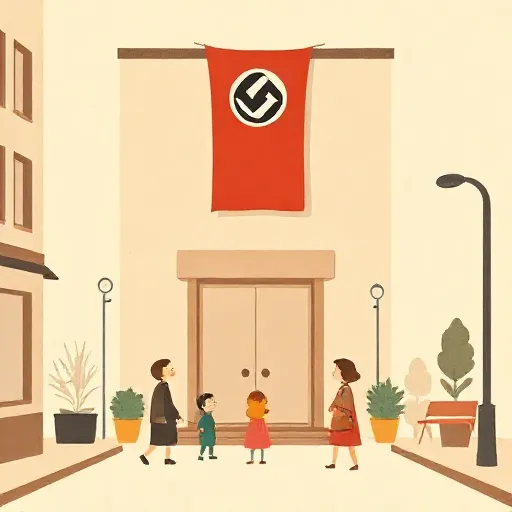
This is the unsettling starting point for a tradition of thinking called “critical theory.” A group of philosophers called the Frankfurt School—mostly German Jews who fled the Nazis in the 1930s—began asking: What if the way we think, feel, and want isn’t entirely our own? What if our deepest beliefs about what’s normal, good, or even possible have been shaped by a society that’s designed to keep us obedient, distracted, and willing to accept things that are actually making us miserable?
They weren’t asking this as a joke or a conspiracy theory. They were trying to understand something genuinely terrifying: how did the most “enlightened,” scientifically advanced, culturally sophisticated country in Europe—Germany—become a place where people voted for and supported a genocidal dictator?
What Critical Theory Is (and Isn’t)
Most philosophy asks abstract questions like “What is justice?” or “How do we know what’s true?” Critical theory asks a more urgent question: “What’s wrong with this society, and how do we fix it?”
This might sound simple, but it changes everything about how you do philosophy. For critical theorists, you can’t just sit in an armchair and think up answers. You need to understand how society actually works—its economy, its culture, its psychology, its power structures. And you need to be honest about where your own thinking comes from. After all, if society is shaping everyone’s minds, it’s shaping philosophers’ minds too.
Here’s the core difference the first major figure of the Frankfurt School, Max Horkheimer, pointed out in 1937. Most “traditional theory”—whether in science or philosophy—takes the world as it is and tries to describe it accurately. If you’re a physicist studying gravity, you don’t ask whether gravity should exist. You just measure it. But critical theory says: when you study human society, taking the world as it is means accepting injustice as normal. A theory that simply describes how things work in a society built on exploitation is actually helping keep that exploitation going.
So critical theory aims to do something different. It wants to be a force for change. It wants to uncover the hidden ways that power works, so that people can free themselves from it.
Why We Accept What Hurts Us
This leads to the most puzzling question critical theorists face: if society is making people miserable, why don’t they rebel?
Marx, the philosopher who most influenced the Frankfurt School, predicted that workers in capitalist societies would eventually realize they were being exploited and rise up to create a better system. But by the 1930s and 1940s, the opposite was happening. Workers in Germany were supporting a fascist regime that was clearly not in their interest. Workers in the United States were happily buying into consumer culture, spending their energy on new cars and appliances rather than demanding fundamental change.
Something was blocking people’s ability to see and act on their own suffering.
The Frankfurt School turned to psychology—specifically, the ideas of Sigmund Freud—to understand what was happening. They argued that modern society doesn’t just control people through force or even through laws. It shapes their inner lives: their desires, their fears, their sense of what feels good and what feels normal.
Consider something you’ve probably experienced: the feeling that you need to buy a new phone even though your current one works fine. You might think this is just a personal preference. But critical theorists would say that this desire has been manufactured. Advertisements, social pressure, the way your friends talk about technology—all of this shapes what you want before you even have a chance to decide what you actually need.
Now scale this up. What if your ideas about success, about what a good life looks like, about what’s possible for you—what if these have all been shaped by a system that benefits from your staying busy, consuming, competing, and not asking big questions?
The Culture Industry: How Entertainment Trains Us
The most famous version of this argument comes from Theodor Adorno and Max Horkheimer, who wrote a book called Dialectic of Enlightenment during World War II. They developed the concept of the “culture industry”—a term they deliberately chose instead of “mass culture” to emphasize that popular entertainment isn’t something that naturally grows from people’s lives. It’s manufactured, like any other industrial product.
Think about movies, TV shows, music, and video games. They seem like harmless fun. But Adorno and Horkheimer argued that the culture industry serves a deeper purpose: it keeps people distracted and satisfied with the world as it is. Every movie has a predictable structure: problem arises, hero overcomes obstacles, happy ending. This trains people to expect that everything will work out in the end, that there’s no need to demand real change. Every pop song follows a formula. Every video game gives you small rewards to keep you playing.
The result? People lose the ability to imagine that things could be fundamentally different. You might feel frustrated with your life, but you can’t picture an alternative. The culture industry has filled your mind with ready-made fantasies—becoming rich, becoming famous, finding the perfect partner—that all fit within the existing system. It’s hard to imagine a society built around cooperation and genuine freedom when every story you’ve ever heard tells you that the point of life is to compete and win.
Not everyone in the Frankfurt School agreed about this. Walter Benjamin, another key figure, was more optimistic. He thought that new technologies like film and photography could actually democratize culture. When anyone can make a movie or take a photograph that reaches lots of people, that breaks down the old distinction between artists (who create) and audiences (who just consume). Benjamin saw potential here for a more active, engaged public.
But even Benjamin agreed with the basic diagnosis: something has gone wrong with how we experience our own lives.
Reason Turned Against Itself
You might be thinking: wait, aren’t we supposed to be rational creatures? If society is making us miserable, can’t we just think our way out of it?
Dialectic of Enlightenment tells a darker story. The book argues that the very form of thinking we call “reason” has become twisted. Early humans started using reason to gain control over nature—to predict floods, grow food, build shelter. This was a good thing. But gradually, this instrumental rationality (thinking that treats everything as a tool or obstacle to be managed) came to dominate all of life.
Today, we don’t just use reason to solve practical problems. We use it to manage ourselves. We calculate our productivity, optimize our social media presence, measure our success. We treat our own feelings and desires as obstacles to be overcome. And we treat other people the same way—as competitors, resources, or obstacles.
The paradox is that this kind of rationality, which was supposed to free us from superstition and fear, has become a new form of domination. We think we’re being smart when we calculate how to get ahead. But we’ve lost the ability to ask whether the system we’re trying to get ahead in makes any sense in the first place.
This sounds bleak, and it is. But the book’s point isn’t that everything is hopeless. It’s that we need a different kind of reason—one that doesn’t reduce everything to calculation, one that can appreciate difference, one that can hear what doesn’t fit into neat categories.
The Communicative Turn: Can Talking Save Us?
A younger philosopher named Jürgen Habermas grew up in postwar Germany and became the most important figure in the second generation of the Frankfurt School. He thought the first generation had painted things too darkly. Yes, modern society has problems. But Habermas pointed to something they had overlooked: the way people actually talk to each other.
Think about a real conversation you’ve had—not just small talk, but a time when you were trying to work something out with someone. Maybe you disagreed about something important. In that conversation, you probably did something remarkable. You made claims. You gave reasons. You expected the other person to respond with reasons. And if someone just said “because I said so” or pulled rank, you probably felt that wasn’t a real answer.
Habermas argues that this everyday practice of communication contains a hidden standard. When we talk to each other, we necessarily make assumptions: that we could, in principle, reach agreement if we had enough time and good information; that the better argument should win; that everyone affected by a decision has a right to have their voice heard. These assumptions might not be fully realized in reality—often they aren’t—but they’re built into the very act of trying to communicate.
This gives critical theory a way to criticize society without needing to appeal to an outside standard. We can show that actual conversations in society are distorted by power, by inequality, by manipulation. And we can show this by comparing them to the standards that people already implicitly accept when they open their mouths to speak.
Habermas uses this idea to analyze the “public sphere”—the space where citizens come together to discuss matters of common concern. In the 18th century, coffee houses, salons, and newspapers created a new kind of public conversation. People who weren’t nobles or clergy could debate ideas as equals. This was a real achievement. But Habermas argues that this public sphere has been “recolonized” by money and power. Today, public debate happens on platforms owned by billionaires, shaped by algorithms designed to maximize engagement, and dominated by people with resources to buy media attention. The ideal of equal citizens reasoning together has been hollowed out.
Alienation, Reification, Ideology: Three Key Ideas
Critical theorists developed several concepts to diagnose what’s wrong with modern life. Here are three of the most important.
Alienation means being separated or estranged from something that should be close to you. Marx used this to describe how workers in capitalism are cut off from the products of their labor, from the creative process of work, from other people, and from their own human potential. Rahel Jaeggi, a contemporary philosopher working in this tradition, defines alienation more broadly as a “relation of relationlessness”—a situation where you should have a meaningful connection to something (your work, your community, yourself) but instead feel disconnected and indifferent.
Think about school. You might feel that your education is something that happens to you, not something you actively participate in. You’re being processed through a system that measures you with grades and test scores, and the whole thing feels external to who you actually are. That’s a form of alienation: you’re estranged from your own learning.
Reification comes from a word meaning “thing-ification.” It describes what happens when something that should be understood as a human relationship or a dynamic process gets treated as a fixed object. The classic example is money. Money is a way of representing social relationships—who owes what to whom, what labor is worth. But we treat it as a thing with its own power, as if the money itself has value regardless of the human relationships behind it.
Georg Lukács, who deeply influenced the Frankfurt School, argued that capitalism turns everything into a thing. You start to see yourself as a product to be marketed (your “personal brand”). You see other people as instruments for your advancement. You see nature as a resource to be exploited. The world becomes dead and lifeless, even though it’s made up entirely of living relationships.
Ideology is the most familiar concept. It refers to systems of belief that justify and hide social oppression. The tricky thing about ideology, as critical theorists understand it, is that it’s not just a lie. It’s not something powerful people deliberately invent to fool everyone else. Instead, ideology emerges from the way society actually works.
Consider the idea that “if you work hard enough, you’ll succeed.” This isn’t exactly false—sometimes hard work does pay off. But as a complete explanation of how society works, it’s deeply misleading. It ignores that some people start with enormous advantages (wealthy parents, good schools, connections) and others start with huge disadvantages (poverty, racism, discrimination). It makes it look like failure is always the individual’s fault. And it keeps people from demanding the kind of systemic changes that would actually make opportunity more equal.
Ideology is so powerful because it’s not just a belief—it’s embedded in practices. The way schools are organized, the way hiring works, the way people talk about success and failure—all of this reinforces the ideological message that the system is fair, even when it isn’t.
Emancipation: What Are We Trying to Achieve?
If critical theory diagnoses what’s wrong, what’s the cure? The tradition’s answer is “emancipation”—freeing people from domination so they can live self-determined lives.
But this is harder than it sounds. What does freedom actually look like? Different critical theorists have answered this differently. Horkheimer and early Habermas thought emancipation meant achieving rational control over social life, so that people could collectively decide how to organize society. Marcuse, writing in the 1960s, thought it involved liberating sensual and erotic energies that capitalism had suppressed. Adorno, famously pessimistic, once described a vision of freedom as “lying on water and looking peacefully at the sky”—a moment of simply being, without striving, without calculation.
Contemporary critical theorists are more cautious. They tend to think of emancipation not as a perfect state we’ll reach someday, but as an ongoing process of removing obstacles to freedom. The task is to identify and dismantle the specific forms of domination that keep people from living fully human lives—whether those are economic exploitation, racism, sexism, or the subtler domination built into how we think and feel.
This is also where the Frankfurt School’s relationship to real-world struggles becomes crucial. The first generation was criticized for being too academic, too disconnected from actual movements for change. Later theorists have tried to build stronger connections with feminism, anti-racism, anti-colonial struggles, and environmental movements. The idea is that critical theory shouldn’t just tell oppressed people what their problems are—it should learn from their struggles and help articulate what they’re already experiencing.
Still Alive, Still Arguing
Critical theory isn’t a finished system. It’s a living tradition full of arguments. Some Frankfurt School thinkers today emphasize the need to analyze capitalism’s economic dynamics. Others focus on recognition—the ways people need to be seen and respected by others. Some defend the Enlightenment values of reason and universal rights, while others argue that these values have always been entangled with colonialism and racism.
These debates matter because the problems critical theory diagnoses are more urgent than ever. We live in a world of manufactured consent, where algorithms shape what we see and want. We face ecological collapse while being told the solution is to buy different products. We see authoritarian movements rising again, fed by the same resentments and manipulated fears the first generation studied in the 1930s.
The question critical theory leaves us with is simple and devastating: How much of what you think, feel, and want is actually yours? And what would it take to find out?
Key Terms
| Term | What it does in the debate |
|---|---|
| Critical theory | An approach to philosophy that aims to diagnose what’s wrong with society and help change it, rather than just describe it |
| Frankfurt School | A group of German philosophers who developed critical theory in the 1930s–1960s, combining Marx, Freud, and Weber |
| Culture industry | The system of mass entertainment that manufactures distraction and conformity, training people to accept the existing social order |
| Instrumental rationality | A kind of thinking that treats everything (including people and nature) as tools or obstacles to be managed |
| Public sphere | The space where citizens come together to discuss matters of common concern—ideally as equals |
| Alienation | Being disconnected or estranged from something you should be closely connected to (your work, yourself, others) |
| Reification | Treating something that’s really a human relationship or process as if it were a fixed, unchangeable thing |
| Ideology | Systems of belief that justify and hide social domination, making injustice seem normal or inevitable |
| Emancipation | The process of freeing people from domination so they can live self-determined lives |
Key People
- Max Horkheimer (1895–1973): Director of the Frankfurt School’s Institute, defined critical theory as emancipatory and interdisciplinary. Co-wrote Dialectic of Enlightenment.
- Theodor Adorno (1903–1969): Musician-turned-philosopher who developed the concept of the “culture industry” and a method called “negative dialectics” that rejects neat solutions.
- Walter Benjamin (1892–1940): More optimistic than others in the school, he saw radical potential in new technologies like film. Died fleeing the Nazis.
- Herbert Marcuse (1898–1979): Became a hero of 1960s student movements for his critique of “one-dimensional” consumer society and his vision of liberation.
- Jürgen Habermas (born 1929): The leading second-generation figure, turned critical theory toward communication and democracy, arguing that ordinary conversation contains standards for critique.
- Nancy Fraser (born 1947): Contemporary critical theorist who connects feminism, anti-racism, and environmentalism with a renewed critique of capitalism.
- Rahel Jaeggi (born 1967): Contemporary philosopher who has developed updated concepts of alienation and ideology critique.
Things to Think About
-
Can you identify moments in your own life where the “culture industry” might be shaping what you want? What would it mean to figure out what you actually want, apart from what you’ve been trained to want?
-
Habermas thinks that ordinary conversation contains standards for judging whether communication is free and fair. But what about conversations where people are genuinely trying to communicate but have different backgrounds, different power, different ways of speaking? Can the standard he describes ever be fully achieved?
-
Critical theory argues that society shapes our inner lives—our desires, our sense of what’s normal, even our emotions. If that’s true, how could anyone ever be truly free? Would freedom mean escaping all social influence, or something else?
-
The first generation of the Frankfurt School was criticized for being too pessimistic and disconnected from actual social movements. Is a philosopher’s job just to understand the world, or do they have an obligation to help change it? What counts as “helping”?
Where This Shows Up
- Social media debates about “manufactured consent” and algorithms that shape what we see directly echo Frankfurt School arguments about the culture industry.
- Contemporary critiques of advertising and influencer culture apply the same logic: your desires are being manufactured for profit, not naturally arising.
- Climate activism draws on similar critiques of how capitalism makes us see nature as a resource to be exploited rather than a web of life we’re part of.
- Arguments about “critical race theory” and “intersectionality” share critical theory’s method of connecting different forms of oppression and asking how they reinforce each other.
- Your own experience of feeling like something’s off—like the system isn’t working for you, but you can’t quite name what’s wrong—is exactly the starting point critical theory was designed to address.