Did You Choose to Read This? One Rabbi Said No.
The Night That Shattered a World
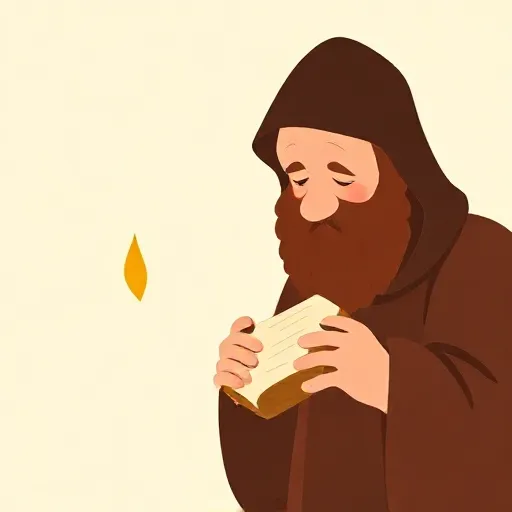
In the summer of 1391, mobs swept through Spain. On a single night in Barcelona, they stormed the Jewish quarter. Houses burned. People were killed or forced to become Christian. Among the dead was the son of a rabbi named Hasdai Crescas (about 1340–1410/1411). Crescas had grown up in Barcelona, the son of a respected family of rabbis and merchants. He had studied traditional Jewish law, philosophy, and science in a famous academy. By 1391, he was already a leading judge and scholar. But the horrors of that year changed him.
Crescas became the head of what was left of Spanish Jewry, fighting to protect communities, help forced converts escape, and rebuild. He also turned to his most ambitious project: a philosophical book called Or Hashem (The Light of the Lord). He wanted to challenge the ideas of the greatest medieval Jewish philosopher, Maimonides (1138–1204), and the ancient Greek thinker Aristotle (384–322 BCE), on whom Maimonides had relied. Crescas argued that almost everything Aristotle said about the physical world was wrong — and that Maimonides had been wrong to trust him so completely. He also built a bold new view of choice, sin, and love of God out of the ashes of the tragedy he had witnessed.
Could You Have Chosen Differently?

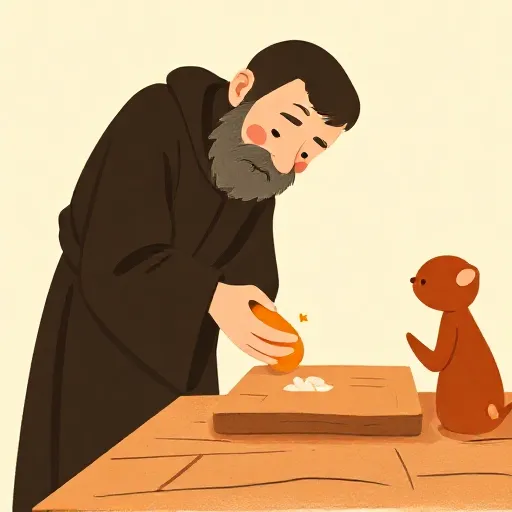
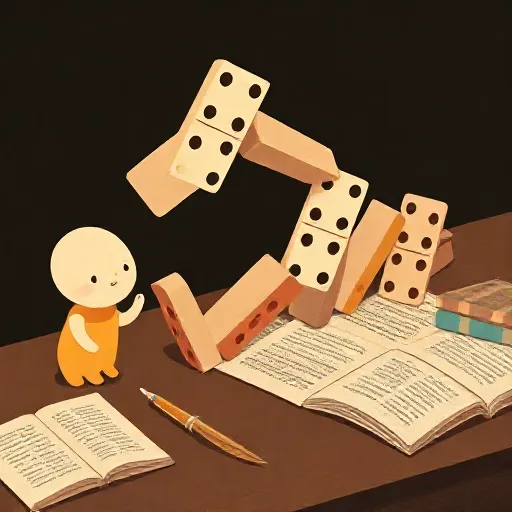
Imagine you are standing in front of two desserts. You pick one. Could you really have picked the other? Crescas said no. He was a determinist, meaning he believed every event, including your choice, is completely caused by earlier events. If you could know every cause — your memories, your hunger, what your friend whispered — you would see that the choice had to happen exactly as it did. There was no moment where you, free of all influences, simply “decided.”
Crescas used an image from a workshop: a lump of bronze. By itself, that bronze could become many things — a bowl, a sword, a bell. But once a craftsman starts hammering, the shape is determined by forces outside the bronze. Human choices, Crescas said, work the same way. The will is shaped by causes like education, habit, and desire. You still feel like you are choosing freely, but that feeling does not mean the choice was uncaused.
At first, this seems to wreck the idea of religious commandments. Why would God command you to do something you cannot help doing? Crescas answered that the Torah is one more cause — a cause that pushes you toward good. He also said that punishment is not God striking you from outside; it is the natural result of harmful actions, like a burn from touching fire. So a deterministic world does not make reward and punishment unfair.
The Person Inside Who Still Says No

What about the thousands of Jews who were forced to convert in 1391? Crescas was their leader, and his determinism could have added despair: if everything is determined, does that mean the forced converts were fated to become Christian, and were they then being punished for something they could not avoid?
Crescas added a crucial distinction. He said every person has an inner self that watches the external actions. Suppose someone holds a sword to your throat and makes you bow to an idol. Your body bows, but deep inside, you hate what you are doing. Crescas argued that in this situation, the outer action is determined by the threat, but the inner self’s rejection is what really counts. You are not truly sinning, because your deepest will refuses the act. The natural punishment that follows sin — the sadness and separation from God — only applies when the inner self agrees with the wrongdoing.
This idea offered hope. Forced converts who secretly kept loving God and hated the situation they were in were not spiritually lost. Their inner refusal kept their conscience clean. Crescas had found a way for determinism to coexist with a sense of personal integrity and divine justice.
Empty Space, Infinite Worlds, and Time That Stands Still

Crescas did not only attack Aristotle on the question of choice. He also dismantled Aristotle’s physics. Aristotle had insisted that void — a completely empty space — is impossible. If space were empty, he said, two objects could share the same place, which was absurd. Crescas shot back: a void is just dimension without matter. A body can enter a void as easily as you step into an empty room. The emptiness itself does not push back.
He went further. The universe, he said, is an infinite void containing an endless number of worlds separated by empty space. Time can exist with no movement at all — if the world stood still, time would still flow. He separated matter from its properties, arguing that matter first takes on dimension, and only later does it get qualities like heat or weight. These were shocking ideas in a culture that had treated Aristotle as the final word on nature. Centuries later, they would help thinkers like Baruch Spinoza (1632–1677) imagine a God who is extended in space.
Love, Not Knowledge, Is What the Soul Really Wants

Maimonides had taught that the highest human goal is intellectual knowledge. The more you understand about God and the universe, the closer you come to God, and that understanding is what saves the soul. Crescas turned this upside down. The soul’s true essence, he argued, is love — love of God, carried out through the will and the passions, not the intellect. He pointed out that even animals have something like will and imagination; the soul’s drive to love is more basic than abstract thinking.
After death, the soul continues to exist, because it is a spiritual substance with a natural drive toward God. If a person spent life cultivating that love, the soul experiences joy in the afterlife. If a person ignored it, the soul grieves, realizing what it lost. That grief is hell — not a fire imposed from outside, but the soul’s own inner sorrow. For Crescas, simply fulfilling commandments was a way of training your love. This meant that even people who could not engage in deep philosophy could reach the highest spiritual state. Love, not knowledge, was open to everyone.
From a Medieval Rabbi to Your Brain

Crescas never founded a school that carried his name, and for centuries his book was read mainly by other rabbis. But his ideas snuck into modern philosophy through Spinoza, who adopted Crescas’s determinism and his view that God has extension. His critiques of Aristotle also helped weaken Aristotle’s grip on European science during the Renaissance.
Today, the question Crescas raised is far from dead. Neuroscientists study whether brain activity can predict a choice before you feel you have made one. If it can, are you really free? And if everything is determined by causes, can we still hold people responsible? Crescas’s answer — yes, because inner attitudes matter and we can add good causes to the world — is still part of the conversation.
So when you pick a snack or decide what to say next, Crescas would tell you that a long chain of causes shaped that moment. He would also tell you that the way you feel about what you do, and the love you bring to it, still counts.
Think about it
- If you could replay a decision over and over, with everything exactly the same, would you always choose the same thing? Why or why not?
- If a scientist could predict every choice you’ll ever make, would it still be fair to punish someone for a crime?
- Can you think of a time when you felt forced to do something but inside you were saying no? Does that matter?