Does God Recreate the World Every Second?
A world that flickers?

Imagine a video game where the whole world — every tree, every cloud — only exists while the console refreshes the screen sixty times a second. Now imagine a philosopher saying, “That’s exactly how our real universe works, with God as the console.” That idea is startling, but it lies at the heart of a centuries-old debate about what keeps the universe going. Many religious traditions teach that God holds everything in existence. But does God merely keep the world ticking, or does God recreate it moment by moment from nothing? This is the puzzle of divine conservation, and philosophers have argued fiercely about two rival pictures. In one, God’s creative act never stops; the world is continuously created. In the other, God gives things a kind of staying power, and then preserves them in a more gradual way. The difference may sound tiny, but it shifts how we understand cause, identity, and whether we are anything more than flickering shadows.
Creation and keeping things going: what’s the difference?
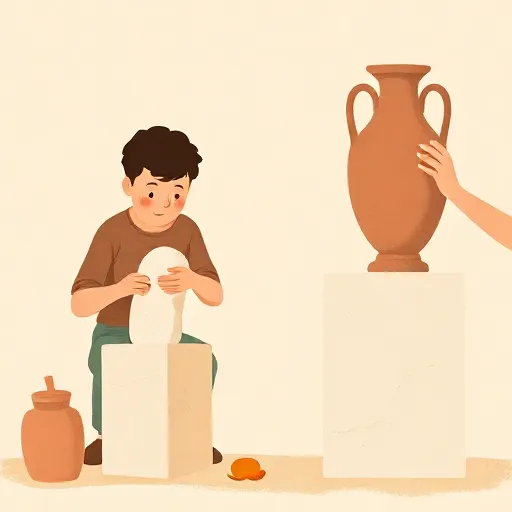
Before jumping into the fight, we need clear words. Creation is bringing something into existence without using any pre‑existing material — making something “out of nothing.” Conservation is keeping something in existence after it’s already here. A simple conservation thesis says that created things stay around only because God’s activity continues. That might sound obvious to many religious believers, but it’s not the same as saying conservation is just creation all over again.
Some philosophers go further. The same‑action thesis claims that the very act by which God first brought a thing into being is exactly the same act that keeps it in being later. The Christian thinker Thomas Aquinas (1225–1274) compared God’s preservation to sunlight. Once the sun is shining, its light keeps filling the air without any new effort — one steady, timeless action. So God’s single, unchanging act causes a tree to exist at ten o’clock and also at ten‑oh‑one. The act itself doesn’t happen in time; only the effect stretches across moments.
A bolder claim is the sole‑source thesis: God alone brings about the continued existence of things, without any help from the things themselves. On this view, conserving is just like creating ex nihilo — every instant a fresh creation. The 17th-century philosopher Francisco Suárez (1548–1617) held that creation and conservation differ only in our minds; they really are one action with no patient, no thing being acted on. God simply keeps giving existence, just as God first gave it. These ideas will matter when we see why some thinkers think we’re almost blinking in and out of being.
Why some thinkers say it’s all one big creation
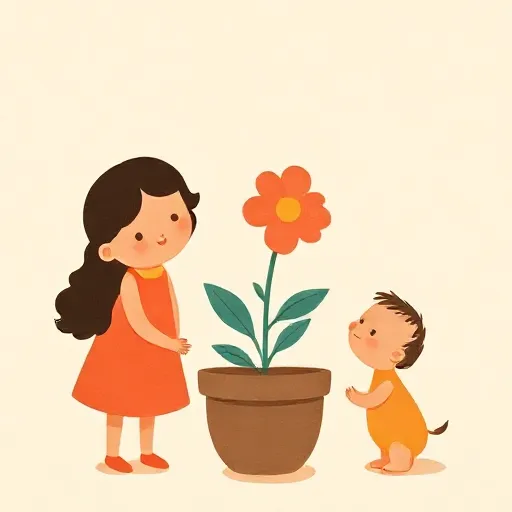
The arguments for treating conservation as continuous creation pull from different directions. One comes from divine timelessness. If God exists outside time, then God’s single creative act reaches every moment that ever happens. There’s no need for a separate “keeping‑in‑existence” act; one action produces the whole timeline. Francisco Suárez added a sharp razor: why would we need two distinct actions — creating and conserving — when both produce the exact same effect, existence? Positing two actions is just clutter.
A more dramatic argument says that objects can’t keep themselves in existence even for an instant. The mathematician‑philosopher René Descartes (1596–1650) pointed out that the nature of time splits moments apart. Just because you exist now, that doesn’t determine that you’ll exist a moment from now, unless some cause continually “reproduces” you. He thought no created thing has the power to pull its future self into being. The 18th‑century American philosopher Jonathan Edwards (1703–1758) put it vividly: the moon’s past existence can’t cause its present existence, because a cause can’t act at a time when it doesn’t exist. The moon’s past was elsewhere in time. Edwards concluded that God’s preserving is “perfectly equivalent to a continued creation” — as if God creates the moon out of nothing at each moment.
Contemporary philosophers Jonathan Kvanvig and Hugh McCann reinforce this with a modern analogy. Scientific laws describe how objects behave if they continue to exist, but they don’t guarantee that continuation. A law predicting where a planet will be presumes the planet is still there; the law itself doesn’t hold the planet in being. If nothing inside the universe has a built‑in self‑sustaining power, then something — God — must supply existence continuously. Otherwise, the world’s existence would be an unexplained free lunch happening second after second.
Wait — are we puppets then? Objections to continuous creation
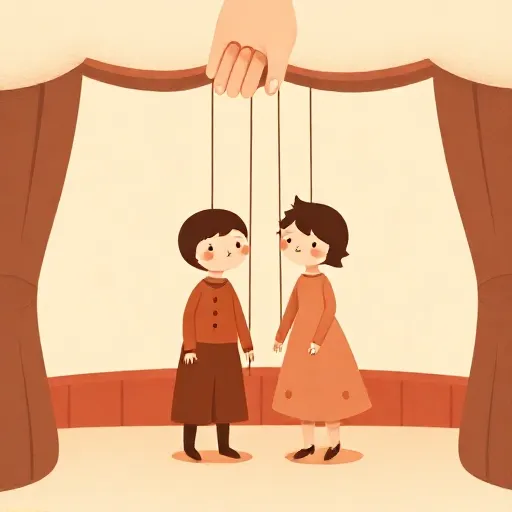
If God recreates the world each instant and no creature helps, a worry pops up: does anything besides God ever truly cause anything? If a lit match can’t contribute to its own existence, can it even heat water? The extreme view that God is the only genuine cause — and all apparent created causes are just occasions for God to act — is called occasionalism. Some medieval Islamic thinkers, like the Ash‘arites, embraced it. But most European philosophers, including Aquinas and Suárez, rejected it strongly. They wanted a middle ground: God as the first cause, but creatures as real secondary causes too.
One way to have your cake and eat it too is to say that God provides the existence of things, while created things supply their qualities and changes. The late‑20th‑century philosopher Philip Quinn offered a memorable image: God and a lit match collaborate to heat water — God supplies the water, the match supplies the heat. That sounds neat, but it has a crack. If the very first moment of the universe was a world God created fresh, objects at that moment had no past to reach back to, so their causal powers couldn’t yet do anything. Now, if every later moment is also a fresh creation (continuous creation), isn’t every moment like the first? Critics such as Andrew Pavelich argue that secondary causation never gets off the ground: at no time can a created object genuinely affect anything else.
Then there’s a puzzle about identity. Suppose God recreates you at 10:00, again at 10:01, and so on. Are these the same you, or a series of perfect copies? The philosopher William Lane Craig puts the point sharply: if God creates ex nihilo at every instant without a patient, how can the identical thing reappear rather than just a very similar replacement? Jonathan Edwards came close to saying that identity over time is just a divine decree, not a physical fact. Some defenders reply that God can create the same object twice — creating is not introducing a brand‑new thing, just causing its existence each time. Others turn to the idea that objects are composed of momentary “time‑slices,” like a movie reel, but that struggle to explain how a person’s life hangs together as more than a scattered heap.
Finally, Pavelich argues that continuous creation would rob time of any “inertia” — any natural tendency to carry moments forward. If each moment depends entirely on a fresh divine act, then before‑and‑after relations might be illusions built after the fact. Critics of that claim respond that time doesn’t need inertia; some even think the flow of time is just God’s creative activity. The debate pulls in deep assumptions about what it means for anything to be real.
Why it matters, even for non‑philosophers
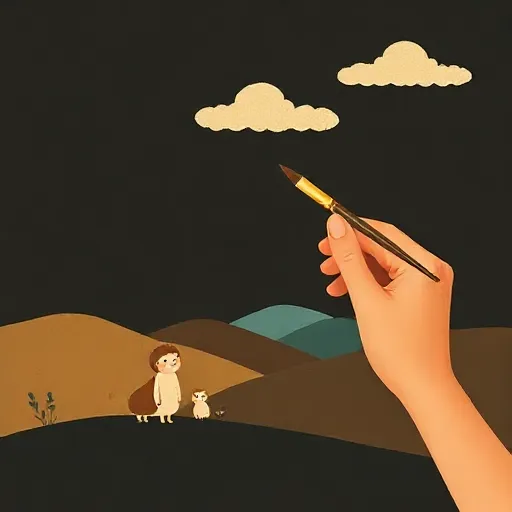
You don’t have to be a theologian or even believe in God to find this tussle fascinating. It forces questions about what holds the world together from one heartbeat to the next. Is existence something objects somehow own, or is it a gift that gets re‑given constantly? The next time you watch the moon rise, you might wonder: does it simply stay in being by its own past, or is there an unseen cause that never stops painting the cosmos onto the canvas of reality? These are not dusty museum relics. Every modern debate about causation, personal identity, or the nature of time echoes the clash between continuous creation and conservation. Your own sense of being the same person yesterday and today — that too hangs on what it means to persist through time.
Whether you end up siding with Aquinas, Edwards, Quinn, or someone else, the argument reminds us that some of the ordinary things we take for granted — like a stone staying put from one second to the next — might hide staggering mysteries.
Think about it
- If you build a sandcastle and the tide washes it away, but you rebuild it exactly the same every morning, is it the same castle or a new copy each day?
- Which feels stranger to you: a universe that needs an outside power to keep it going, or a universe that can keep itself going for absolutely no reason?
- Imagine you could draw a comic strip character and, to keep her alive, you had to redraw her in every single panel. Would she still be the same person across the panels, or would each drawing show a different character?