Did the Big Bang Prove God Created the Universe?
A Universe That Had a Birthday
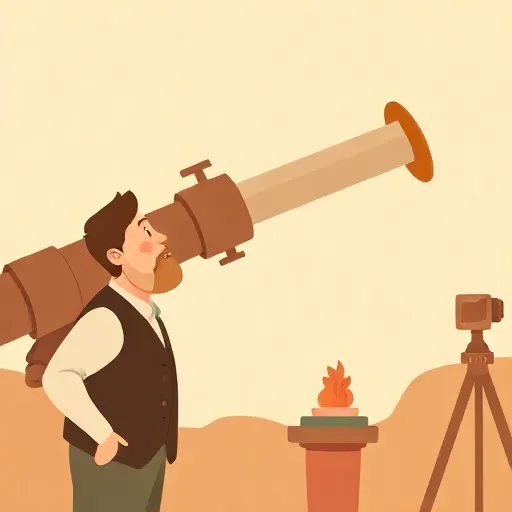
On a crisp night in 1929, astronomer Edwin Hubble (1889–1953) sat at the giant telescope on Mount Wilson, California. He was studying faint smudges of light—other galaxies far beyond our Milky Way. Strangely, the light from those galaxies was stretched toward the red end of the rainbow. The farther away a galaxy was, the more its light was stretched. The simplest explanation: the whole universe is expanding, like a loaf of raisin bread rising in the oven.
That discovery turned cosmology into a detective story about the very beginning. If the universe is expanding now, then long ago everything must have been squeezed together into a tiny, incredibly hot speck. This picture eventually became the Big Bang model. According to the model, space and time themselves came into existence about 13.8 billion years ago. Before that, literally nothing—no space, no time.
For many religious believers, this sounded like a scientific echo of the idea that God created the world out of nothing. Pope Pius XII said as much in the 1950s, and apologists like William Lane Craig (born 1949) still argue that the Big Bang offers powerful evidence for a Creator. It seems straightforward: everything that begins to exist has a cause; the universe began to exist; so the universe has a cause. And that cause could be God.
But the story quickly grows complicated. Even in the Middle Ages, the theologian Thomas Aquinas (1225–1274) argued that reason alone cannot prove the universe had a beginning. For Aquinas, God could have created an eternal universe. So a finite age is not required by the idea of a Creator. Modern theologians like Arthur Peacocke and Ian Barbour agree: God’s creation might be about the universe’s timeless dependence on God, not about a first moment in time.
So right away, the Big Bang doesn’t support all versions of theism equally. Some believers actually find a 13.8-billion-year-old universe in conflict with a literal reading of the Bible, which they think points to a much younger cosmos. For them, the Big Bang would be a problem, not a proof.
Did the Big Bang Really “Begin”?
The Big Bang model uses Einstein’s general theory of relativity, which treats space and time as a stretchy fabric. When physicists play the expansion backward, distances shrink to zero at a point they call a singularity—a sort of edge where the theory breaks down. At the singularity, time simply has no “before.” The universe exists at all moments after that ideal boundary, but never at or before it.
But here’s a puzzle: the model has no actual first moment. It’s like the number line greater than zero: you can get as close to zero as you like, but zero itself isn’t included. If time has no first instant, can we really say the universe began?
In the 1960s, the physicist Charles Misner (born 1932) showed something even more surprising. You can transform the time coordinate—like changing the labels on a ruler—so that the universe becomes infinitely old. Just take the ordinary age and replace it with its logarithm. After the switch, infinitely many “things happened” even before the ordinary zero. Misner, a Catholic, wasn’t trying to get rid of God; he was pointing out that “finite vs. infinite” might be a matter of how we choose to measure duration, not a deep fact about the cosmos.
Philosophers like Ernan McMullin argued that the theological idea of creation “out of nothing” should be about whether the timeline has a first point in time, not about its length. But the Big Bang model fails that test too: it has no first point. You could add an ideal first point to any model, even one with an infinite past, making it trivially compatible.
And there’s a deeper reason to hesitate. Near the singularity, gravity grows so intense that we should expect quantum effects to take over. General relativity ignores quantum mechanics, so we can’t fully trust it there. New theories that try to unite gravity and quantum theory, like loop quantum cosmology and string cosmology, often predict that the universe existed before the Big Bang—that what looks like a beginning is really a bounce or a phase transition. So the Big Bang may not be the absolute starting point after all. If science is still unsure, using it as a proof of creation is risky.
When the Universe Had No Birthday
In 1948, three physicists—Fred Hoyle (1915–2001), Hermann Bondi (1919–2005), and Thomas Gold (1920–2004)—proposed a completely different story: the steady-state theory. Their universe is expanding, but it never had a beginning and it will never end. To keep the average amount of stuff constant, new matter is continually popping into existence, just a few atoms at a time, out of nothing.
At first glance, this sounds like bad news for the idea of a Creator. The astronomer Carl Sagan once said that an infinitely old universe would never need to be created. But theologians were not caught off guard. They had been discussing the possibility of an eternal creation since the 1200s, when Aquinas suggested God could have made a universe with no temporal beginning.
Many Christian thinkers, like the priest and philosopher Erich Mascall (1905–1993), argued that the whole question of a beginning is “profoundly unimportant for theology.” What matters is that the universe depends on God at every moment, not that it had a first moment. The older idea of creatio continuans—continual creation—fits an eternal universe perfectly. God never stops causing the world to exist. So steady-state models, and later cyclic models where the universe bounces forever, don’t strike at the heart of theism. In fact, some believers found the continuous creation of matter to be a beautiful sign of God’s ongoing activity.
This flexibility shows that cosmology and theism don’t have a simple, one-way relationship. New models didn’t send theologians running for cover; they often found ways to integrate the science without changing their core beliefs.
Too Many Universes? The Multiverse
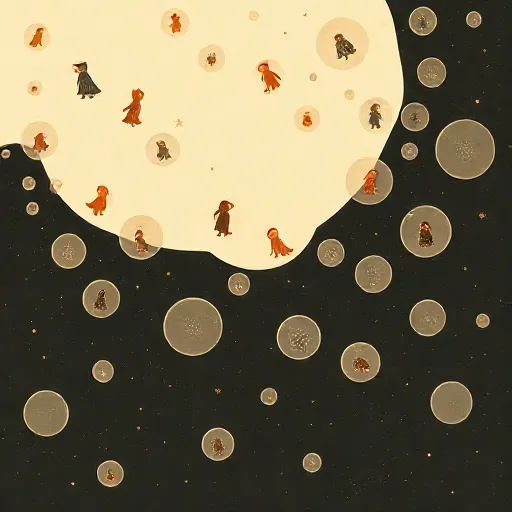
Modern physics has added yet another twist: the multiverse. In some versions of string theory, the equations don’t describe just one universe but a huge landscape of possible universes, each with different particles, forces, and even dimensions. A process called eternal inflation might actually bring all those possibilities into existence, filling reality with an enormous number of causally disconnected universes.
Why does this matter for the God question? Because our universe seems strangely fine-tuned for life. If the strength of gravity or the mass of an electron were slightly different, stars and planets—and you—couldn’t exist. A theist might see that tuning as a designer’s handiwork. But the multiverse offers another explanation: if every possible universe exists somewhere, it’s no surprise that we find ourselves in one of the rare ones that can support life. We are here precisely because this particular universe is life-friendly. This is called the anthropic principle.
Some atheistic thinkers, like physicist Steven Weinberg (1933–2021), have compared the multiverse to Darwin’s theory of evolution: both explain a seemingly designed outcome without a designer. But theists reply that the multiverse doesn’t rule out God. A perfect being might choose to create many worlds, not just one. Even if 10⁵⁰⁰ universes exist, they could still be providentially created. And some philosophers argue the multiverse has no way to give unconditional probabilities for why anything exists at all—so it may not be a true alternative to a Creator.
The debate stays lively, with no consensus. The multiverse can be seen as a challenge to design arguments or as a grander canvas for divine creativity.
The End of Everything (and What It Means)

Cosmology doesn’t just look backward; it also peers far ahead. If the universe keeps expanding forever, it will eventually become a cold, thin soup of particles—a heat death. If it someday collapses, it could end in a big crunch. This field is called physical eschatology—the study of the ultimate fate of life and the cosmos.
Some scientists, like Frank Tipler (born 1947), have made bold claims: that intelligent life could survive until the very end, and that the final singularity would be a kind of God, an “Omega Point” of infinite knowledge and power. Most physicists and theologians find this picture extreme. The Bible’s stories of a new creation are not really about physics; they are about hope, transformation, and the purpose of human life. The theologian Karl Peters argued that a final heat death that destroys everything would be hard to square with the Christian promise of a new creation. Others, like Robert Russell, propose that God can act beyond the laws of nature—so even if physics predicts a cold end, God could bring about a new beginning through a miracle.
What’s clear is that science gives us possible scenarios, but it doesn’t settle the meaning of the end. That remains a question for philosophy and faith.
Why This All Matters to You
On a dark night, you can step outside and see the same stars Hubble saw. The universe is still expanding. The afterglow of the Big Bang still hums in the background as faint microwave radiation. But knowing the science hasn’t answered the deepest question: why is there something rather than nothing?
Cosmology has given us stunningly precise models. It has shown that origins are stranger than anyone expected—with possible bounces, multiverses, and quantum beginnings. Yet the lesson of the last hundred years is that no single model forces us into one religious conclusion. The Big Bang is not a simple proof of God, just as an eternal universe or a multiverse isn’t a simple disproof.
That means you get to keep asking. The real excitement lies in the way physics, philosophy, and theology cross paths. When you wonder about your place in the cosmos, you’re part of a conversation that includes Aquinas, Einstein, Hoyle, and a 12-year-old looking up at the night sky.
Think about it
- If scientists someday prove that our universe came from another universe that existed forever, would that make the idea of God less necessary? Why or why not?
- Imagine a universe with no first moment, stretching back infinitely. Can you still make sense of the claim that something causes the whole chain to exist? What sort of cause could that be?
- When you look at the stars, do you feel the universe must have a reason for existing, or is it okay if there isn’t one? What do you think, and why?