
The 1930s War Over How Science Should Work: Look First or Think First?
A Public Accusation of Betrayal

It began with an angry article. On May 8, 1937, a respected British astrophysicist named Herbert Dingle published a piece in the leading science journal Nature. The title said it all: “Modern Aristotelianism.” Dingle accused several of the world’s most famous cosmologists — among them the gentle genius Arthur Eddington and the bold theoretician E. A. Milne — of betraying true science. They were, he wrote, inventing whole universes inside their heads, without first looking at the world. He called their work an “intoxication of the fancy,” a “paralysis of reason,” and a “‘Universe’ mania.” He branded them modern-day Aristotles, who thought they could reason their way to truth without careful observation.
The response was unlike anything the scientific community had seen. Three months later, Nature published a special fifteen‑page supplement. Sixteen leading scientists weighed in — some with barely contained rage, others with icy calm. The question they were all fighting about was utterly simple and completely enormous: What is the right way to do science? Should you start by looking at the world and collecting facts, or can you start by dreaming up ideas and only later check them against reality?
A New Science With Almost No Data
To understand why the fight got so fierce, you have to know what cosmology looked like in the early 1930s. A decade and a half earlier, Albert Einstein had published his General Theory of Relativity. It didn’t just change physics; it rewrote the whole story of the universe. Instead of Newton’s picture — a force of gravity pulling objects through an unchanging, three‑dimensional space — Einstein said gravity is the curving of space and time themselves. Near a massive star, spacetime curves more steeply, and that curvature makes comets swing faster, as if pulled by an invisible hand.
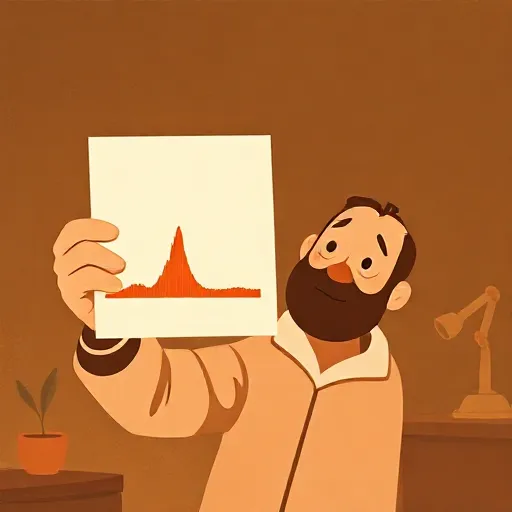
But Einstein’s theory had a shocking side effect. If you applied it not just to a star or a galaxy but to the entire cosmos at once, you got a universe that couldn’t sit still. Mathematicians soon found that it had to be either expanding or contracting. For years, nobody believed it. Then in 1929, the astronomer Edwin Hubble, working at California’s Mt. Palomar, announced his discovery: light from distant galaxies was stretched toward the red end of the spectrum — a red shift. The simplest explanation was that the galaxies were rushing away from us. The universe really was expanding.
Almost overnight, a new science — relativistic cosmology — was born. The problem? It was a science starved of data. Cosmic observations were rare and maddeningly hard to get. Most of the theoretical models couldn’t be decisively tested because there just weren’t enough solid facts. In that kind of empty‑handed situation, you can’t avoid a philosophical question: if data can’t settle the matter, how should we decide which theory is better?
Milne’s Challenge: Toss Out All the Unseen Stuff

Into this confusion stepped Edward Arthur Milne, an Oxford astrophysicist with a taste for radical ideas. In 1932 he published a short article that attacked the reigning philosophy of cosmology from the ground up.
The way most cosmologists worked at the time went like this: you observed the heavens, you noticed patterns in your measurements, and then you used induction — the logical leap from many individual sightings to a general law — to build a theory. This method was deeply empiricist: it insisted that all scientific knowledge must start with sensory experience. It also took for granted that the objects mentioned by the theory — curved space, four‑dimensional spacetime, an expanding geometric container — were real things in the world.
Milne thought the whole package was unscientific. He argued that real science should only talk about things you could actually observe and measure through a clearly defined operation. This position is called operationalism. By that rule, “curved space” was nonsense. You couldn’t touch it, you couldn’t signal through it — it was just an idea. The only thing that counted, Milne said, was what observers could report to one another using light signals and clocks. Even distance itself should be redefined in terms of the time it takes light to travel.
More jarringly, Milne flip‑flopped the order of scientific work. He was a hypothetico‑deductivist. That means he believed you should start by dreaming up a bold hypothesis — maybe based on some simple, beautiful, rational principle — and only then deduce what observations that hypothesis would produce. His favorite hypothesis was what he called the cosmological principle: every observer anywhere in the universe should, on average, see the same large‑scale picture. From that single idea, combined with the rules of light signaling, Milne built an entire alternative cosmology called kinematic relativity. It didn’t need curved space or an expanding geometric container; galaxies simply moved apart in a flat, familiar Euclidean world.
The War of Words Explodes

Milne’s challenge did not sit quietly. Dingle became his most relentless critic. Dingle was a fierce inductivist and an equally fierce empiricist. In his view, authentic science could only travel one road: start with sense observations, let those observations suggest a hypothesis, then test it with more observations. Induction from facts was everything. To do it the other way around — to cook up a hypothesis in your head and only then check it — was to abandon the method that Isaac Newton and the first members of the Royal Society had handed down. Dingle genuinely believed Milne, Eddington, and the young theorist Paul Dirac were producing “chimeras,” fantasies that would corrupt science.
Eddington, for his part, thought Milne’s operationalism was absurd. When a theory reliably refers to a curved geometry of spacetime, he argued, that curved geometry is just as real as stars and planets. You don’t have to see it directly to believe in it; you infer it from the success of the theory. This view is a modest form of explanatory realism — the conviction that well‑confirmed theories describe genuine features of the world, not just useful bookkeeping.
But the most interesting turn came from a few younger cosmologists who actually liked Milne’s methods, even if they didn’t fully accept his specific theory. H. P. Robertson, A. G. Walker, and William McCrea began to construct new versions of relativistic cosmology using Milne’s own tools. They started by ruthlessly paring down the theory to only what could be operationally measured with light signals and clocks, then embedded those minimalist concepts in a deductive, almost axiomatic, structure. The result — the famous Robertson‑Walker metric — became a cornerstone of modern cosmology. In effect, Milne’s philosophical approach had won a major victory, even if his own theory didn’t.
The tone on both sides could be vicious. When sixteen scientists replied to Dingle in Nature, some fired back with personal jabs. The geologist‑astronomer Harold Jeffreys noted, “Without using induction, Milne and Eddington could not order their lives for a day.” L.N.G. Filon dismissed the theoreticians’ confidence in “some all‑inclusive mathematical intuition.” But the clearest voice belonged to McCrea. He argued that what Dingle was attacking — a mathematical physicist dreaming up a hypothesis, working out its consequences, and testing them — was simply how mathematical physics had always been done. If you condemned Milne, you’d have to condemn Newton too. The real question, McCrea insisted, was whether the hypothesis produced successful predictions, not where it came from.
Why This Fight Still Matters

By the early 1940s, the storm had largely passed. Milne was elected president of the Royal Astronomical Society. His hypothetico‑deductive method, together with operationalism, had become a respectable, even dominant, way of doing cosmic theorizing. But the argument didn’t end there; it evolved.
In 1948, a young mathematician named Hermann Bondi, working with Thomas Gold and Fred Hoyle, proposed the steady‑state theory of the universe. Bondi openly admired Milne’s methods. He doubled down on the rationalist‑deductive approach and pushed Milne’s cosmological principle to an extreme, calling it the perfect cosmological principle: not only should every observer see the same universe, but the universe should look the same at all times — no beginning, no evolution. Bondi then added a new ingredient borrowed from the philosopher Karl Popper. A truly scientific theory, he argued, must stick its neck out and make a prediction that could, in principle, be shown to be false — falsified. The steady‑state model was brilliantly risky because it could be disproved by a single observation: a fossil of a universe that looked different in the past.
In 1965, that fossil arrived. Astronomers detected the faint 3‑degree‑Kelvin microwave background radiation left over from the hot, dense early universe — a clear sign of cosmic evolution. Bondi, true to his philosophy, accepted the refutation and let go of the theory.
Today, the argument between “look first” and “think first” is settled in a way nobody in 1937 would have quite predicted. Science now routinely uses the hypothetico‑deductive method: dream up a hypothesis, deduce what must happen if it’s right, and then go out and try to prove it wrong. But observation and induction haven’t disappeared — they are the ground floor you keep returning to. The great cosmological debate didn’t crown a winner; it showed that good science needs both the patient observer and the wild‑eyed dreamer, and above all the courage to test your biggest ideas against the hard, cold facts.
Think about it
- If you had to find out how a mysterious locked box works, would you first take it apart and study the pieces, or would you imagine a mechanism inside and then see if your guess fits? What makes one approach feel more “scientific” to you?
- Dingle said that inventing a hypothesis before looking at data is a betrayal of true science. Do you think starting with a guess is ever cheating, or is it just using your brain in a different way?
- The steady‑state theory was eventually shown to be wrong. Does that make it a bad theory? What matters more: that a theory is correct, or that it is brave enough to be tested?