Are There Tiny Unbreakable Bricks at the Bottom of Everything?
A Surprise at the Paris Salon
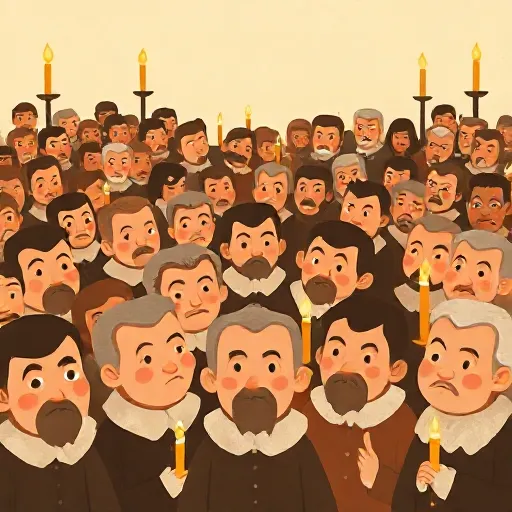
One evening in 1666, in a bustling Parisian salon, a soft‑spoken lawyer named Géraud de Cordemoy (1626–1684) stood up and said something that made the room go quiet. Nearly everyone there admired René Descartes (1596–1650), the great philosopher who had argued that all physical stuff is just extension — that is, just stuff that takes up length, width, and height, endlessly divisible like a lump of dough you can keep slicing forever. Cordemoy, a Cartesian himself, now insisted the opposite: matter is made of tiny, absolutely indivisible grains, and between them there can be genuinely empty space. The idea was so bold that some called it a betrayal. But Cordemoy was convinced he was being more true to reason than Descartes had been.
The Tiniest Building Blocks
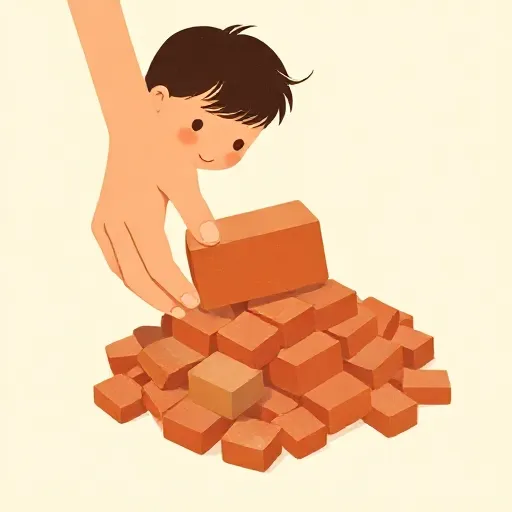
Cordemoy drew a sharp line between what he called bodies and what he called matter. A body, he said, is a substance — something that needs nothing else to exist except God. And a real substance cannot have parts, because if it did, it would depend on those parts to be what it is. So every genuine body is a tiny, indivisible atom. Matter, on the other hand, is just an assemblage of these atoms. A pile of sand, a glass of water, a block of iron — all are matter, but none is a single substance. They are collections that can be taken apart, even though each individual atom in them can never be split.
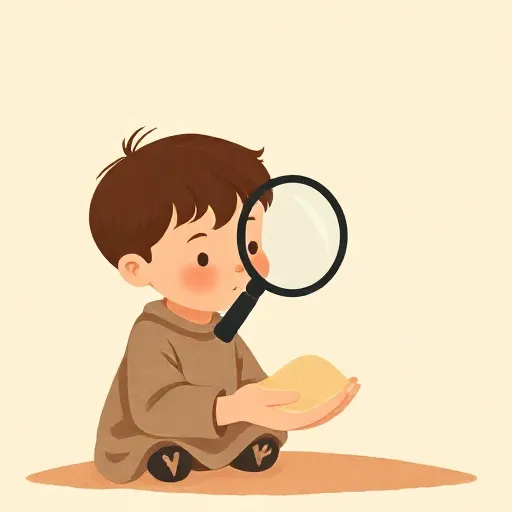
Descartes had taught that the essence of body is extension, the simple fact of taking up space. Since any space can always be divided in thought, Descartes concluded that matter had to be divisible without end. Cordemoy thought this was a dangerous confusion. If you look at a heap of flour, you might think the flour itself is one continuous stuff. But really it is a crowd of tiny grains. Our senses fool us into treating collections as single things, he warned, and then we wrongly imagine that all extended stuff is itself endlessly cuttable.
Against other Cartesians, Cordemoy also defended the reality of a void — truly empty space. Imagine a vase full of marbles. If you could instantly destroy the middle marble, Cordemoy argued, the others would not rush together. Each marble is a substance, and a substance does not depend on its neighbors. The space left behind would be a gap containing nothing at all. Descartes and his followers said this was impossible: wherever there is distance, they insisted, there must be something extended to carry that distance. But Cordemoy retorted that their own view made substances too weak to be truly independent.
His fellow Cartesian Dom Robert Desgabets fired back. If distance is a mode, a way a substance is, he said, then it can only exist as a property of something. A void, with no substance in it, would have a length that is the length of nothing — and that made no sense. Desgabets also argued that even if you cannot split an atom with your hands, God could always divide any extension, since extension is just more of the same stuff. The fight was on, and Cordemoy found himself almost alone among Descartes’s followers.
Does Anything Really Push Anything Else?
If you push a book across a desk, you probably think your hand gave motion to the book. Cordemoy said that cannot be what really happens. This idea is called occasionalism, and Cordemoy was one of the very first philosophers to spell it out in detail.
He started from a few simple claims. A thing does not have of itself what it can lose without ceasing to be that thing. Bodies can lose motion and still be bodies. Therefore, motion does not belong to bodies essentially. It is a mode — a temporary state, like a hat you can take off. And a mode cannot be passed from one substance to another like a coin. If you have a red scarf, you cannot hand “redness” itself to a blue cloth. In the same way, Cordemoy reasoned, a moving ball cannot hand its motion over to a resting ball.
So where does motion come from? The first mover cannot itself be a body, because then it would need motion of itself, which is impossible for bodies. Only two kinds of stuff exist, Cordemoy held: bodies and minds. Our own finite minds are not the source, because we often fail to move our bodies the way we want — think of a paralyzed limb or a racing heartbeat you cannot stop. And when we watch our own actions, all we ever notice is a want followed by a movement; we never directly spot a causal chain, only a regular sequence. (Later philosophers like Nicolas Malebranche (1638–1715) and David Hume (1711–1776) would make this same observation central to their philosophies.) Cordemoy concluded that an infinite mind — God — must be the first mover.
And God doesn’t just start the motion. Cordemoy’s axiom was that an action can only be continued by the agent that began it. So God, who first set things moving, is the one keeping every leaf, every drop, every heartbeat going at this moment. When one billiard ball strikes another, all that really happens is that God stops moving the first ball at the moment of contact and starts moving the second. Our senses fool us again: we think we “see” a transfer of motion, but we only ever see one event followed by another.
Are You a Thinking Ghost in a Body‑Machine?

Cordemoy, like Descartes, believed that mind and body are completely distinct substances. Bodies are extended things that can be pushed and divided; minds are thinking things that doubt, wish, and understand. But Cordemoy went further than most in claiming that we can know our own mind exists more securely than we know we have a body.
He offered a version of the doubt trick. Try to doubt everything that exists in the physical world — tables, chairs, your own hands. You can do it; maybe you’re dreaming, maybe a trickster is feeding you illusions. But while you’re doubting, you cannot doubt that you are thinking. The doubting itself is a thought. So even if all bodies turn out to be imaginary, your mind must exist. That, Cordemoy said, shows the mind is a different thing from body.
The union of mind and body, on his view, simply means that they interact: when you decide to raise your arm, your arm goes up; when you stub your toe, your mind feels pain. But because mind and body have completely different natures — one is unextended thinking, the other is extended non‑thinking — Cordemoy argued that only God can make that communication work. So his occasionalism stretched to cover the mind‑body bond as well. Every time you form the intention to move, it is God who actually causes the muscles to contract. You are not a ghost pulling levers; you are a thought‑substance whose wishes God answers through a body‑machine.
How Do You Know Other People Aren’t Robots?
A famous puzzle in philosophy is the problem of other minds. You know from the inside that you have a mind, because you catch yourself thinking. But when you look at your friend, all you see is a body — a clever machine that might only be mimicking a person. Cordemoy tackled this head‑on in his book A Physical Discourse on Speech, which became his most celebrated work.
He argued that the only reliable sign of a mind behind a body is true language use. A parrot can squawk words, and an echo can return a sentence, but neither knows what the sounds mean. Genuine speech, Cordemoy said, is a system of signs we invent to share our thoughts. It is creative: a real speaker can string new sentences together in ways no mere machine can. The voice itself can be produced by the body’s organs — no soul needed for the raw sound, just as a pipe organ makes music without thinking. But the meaning attached to the sound must come from a mind.
That is why, when you hear another human not just repeating phrases but building fresh, thoughtful replies, you can be confident there is a soul united to that body. Cordemoy’s careful study of language was so thorough that later scholars remarked that after him, the debate about animal speech and human minds was nearly settled. It was a sharp point that still echoes whenever we wonder whether a chatbot truly understands anything.
Why It Still Matters Today

Cordemoy’s name is less famous than Descartes or Hume, but his ideas keep surfacing. His picture of indivisible building blocks sounds like a distant cousin of modern atomic theory, even though the details are different. His warning that our senses mislead us into thinking we “see” causal pushes still challenges scientists and philosophers who puzzle over what it means for one thing to cause another. And his argument that creative language is the fingerprint of a mind is exactly the kind of test we reach for when we ask whether an artificial intelligence really thinks or merely simulates thinking.
So next time you drop a coin and it clinks on the floor, you can pause for a moment and wonder: did the coin push the floor, or did God just stop moving the coin and start vibrating the atoms in the tile? You don’t have to accept Cordemoy’s answer, but asking the question is what makes philosophy keep moving.
Think about it
- If everything that happens is caused directly by God, as Cordemoy thought, can humans ever be held responsible for their actions? Why or why not?
- Imagine a friend who can never invent a new sentence — she only repeats phrases she has heard. Would you be sure she has a mind? What would change your mind?
- If you could prove that the smallest bits of matter are truly unbreakable, would that kill the idea that matter is just extension? Or could Descartes’s followers still hold their ground?