Who Moved the Earth? The Story of Nicolaus Copernicus
A Lonely Astronomer Looks Up
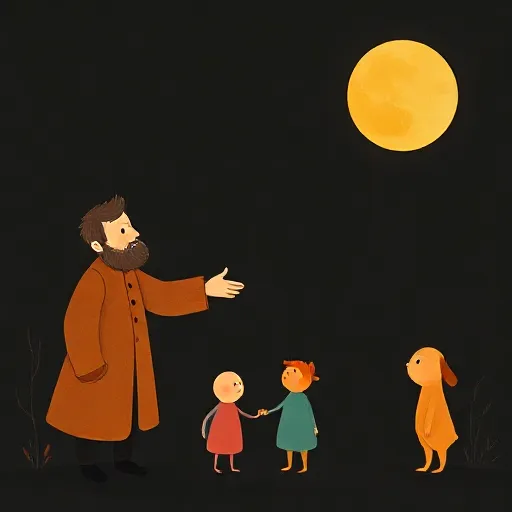
Imagine standing outside on a clear night, far from city lights. The stars slowly wheel above you. The moon traces a path among them. You might feel that you are still, while the sky turns. For most of human history, that’s exactly what people thought: Earth sits in the middle, and everything else circles around it. But in a small town called Frombork, near the Baltic Sea, a quiet priest and astronomer named Nicolaus Copernicus (1473–1543) began to wonder if the whole picture was backward. His idea would shake the foundations of science and philosophy.
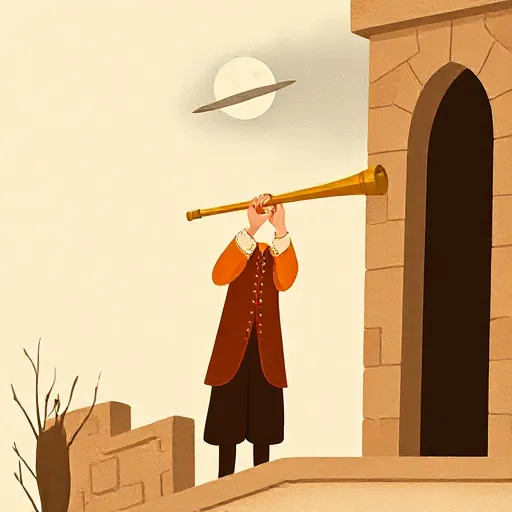
Copernicus was born in Torun, Poland, into a merchant family. After his father died, his powerful uncle — later a bishop — made sure he got a top education. He studied at the University of Krakow, then in Italy at Bologna and Padua, where he soaked up mathematics, astronomy, and even medicine. By the time he returned to Poland, he was a church canon, an administrator, a doctor, and an amateur astronomer. At night, from a cramped observation spot, he tracked the planets with instruments like the astrolabe and recorded their positions. What he found in the old astronomy books troubled him deeply.
The Universe on a Tidy Machine
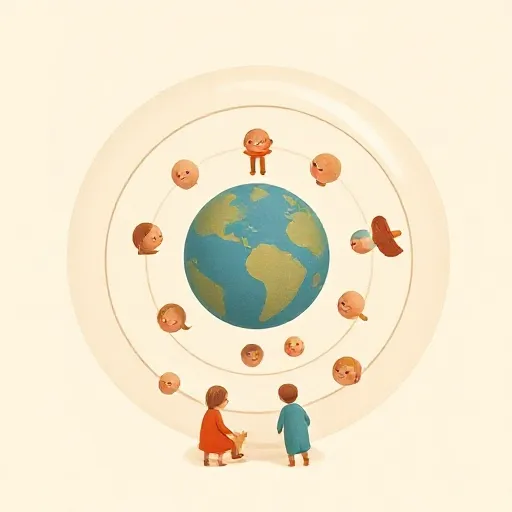
To understand Copernicus, you have to know the picture he was taught. The ancient Greeks — especially Aristotle (384–322 BCE) — built a cosmos that felt convincing and orderly. They put Earth at the very center. Around it, they imagined a set of invisible, transparent spheres carrying the moon, the sun, and the five known planets (Mercury, Venus, Mars, Jupiter, Saturn), all the way out to the fixed stars. The spheres moved in perfect circles, because circles were thought to be the only “perfect” shape for the heavens.
But there was a problem. The planets didn’t move in simple, steady loops across the sky. Sometimes they seemed to slow down, stop, and even move backward — retrograde motion. To save the appearances, the astronomer Ptolemy (c. 100–170 CE) in Alexandria created a clever system. Each planet moved on a small circle called an epicycle, and the center of that epicycle traveled along a larger circle called the deferent that was slightly off-center (an eccentric). To make the motion uniform, Ptolemy added a point called the equant — the planet’s center of motion appeared to move at a steady speed around that point, not around the center of the deferent or the Earth. The planet’s speed wasn’t constant as seen from Earth, but the system could predict where a planet would be. For over a thousand years, this model was the standard.
The Offending Point: Why Copernicus Rebelled
Copernicus had enormous respect for Ptolemy, but one feature of the model drove him crazy: the equant. Aristotle had taught that heavenly bodies must move in uniform circular motion. The equant violated that — it only made a planet’s motion look uniform from a point that wasn’t the physical center. To Copernicus, that felt like cheating. In his early sketch, the Commentariolus (written around 1510–1514), he wrote that the old theories “seemed likewise to present no small difficulty” because they used equalizing circles that broke the rule of perfect motion. He wanted a system where everything moved in true, steady circles around real centers.
Most scholars today think the equant was the spark that set Copernicus on his new path, but not the only reason. As he worked, he noticed other awkward patches in Ptolemy’s model — like the fact that Mercury and Venus always stayed close to the sun, and that the outer planets’ retrograde loops happened in a pattern tied to the sun’s position. A heliocentric model could explain all that more neatly. So Copernicus began a careful analysis of planetary positions, a project that would consume decades of his spare time.
The Sun Takes the Throne
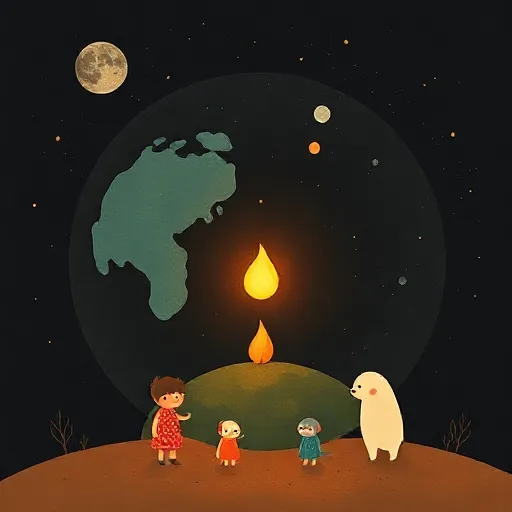
Copernicus’s central idea was bold but simple: put the sun near the center of the universe, and let Earth orbit it like the other planets. He still used circles and epicycles to model orbits, but now retrograde motion was no longer a real backward motion of the planets. It was an illusion — something that happens because we watch from a moving Earth. If you’re in a car that passes another, the other car can seem to slide backward for a moment. Copernicus applied the same logic to the sky.
His system had an elegant new feature. In Ptolemy’s model, the planets didn’t share a clear single order: Mercury, Venus, and the sun all had the same annual period around Earth, which felt messy. In Copernicus’s system, the planets naturally arranged themselves by speed: Mercury closest to the sun, then Venus, Earth (with the moon orbiting it), Mars, Jupiter, and Saturn. The farther a planet, the longer its year. For the first time, the solar system became a unified structure — you could see why the planets moved as they did. Copernicus himself considered this the strongest argument for his model.
Yet he didn’t completely abandon the old physics. He still believed that all heavy things “gravitate” toward the center of Earth, even though Earth was no longer the center of the universe. That would puzzle later thinkers. And he still insisted on perfect circles, which meant he needed many epicycles of his own — his system wasn’t simpler in the number of circles, but it restored uniform motion around real centers.
The Book That Almost Didn’t Exist
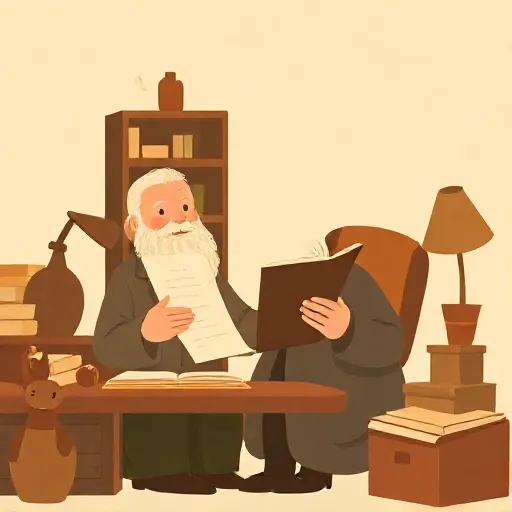
For decades Copernicus kept his full theory to a manuscript that only a few trusted friends saw. He was busy running church estates, treating patients, and even helping to reform the local currency during a war with the Teutonic Knights. He also worried about ridicule. But in 1539 a young mathematics professor named Georg Joachim Rheticus (1514–1574) showed up in Frombork, eager to learn from him. Rheticus published a short introduction to Copernicus’s ideas, the Narratio prima, and finally convinced the old man to finish his big book, On the Revolutions of the Heavenly Spheres.
The printing was nearly complete when a Lutheran minister named Andrew Osiander (1498–1552), who oversaw the final stages, slipped in an anonymous preface without Copernicus’s permission. It said the whole theory was just a calculating tool — a hypothesis to make predictions, not a true description of the universe. Copernicus, on his deathbed in 1543, may never have known. Rheticus angrily crossed it out of his own copy. The book itself, though, argued the opposite: that the sun-centered system was the real arrangement of the heavens. Copernicus had even dedicated it to Pope Paul III, pointing out that the calendar was a mess because astronomers didn’t have a reliable model.
From Suspicion to a New Universe

At first, On the Revolutions didn’t cause an uproar. Most sixteenth-century astronomers admired it for getting rid of the equant, but they didn’t buy the moving Earth. At the University of Wittenberg, scholars used Copernicus’ mathematical tables but rejected his cosmology. Tycho Brahe (1546–1601), the greatest naked-eye observer ever, crafted a compromise: he put the moon and sun around Earth, but let the other planets orbit the sun, which in turn orbited Earth. Tycho called Copernicus a “second Ptolemy” but couldn’t accept a moving Earth — partly because it seemed to conflict with the Bible.
Only a handful of thinkers, like Michael Maestlin (1550–1631), taught the heliocentric system as the true one. His student Johannes Kepler (1571–1630) would take the next giant step: using Copernicus’s framework but replacing circles with ellipses, he finally described planetary motion with astonishing accuracy. The Copernican revolution — slow, messy, and full of compromises — gradually remade astronomy.
Why It Still Matters

You don’t need a telescope to feel the shift Copernicus set in motion. When you picture the solar system — sun in the middle, Earth a blue marble zipping around it — you’re seeing a universe he helped invent. But the deeper change was in how we think about knowledge. For centuries, the best model was whatever saved the appearances. Copernicus asked a different question: what is really out there? That insistence on finding the true physical arrangement, not just a convenient calculator, pushed science away from pure mathematics and toward a search for causes.
His work also taught a hard lesson: our senses can fool us. The ground feels still, the sun seems to rise, but the quieter truth is the opposite. Philosophy and science ever since have been chasing those hidden realities — atoms, germs, evolution, gravity waves — all invisible to the naked eye but real nonetheless. Copernicus didn’t just move the Earth; he nudged humanity away from the center of everything, and that decentering, scary as it was, opened up the whole cosmos.
Think about it
- If you had lived in Copernicus’s time, what evidence would you have wanted to see before believing the Earth moves? Would the lack of a telescope make it easier or harder to trust his model?
- Copernicus kept much of Aristotle’s old physics — like heavy things falling toward Earth — even though his new model made Earth just another planet. Can a big new idea still carry old, unexamined assumptions? Can you think of a modern example?
- Is it more important for a scientific theory to make accurate predictions, or for it to describe what actually exists? Can a theory be useful even if it’s not “true”?