The Philosopher Who Thought Rocks Were Alive
The Woman Who Learned Philosophy by Mail

In 1640s England, a teenage girl named Anne Finch was too sick to leave her house often — and even if she had been healthy, university doors were closed to women. What could a clever, bookish young person do? Her older half-brother John was studying at Cambridge with a famous philosopher, Henry More (1614–1687). John asked More to teach his sister by post. So began one of the strangest philosophical educations ever: lessons delivered not in a lecture hall, but in letters carried to a quiet room in Kensington.
Anne Conway (1631–1679) had a lifelong illness that brought fevers and pain, and she married an Irish viscount who encouraged her studies. Desperate for relief, she eventually welcomed a Flemish physician and philosopher, Francis Mercury van Helmont, into her home. He introduced her to the Jewish Kabbalah and to Quaker ideas. In her final years, she wrote a single, daring book — The Principles of the Most Ancient and Modern Philosophy — in which she set out to correct some of the biggest thinkers of her time, including Descartes. Her book was published after her death, but it was so unusual that even the great Leibniz took notice.
Why Rocks Aren’t Dead Matter
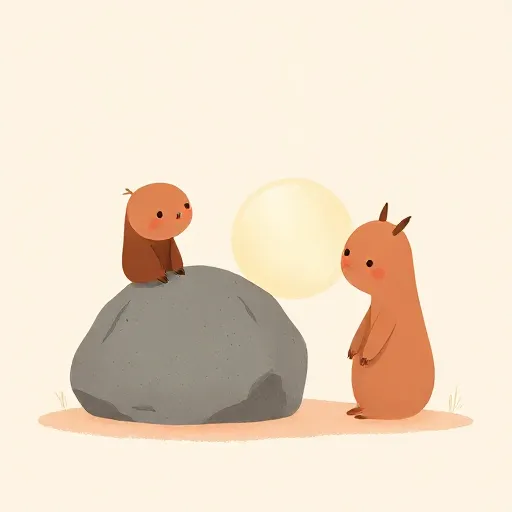
Descartes (1596–1650) had split the world into two kinds of substance: thinking minds and extended, non-thinking matter. Even Conway’s own teacher, Henry More, held a version of that dualism. Conway thought both were wrong. Her first move was simple but radical: if God is alive and everything in creation resembles God in some way, then nothing in creation can be completely lifeless. A totally dead, inert lump of matter would have no likeness to God at all — so, she argued, it cannot exist.
What we call a “body” is really just spirit that has grown dense and sluggish, like light dimming toward shadow. Conway kept the word substance for the basic stuff of reality, but said there is only one created substance: living spirit, arranged in infinite, tiny spirit-particles. Rocks, plants, animals, and human beings are all made of the same spiritual stuff, only more or less bright and active. The rock is not dead; it is simply heavily condensed, slow-moving spirit.
Between God and the created world, Conway placed a Middle Nature — a living bridge, which she identified with Christ — that shares in both divine unchangeableness and creaturely mutability. This let her avoid the idea that God and the world are identical, while still holding that everything flows from God’s life.
When a Horse Could Become a Human
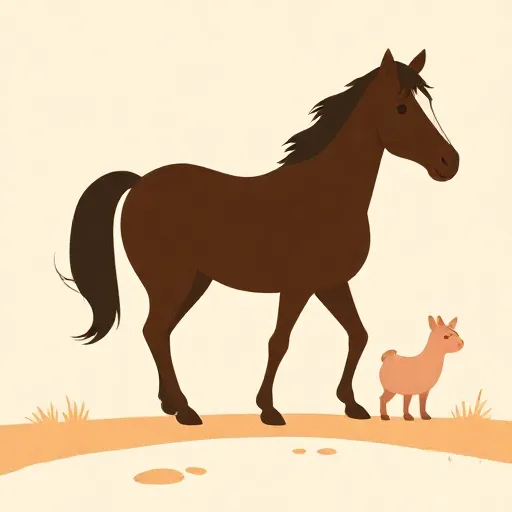
Because created things are made of spirit-particles, they never stop changing. Conway believed that all creatures are mutable — they can shift not just in small ways, but in their whole form. A horse does not have to stay a horse forever. Across many lifetimes, through tiny, gradual steps, it could refine itself until it eventually lives as a human being. A human, in turn, could fall into a coarser, more animal-like state if they gave in to cruelty or indifference.
This sounds like a fairy tale, but Conway had serious reasons for it. Every creature, she thought, is held together by a kind of “captain spirit” — a dominant spiritual core that keeps the creature’s identity continuous even as its outer shape changes. That is why Peter cannot simply become Paul, or a villain swap identities with a saint. In her view, divine justice depends on a person remaining that same individual, so that no one is ever punished for someone else’s choices. The mutability of creatures is real, but identity persists.
The direction of change matters. The more good and godlike a creature becomes, the more active, bright, and spirit-like its makeup. The more it sinks into selfishness, the heavier and darker it becomes — literally thicker. Evil is not a separate power; it is a falling away from perfection, a kind of spiritual hardening.
Pain as a Teacher, Not a Punishment
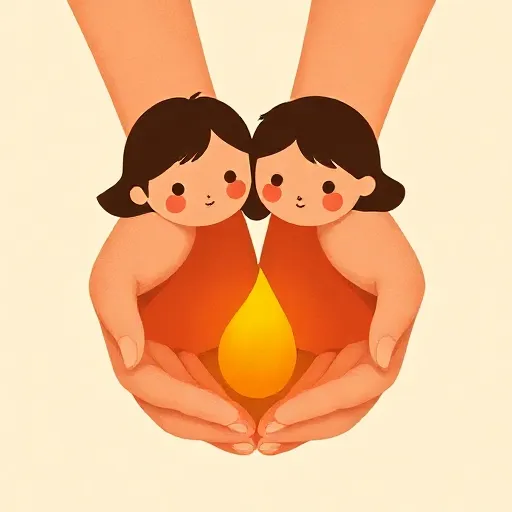
If God were truly good and just, Conway asked, could God really torture people forever in hell for wrongs they did in a single lifetime? She thought not. An endless punishment for a finite mistake would be monstrously unfair. Instead, she turned pain into part of a cosmic improvement plan — a theodicy, a way of explaining why a good God would allow suffering.
When a creature becomes more dense and corporeal through wrong choices, that cramped, sluggish condition is already painful. Sin brings its own punishment. But the pain is not pointless. Like sore muscles after exercise, or the sting of cleaning a wound, suffering has a purgative effect: it gradually breaks up the hardness and lets the creature begin climbing back toward its original, spirit-like, good state. The more the creature recovers, the more good and free it becomes. No one stays broken forever; everyone, in the end, is restored. Conway embraced the ancient idea of universal salvation — the belief, sometimes called apocatastasis, that all beings will eventually be healed.
Why Her Idea Still Matters: Can Suffering Help You Grow?

Conway lived with pain nearly every day. She did not write about suffering from a comfortable armchair — she built her philosophy inside it. Her system invites you to look at hardship in a completely different way: not as a cosmic gotcha, but as a process that can, over a very long stretch of time, make someone more awake, more compassionate, more fully themselves.
That doesn’t mean you have to agree with her that rocks are alive or that horses will one day become people. The deeper challenge is this: what if punishment alone is never the answer? What if even the worst mistake a person makes is not the final word on who they are? Conway never tells you to ignore injustice or pretend pain doesn’t hurt. She does ask you to wonder whether every creature — including the person who wronged you, and including you on your worst day — might be capable of turning around, one slow, almost invisible change at a time.
Think about it
- If you truly believed that even a stone had some kind of life or spirit, would you treat the non-living things around you differently?
- Do you think a person who has done something cruel could become genuinely kind through suffering alone, or does real change need something else?
- Conway imagined a horse slowly becoming a human. What might that idea say about how we should treat animals?