What If You Had to Justify Your Actions to Everyone on Earth?
Who Gets to Play? A Recess Puzzle

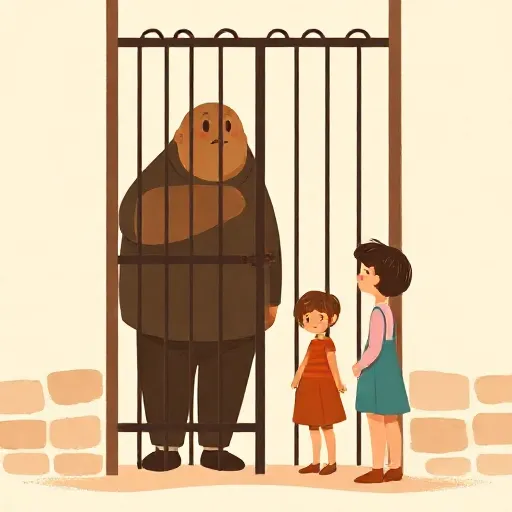
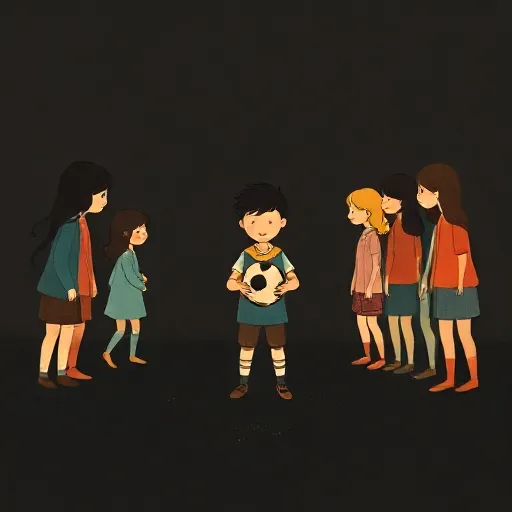
Imagine you are the only person with a soccer ball at recess. Two groups of your friends want to play a game, but there is only room for one match on the field. One group is packed with ten kids; the other has just three. How do you decide what to do? You could count up the total fun and give the ball to the bigger group. That seems efficient. But the three kids might protest: “Why should our chance to play disappear just because we are outnumbered? We have a right to be treated fairly too.” This small schoolyard dilemma hides a huge philosophical question: what makes an action wrong? The American philosopher T. M. Scanlon (born 1940) built a whole theory around that question. His answer: an act is wrong if it would be ruled out by any set of rules that no one could reasonably reject. That idea is called contractualism.
Scanlon’s contractualism is not about a real contract that people sign. It is a way of testing moral rules by imagining a conversation among everyone who would be affected. The goal is to find rules that each person could accept, not because they are forced or tricked, but because the rules respect them as rational, free individuals. Unlike some other social contract theories, it does not start from self-interest. Instead, it starts from the idea that every person has equal moral standing simply because they can think about reasons and justifications. This gives us a powerful moral compass, but it also leads to puzzles that still spark debate.
Why Not Just Add Up Happiness?
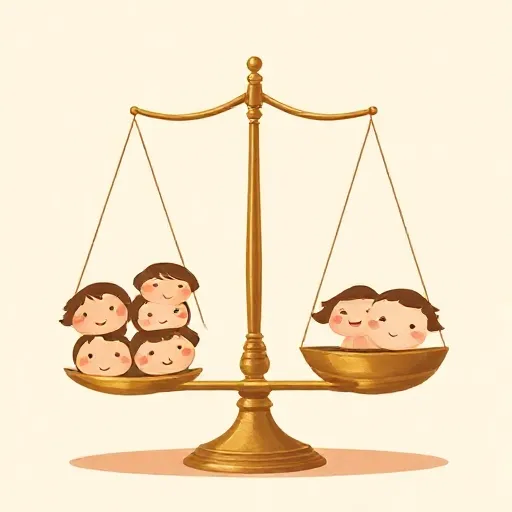
The most famous rival to contractualism is utilitarianism, the idea that the right action is the one that produces the greatest total well-being for everyone. Think back to the soccer ball. A utilitarian would say: give the ball to the ten kids, because ten happy players create more total good than three. Contractualism pushes back. Scanlon argues that morality must respect the separateness of persons — the fact that each of us lives a unique life that cannot be lumped together like points in a video game. Utilitarianism adds up different people’s joys and pains as if they were scores in one giant ledger. Contractualism refuses to do that; it looks at each person’s complaint one by one.
To handle conflicts, utilitarianism uses aggregation: it lets many small complaints outweigh one huge complaint. Contractualism, by contrast, blocks this move. Imagine the ball scenario again, but with higher stakes: five swimmers are trapped on one rock and one swimmer on another. A lifeguard can only reach one rock before the tide drowns everyone on the other. A utilitarian would immediately save the five, because five deaths are worse than one. But a contractualist must ask: can the lone swimmer reasonably reject the rule “save the larger number”? Her reason — “this rule lets me die” — is exactly as strong as each of the five’s reasons. The five cannot gang up and combine their complaints, because moral reasons belong to individuals, not to groups. So the simplest contractualist logic might say we should flip a coin to give everyone an equal chance. That result troubles many people, but it shows how seriously contractualism takes each person’s equal voice.
Reasons Beyond Pain and Pleasure
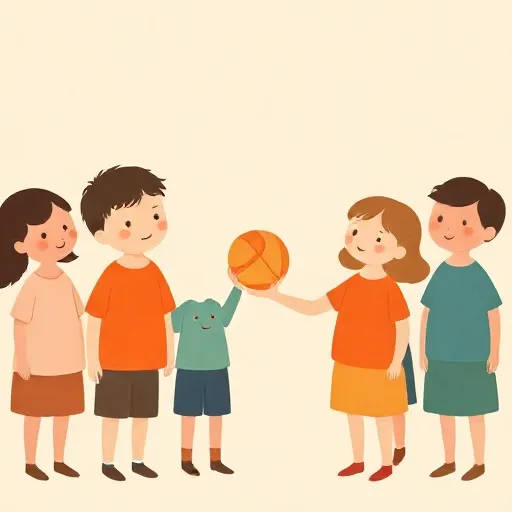
Contractualism has another weapon against utilitarianism: our reasons for rejecting a rule are not limited to how much pleasure or pain it brings us. Scanlon points out that the way a rule treats me can matter just as much as the result. Suppose a rule decides who gets to play by giving the ball always to the group with the most kids from the same racial background. Even if that rule maximises total fun, it can be rejected, not because of the fun I lose, but because it tells me my race makes me less worthy. The same burden imposed randomly would not send that insulting message.
This flexibility prevents contractualism from collapsing into a cold calculation. It can explain why we recoil from rules that are efficient yet disrespectful. The key is that a reasonable rejection must be based on something that goes wrong for that specific person, like being treated as less than a full human being. It cannot be just “I don’t like it.” The test asks: given how the rule affects everyone, could this person’s complaint be set aside by anyone who really cares about living on terms of mutual respect? If the answer is no, the rule is wrong.
How Much Do You Owe to a Stranger?

One of the most uncomfortable questions for any moral theory is: how demanding is it? If you buy a movie ticket instead of donating that money to a charity that could save a child’s life far away, have you done something wrong? Utilitarianism seems to say yes — you must give away almost everything you can until your own basic needs are threatened. Contractualism might not escape that conclusion. Scanlon himself offers a Rescue Principle: if you can prevent something very bad from happening to someone by making a slight sacrifice, it would be wrong not to. The problem is that a slight sacrifice for you (a few dollars, an hour of your time) can prevent something very bad for someone in extreme poverty. So even small luxuries become morally suspect.
Some philosophers who follow Scanlon argue that the Rescue Principle leads to an even stricter rule: if a great sacrifice from you (giving up most of your spare time and money) prevents a much greater disaster for someone else, it is wrong not to do it. Others push back. They say a rule that leaves no room for your own personal projects would fail to respect you as a person. The poorest person, though, can reply that a rule that lets them starve while you keep your comforts also fails to respect them. The fight between these two complaints is unresolved. Contractualism does not give an easy answer; it forces us to weigh what we owe to strangers against the lives we want to lead.
What About Animals and People Not Yet Born?

A clean moral contract sounds great — until you notice who stands outside it. Social contract theories have always struggled with obligations to non-human animals, because animals cannot join the hypothetical conversation and offer reasons. Scanlon admits that contractualism mainly covers what we owe to other persons, and he leaves room for other parts of morality to cover animals. Yet he suggests an extension: we could imagine trustees speaking on behalf of animals, presenting what any sentient being would reject if it could reason. Many critics find that move a bit awkward, but it keeps the same basic test: a rule that causes terrible animal suffering without a very strong justification would likely be rejected by a careful trustee.
Future people pose a sharper challenge. We can affect the lives of people who will be born a hundred years from now, but they cannot affect us. Fortunately, contractualism does not need two-way interaction; it only needs a rule that no future person could reasonably reject. If we store radioactive waste carelessly, those who suffer in the future can reasonably object to the rule that allowed it. So contractualism handles one part of the problem better than self-interested contract theories. A bigger puzzle, called the non-identity problem, remains: suppose a mother’s choice today determines which child exists, not just how well off that child is. If a child born with a difficult condition still has a life worth living, has that child been wronged? There may be no specific person who can complain, because without that choice the child would not exist at all. This puzzle is still being debated, and it forces contractualists to ask whether the reason for rejection can be based on impersonal concern for human well-being, not just on what happens to a named individual.
The Rule You Already Use Every Day

Why does this tangled argument about rock swimmers and future people matter to you? Because you already practice a rough version of contractualism every time you justify your actions to a friend, a sibling, or yourself. When you say, “I took the last slice because I didn’t eat any earlier, and you already had two,” you are offering a reason you think they should accept. You are trying to find a principle — “whoever didn’t get a slice yet gets the last one” — that you hope no one could reasonably reject, given the facts.
Scanlon’s big idea is that morality works the same way, just scaled up to include every person your actions touch. The tough part is that we don’t always agree on what counts as reasonable. But the demand to justify yourself to others, rather than simply calculating the best outcome, is a profound shift. It reminds you that even the lonely kid on the playground, the stranger far away, and the grandchild you’ll never meet all have a kind of moral vote — not a majority vote, but a single, weighty voice that asks: “Could you honestly explain your choice to me?” Learning to listen to that voice is what living respectfully is all about.
Think about it
- If you could give a small amount of your allowance to prevent a classmate from going hungry over the weekend, would it be wrong to spend it on a video game instead? Why or why not?
- Imagine a policy at your school says that the student council can ignore one person’s complaint as long as it makes the whole school happier. Would you accept that rule if you were the one person whose complaint was ignored?
- Can a rule be unfair even if absolutely everyone ends up better off under it? Give a real-life example if you can.