How Does a Frog's Thought Point to a Fly? The Story of Teleosemantics
The Frog and the Moving Speck
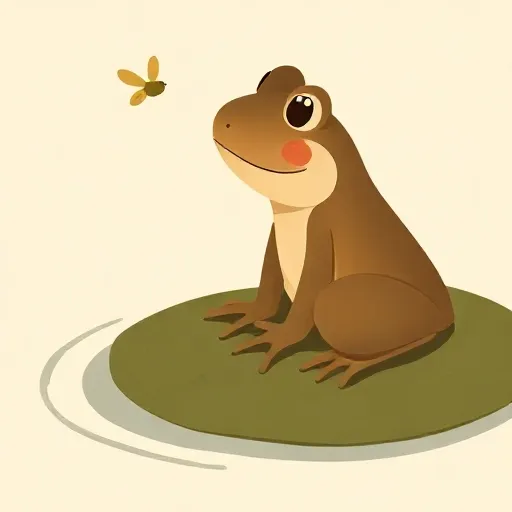
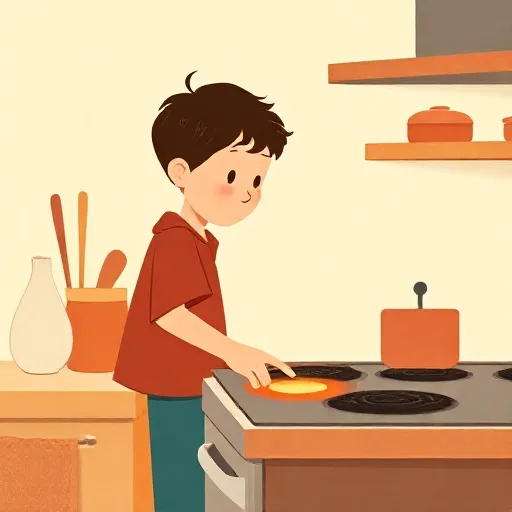
Picture a frog by a pond. A small dark speck flits past. Instantly, the frog’s tongue snaps out. Why? Something inside the frog’s brain said, “That’s food!” But what exactly did that inner signal mean? A fly? A nutritious meal? A moving shadow? This is the puzzle of intentionality — the way mental states can be about things in the world.
Your own thoughts are like that too. A belief that it will rain tomorrow is about tomorrow. A desire for chocolate is directed at chocolate. The frog’s snap is guided by a brain state that points to something outside its body. But how can a bunch of neurons inside a skull be about anything at all? That is the question at the heart of the philosophy of mental content.
When “Fly” Meets Pellet: The Problem of Error
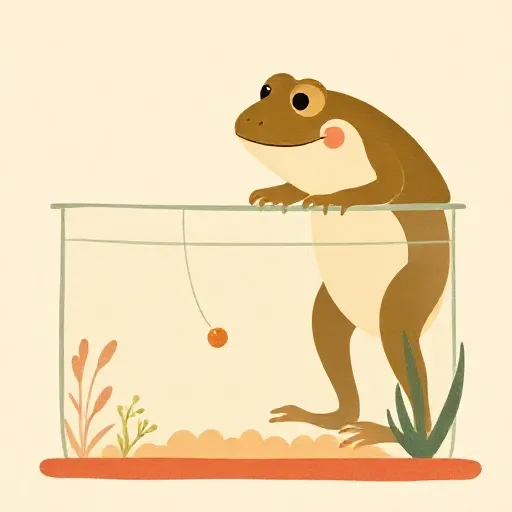
Imagine that every time a frog sees a fly, a certain brain cell fires. If we say that cell’s meaning is “fly,” what happens when the frog snaps at a tossed pellet? If the cell fires then too, should we change its meaning to “fly or pellet”? This is the disjunction problem. If a mental state is caused by many things, its content threatens to include all of them — “fly or pellet or dust speck.” But then the frog would never be mistaken. A true thought can’t be an error.
We need room for misrepresentation: the frog must be able to get it wrong. A brain state only really means “fly” if it can be false — if something can trigger it that is not a fly. The simple rule “content = whatever causes the state” fails because it erases all error. So philosophers searched for a better story. That story often begins with a surprising idea: evolution.
What Hearts and Thoughts Have in Common: Teleological Functions
A heart has a proper function: pumping blood. It evolved because hearts that pumped blood helped ancestors survive. A heart can malfunction — it can fail to pump blood, yet still be a heart. Biologists call this an etiological theory of function: what something was selected for.
What if mental states have proper functions too? Fred Dretske (1932–2013) argued that a brain state’s content is what it has the function to indicate. For instance, a perceptual state in a frog might have the function of carrying information about flies. If a pellet triggers it, the state malfunctions — it fails to do its job. That makes the pellet-triggering a case of misrepresentation, not a change in meaning.
But Dretske found a hitch. Some bacteria have tiny magnets that steer them downward to oxygen-free mud. If you trick them with a magnet, they swim upward to their death. Is that a misrepresentation? It’s hard to say, because the magnetosomes indicate magnetic north, but they also indicate the oxygen-free sediment. Is the function to indicate the magnetic field or the mud? Dretske worried that we can’t tell which is the right content. The distal content problem was born: how does a brain state represent the far-away thing (the fly) rather than the chain of in-between things (light patterns, retinal firings)?
Millikan’s Message in a Brain: Producers and Consumers

Ruth Millikan (born 1933) thought the trick was to look at how representations are used. In her biosemantics, every representation is a message sent from a producer to one or more consumers. A beaver slaps its tail to warn others. The splashing beaver is the producer, and the diving beavers are the consumers. The splash means “danger at this time and place” because consumers must react as if danger is present for the splash to do its job.
In the frog’s brain, the visual system is the producer, and the motor system that darts out the tongue is the consumer. The brain state’s content is whatever must usually be true in the world for the consumer’s proper function to succeed in the normal way. Since the tongue‑darting system evolved to catch food, the content is “frog food,” not “moving shadow.” Even though the frog detects the food via moving shadows, the meaning is the deeper biological benefit — what the whole system is for.
Critics push back. Pietroski imagines colour‑blind creatures called kimu. A mutation gives them a brain state B that fires when they see red, and they love the feeling so much they climb a hill to watch the sunrise. The climb helps them avoid predators in the valley, so the mutation spreads. On Millikan’s view, B means “safe from predators,” not “red.” That seems odd — the kimu themselves might never recognise a predator and might happily walk toward a red flag planted among enemies. Is it really right to say they are thinking about predators rather than the redness they see?
Neander’s Alternative: Content is What You Were Caused to Detect
Karen Neander (born in the 20th century) proposed a different causal-informational theory. Her idea: a sensory system’s content is whatever it was selected to respond to — the very thing that causes it to produce its signal. The frog’s visual system evolved to produce a certain brain state when it encounters a small, dark, moving shape. It was not selected to respond to “nutritional value,” because the visual system can’t detect nutrition directly. So the frog’s state means “small, dark, moving,” not “frog food.”
This handles the distal content problem with a clever asymmetry: the system was selected to respond to the light patterns because that’s how it detected the shape; but it was not selected to detect the shape because that’s how it detected the light patterns. So shape, not light, is the content. It also fits how cognitive scientists describe perception — we first see surface features like shape and colour, not invisible properties like being edible. And misrepresentation is still possible: a frog with brain damage can snap at a looming hand, mistaking it for a small moving object.
Swampman: A Brain Without a History

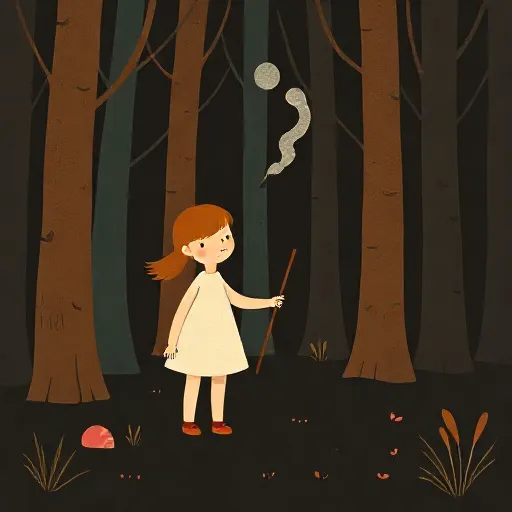
Now imagine a swamp creature. A bolt of lightning strikes a bog, and a man forms out of the muck — an exact copy of a real person, atom for atom. Swampman has no evolutionary history, no childhood, no learning past. He was never shaped by natural selection. According to the theories we’ve seen, none of his brain states would have proper functions. They would carry no content. He’d make noises that sound like words, but those sounds would mean nothing at all. He’d reach for an apple, but his inner state wouldn’t really be about an apple.
That’s hard to swallow. If Swampman walks out of the swamp and asks for water, we feel he must mean what we mean. Millikan and Neander both treat Swampman as a creature that merely seems to have thoughts, just as a puddle shaped like a heart doesn’t really pump blood. They think the concept “thought” picks out something with an evolutionary history, like “water” picks out H₂O. But many philosophers remain unconvinced. They ask: if Swampman can learn, feel pain, and solve puzzles, why deny that his brain really represents anything? The swamp creates a deep tension between our intuitions about meaning and a theory grounded in biological history.
Why It Matters: What About Robots?
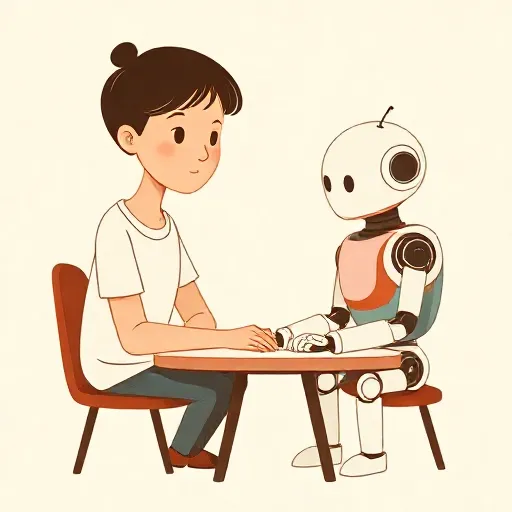
Today we build clever machines that recognise faces, translate languages, and beat humans at chess. They seem to represent the world. But if teleosemantics is right, a robot assembled in a factory might be a lot like Swampman — its internal states might point to nothing at all unless we can say they have functions shaped by some kind of selection. It matters whether genuine meaning requires a history of survival and design, or whether new systems can grow meaning on their own.
This is not just about robots. It touches your own thoughts. When you think about tomorrow’s test or last summer’s holiday, your brain is doing something that was shaped by millions of years of ancestors and a lifetime of learning. Understanding how that gives your thoughts their grip on the world is one of the biggest puzzles in philosophy. And the frog, the beaver, the kimu, and Swampman are all helping us figure it out.
Think about it
- If you discovered that your brain states have their meanings because they helped your ancestors survive, would that change how you feel about your own thoughts?
- Imagine you meet a perfect copy of your best friend, created by a freak scientific accident. Would you treat the copy as a real person, even if a theory said its words have no meaning?
- Could a computer ever have beliefs about things, or does it just simulate thinking without ever genuinely meaning something?