What Makes a Thought About a Dog, and Not About a Fox?
A Thought in the Forest

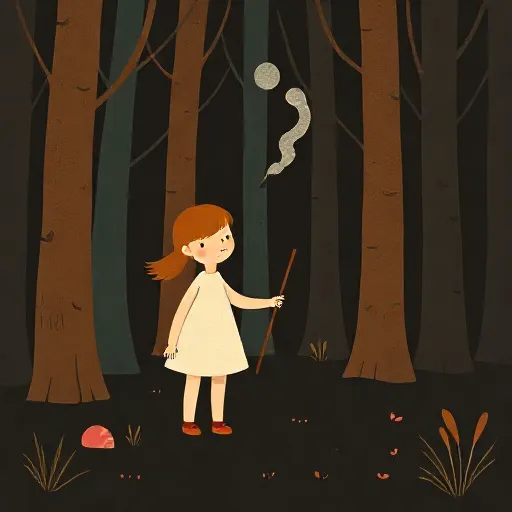
You are walking through a forest in autumn. You smell smoke and think, “Fire!” In one way, the smoke means fire. If there is smoke, there really is a fire. This is what philosophers call natural meaning: one event guarantees another, like smoke guarantees fire. But your thought “Fire!” is different. You might smell smoke from a barbecue and think “Fire!” — and be wrong. Thoughts can be false. This is non-natural meaning. It doesn’t guarantee that what you’re thinking about actually exists or is true.
Your thought “Fire!” is a mental representation — something inside your mind that stands for something in the world. Even before you ever learned the word “fire,” you could think about fire. That makes mental content underived meaning: it doesn’t depend on a group of people agreeing, the way a red stop sign does. So here’s the puzzle: what makes your brain state be about fire, rather than about smoke, or about a barbecue, or about nothing at all?
Philosophers who build causal theories of mental content try to answer that question using one simple idea: thoughts are caused by what they are about. But as we’ll see, that simple idea runs into a very clever fox.
The Simple Cause Idea — And the Fox

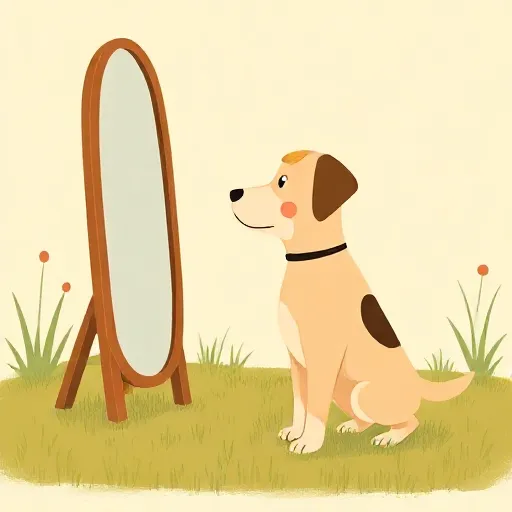
Suppose you have a mental symbol — call it “X” — that fires in your brain whenever you see a dog. The causal story says “X” means dog because dogs cause “X” to turn on. That seems tidy. But imagine you’re walking at dusk and spot a shape in the bushes. It’s actually a fox, but it looks dog-like enough that your “X” fires anyway. You think “dog.” You’ve just made a false identification.
Now we’re in trouble. If foxes also cause “X,” why does “X” mean dog and not dog-or-fox? This is the disjunction problem. A causal theory cannot just say “X” means whatever causes it, because then the meaning would always be a giant list of everything that has ever triggered the thought — dogs, foxes at odd angles, stuffed dogs, even a well-aimed question like “What kind of animal is Fido?” And what about a dose of LSD, or a neurosurgeon’s microelectrode that accidentally pokes the very neuron that realizes “X”? All of these could cause “X” to light up, but we don’t want “X” to mean LSD or electric poke.
Every causal theory has to solve this filtering problem: how to separate the content-determining causes (the real meaning-makers) from all the other causes rattling around.
First Fixes: Normal Conditions and Tiny Jobs
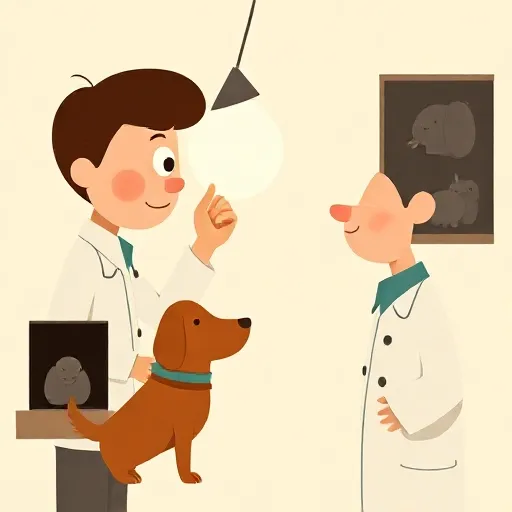
One early suggestion, from the philosopher Dennis Stampe (1941–2014), was to appeal to normal conditions. Just as a tree grows one ring per year only if the weather is normal, maybe a thought means dog if, under normal viewing conditions (good light, right distance, no fog), only dogs cause it. Foxes in bad light wouldn’t count. Hallucinogens wouldn’t count either, because taking LSD isn’t a normal condition.
This helps, but it isn’t enough. Even in perfect light, a dog causes your thought through a chain of events: light bounces off the dog, hits your retina, sparks nerve signals, and so on. Why does “X” mean dog and not retinal projection of a dog? Normal conditions don’t chop out the brain’s own causal intermediaries. And why does “X” keep meaning dog when the light is bad? If meaning is tied to normal conditions, maybe under bad light the meaning shifts to dog-or-fox. That feels wrong.
The next move was to give thoughts a function. A mercury thermometer measures temperature, even though pressure also affects the mercury column, because its function is to track temperature. Similarly, if the function of a neuron is to detect dogs, then foxes triggering it are just mistakes — false alarms. Functions can come from evolution. Imagine a population of rabbits. By genetic luck, some have a brain circuit that fires in the presence of dogs and triggers a freeze response. Those rabbits survive more often, so the circuit spreads. Its evolutionary function becomes detecting dogs. But critics asked: why say the function is detecting dogs rather than detecting dog-look-alikes? Both would help survival equally. The same worry appears with developmental functions, the idea that you learn the right meaning through training. When does learning stop? And does the solution secretly rely on the teacher’s intention, which itself is a meaningful mental state — exactly the sort of thing we’re trying to explain without magic? These problems kept pushing philosophers to look for a deeper principle.
Fodor’s Lopsided Laws

Jerry Fodor (1935–2017) proposed a bold alternative he called asymmetric dependency. Forget about normal conditions or jobs. Instead, notice an odd fact about the laws linking causes to your mental symbol “X.” There is a law connecting dogs to “X,” and another law connecting foxes to “X.” But Fodor argued that the fox-law depends on the dog-law in a one‑way, asymmetrical fashion. If dogs suddenly couldn’t cause “X,” the fox connection would collapse — because foxes only set off “X” when they are mistaken for dogs. However, if you broke the fox connection, the dog connection would remain intact. The dog-law is the central pillar; everything else leans on it.
This solves the disjunction problem. The would‑be law “dogs-or-foxes cause ‘X’” depends on the dog-law (break the dog-law and the disjunctive law crumbles), but not the other way around. So “X” means dog, not dog-or-fox. The dependency must be synchronic — it holds at a single moment, not over time — to avoid weird learning cases where, say, you only ever encountered foxes and somehow ended up thinking about dogs.
Fodor’s theory ran into a sharp difficulty: sensory projections. Light bouncing off a dog into your eye always travels through a retinal pattern. So there’s a law “dog → retinal projection → ‘X’.” The retinal projection can cause “X” even if the dog disappears, so the “dog” law depends on the “retinal projection” law, and not symmetrically. By Fodor’s own rules, that would make “X” mean retinal projection of a dog, not dog. Even if many different sensory pathways work together, there may be no single fundamental law — and without one, meaning evaporates. Critics also noticed that indistinguishable things, like two minerals once both called “jade,” create symmetric dependencies: neither can be the sole pillar, so the theory can’t assign a meaning. And underneath all this, some wondered whether Fodor was smuggling meaning in through the back door. Why would all those other causes depend on the dog cause unless we already secretly knew that “X” meant dog?
A Spreadsheet for Your Mind

A more recent approach, from the philosopher Robert Rupert (working today), takes a different path. Rupert’s Best Test Theory (BTT) says: for terms that pick out natural kinds (like dogs, water, or gold), a mental symbol means the kind that is the most efficient cause of that symbol in a person’s actual life history. Efficiency is measured by how often a kind triggers the symbol when you encounter it.
Imagine a big spreadsheet. The columns are your mental symbols “X1,” “X2,” and so on. Every time you meet an individual from a natural kind — say a dog, a fox, or a cat — we record which symbols light up. A dog might turn on “X1” four out of six times you see one. A fox might turn it on only on dark nights at a distance, so its efficiency is much lower. “X1” means whatever kind scores highest, not what turns it on most often overall. This neatly handles standard false sightings: foxes are less efficient causes of your “dog” thought than real dogs are, so the meaning stays dog. Brain invasions like microelectrodes don’t appear in most people’s biographies at all, so they don’t interfere.
The theory works only for natural kinds — it cannot explain thoughts about mathematics or unicorns — and it can stumble if a question (“What animal goes oink?”) turns out to be more efficient at sparking a “pig” thought than actual pigs. But by sticking to real biographies, BTT shows that a purely causal, statistics-based story can go surprisingly far without inventing anything spooky.
The Puzzle That Keeps On Giving
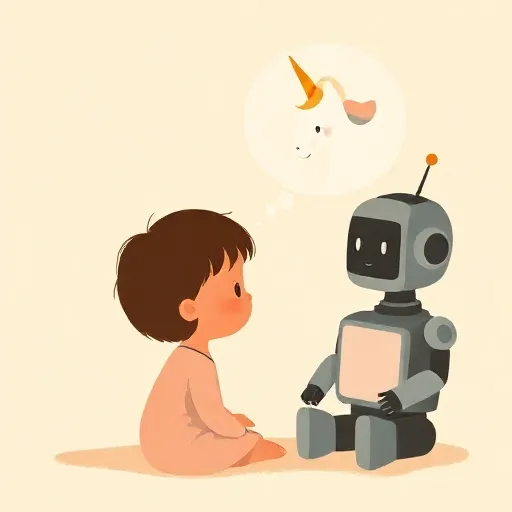
Even the cleverest causal theories face challenges that keep philosophers up at night. How do we have thoughts about things that don’t exist, like unicorns or the fountain of youth? A pure causal theory gets stuck, because nothing real causes those thoughts. Some philosophers reply that such thoughts are built from simpler parts (horse + horn) that are caused by real things, but that doesn’t work for every empty idea. Others point to the raw feel of experience: when you see the color red, there is a “what it’s like” vividness that seems meaningful even if the outside world supplies no red things. A causal theory that insists meaning must come from outside might miss this inner dimension. And if colors don’t actually exist in the world (a view called color anti‑realism), then our red-representations are reliable misrepresentations — always wrong in the same way, yet still meaningful — a bullet some causal theories struggle to bite.
None of this means causal theories are dead. They remain one of the most attractive ways to ground meaning in the physical world, which matters enormously for understanding our own minds and for the dream of building genuinely thinking machines. If a robot could have thoughts that truly mean something, rather than just mimicking words, we’d want to know what physical set‑up makes that possible. The same question lurks in your everyday life: when you mistake a shadow for a person, or hear a friend’s voice in a rustle, your brain still pulls off the feat of thinking about something — even though that something isn’t there. Causal theories give us the tools to ask how, and the many live debates show that the answer is far from settled.
Think about it
- If a scientist could stimulate your brain to make you think of a unicorn, even though unicorns don’t exist, how is that thought meaningful at all? What would have to change in the world for the thought to become true?
- Imagine a robot that says “ouch” when it bumps into a wall. It reacts just like you do. Does it matter whether its internal symbols were caused by real pain, or could they mean something else entirely? What test could tell the difference?
- You’ve never seen a live penguin, but you can think about one. If all your thoughts about penguins came from cartoons and stuffed animals, would your thought “penguin” really be about real penguins, or about those substitutes? What makes the difference?