Do We Really Need to Keep All Our Traditions?
Paris, 1790: A Man with a Quill Watches the World Burn
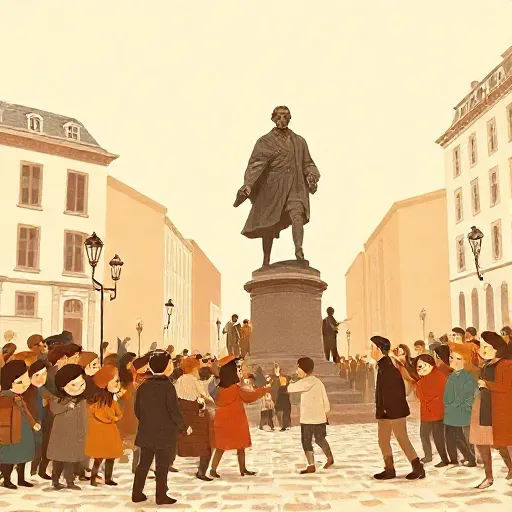
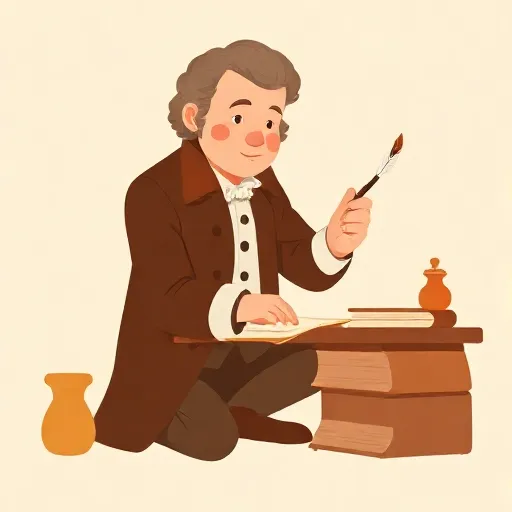
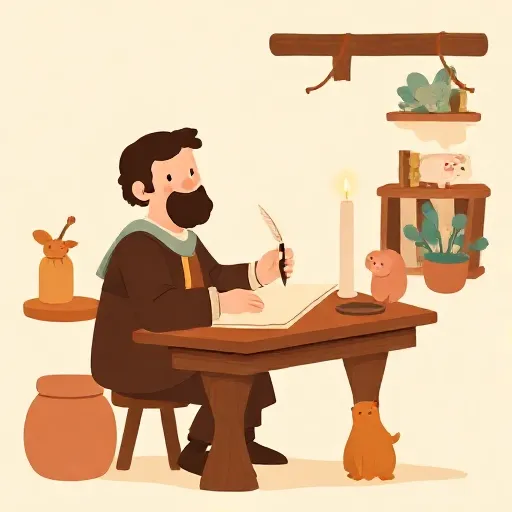
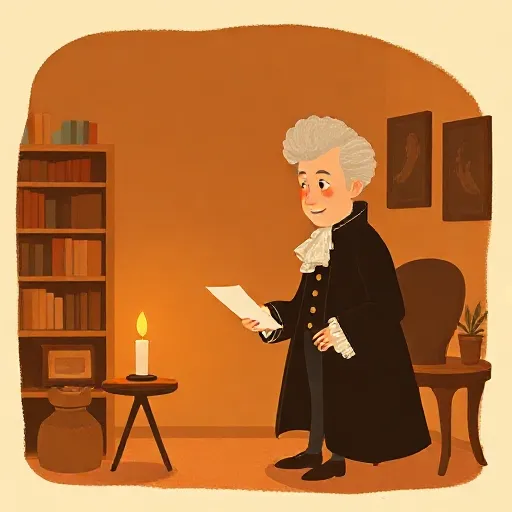
In the summer of 1790, Paris was alive with the French Revolution. Crowds tore down monuments of the old monarchy. Excited thinkers drew up perfect new laws based on reason alone — equality, liberty, rights for everyone. Across the Channel in England, the writer and politician Edmund Burke (1729–1797) watched with growing alarm. He took up his quill and wrote a fierce warning: if you try to redesign society from scratch using pure reason, you will end up with chaos and bloodshed. Three years later, the Reign of Terror proved him grimly right. Burke’s foresight made him the founding figure of a powerful way of thinking called conservatism. So what exactly is conservatism? Is it just being afraid of change, or is there something deeper?
Conservatism has a broad sense that has existed as long as humans have — the instinctive fear of sudden, big changes, a habit of sticking with what works. But a self-conscious, philosophical conservatism was born after 1789. This narrower conservatism rests on a deep scepticism about reason in politics. It doesn’t say reason is useless; it says that reason alone is not enough to design a good society from nothing. Burke and those who followed him believed that our political and social arrangements grow slowly over centuries, like a forest, not like a machine built from a blueprint. We gain practical wisdom from traditions, customs, and habits — collective knowledge we can’t fully explain in words. Tear that away, and you lose something irreplaceable.
Society as a Living Tree, Not a Machine
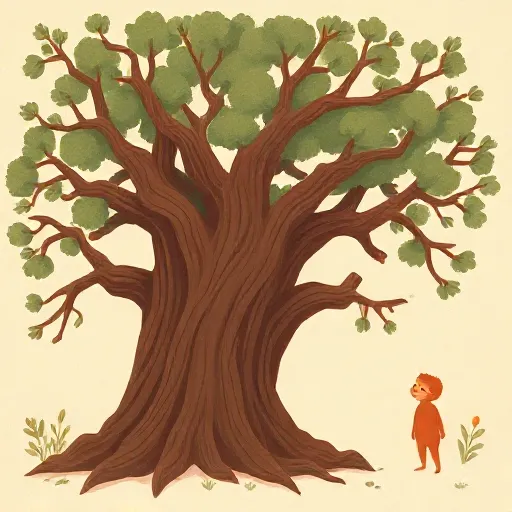
Burke argued that society is not a machine that can be taken apart and reassembled better. It’s an organic thing — like a living tree, or a family whose habits have grown over generations. You cannot simply throw away all the old rules and write new ones based on what sounds good in the moment. The accumulated experience of centuries lives in laws, customs, and everyday habits. Burke called this storehouse “the general bank and capital of nations and of ages” — meaning a kind of collective wisdom, not money.
A key concept here is tradition. For conservatives, tradition is not just old stuff. It’s a living practice that changes slowly, adjusting as circumstances demand, but never snapping continuity with the past. It’s like a family recipe that gets tweaked by each generation but still tastes like home. Or the way a game’s rules evolve to be more fun without anyone rewriting the whole rulebook overnight.
Conservatives also place a lot of weight on what Burke called prejudice. In everyday English, “prejudice” means unfair dislike. But Burke meant a pre-judgment — a habit of mind that lets you act quickly and wisely without having to reason everything out from scratch. It’s like knowing to look both ways before crossing the street: you don’t calculate the physics of each car; you’ve built a mental shortcut. Many such shortcuts — manners, traditions, moral intuitions — allow people to live together without constant arguments. They may not be perfectly rational, but they work. The modern conservative Roger Scruton (1944–2020) added that beliefs that look like “prejudice” might be vital; trying to justify them from scratch could destroy them.
Finally, Burke imagined society as a partnership across generations — connecting the living, the dead, and those yet to be born. That means we don’t have the right to tear down institutions we inherited just because we’d prefer something different. We hold them in trust. This idea often rings true when we think about preserving a beautiful old building or a local tradition — we feel a duty to pass it on, not to scrap it for a quick improvement.
Repair, Don’t Demolish: Why Gradual Reform Is the Conservative Way
Conservatism is often confused with reaction — a dogged refusal to change anything ever. But Burke said that a nation without the means of some change is without the means of its own conservation. Change must be cautious, because we don’t fully know how society works and every change may have unintended bad effects. Conservatives prefer gradual reform, fixing specific problems that have become obvious, rather than designing a whole new society based on abstract principles.
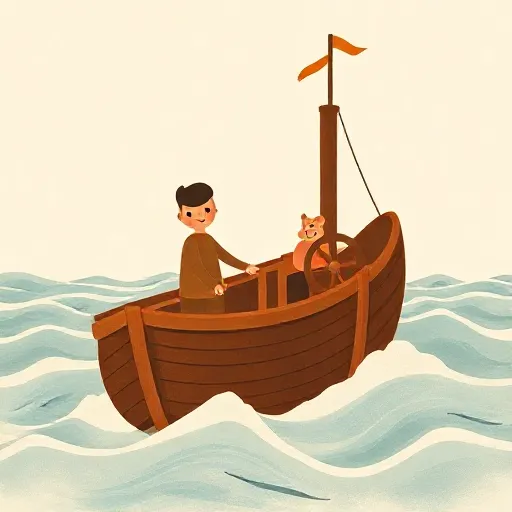
The English philosopher Michael Oakeshott (1901–1990) gave a famous image: governing is like sailing a boat on a “boundless and bottomless sea.” There is no final destination, no perfect island to reach. The job is simply to keep the ship afloat and in good repair — to make small adjustments so the crew can live decently. This contrasts with revolutionary Jacobinism, the mindset that sparked the French Revolution. Jacobins believed that you could use pure reason to build a flawless society from scratch, and they were willing to use violence. Burke predicted that would lead to terror, and he was right: the revolution devoured its own children.
Conservatives argue that revolutionary change often makes things worse because it ignores hidden wisdom embedded in existing institutions. For example, the British legal tradition of precedent evolved over centuries; it’s not a tidy code, but it adapts to new situations remarkably well. In contrast, law codes designed from pure reason can be rigid. Conservatives think that particularist scepticism — the belief that general principles can’t simply be applied to every local situation — is the wise guide. You have to look at the specific people, the history, the “circumstances that give every political principle its color.”
Yet, conservatives don’t believe we should never reform anything. They simply insist that reformers proceed by trial and error, on a small scale, and with respect for the people who have built their lives around existing rules.
Not Just “Keep the Rich Rich”: What Conservatism Is Not
Many people assume conservatism means defending the wealthy and powerful, or wanting a completely free market with no government interference. That’s a misunderstanding. As we’ve seen, conservatism is a way of thinking about change, not a fixed list of economic policies. Burke was no cheerleader for unchecked capitalism; he thought markets should operate within strong moral traditions. Scruton believed a market economy can be good, but only if it’s embedded in customs that stop it from eating away at family life.
In fact, conservatism is suspicious of all rigid ideologies — including free-market dogma. The conservative temperament is pragmatic: if government intervention works in practice to keep society stable and decent, then it might be okay. What conservatives oppose is the idea that society can be reorganized around one single rational principle, whether that principle is “liberty,” “equality,” or “efficiency.” The conservative says: I don’t have a grand plan; I just try to keep the good things we have and fix what’s broken without breaking more.
That’s also why conservatism is different from libertarianism (the view of thinkers like Robert Nozick) and from later neo‑conservatism. Libertarians reject almost all state planning as a matter of principle. Burkean conservatives are slower, more modest. They ask, “Will this reform, in this place, at this time, preserve the best of what we’ve inherited?” rather than “Does this fit my abstract theory?” So conservatism is a lens, not a platform.
Why This Still Matters: The Old Photo Album and the New Building

You’ve probably bumped into conservative thinking in your own life. Maybe your school has a rule that feels pointless, but older students say “it’s always been that way.” Maybe your town wants to tear down an old library to build a sleek new one, and some people protest, even though the new building would have faster Wi‑Fi. Why do we cling to things that seem outdated? The conservative answer is that we care about particular things — not just the “value” they produce, but the things themselves. The philosopher G.A. Cohen (1941–2009) made this vivid: if a beautiful old church is destroyed to build a slightly more valuable office block, you lose something irreplaceable, even if the new building scores higher on a scorecard. We are attached to the past because it is ours; we want to belong to the partnership between the living, the dead, and the unborn.
There is also a tricky moral puzzle known as Sidgwick’s paradox of conservative justice (named after Henry Sidgwick, 1838–1900). Imagine a long-standing unfair practice — a rule that gave certain families an unfair advantage for generations. If you suddenly scrap it, you may be just in the abstract, but you’ll also wreck the plans and expectations of people who built their lives around the old system. Changing the rules in the middle of the game can be unfair in a different way. That’s why even progressive thinkers admit we sometimes have to weigh competing claims and move gradually.
So conservatism offers a permanent challenge: how do we balance the desire to make the world better with the need to honor what already exists? The 18th‑century debate between Burke and the revolutionaries is still alive whenever someone proposes a radical overhaul of school, government, or everyday life. It reminds us that before we break things, we should try to fix them — and before we design a perfect future, we should listen carefully to the imperfect past.
Think about it
- Your town wants to replace an old, beloved public park with a modern sports complex that would serve more people. Is it always better to keep something because it has been there for generations, or can something new be worth the loss?
- If you knew that a big change — like giving everyone a say in how schools are run — would cause chaos and confusion for a few years but eventually make things fairer, would you support it anyway? Why might a conservative say no?
- Is there a family tradition that you follow even though you can’t fully explain why? Can you think of a case where breaking that tradition would cause real harm, and another where it might not matter much? What makes the difference?