What Makes 'Therefore' Actually Work? Medieval Logicians’ Big Fight
A Classroom in 1320 Asks a Hard Question
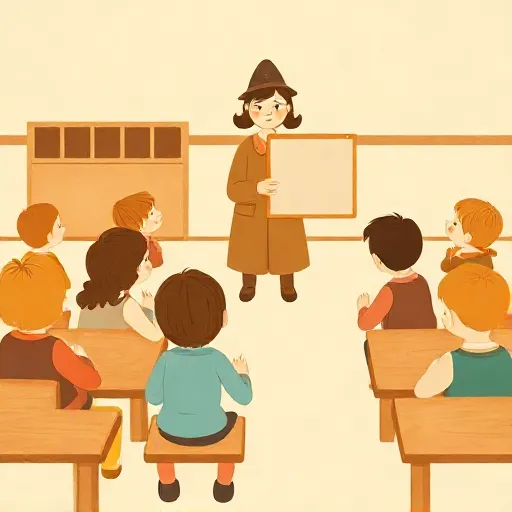
Paris, around 1320. A master of logic faces his class. He says two short sentences aloud: “Socrates is a man.” Then he adds: “Therefore, Socrates is an animal.” The students are supposed to decide if that “therefore” really works. Why must the second sentence be true just because the first one is?
This is the problem of logical consequence. A consequence is a relationship between statements. It says that if the premise (the starting claim) is true, then the conclusion (the statement that follows) must be true. Logicians call that necessary truth-preservation: it is impossible for the premise to be true while the conclusion is false.
Aristotle (384–322 BCE) already gave a famous version. In his book Prior Analytics, he wrote that a deduction is a speech where “something other than what is stated follows of necessity from their being so.” So if you accept the starting points, you cannot deny the conclusion.
But medieval thinkers noticed something. Necessary truth-preservation sets a bare minimum. It tells you that the conclusion can’t be false if the premise is true. But does that alone make an argument feel truly good? Many medieval philosophers thought you needed something extra. Over several centuries they argued about two extra ingredients: formality and containment.
The Ancient Seed: Form, Matter, and Substituting Words
The idea of formality came from a powerful metaphor. Aristotle had taught that everything is a compound of form and matter: a statue’s matter is bronze, its form is the shape. Ancient commentators on Aristotle, like Alexander of Aphrodisias (2nd century AD), applied this to arguments. They said a syllogism (a two-premise argument) has matter — the specific words — and form — the logical structure. Alexander noticed that if an argument works because of its structure, you can replace the words with any others and the reasoning stays valid. He called this being “reliable” no matter what the matter is.
This idea is the substitutivity test: swap the non-logical words (like “Socrates” or “animal”) for any other words. If the consequence still holds, it’s a consequence in virtue of form. This test became known as criterion (ST).
The Latin tradition inherited these hints through Boethius (c. 480–524), but the form-matter language only truly took off in logic centuries later. Then came Peter Abelard (1079–1142). He drew a sharp line between perfect inferences and imperfect ones. A perfect inference, he said, has a structure (complexio) that guarantees the truth. “Whatever terms you substitute,” he wrote, “the consecution can in no way be broken.” That is an early, clear statement of (ST). Abelard still thought a good inference also needed a tight connection of meaning (containment), but he gave the form test a prominent role.
By the late 1200s, authors like Simon of Faversham were using the phrase formal consequence for the first time. Simon said a formal consequence “holds in virtue of form” and “must hold in all matter.” The stage was set for a full-blown 14th-century explosion.
Buridan and the Parisian Definition: Formal Means “Works for Any Words”
John Buridan (c. 1295–1358), a Parisian master, gave the clearest version. In his Treatise on Consequences, he wrote: a formal consequence is one where every proposition similar in form — using any other categorematic terms — would be a good consequence. The categorematic terms are the content words like “man,” “runs,” “animal.” The logical skeleton — words like “every,” “no,” “is” — belong to the form.
Here is a consequence that passes Buridan’s test: “No A is B, therefore no B is A.” You can replace A and B with absolutely any nouns (“No dog is a fish, therefore no fish is a dog”) and it stays airtight. The validity rests on the shape of the sentences, not on what the nouns mean.
Now look at this one: “Socrates is a man, therefore Socrates is an animal.” Try the substitution test. Replace “man” with “stone”: “Socrates is a stone, therefore Socrates is an animal.” Not valid. The original works only because we know the meaning of the word “man” — it includes being an animal. Buridan called consequences like that material consequences. They are still true consequences (they pass necessary truth-preservation), but they are not formal.
Notice that for Buridan, both kinds are equally valid consequences. The substitution test just separates consequences that lean on word meanings from those that don’t. Buridan never said that only formal consequences are real. Necessary truth-preservation remained the ultimate ground.
The British Countermove: The Conclusion Must Be “Inside” the Premises

While Buridan taught in Paris, a different tradition grew in Britain. Authors like Richard Lavenham, Ralph Strode, and Richard Billingham had another favorite idea: containment. This was the third big theme, (Co). A formal consequence, they said, is one where the conclusion is already understood or contained in the premise.
Strode put it this way: a consequence is formally valid “if when it is understood to be as is adequately signified through the antecedent, then it is understood to be just as is adequately signified through the consequent.” In everyday words: if you understand that someone is a man, you already understand that he is an animal. The conclusion is already inside the premise, waiting to be seen.
That definition made many everyday enthymematic consequences formal. “Socrates is a man, therefore Socrates is an animal” is formal because knowing what a man is means knowing he is an animal. Buridan had treated that very argument as material, because the substitution test fails. The British school disagreed.
What, then, counted as a material consequence in Britain? The ones where the premise does not contain the conclusion at all. The classic examples were “from the impossible anything follows” and “the necessary follows from anything.” Suppose someone says “God does not exist, therefore you are a donkey.” The premise cannot be true (medieval thinkers thought God must exist), so the truth-preservation test is trivially satisfied. But the conclusion “you are a donkey” is not contained in the premise. It feels like a cheat. British logicians called this a material, not formal, consequence.
So the two big camps agreed that truth-preservation was essential. But they split over what makes a consequence formal: the Parisian tradition pointed to substitution; the British tradition pointed to containment. The same phrase, two very different outlines.
Why This Medieval Tug-of-War Still Tugs at Logic Today

Today’s formal logic — the kind used in mathematics, computer science, and philosophy — leans heavily on the substitution idea. When a logician says an argument is “valid in virtue of logical form,” they are echoing Buridan’s definition of formal consequence. The project of boiling arguments down to their logical skeleton, with constant symbols doing the hard work, grew directly out of medieval form-matter thinking.
But the containment idea did not vanish. In the 20th century, logicians created relevance logics. These systems refuse to call an argument valid unless the premises are genuinely used to reach the conclusion. A relevance logician would reject “God does not exist, therefore you are a donkey” not because the truth test fails, but because the premise has nothing to do with the conclusion. That is exactly the medieval British intuition.
So the medieval debates are alive. Whenever you hear someone say “well, technically that follows,” you might feel that something is missing. Logicians are still arguing about whether truth-preservation alone is a good enough standard for a real argument. The 14th-century classrooms would feel surprisingly familiar.
Think about it
- Imagine a friend says: “All dogs bark. Rex is a dog, so Rex barks.” That seems fine. But what if Rex is a robotic dog? Does the argument’s form stay good even if the premise is false? Why might someone still call it a logical consequence?
- The British logicians treated “God does not exist, therefore you are a donkey” as a valid material consequence. Do you think an argument can be logically valid if it starts from a statement everyone agrees is impossible? Why or why not?
- You tell a friend: “If you study, you’ll pass. You studied, so you’ll pass.” Suppose the friend passes only because the teacher cancelled the test. Was your “therefore” still a good consequence? Is there a difference between a logical guarantee and a real reason?