Do You Ever Really See Things Move?
The Puzzle of the Moving Fingertip
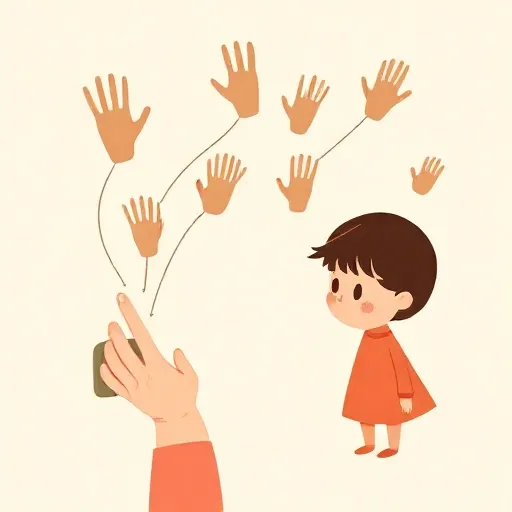
Tap your finger on the table. As you watch, you don’t see a bunch of frozen finger-shots that your brain later stitches together. You simply see your finger moving, the whole smooth journey from up to down. And you hear the tap not as separate instants but as one sound that starts and ends. This direct awareness of change and persistence feels like the most ordinary thing in the world.
But something strange happens when you think about it. The present—the now you inhabit—is a single point in time, with no duration at all. A point can’t hold anything that takes time. So how can you ever see a finger that is already halfway through a tap, or hear a note that is still ringing? You seem to live inside a tiny, unextended moment, yet your experience reaches across a stretch of time. This is the paradox of temporal awareness.
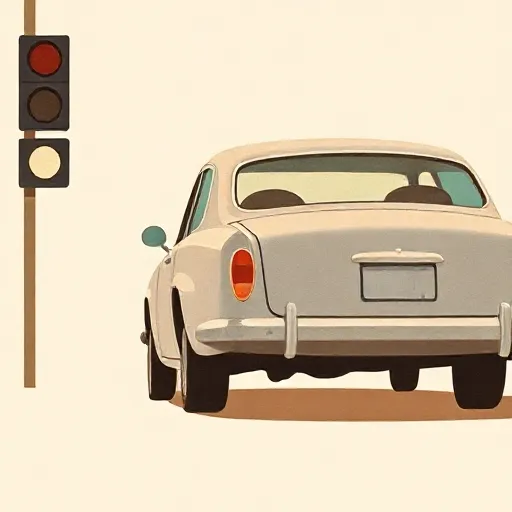
Philosophers have shaped three main answers, each a different model of how consciousness relates to time. To understand them, you need two competing principles. One says that what you are aware of unfolds at the same rate as your awareness itself—watching a traffic light change from red to green means your awareness lasts exactly as long as the change. The other principle says the opposite: to be aware of something lasting, you must grasp it all in a single instant, as if every part of a melody were present to your mind at one timeless moment. These two ideas push in different directions. The models try to find a way forward.
Model 1: The Movie Screen in Your Head
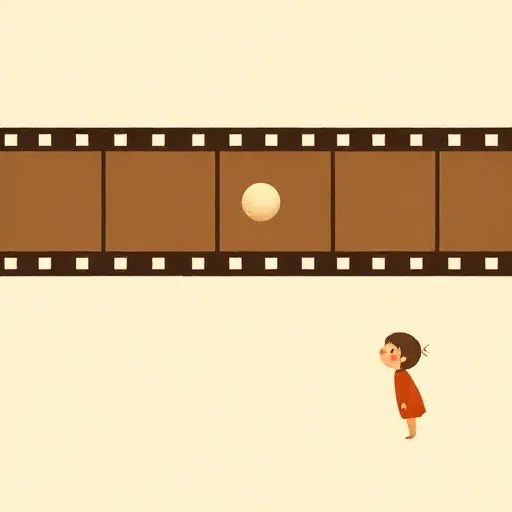
The simplest model is the cinematic one. Imagine your stream of consciousness as a movie. A film is just a sequence of still photographs shown so fast that you see motion. Perhaps your experience works the same way: each moment you have a static snapshot with no motion or change in it, but because these snapshots succeed one another rapidly, you feel as if you see movement.
This idea goes back at least to Saint Augustine (354–430), who believed only the present moment is real and it has no duration. Thomas Reid (1710–1796) also held that the senses only ever give you a point-sized now, and that memory—not perception—lets you knit those points into the appearance of motion. Modern defenders call it the snapshot theory. They say your brain produces momentary frames that are completely still, yet the rapid stream of frames, plus your memory of the previous ones, makes you mistakenly believe you directly perceive change.
The trouble is that a succession of experiences is not the same as an experience of succession. Picture five people standing in line with their eyes closed, facing a tennis court. Each opens their eyes for one millisecond, one after another, then closes them. Each sees a frozen instant of the ball’s flight. If you added up their moments, you’d get five static images in a row—but nobody would experience the ball moving. You need the earlier and later parts to be present together in your consciousness. Cinematic models have a hard time explaining where that togetherness comes from.
There’s also the fact that actual motion in the world still looks like motion even when it’s built from static images, as in a movie. But that doesn’t help the cinematic view. A movie screen isn’t your brain; what you see on it is already motion. The theory needs to explain how your momentary conscious states—the raw ingredients—could ever feel dynamic, not how a projector does its job.
Model 2: Carrying the Past in a Single Instant

The retentional model takes the second principle seriously: to be aware of a succession, you must grasp it all together at one moment. But it denies that this reduces you to a series of dead snapshots. Instead, each instantaneous moment of experience is richer than a still photograph. It includes not only a primal impression of what is happening right now, but also special representations of what just happened—called retentions—and even faint expectations of what is about to happen, called protentions.
The philosopher Franz Brentano (1838–1917) first explored this idea in detail, and Edmund Husserl (1859–1938) turned it into a full theory. Husserl imagined each moment of consciousness as having a kind of comet’s tail: the bright head is the primal impression, and the tail is a trail of retentions that present the immediately preceding moments as “just past,” not as memory but as still present in experience. At the exact same instant, you are aware of a short sequence—say, the last three notes of a tune—all at once, yet they still feel like a succession in time.
William James (1842–1910) popularized a related idea when he wrote about the specious present—the present that feels like it has duration, even if the strict mathematical present is durationless. Borrowing the term from E.R. Clay, James described this specious present as a little boat with a bow and a stern, pointing toward the recent past and the immediate future. The retentional model says that boat really exists inside a single instant.
To make sense of how a momentary mental state can have a stretched content, many modern retentionalists appeal to representationalism. A word written in ink can represent the color red without itself being red. In the same way, a durationless experience can represent a stretch of time. But critics ask: if all the contents are literally simultaneous in your mind, how can they seem to happen one after another? Supporters reply that the representational vehicle is instantaneous, but what it represents flows—just as a film reel contains a whole chase scene without moving.
Model 3: A Stretching River of Experience
The extensional model rejects the idea that you can only be aware of time inside a single instant. It says your experience itself is literally extended through a short interval. When you hear a melody, your hearing of the first note and your hearing of the second note are parts of one temporally wide experience that stretches across both notes. Change and motion are directly presented to you because your act of awareness lasts long enough to embrace them.
This approach was defended by the psychologist L. W. Stern in 1897 and later by Bertrand Russell (1872–1970). Russell suggested that specious presents—short, unified chunks of experience—overlap like shingles on a roof. If you hear the notes do-re-mi, one specious present might cover do-re, and the next covers re-mi, sharing the re phase. Because each note is experienced only once but appears in two overlapping presents, you get a seamless flow without any repetition.
Barry Dainton (born 1952) developed an extensionalist view that builds on this idea. He argues that the togetherness you feel among all the parts of your present experience—smells, sounds, sights—is a basic feature of consciousness. That same kind of togetherness, he claims, also ties earlier and later moments within a specious present. The result is a stream of consciousness that continuously rolls forward like a river, with no need to pack the entire past into a single instant.
But extensionalism face challenges. If your awareness really lasts, say, half a second, then the present is not a razor’s edge but a little slab. Some thinkers worry this clashes with the view that only the present is real (presentism). If you literally experience something in the past right now, that past must still exist in some sense. The model fits more comfortably with the four-dimensional “block universe” picture of time, where past, present, and future are all equally real. Even so, many find the extensional model matches how experience feels from the inside.
Why It Matters: The Shape of Your “Now”

Picture yourself at a concert. The band launches into a song. If the cinematic model is right, your stream of consciousness is a rapid slide show of silent, motionless frames and you never truly hear a note—you only seem to. If the retentional model is right, you hear the whole riff inside a single frozen instant, like a chord stretched into melody by a trick of representation. If the extensional model is right, your hearing literally flows through time, with each moment containing the real tail of the one before.
Which story you find most convincing changes how you answer bigger questions. What is the present, really? Is it a dimensionless point that’s already gone before you can notice it? Or is it a small but real window, perhaps half a second wide, in which you live and act? The debate spills over into science: neuroscientists who study timing, illusions, and the binding of sensory information sometimes build their theories assuming a cinematic brain, other times a retentional one, and increasingly some look to extended processes that match the extensional picture. There is no settled consensus.
And in your own everyday life, the models invite you to pay attention to something you normally ignore—the texture of time itself. Next time a friend waves, or you splash water through your fingers, or a single violin note hangs in the air, ask what your experience is really like. You might find that your “now” is stranger and more roomy than any clock ever shows.
Think about it
- If someone made a film of your entire day and played it back one still frame at a time, would each frame capture exactly what you were experiencing? Why might your answer pull you toward one of the three models?
- Imagine you could stretch your specious present to last ten seconds. Would listening to a song feel richer and more connected—or confusing, like hearing ten seconds of sound all at once? What would be lost?
- A robot that processes the world in isolated snapshots, with no memory linking one to the next, could never feel like it’s hearing a melody. If that robot were programmed to say it hears motion, would you believe it? What does that suggest about consciousness?