
Is the Green in Your Afterimage Out There Somewhere?
The Green Blob That Won’t Go Away

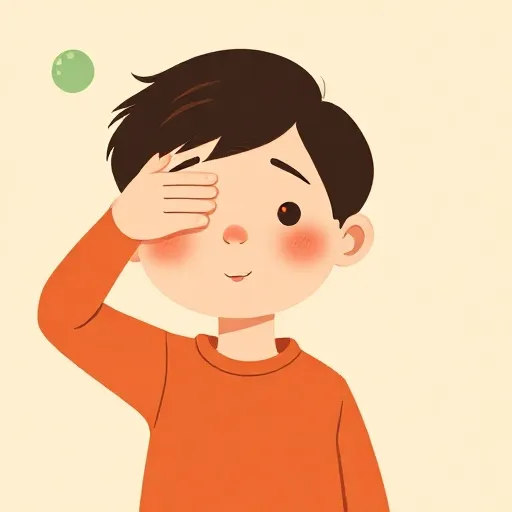
You stare at a bright camera flash. When you look away, a green blob floats right where the light was. It isn’t really out there in the room—no one else can see it. You can point to where it seems to be, but there’s nothing physically green in that spot. What is that greenness?
Philosophers call this a sensory quality, or a quale (pronounced KWAH-lee; the plural is qualia). The term was introduced in a strict sense by C.I. Lewis (1883–1964). A quale is a felt, introspectible property—like the colour of an afterimage, the pitch of a heard note, or the bitterness of a taste. It seems to be right there in your experience, part of your mental life. But where exactly is it located in the world?
The Problem for Materialists: Where’s the Green Thing?
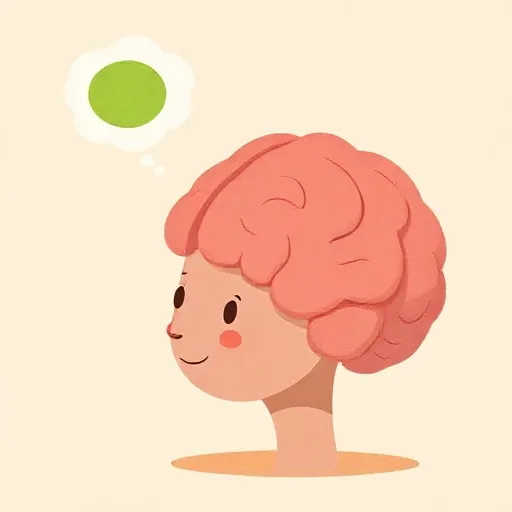
Suppose Bertie has a green afterimage. That greenness is a sensory quality. If it’s something physical, it must be either outside Bertie’s head or inside it. But the green isn’t on the wall—no one else sees it. And it isn’t inside his skull either; if you opened his brain you’d find only pinkish-grey tissue, not a glowing green patch. So, the argument goes, the green thing is not physical at all. Bertie’s experience contains something nonphysical.
This is a serious challenge for materialism, the view that everything that exists is physical. Many philosophers find materialism attractive because it connects the mind to the brain without mysterious extra stuff. But sensory qualities seem to leave a ghostly remainder—a greenness that floats outside the physical world.
The Representationalist Answer: Your Brain Tells a Story
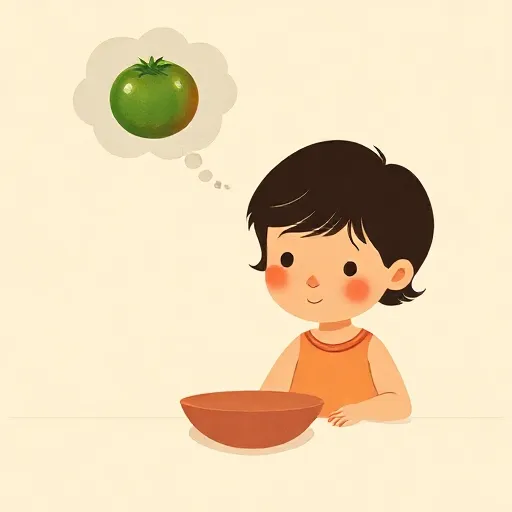
A powerful reply came from thinkers like Fred Dretske (1932–2013), Michael Tye (born 1950), and William Lycan (born 1945). They defended the representational theory (also called intentionalism). According to them, a sensory quality is not a mental paint-in-property inside your head. Instead, it is a represented property of a represented object.
When Bertie has a green afterimage, he is visually representing a green blob at a certain spot in the room. But there is no real blob there—the blob is a non-actual intentional content. The greenness is the greenness of that imaginary blob. The word “there is” works the same way as when we say “There is a unicorn in that story” or “There is a god the Greeks worshipped but no one worships anymore.” No actual unicorn or god exists, but they are still things the story or the worshippers are about.
So the dilemma dissolves. The green thing is not a physical object inside or outside the head; it’s an intentional object. The materialist can accept that without adding anything spooky to reality.
A helpful distinction: strong representationalism says that sensory qualities are nothing but representational contents of a certain special sort (like colours represented by the visual system). Weak representationalism agrees only that sensory states have representational content, while leaving room for extra non-physical properties. The strong version is the one that aims to save materialism.
Looking Right Through Your Experience

How could anyone show that the green afterimage is just a representation? One famous argument is the transparency argument, put forward by Gilbert Harman (born 1938). Look at a tree. Now try to turn your attention inward, to the intrinsic features of your visual experience itself. You’ll find that you can only notice features of the tree—the greenness, the leafy shape, the way it looks from here. The experience seems “transparent”; you look right through it to the world.
If that’s right, then what your experience is like is entirely a matter of what it represents. Harmon even extended the argument to hallucinations: imagine you see a real red tomato and then hallucinate a second, identical tomato right next to it. The redness in both cases is exactly the same property—the redness of the (real or hallucinated) tomato. There’s no extra, private red paint inside your mind.
Michael Tye and others use this to argue that sensory qualities are just the visible properties of objects, real or imagined. And because physical objects can have those properties, the materialist can breathe easily.
But Does That Cover Everything?
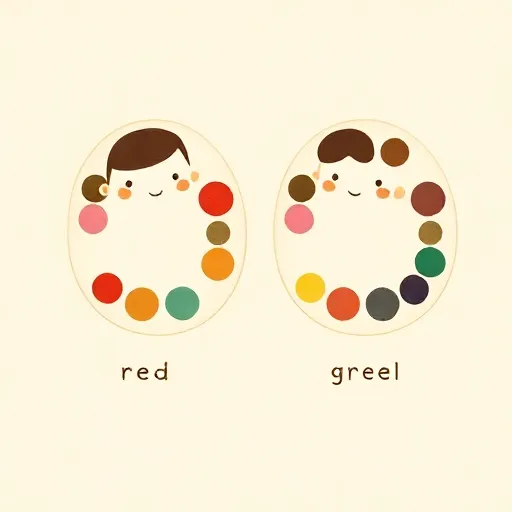
Critics point to cases where sensory qualities seem to come apart from what is represented. Ned Block (born 1942) and David Chalmers (born 1966) have raised several objections.
One is the inverted spectrum. Imagine two people whose inner colour experiences are swapped: one sees grass as red and fire trucks as green, but they both learn to call grass “green” and trucks “red.” Their behaviour and words would match perfectly. If sensory qualities were just representational contents, then they would have to be identical—but we can easily imagine they are not. Block’s thought experiment of Inverted Earth pushes this further: if you moved to a planet where colours were physically inverted and your language adapted, your intentional contents would shift after many years. Yet, intuitively, your colour experiences might stay the same. This suggests qualia are “narrow”—determined solely by what happens inside you, not by the outside world—contrary to wide representationalism, which ties them to environmental properties.
Another challenge is blurry vision. When you see a clear object blurrily, is that a representational difference? Defenders like Tye say yes: a blurry experience simply carries less information, failing to represent the sharp edges. But critics think there is an extra non-representational “blurriness” feel that you can introspect.
Bodily sensations cause trouble too. A pain feels awful in a way that seems more than just representing tissue damage. While some representationalists try to explain this with additional functional roles, many philosophers remain unconvinced that the whole sting of a burn is captured by what it says about your body.
Why This Still Matters: Is Your Mind Just a Storyteller?
The puzzle of the green blob isn’t just a philosopher’s game. It shapes how we understand ourselves. If the representational theory is right, then conscious experience might eventually be explained by how brains (or even machines) represent the world. There would be no need for ghostly non-physical properties. That would mean that one day, an artificial intelligence could genuinely see colours or feel a toothache—if it had the right kind of representational system.
If the theory is wrong, on the other hand, then there’s something about experience that goes beyond information processing. We might have to accept that each of us has private, inner qualities that can’t be reduced to brain cells. The debate remains wide open. Scientists try to find the brain areas that light up when you experience green, but the deeper question—what the greenness is—keeps philosophers busy.
The next time you rub your eyes and see swirling colours, you’re face to face with one of the biggest mysteries about the mind.
Think about it
- If you and a friend had all your colour experiences secretly swapped (you see red where they see green, and vice versa), would you ever be able to discover the difference? Why or why not?
- When you imagine a pink elephant, where is the pink? Is it the same kind of pink as the afterimage from a flash?
- If a robot’s camera detects green light and its computer says “I see green,” could it ever have a green afterimage? Would that be exactly like your experience, or would something be missing?