
Do We Always Know Our Own Thoughts? A 1600s Fight
A Room in Paris, 1641: Descartes Finds the Mark of the Mental

In 1641, a French thinker named René Descartes (1596–1650) shut himself away to doubt everything. Maybe the world is a dream. Maybe an evil demon is tricking him. But there was one thing he couldn’t doubt: he was thinking. And whenever he thought, he was immediately aware of that thought. He called this consciousness — taking a Latin word, conscientia, that mostly meant moral conscience (a nagging voice about right and wrong) and giving it a completely new, psychological job. From then on, for Descartes, consciousness meant the inner spotlight: the moment‑by‑moment feeling that a thought is happening right now.
Descartes defined thought itself in terms of that spotlight. A thought is whatever is “in us” of which we are immediately aware. If you see a red ball, you don’t just see red — you also know you’re seeing it. For Descartes, consciousness became the mark of the mental: if something truly belongs to your mind, you cannot miss it. This single move launched a century of arguments — because once you say all mental states are conscious, a lot of ordinary experience suddenly looks like a problem.
The Baby in the Womb: Does Every Thought Come with a Spotlight?
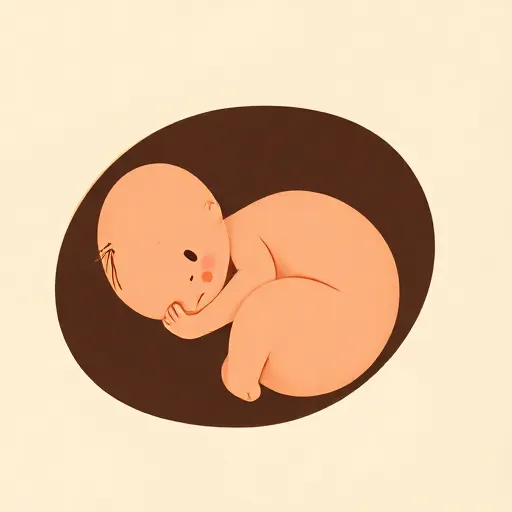
Antoine Arnauld (1612–1694) fired the first big objection. A baby in its mother’s womb, he argued, must have the power to think — it has a soul — but surely the baby isn’t aware of those thoughts. If we can’t remember them and can’t point to them, how can anyone say they were conscious? Descartes replied that the baby does have conscious thoughts, but the impressions don’t stick in memory. You can be aware of something and then forget it entirely, like a dream that vanishes the moment you wake up.
Other Cartesians began to worry about what consciousness actually reveals. Louis de la Forge (1632–1666) and Nicolas Malebranche (1638–1715) described consciousness as an inner sensation — like an extra sense that reports, “you are seeing red” or “you are doubting.” But Malebranche added a twist: this inner sense is blurry. It tells you that your soul exists and is thinking, but it doesn’t reveal what your soul is really made of. You can feel your own thinking, but you can’t see its deepest nature. So the transparency of the mental — the idea that all thoughts are fully known — started to crack, even among Descartes’s own followers.
The Flashlight That Lights Itself: The Riddle of Reflection

If consciousness is awareness of your own thought, does that require a second thought watching the first one? Pierre Daniel Huet (1630–1721) said yes. When you think “I am thinking,” the object of your thought is the thought itself. But you can’t have a single action bend back onto itself entirely — it would be like an arrow curving in mid‑air to hit itself. So, Huet concluded, you need two thoughts: one doing the thinking, and a second reflecting on it. But then how are you aware of that second thought? You’d need a third, and a fourth — an infinite regress that never bottoms out.
Cartesians had a clever reply. Pierre‑Silvain Régis (1632–1707) said thought is more like seeing light. When you look at a candle, the flame makes itself visible without needing a second flame to illuminate it. Similarly, a thought is self‑intimating: it makes you aware of itself all by itself. Antoine Arnauld added the idea of virtual reflection: every thought contains a built‑in reference to the thinker, like a painting that includes a tiny self‑portrait of the artist somewhere in the corner. You don’t need a whole separate thought; the awareness is folded into the original thought from the start. For the Cartesians, consciousness does not require two mental acts — it is part of the very shape of a thought.
Locke’s Deep Sleep: What Happens When You Are Not Conscious?

John Locke (1632–1704) attacked the problem from a different angle. He agreed that when you think, you’re conscious of it — but he didn’t believe the soul is always thinking. Have you ever fallen into a deep, dreamless sleep and woken up with no memory of any thought at all? Locke insisted that experience itself settles the question: “Every drowsy nod shakes their doctrine,” he wrote, meaning that the Cartesian idea of non‑stop thinking simply doesn’t match our lives.
This mattered because Locke wanted to pull apart what you are — a conscious person — from the invisible stuff of your soul. Your identity as a person depends on consciousness linking your memories and actions, not on some ghostly soul‑substance. Consciousness becomes the thread that stitches your past self to your present self. If you lose all memory of an event, then as a person you are not responsible for it. That was a huge shift: consciousness turned into a psychological knot tying a life together, rather than a moral witness judging right and wrong.
The Ocean’s Roar: Leibniz Invents a Theory

The biggest break with Descartes came from Gottfried Wilhelm Leibniz (1646–1716). Leibniz flatly rejected the claim that all mental states are conscious. He argued that the mind is full of petites perceptions — tiny, dim perceptions that never poke through into awareness. To make this feel real, he asked you to stand on a shore and listen to the roar of the sea. The great noise is made of thousands of individual wave‑sounds, each one too small to hear by itself. But when they fuse together, you hear the powerful, conscious roar.
Leibniz introduced a new word: apperception. It means the kind of perception that is distinct and forceful enough that you notice it — a perception that “makes itself felt.” In his theory, consciousness isn’t a separate magic ingredient; it’s what happens when a perception crosses a certain threshold of strength or clarity. Below the threshold, the perception is still there, doing its work, but you don’t feel it. Above the threshold, you’re aware of it. And that threshold can shift: after you live next to a noisy mill for a while, the sound fades from consciousness even though the hammering continues. Your brain hasn’t stopped registering it; the sound just lost the punch of novelty.
So Leibniz turned consciousness into something that could be explained in terms of more fundamental stuff — representations and their forcefulness. This was the start of a naturalistic project: instead of treating consciousness as an unsolvable mystery that simply comes with being a mind, philosophers could hunt for the causes that turn ordinary information‑processing into felt experience.
Why It Still Matters: The Question That Won’t Go Away
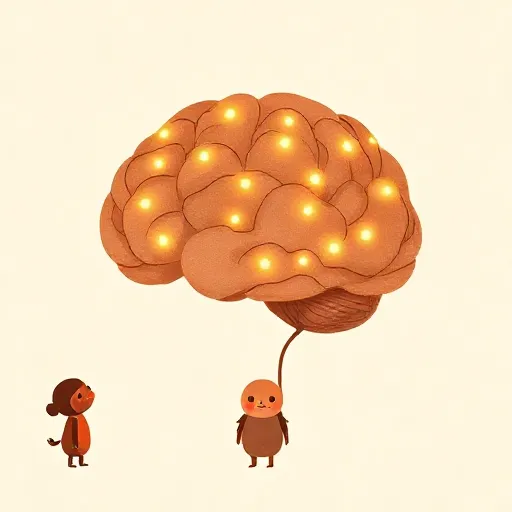
You might think this is just old history. But the very same questions are alive in today’s neuroscience labs. Researchers study blindsight, where people can guess what is in front of them without any conscious seeing. They measure brain activity that predicts a decision seconds before you feel you made it. They argue over whether consciousness is a threshold effect, a global workspace, or something else entirely.
At the dinner table or in your own head, you can still catch echoes of the 1600s fights. Have you ever walked into a room and then immediately forgotten why, your mind already on the next thing? Did the purpose simply vanish, or was it an unconscious perception that nudged above threshold for just a flash? The problem Descartes stumbled into — what is this inner awareness that seems to come with thinking? — remains one of the most thrilling puzzles on Earth. And it began right when someone first looked inside and noticed that noticing itself is worth explaining.
Think about it
- Leibniz thought that many tiny, unnoticed perceptions add up to conscious experience. Can you think of a moment when a bunch of small details suddenly clicked together and you became aware of something? Did those details exist in your mind before you noticed?
- Locke argued that during dreamless sleep, you are not thinking. But your body keeps breathing and your brain processes sounds. Does that mean some mental activity can happen without consciousness? How might you test if you had a thought you never knew about?
- Descartes said every thought comes with a built‑in awareness. If you discovered you had a thought you were never aware of, would that change how you think about what it means to be “you”?