Can a Bowl of Millet Teach You to Be a Good Person?
A Laugh at the Duke’s Feast
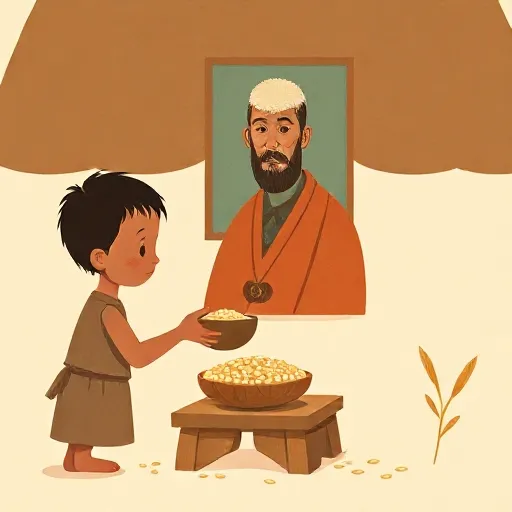
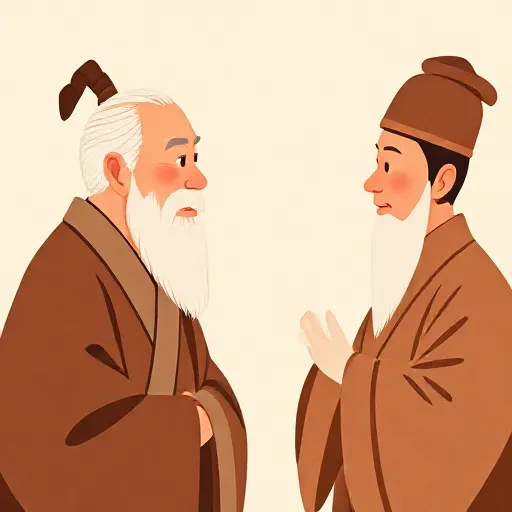
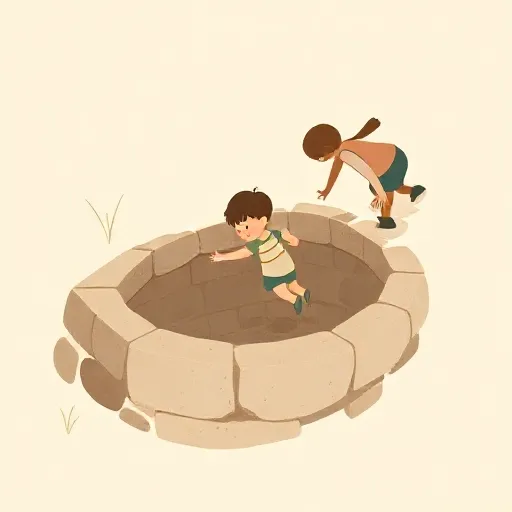
Picture this: you’re invited to a grand banquet in ancient China. The table is set with roast meats, millet, and a single peach. Everyone knows the proper way to eat a peach is to scrub it clean with a handful of millet grains — the coarse grain brushes the fuzz from the fruit. But when the guest of honor, an older man named Confucius (551–479 BCE), sits down, he pops the millet straight into his mouth. The other guests snicker. What a blunder!
Confucius doesn’t blush. He explains that in sacrifices to the ancestors, millet is the most honored offering. Placing a ritually common peach above that sacred grain would be arrogant. He would rather look foolish at a feast than disrespect the rites.
This story from hundreds of years after his death captures something central about Confucius. He wasn’t fussy about forks or spoons. He believed that ritual propriety ( li ) — the patterns of behavior we repeat in ceremonies, greetings, meals, and mourning — doesn’t just display who we are. It slowly, quietly, builds who we become.
The Man Who Became a Symbol
Confucius was born in the small state of Lu, in what is today Shandong Province, around 551 BCE. His father died when he was very young, leaving the family poor but with some social standing. As a boy, the future teacher became known for mastering the old Zhou dynasty rituals and music. In his adulthood, he traveled from court to court, working as an official, an advisor, and a teacher, hoping to find a ruler who would put his ideas into practice. He never found that perfect ruler. Late in life, he turned fully to teaching a circle of students.
The trouble is, almost everything we think we know about Confucius is woven from brief dialogues and sayings written down by people who lived generations after him. The most famous collection, the Analects , was probably compiled over centuries, with some parts only becoming widely read long after his death. New ancient manuscripts dug up in recent decades — in tombs in Hebei, Hunan, and even North Korea — show that many different versions of conversations with Confucius once circulated. Some sayings attributed to him in one text appear in another text as the words of somebody else. So historians are careful: the true “core” teachings are debated.
Still, across all these fragments, several big ideas keep surfacing, like a melody that won’t fade. The most powerful of them is this: you can train your feelings the way a musician trains her fingers.
Ritual Is Not Just “Going Through the Motions”
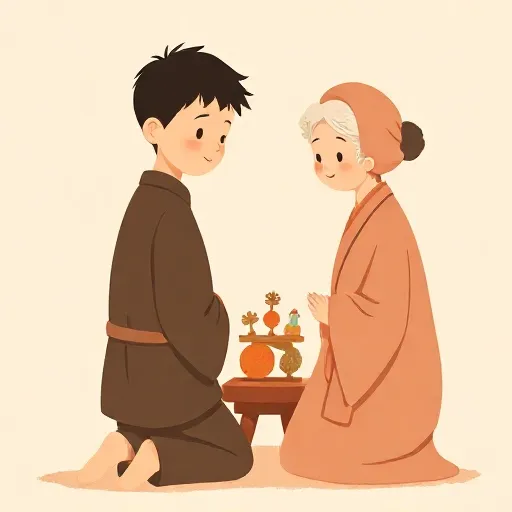
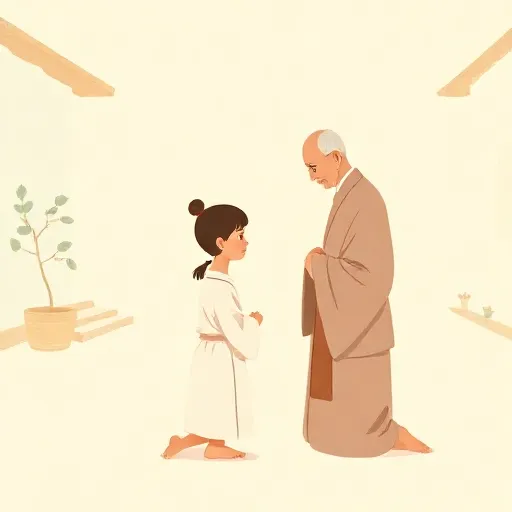
Imagine you visit a friend whose grandmother has died. You sit quietly, you bow, you offer food. You might think the only reason for these customs is to comfort the family. Confucius saw something deeper. The act of bowing, of being still and silent, doesn’t just show your respect — it produces a respectful feeling inside you. Over time, repeated actions shape your emotional habits.
Confucius was not interested in empty ceremony. In one dialogue, he said he couldn’t bear “ritual performed without reverence, or mourning performed without grief.” A ruler might burn incense and offer meat, but if his heart wasn’t in it, the ritual was worthless. The inner state mattered more than the outer show. That was a radical claim in an age when many people saw offerings as a transaction: I give the spirits food, they give me good luck. Confucius shifted the focus inward.
He also thought ritual trains us to control our desires. He compared the way of the gentleman ( junzi ) — his term for a morally mature person — to an embankment dam: it blocks the overflow of selfish wants so you can reflect instead of grabbing. When a disciple wanted to cancel part of a seasonal sacrifice to save a sheep, Confucius objected, “You care about the sheep; I care about the ritual.” The ritual restraint was the point.
The Roots of a Good Life
If ritual shapes your emotional soil, what grows from it? Confucius described five central virtues he thought a gentleman should cultivate:
- Benevolence ( ren ): caring for others from their point of view. It’s the widest virtue. In one exchange, a disciple asked what benevolence means, and Confucius replied that it is to love all people. But he also gave concrete snapshots: treating a stranger on the street as an honored guest, speaking cautiously rather than with clever winks, and serving your parents with genuine feeling.
- Righteousness ( yi ): an inner compass that keeps you from doing the wrong thing for profit. A gentleman, he said, “thinks of righteousness when faced with gain.” Even if all you had to eat was coarse rice and water, you should not accept wealth gotten by crooked means.
- Ritual propriety ( li ): the sense of where you stand and what you owe others in each situation — how to grieve, how to host a guest, how to speak to an elder.
- Wisdom ( zhi ): knowing people and situations well enough to act appropriately. It’s the virtue that lets you tell honest advice from flattery, and know when you don’t know something.
- Trustworthiness ( xin ): being the kind of person others can rely on. Confucius told a ruler that if the people don’t trust their government, the state cannot stand — even more crucial than food or weapons.
These are not separate, like items on a checklist. They grow into each other, much as practicing the piano every day makes you a musician who can play with sensitivity, not just a robot following sheet music. Confucius thought a person develops by imitating the good examples of the past — the legendary sage kings — and adapting their patterns to the messiness of real life.
Think about the phrase you might have heard: “Do not do to others what you do not want done to yourself.” Confucius said something very close to that. But instead of using it as a one-size-fits-all rule, early records often use it to explain how a ruler’s personal example works. If a ruler wants the people to be honest, she must first be honest herself. Moral reform spreads like wind bending grass — not through shouted commands, but through a life that others can see and follow.
The State Begins at the Breakfast Table
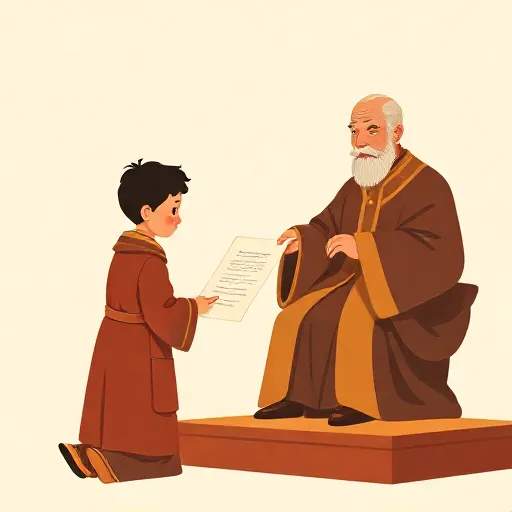
One of Confucius’s boldest moves was to connect family life to political life. In the Analects, a disciple says: a person who respects their parents and older siblings will rarely defy their superiors. And so, he adds, such family feeling is the very root of a person’s moral path.
That link between private and public life became one of the most powerful — and most controversial — ideas in East Asian history. Confucius and those who developed his thought imagined society as a web of five key relationships: ruler and subject, parent and child, husband and wife, older and younger sibling, and friend and friend. Each pair carries mutual duties. If a father conceals his son’s mistake, or a son conceals his father’s, Confucius once remarked, that loyalty within the family is itself a kind of uprightness.
But that created a real tension. What if loyalty to your father clashes with loyalty to the law? In one story, a student named Zengzi once submitted meekly to a furious beating from his father. Confucius scolded him afterward: even the great sage Shun would have protected his body from crippling harm, because your body is a gift to your parents and a duty to your ruler. True filial piety is not mindless obedience — it requires judgment.
Confucius also reimagined an older idea: the Mandate of Heaven ( tianming ). Ancient kings claimed that Heaven supported their rule because of their virtue. Confucius, who never gained real political power, became a walking puzzle for that theory. If virtue alone didn’t guarantee a throne, where did Heaven’s role end? In the Analects, Heaven is less a cosmic judge barking orders and more the source of the moral order itself — visible in the rhythms of culture, ritual, and the consciences of good people. A ruler proves his right to govern not by magic but by how he serves his subjects and performs the rites.
Why This Still Matters
You might never scrub a peach with millet. But every day you follow little rituals you don’t think about — how you greet a friend, how you sit at a table, how you react when someone cuts in line. Confucius would say those tiny, repeated moves are quietly sculpting the kind of person you are becoming.
For over two thousand years, his ideas were woven into the education systems of China, Korea, Japan, and beyond. In the modern era, reformers both celebrated him as a guide to moral renewal and condemned him as a prop for old hierarchies. Yet the core question he asked survives every political battle: can a society flourish if its people don’t cultivate honesty, self-control, and genuine concern for one another? And can you cultivate those virtues without the daily practice that ritual provides — not just big ceremonies, but the small, deliberate acts that remind you what you care about?
The old master would probably answer with another question, gentle and sharp at once: “What are you practicing right now?”
Think about it
- If a school lunch period has no rules at all, what kind of habits do students build over a year? Do those habits make people more selfish or less selfish? Why?
- Confucius believed that being a good child to your parents is the first practice ground for being a fair ruler. Can you think of a situation where loyal behavior in a family would actually make someone a worse political leader?
- Can you design a small daily ritual — something you do for thirty seconds — that would train yourself to be more patient? What would it look like, and why might it work?