Philosophy for Kids

What Does It Mean to Be a Woman? Confucian Ideas About Gender

A Puzzle

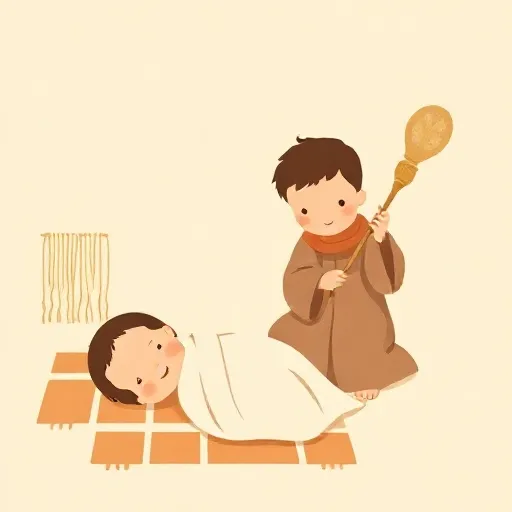
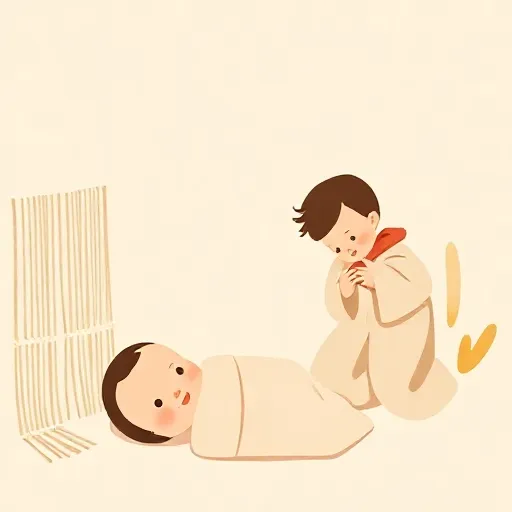
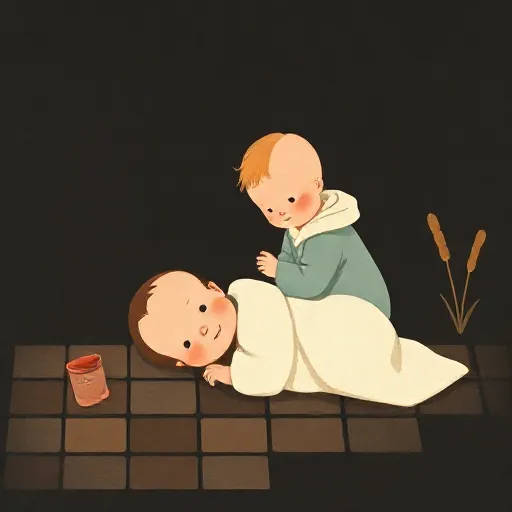
Imagine two babies are born on the same day. One is wrapped in a fine robe and placed on a couch to sleep, with a tiny toy scepter put in its hand. The other is wrapped in rough cloth and laid on the floor, with a weaving tile put in its hand. From that moment on, everything about how these babies are raised will be different—what they’re taught, what they’re allowed to do, who they’re expected to become.

The first baby is a boy. The second is a girl.

This isn’t a made-up example. It comes from one of the oldest collections of Chinese poems and songs, the Book of Songs, composed over 2,500 years ago. And it raises a strange and difficult question that philosophers still argue about today: Are the differences between men and women something natural and inborn, or are they created by the way a society raises its children and assigns them roles?

In the Western philosophical tradition, many thinkers have argued that women are by nature inferior to men—less rational, weaker in character, less capable of virtue. Confucian philosophy, which has shaped Chinese society for over two millennia, says something very different. And that difference is both fascinating and troubling.

The Trouble with “Gender” Itself

Here’s a surprising fact: there is no word in classical Chinese that means exactly what English speakers mean by “gender.” The Chinese term used today to translate “gender” (xingbie) was only invented in the 1990s, as a direct response to Western feminist ideas arriving in China. Before that, the closest term was nüxing—“woman” or “female nature”—which itself was a new word created in the 1920s.

This isn’t just a translation problem. It points to something deeper. In the Confucian tradition, people aren’t understood first and foremost as “men” and “women” with fixed inborn traits. Instead, they’re understood through their roles in a family and society. A person is a daughter, a wife, a mother—or a son, a husband, a father. These roles come before the idea of “being a woman” or “being a man.”

The earliest Chinese dictionary defined the character for “woman” () the same way it defined “married woman” (fu). A daughter, in this way of thinking, is just a wife-in-waiting. Your identity is tied to your place in a web of relationships, not to some inner essence.

This might sound strange to someone raised on Western ideas about individuality. But it also raises some interesting questions: If gender is mostly about roles, then what happens when we change the roles? Can we imagine a different set of roles that wouldn’t be unfair?

Inside and Outside: The Nei-Wai System

The most important concept for understanding gender in Confucian philosophy is the distinction between nei (內) and wai (外)—“inside” and “outside.” This isn’t just about physical space, though it includes that. It’s about spheres of life.

Nei is the domestic sphere: the household, the family, the inner quarters. Wai is the public sphere: politics, scholarship, travel, official careers, friendship outside the family. According to the Confucian classics, a woman’s proper place is nei, and a man’s proper place is wai.

Now, here’s an important point: nei is not considered inferior to wai. In fact, nei is the center from which everything else grows. The Confucian classics say that “from the distinction between man and woman came the righteousness between husband and wife,” and from that came all the other relationships that make civilization possible—father and son, ruler and minister. The family is the foundation of everything good.

But—and this is a crucial “but”—the sphere of nei is much more restricted than wai. A woman’s life, ritually and physically, was supposed to be centered on her home. She could learn to read and write (basic literacy), but her education focused on cooking, weaving, managing a household, and being a compliant wife. A man’s education, by contrast, was designed to prepare him for the wider world: classical texts, philosophy, politics, military arts, travel, and public service.

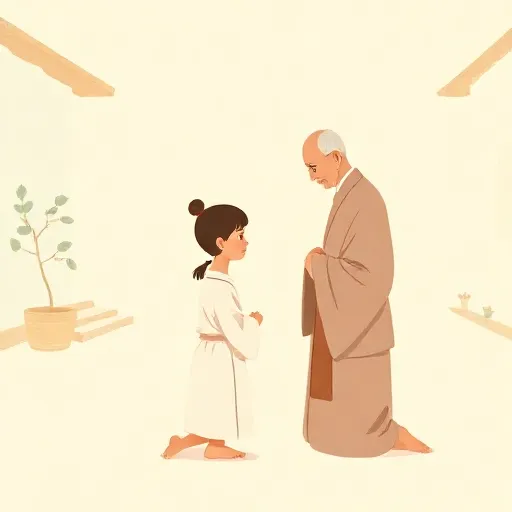
The Book of Rites spells this out in detail. At age seven, boys and girls stop sitting together or eating together. At age ten, their education diverges completely. Boys go out to study with outside teachers. Girls stay home to learn “pleasing speech, pleasing expression, and compliance.”

This created what philosophers call a structural limitation. Even if a particular woman was brilliant, ambitious, and virtuous, there was no legitimate path for her to become a scholar-official, a traveling teacher, or a political advisor—unless she was connected to powerful men. The famous case of Confucius himself, who spent decades wandering from state to state teaching rulers and collecting disciples, was simply impossible for any woman of his time.

The Case of Ban Zhao: Exception That Proves the Rule

There was one woman who did manage to achieve something close to what great male scholars achieved. Her name was Ban Zhao (c. 45–117 CE), and she’s one of the most remarkable figures in Chinese intellectual history.

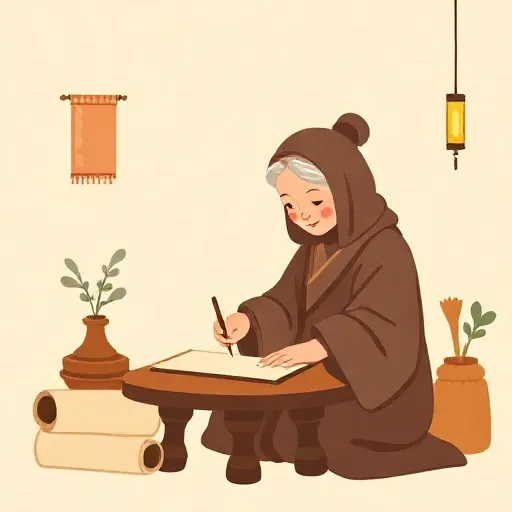
Ban Zhao came from a family of scholars. Her father, her brothers, her uncles—all were educated in the classics. And unusually, so was she. After her eldest brother died, the emperor summoned Ban Zhao to the imperial library to complete the History of Han, an official dynastic history. She worked as a de facto grand imperial scholar, teaching not just palace women but also ten male colleagues.

She also wrote a famous text called Admonitions for Women (Nüjie), which became the foundation of a whole genre of “didactic texts for women.” Here’s where it gets complicated. Ban Zhao’s text is deeply conservative. It tells women to be compliant, modest, hardworking, and loyal to their husbands’ families. It seems to endorse the system that kept women confined to nei.

Yet buried inside this conservative text is a radical move. Ban Zhao argued that girls should receive the same classical education as boys. She cited the Book of Rites as her authority—but she subtly changed what the Book of Rites actually said. The original text said girls should learn only basic reading and numbers. Ban Zhao claimed it said girls should study the classics until age fifteen, just like boys.

She almost certainly knew she was bending the text. As a grand imperial scholar, she would have known the original by heart. But by appealing to authority while quietly subverting it, she created a justification for women’s education that lasted for centuries.

Ban Zhao’s life shows both the possibilities and the limits of the Confucian gender system. She achieved extraordinary things—but only through a combination of extraordinary family luck (being born into a scholarly family that educated her), personal tragedy (being widowed young, which freed her from some domestic duties), and political opportunity (the emperor needing her skills). There was no normal path for women like her. She was the exception, not the rule.

The Three Followings and the Four Virtues

The core of women’s roles in Confucian philosophy is captured in two teachings.

The “three followings” (sancong) say that a woman throughout her life is to follow (or depend on) the men around her: as a child, she follows her father; when married, her husband; when widowed, her sons. The word cong can mean “follow” or “depend on”—it’s not exactly the same as blind obedience. And the principle of generational seniority means that a mother actually has real authority over her adult sons. The famous story of Mencius’s mother shows her scolding her grown son, the great philosopher himself, for his lack of ritual propriety.

But still: a woman’s legal and social identity was always mediated through a man. She couldn’t hold office, couldn’t travel freely, couldn’t make independent decisions about her life.

The “four womanly virtues” (side) spelled out what a woman should cultivate: virtue (moral character), speech (careful and pleasing words), comportment (modest appearance and behavior), and work (household management, weaving, cooking). These were presented as achievable ideals, comparable to the great male virtue of ren (benevolence or humaneness) that Confucius taught.

And here’s the irony that some contemporary scholars point out: Ban Zhao’s advocacy for women’s education, even though it was wrapped in conservative language, created a space for women to become authors and intellectuals. The genre of “didactic texts for women” that she started was written by women, for women, and about women’s lives. Over the centuries, women writers used this genre to claim authority over the domestic sphere—and sometimes to assert that the domestic sphere was actually more important than the public sphere.

One later writer, known only as Woman Liu (c. 1580), went so far as to argue that women were superior to men and that nei (inside) was more important than wai (outside). This is a remarkable claim for a woman living in a deeply patriarchal society. And she could make it because she was writing within a tradition that she was now part of.

The Problem of Patrilineage

Underneath all of this is something even more basic: the Confucian family system was built around the male line of descent—patrilineage. The purpose of marriage, according to the Book of Rites, was “to secure the sacrificial service in the ancestral temple and to continue the lineage.” A woman married into her husband’s family, not the other way around. Her identity was tied to producing male heirs for that family.

This created devastating pressures. A wife who couldn’t have children could be divorced. (There were “seven reasons” for divorcing a wife, and childlessness was one of them.) Women often participated in practices that were harmful to other women—female infanticide, child marriage, concubinage—because these practices served the interests of the patrilineage that women depended on for their own survival and status.

The great Confucian philosopher Mencius famously said, “There are three unfilial things, and to have no posterity is the greatest.” A man who didn’t produce a male heir was failing his ancestors. This wasn’t just about personal preference; it was about the deepest moral obligations a person had. And it fell on women to fulfill this obligation—or to bear the blame for failing.

Can Confucianism Be Feminist?

In recent decades, a new debate has emerged. Some scholars, especially in the West, have dismissed Confucianism as simply patriarchal and oppressive—something to be left behind. But others have asked a more interesting question: Could Confucian philosophy be used to build a feminist theory, rather than just being criticized as anti-feminist?

This is a strange idea, but not as strange as it sounds. After all, Western feminists have found useful ideas in the work of many Western philosophers who personally held misogynistic views. If we can use Plato or Kant (both of whom said problematic things about women) to build feminist theories, why not Confucius?

The key insight some scholars offer is this: Confucianism already contains resources that feminists could use. The concept of ren (benevolence or humaneness) emphasizes caring relationships and mutual responsibility—ideas that resonate with feminist “care ethics.” The Confucian idea of the self is not the isolated, independent individual of Western liberalism, but a person constituted by relationships. This fits with many feminists’ critique of the “autonomous self” as a fiction.

Some have proposed replacing the traditional husband-wife relationship with the Confucian concept of friendship (you). Friendship in the Confucian tradition is not just about liking someone; it’s about mutual commitment to moral growth. Unlike the husband-wife relationship, which is defined by hierarchy and gender roles, friendship is defined by trust and shared aspiration. A marriage modeled on friendship would be flexible about who does what—no fixed gender roles, no “inside” and “outside” assigned by birth.

This is a radical rethinking of Confucian tradition, to be sure. It’s not what the ancient texts say. But it’s one example of how philosophers today are trying to take the good parts of a tradition—its emphasis on care, relationship, and moral growth—while discarding the parts that caused real suffering.

What’s Still Unresolved

Philosophy doesn’t usually end with neat answers. Here are some questions that remain open, and that philosophers still argue about:

If gender is mostly about roles rather than nature, does that mean we could just change the roles and eliminate gender inequality? Or are there constraints from biology or psychology that we can’t ignore?

Was Ban Zhao a feminist hero for arguing for women’s education, or was she part of the problem for writing a text that told women to be compliant? Can someone be both?

Can a tradition that was used for centuries to justify women’s subordination ever be truly reformed? Or is it time to leave it behind entirely?

What would a society look like if it took the Confucian emphasis on care and relationship seriously, but gave women and men equal access to both the “inside” and “outside” spheres?

These aren’t just academic questions. They’re about how we think about fairness, identity, and what it means to live a good life—questions that matter no matter what tradition you come from.


Key Terms

TermWhat it does in this debate
Nei (內)The “inside” or domestic sphere, associated with women in Confucian thought
Wai (外)The “outside” or public sphere, associated with men
Sancong (三從)“Three followings”—the idea that a woman depends on her father, then husband, then sons throughout life
Side (四德)“Four womanly virtues”—virtue, speech, comportment, and work—that women were expected to cultivate
PatrilineageA family system organized through the male line; women marry into their husband’s family
Ren (仁)The highest Confucian virtue, often translated as benevolence, humaneness, or compassion
Xingbie (性別)The modern Chinese word for “gender,” invented in the 1990s

Key People

  • Confucius (551–479 BCE) – The founder of the Confucian tradition; a teacher and philosopher who spent much of his life traveling to advise rulers. He said very little directly about women, but his ideas shaped the system that confined them.
  • Mencius (c. 372–289 BCE) – A major Confucian philosopher who emphasized the innate goodness of human nature and the importance of filial piety. His famous statement about “no posterity” became central to the pressure on women to bear sons.
  • Ban Zhao (c. 45–117 CE) – The first female Confucian scholar-official, author of the Admonitions for Women. She argued for equal education for girls while also writing a conservative guide to female behavior. Her life showed both the possibilities and limits of the Confucian gender system.
  • Woman Liu (c. 1580) – A late Ming author of a didactic text for women who argued that the domestic sphere (nei) was actually superior to the public sphere (wai)—a radical claim for her time.

Things to Think About

  1. If you were raised in a Confucian society that didn’t even have a word for “gender,” would you think of yourself as “a woman” or “a man” first, or as “a daughter” or “a son” first? Does the language we use shape who we think we are?

  2. Ban Zhao argued for equal education while also telling women to be compliant. Was she being strategic (saying what she had to say to get her foot in the door), was she inconsistent, or was she genuinely trying to improve women’s lives within the existing system? Can you think of real-world examples where people today face similar choices?

  3. The Confucian tradition emphasizes caring for others as a moral and political ideal. Some scholars think this could be the basis for a feminist philosophy. But others worry that emphasizing care and relationship just gives women more unpaid work to do. How do you tell the difference between a philosophy that values care and one that uses care to exploit people?

  4. Many societies throughout history have had strict gender roles that people accepted as natural. If you were born into such a society, would you be able to see its unfairness? What makes it possible for people to look at their own culture critically?

Where This Shows Up

  • In debates about gender today: People still argue about whether differences between men and women are “natural” or “socially constructed.” The Confucian approach—focusing on roles rather than inner nature—is one alternative way of thinking about this.
  • In discussions about work and family: The question of who does the “inside” work (caring for children, managing the household) and who does the “outside” work (paid employment, public life) is still very much alive, even in societies that claim to believe in equality.
  • In arguments about multiculturalism: When Western feminists criticize practices like footbinding, veiling, or child marriage in other cultures, are they helping women or imposing their own values? This is a version of the question the article raises about whether Confucianism can be reformed or should be rejected.
  • In the #MeToo era: The question of whether a tradition built on hierarchy and male authority can be reformed from within is a live debate in many religious and cultural communities today, not just in Confucian ones.