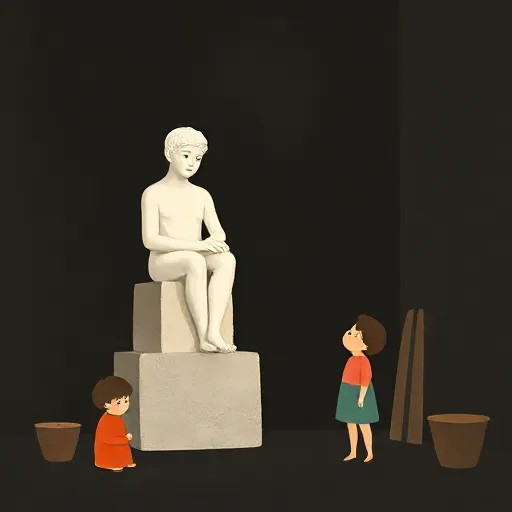
What If You Woke Up as Just a Nose? Condillac’s Thought Experiment
A Statue Comes to Life, One Sniff at a Time
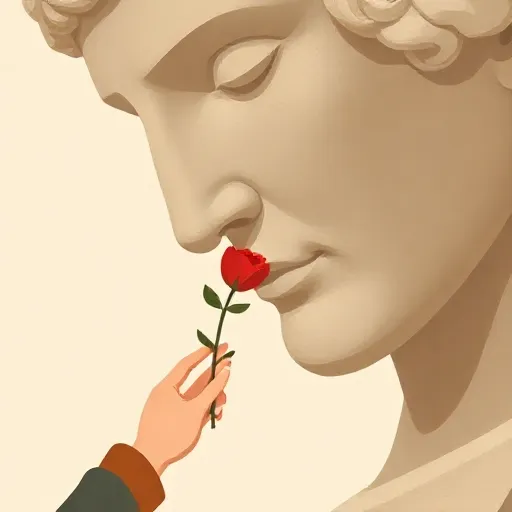
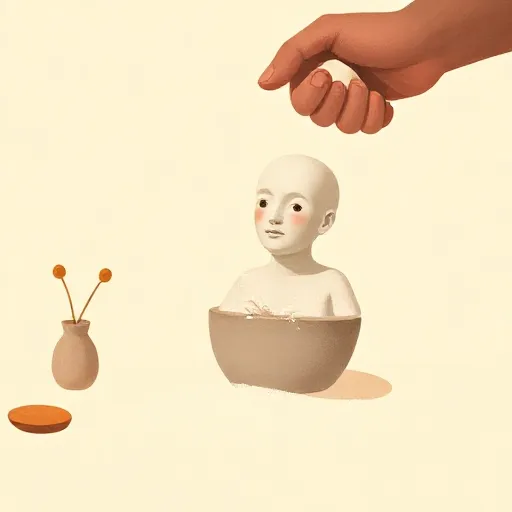
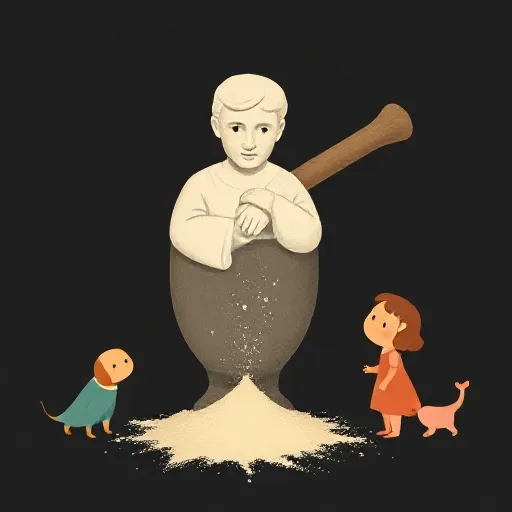
In 1754, the French philosopher Étienne Bonnot de Condillac (1714–1780) asked a bizarre question. Imagine a human-shaped statue—a lifeless block of marble built exactly like your body. Now suppose you could give it just one sense: the sense of smell. What would this statue know? What would it think? What would it be?
Condillac used this thought experiment to push a bold claim. He was a sensationist—someone who believes the mind starts as a blank slate and every idea, every thought, even the idea of “I” and the whole outside world, is built from sensations alone. No built-in concepts. No hidden machinery. Just raw experience. The statue was his tool to show how, step by step, a mind could construct the world from scratch.
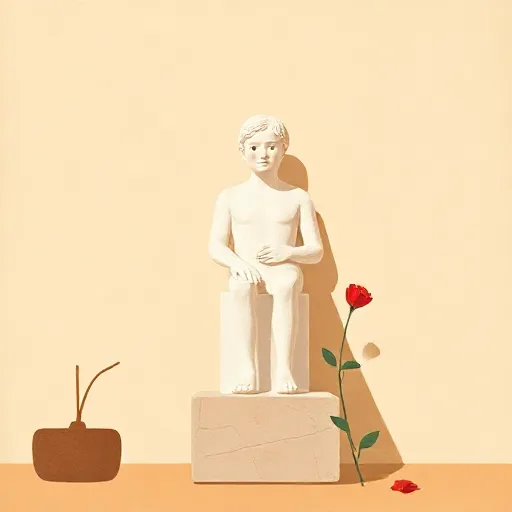
At first, the statue doesn’t think “I smell a rose.” It has no idea of a self or a rose. The smell is all there is. The statue is the scent of the rose. From its own point of view, Condillac wrote, it simply exists as a rose-scented thing. There is no separation between subject and object—just one continuous sensation.
But then things change. Different smells come and go. A whiff of jasmine follows the rose. The statue remembers the previous smell faintly while experiencing a new one. It notices it was one way and now is another. For the first time, it discovers that it is something that endures through change. A primitive sense of “I” is born—not from some hidden soul, but from the rhythm of sensations themselves. Condillac called this reminiscence: the dim awareness that you have been something before.
Give the statue hearing next. Now it experiences itself as both a smell and a sound at once—a double existence. It doesn’t yet think of them as separate things. The smell has a sound and the sound has a scent, like two properties of one experience. The concept of substance, Condillac argued, is nothing more than a bundle of sensations we learn to expect together.
Touch: The Sense That Builds a World
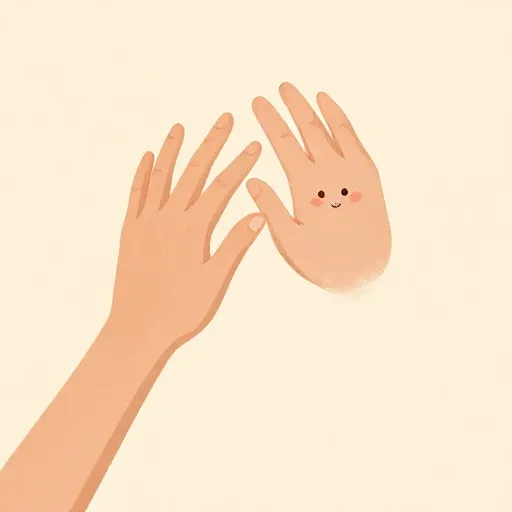
Smell and hearing alone give no idea of space or outside objects. For that, Condillac insisted, you need touch—and one special sensation: solidity. Solidity is the feeling of resistance when you press against something. When the statue touches its own body, say its hand presses against its arm, it feels solidity in the hand and an answering solidity in the arm. It experiences itself as two solid sensations outside of one another.
By moving its hand slowly over its body without lifting, the statue gets a continuous stream of solidity sensations. From this repeated pattern it infers that all these touched parts coexist in one extended surface. It learns it has a body—a spatial thing.
The real leap happens when the statue touches something else, like a stone. It feels solidity in the hand, but no answering sensation anywhere else. That missing echo teaches the statue that there is something solid that is not itself. This is the birth of the idea of an external object. Over time, through varied touch, the statue discovers shapes, sizes, and locations. Touch, for Condillac, is the first true teacher of space.
From Colors to Objects: The Trick of Sight
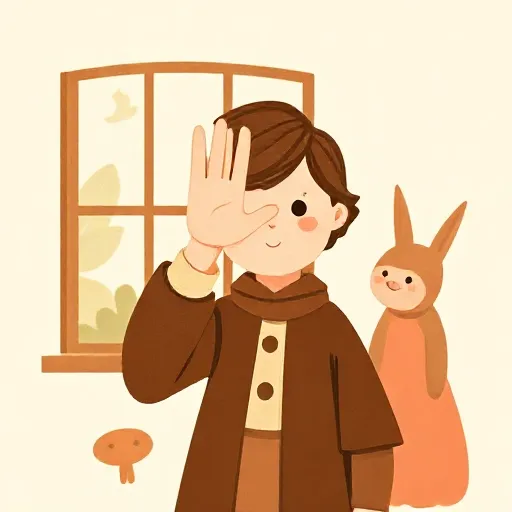
Now give the statue eyes. At first, it receives only patches of color. Condillac argued that light and colors are originally extended in two dimensions—left, right, up, down—but not in depth. The statue sees a shapeless mosaic of reds, greens, and blues. It doesn’t notice edges or figures because it has no reason to pay attention to them.
How does it learn to see shapes? By connecting sight with touch. When the statue moves its hands before its eyes, some color patches vanish and reappear. It discovers that those patches are linked to the tangible objects it already knows. It begins to project colors onto surfaces at arm’s length. Then, by associating visual cues—like how clear an image is or how large it appears—with the effort needed to touch something, the statue learns to judge distance. Depth is not seen directly; it is inferred from past touch experiences. Even seeing space, Condillac concluded, is a lesson built from sensation and association.
This flipped his earlier view and sided with the English surgeon William Chesselden (1688–1752). Chesselden had reported that patients born blind and later given sight needed time to connect what they saw with what they had previously touched. Pure visual sensation, Condillac now believed, does not come with an owner’s manual.
Language: The Power of Signs
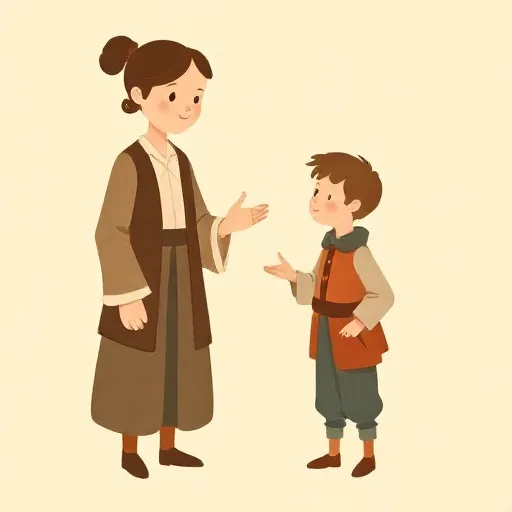
Even with touch, the statue’s thinking is limited to whatever sensations are present. How do humans achieve memory, reason, and voluntary control over their thoughts? Condillac’s answer: signs. He sorted signs into three kinds. Accidental signs are things that often happen together—like a crow’s caw making you think of dawn. Natural signs are instinctive cries and gestures, like a scream of fear. Instituted signs are signs we create on purpose to stand for ideas.
Animals and the early statue use only accidental and natural signs. But humans take a momentous step. Suppose someone screams when they see a predator. Over time, they learn to produce that scream deliberately, even when the predator is absent, to warn others. That scream becomes an instituted sign. From such cries and gestures, a language of action grows. Spoken language emerges slowly, with new words invented by analogy.
For Condillac, language transforms the mind. Signs give us memory—the power to call up an absent object by thinking of its sign, rather than waiting for a chance association. Signs let us control our attention and direct our imagination. By naming complex ideas, we can reflect on things that are not in front of us. Even science and mathematics are just highly refined languages that track the analysis of sensations. All higher thinking, in this view, rests on a foundation of sensation, channeled through signs.
This also drew a hard line between humans and animals. Animals, lacking instituted language, live in an eternal present of sensations and habits. They cannot form moral laws or know God. Only humans, with their language-powered minds, cross that threshold.
Cracks in the Statue
Bold as it was, Condillac’s sensationism hit a major snag. He believed that colors—as we experience them—are literally extended in space. A patch of red spreads out. But he also insisted that sensations are modifications of the mind, and the mind is an unextended, immaterial substance. How can something extended exist in something that has no size? Critics accused him of sliding into materialism—the view that the mind is physical. Condillac tried to dodge by saying we don’t notice extension when we treat colors as our own inner states. Many found that reply unsatisfying.
Another problem: if we only ever know our own sensations, how can we be sure an external world exists? Condillac admitted we cannot prove that objects are colored or even extended in the way we think. Yet his whole story of touch took for granted that hands are real, extended objects moving through space. He needed a real body to explain how the statue learns.
Also, his account of memory and free will seemed to sneak in primitive powers that sensation alone cannot produce. The sense of “pastness” and the ability to direct attention may be part of the mind’s original equipment. These gaps don’t ruin Condillac’s project, but they show how hard it is to build a mind from sensations only.
Why It Still Matters
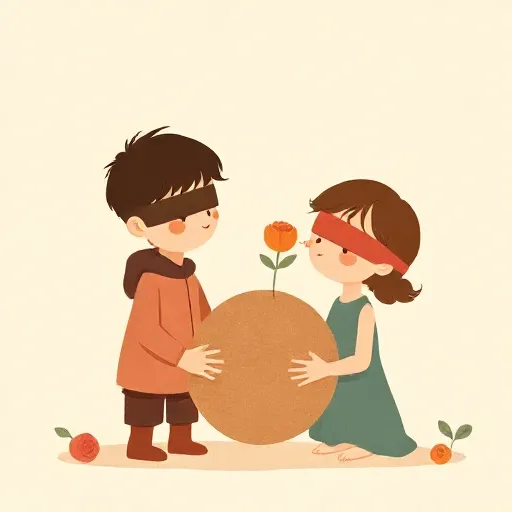
Condillac’s statue experiment is more than an oddity from the 1700s. It forces us to ask: if you grew up with only one sense at a time, would you ever piece the world together? Today’s engineers build robots that learn from sensor data and face the same question—how does a camera image become a concept of a solid object? Psychologists watch babies combine sight and touch to understand depth. And philosophers still debate whether our minds are purely shaped by experience or come with built-in structure.
Next time you close your eyes and smell fresh bread, try something. Ask yourself: if that smell were all you had ever known, what would you think you were? You might just be the smell itself—exactly as Condillac’s statue once was.
Think about it
- If you could only smell and never touch anything, would you ever guess that objects have shapes? Why or why not?
- Condillac thought touch was the key to discovering space. Do you think a person born without the sense of touch could still learn geometry just by seeing? How?
- Suppose a computer program learned everything from sensory data alone, with no pre-programmed knowledge. Would it ever truly understand what it senses, or just process patterns? What’s the difference?