Why Did a Bishop Ban 219 Ideas from a University?
March 7, 1277: A Scroll of Errors
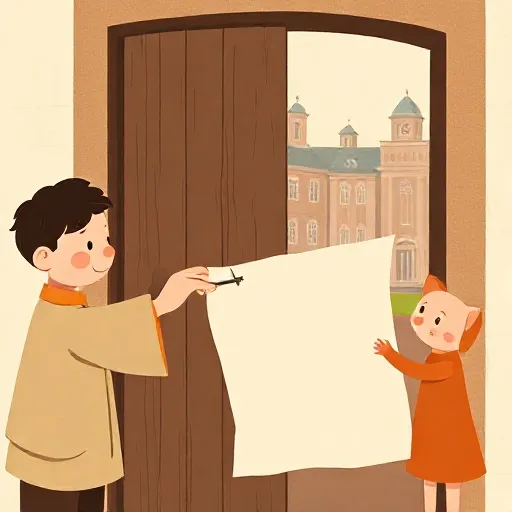
On March 7, 1277, Bishop Stephen Tempier of Paris published a list of 219 statements that nobody at the university could teach or even listen to. Anyone who disobeyed would be excommunicated — thrown out of the Christian community. He said the ideas were dangerous errors spread by “certain scholars in the faculty of arts.” It would become the most famous condemnation in the history of medieval philosophy.
The story, however, is messier than a sudden crackdown. In January 1277 Pope John XXI had sent Tempier a letter saying he had heard rumors of heresy and asked him to investigate who was spreading false teachings. Tempier didn’t just investigate. Within about six weeks he produced a long, disorganized list of prohibited propositions — much more than a normal inquiry would need. Strangely, in his introductory letter he never mentioned the pope’s instructions; he only said “important people” had brought him disturbing reports. To add to the puzzle, the pope sent a second letter at the end of April, giving Tempier a formal mandate to gather names and details, as if he had no idea the March 7 list already existed. Some historians suspect that Tempier was already preparing his condemnation before the first papal letter arrived. The chain of events is still not perfectly clear.
219 Reasons to Be Nervous

The list of 219 errors — an error meant a false belief, according to the bishop — wasn’t neatly organized. It touched almost every big question that fascinated university thinkers: Can God create more than one world? Is the universe eternal, without a beginning? Do all human beings share one single intellect? Many articles dealt with divine omnipotence, God’s absolute power to do anything. Others involved angels, free will, and whether studying philosophy was the highest way of life. Scholars today usually divide the list into 179 philosophical and 40 theological propositions.
Tempier didn’t explain why each idea was wrong. He simply stamped each one with the label “error” and said it could not be held in light of revealed truth — the truths of the Christian faith. Some propositions sound almost like technical puzzles: “If the heavens stood still, fire would not burn straw.” That one actually came from discussions about whether nature would keep working without God’s direct action. Many of the condemned views were inspired by the works of Aristotle and the Arabic philosopher Averroes, which had recently been translated into Latin and were exciting students while making church authorities very nervous.
The Mystery of the Nameless Targets
One of the strangest features of the condemnation is that Tempier didn’t name anyone. He only said the errors were being spread by “certain scholars in the faculty of arts.” Unlike many other medieval censures that pointed straight at specific teachers, this one was faceless. That has left historians guessing for centuries. Two names keep surfacing: Siger of Brabant and Boethius of Dacia, both teachers of philosophy in Paris in the 13th century. A few other documents hint that they were involved, but when modern scholars tried to match the 219 propositions to works by Siger and Boethius, the results were surprising. Out of 219, only about 79 could be traced to known writings with any confidence; 68 couldn’t be found at all. Many of the ones that did match turned out to be quotes or paraphrases from Aristotle or Arab thinkers, not necessarily the teachers’ own views.
Even more intriguing, Tempier himself seemed to separate the “propagators” — the people spreading the ideas — from the ideas themselves. The list might have been drawn from many sources: books, oral student debates, and possibly older collections of suspicious views. Some historians now think that a good number of the propositions came from live disputations that students held in the schools, which would explain why they’re so hard to pin to a single author. The theologian Thomas Aquinas, who wasn’t named, was also suspected of inspiring some of the condemned views. So the condemnation wasn’t a clear trial of two rebellious thinkers. It was more like a wide net meant to catch a whole mood of intellectual daring.
The Trap of “Double Truth”
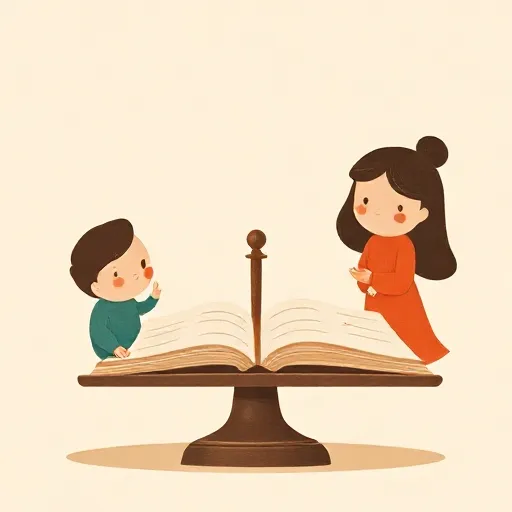
In his introductory letter, Tempier wrote a famous criticism. He said some scholars acted “as if there were two contrary truths, and as if against the truth of Sacred Scripture, there is truth in the sayings of the condemned pagans.” This is the so-called theory of double truth — the notion that a statement could be true according to philosophy but false according to Christian faith, and both could be true at the same time. If something is true, it’s true; it can’t also be false in the exact same sense. That would be a logical mess.
But here’s what most historians agree on: no medieval thinker actually held that absurd theory. Instead, many philosophers and theologians used a careful method: they would first explain what Aristotle or another philosopher had said “philosophically speaking,” and then check whether it matched revealed Christian doctrine. Whenever a conflict appeared, they always said faith’s truth was higher. Tempier’s accusation was probably meant to mock that practice and push scholars never to treat a pagan philosopher’s idea as if it could live in its own little world of truth. The real fight was about how far reason could roam before it had to stop at a wall of faith.
Did the Condemnation Open a Door for Modern Science?

The impact of the 1277 list has been debated for over a hundred years. In the early 20th century, historian of science Pierre Duhem made a bold suggestion: by insisting on God’s absolute power — that God could create many worlds or move the whole universe in a straight line — the condemnation freed Christian thinkers from the belief that nature had to be exactly as Aristotle described it. Duhem even said it marked the birth of modern science. He pointed to articles like number 39 (“That God cannot produce a new motion without producing a new body”) and number 49 (“That God could not move the world in a straight line”) as key examples.
Duhem’s claim was exciting, but later historians found it too simple. Modern science didn’t suddenly appear in 1277; it grew slowly over centuries. Still, many agree that the condemnation had real effects. The philosopher Peter of Auvergne, for example, changed his mind about whether the world was eternal and whether the heavens were alive after 1277. The idea of God’s absolute power also encouraged natural philosophers — early scientists — to suppose that the laws we see in nature are not forced by logic but depend on God’s free will. If God could have made things differently, you can’t just sit and reason it out; you have to look and see how he actually did. That attitude nudged thinkers toward experimentation. It didn’t start modern science, but it helped make “what if?” a slightly more respectable question.
Why a 700-Year-Old List Still Echoes

Nobody in your school posts a parchment of forbidden thoughts. But the tension between free inquiry and deeply held beliefs has not gone anywhere. Every time a school board debates which books belong in a library, or a scientist struggles to explain findings that clash with religious teachings, the shadow of 1277 is there. Philosophy, science, and faith all ask big questions about who we are and how the world works, and sometimes they pull in different directions. Tempier’s condemnation was a dramatic attempt to draw a sharp line and say, “On this side, Scripture; on that side, reason.” The line turned out to be fuzzy and contested, and the debate about where to draw it — if anywhere — is still alive.
The list also reminds us that ideas can feel dangerous. The 219 articles weren’t dusty trivia; they touched free will, the soul, and the nature of God. When a group of teachers and students started exploring them, powerful people felt the whole community was in danger. The same thing happens today when new technology, new science, or new philosophical questions rattle old certainties. Learning about 1277 doesn’t give us easy answers, but it shows that the friction between curiosity and belief is part of what it means to think deeply — and that’s a conversation worth having.
Think about it
- If a teacher forbids a student from explaining an idea that contradicts what most people in the community believe, is the teacher protecting people or shutting down learning? How would you decide?
- Can a person be a good scientist and also hold religious beliefs that seem to clash with science? Does a version of “double truth” ever show up in your own life?
- Tempier’s list banned ideas without naming anyone. Is it fair to punish a whole group for the ideas of a few? What would that look like in your school?