
Are Your Feelings Traps? Old Indian Ideas on True Freedom
Why Would Anyone Want to Get Rid of Joy?

You just scored the winning goal. Joy rushes through you — you want to jump and shout. Now imagine an ancient Indian philosopher telling you that this joy is a kind of poison. Not because it feels bad, but because it hooks you to a world that will always bring you more pain. That sounds extreme. Yet many thinkers in classical India, across different schools, believed that all emotions — even love and pleasure — are obstacles to moksha, or final liberation.
Liberation meant freedom from the endless cycle of birth, death, and rebirth. The big question was: what keeps us trapped? The answer, again and again, was desire, attachment, and the deep sense of “I.” But as the debate deepened, a stranger question surfaced: if feelings are the problem, is thinking itself part of the trap, too? Four major traditions gave four very different answers.
The Nyāya School: Feelings Are Defects of the Self
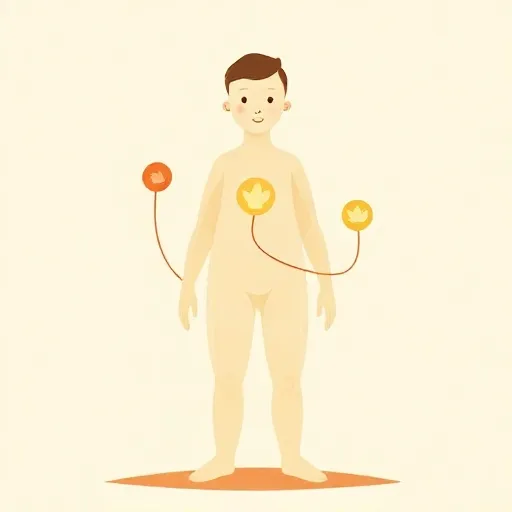
The Nyāya and Vaiśeṣika philosophers, who developed their ideas over many centuries, built their view around a permanent, immaterial self ( ātman ). This self is a kind of substance that carries qualities, like a coat wears colors. Among those qualities are cognition, effort, desire, aversion, pleasure, and pain. Notice the sharp split: thinking is one thing, feeling is another.
Here’s the catch. The Nyāya thinkers classified desire ( rāga ) and aversion ( dveṣa ) as doṣas — defects or impurities. All emotions fall into one of three defect groups: i) attraction (love, greed, selfishness), ii) aversion (anger, jealousy, resentment), and iii) illusion (error, pride, negligence). Even love, which many cultures celebrate, was a defect because it fuels attachment and confusion.
They went further. The Nyāya authors argued that ordinary pleasure is really just a disguised form of pain. Every pleasant experience, they said, eventually brings frustration, loss, aging, or death — and those pains are woven into the pleasure-seeking itself. The only desire that isn’t harmful is the desire for permanent freedom from suffering. So feelings, while distinct from thought, are always negative. To be clear, you have to scrub them all away.
Śaṃkara’s Vedānta: Even Thinking Must Go
The eighth‑century thinker Śaṃkara agreed that emotions bind us, but he drew the lines differently. For him, the true self is pure consciousness — no qualities, no flutter of feeling or flicker of thought. What we call our mind, with its doubt, memory, love, fear, and even reasoning, belongs to the internal instrument ( manas , buddhi , or citta ). These mental functions are not the self; they are a shifting screen that covers it.
Because the mind always has qualities — desire, aversion, attachment — a purely rational, emotion‑free mind is impossible as long as the mind exists. The mind cannot be stripped of its emotional coloring. So Śaṃkara pushed the argument one step past the Nyāya school: if you want liberation, you cannot stop at suppressing feelings while still thinking clearly. You must let go of the thinking self entirely. The goal is not a calm intellect, but a state where even the intellect falls silent.
Sāṃkhya and Yoga: Everything You Think Is Made of Matter
The Sāṃkhya school drew a different dualism. On one side stands puruṣa — pure, contentless consciousness, a witness that does nothing. On the other side stands prakṛti — primordial matter that produces the entire universe, including your mind, your thoughts, and your emotions. Both feelings and cognitions are physical; they are made of the three guṇas (strands or qualities): sattva (linked to pleasure), rajas (pain), and tamas (delusion).
Here, there’s no split between a non‑material thought and a material body. Joy, anger, logical reasoning, and memory are all temporary movements of the same material stuff. Liberation means waking up to the fact that you are puruṣa, not the tumbling show of mind‑matter. Yoga outlines a step‑by‑step method to wear away the kleśas (afflictions) — ignorance, egoism, attachment, aversion, and clinging — to still the mind. Notice again: emotions are the first obstacle, but rational thinking is still an obstacle to be dissolved, not the final destination.
Buddhist Thinkers: Love Without a Real Object
Buddhist philosophers rejected the idea of a permanent self altogether. Instead, they described a beginningless chain of momentary vijñānas — units of consciousness or cognition that pass from life to life. And here’s a twist: for many Buddhist thinkers, feelings and emotions are vijñānas. There is no tight wall between “thinking” and “feeling.” Love, hatred, desire, and even a sensation of pleasure are all mental episodes that have an object, just like a perception does.
The eighth‑century Buddhist thinker Śāntarakṣita, along with his commentator Kamalaśīla, used this idea to argue with materialists who said the mind dies with the body. Love and hatred, Śāntarakṣita pointed out, cannot be explained as plain perceptions of outside objects. You can meet the very same person and feel love, disgust, or nothing. A man might see a woman as “lovable” even though she has no special qualities that compel love. Therefore, love isn’t caused by an external thing; it’s a mental habit carried from previous lives. Even babies feel love and anger before they’ve had enough experience in this life to learn them — so those feelings must come from an unbroken chain of earlier existences.
Buddhists labeled love and hatred as kleśas — afflictions that trap us in suffering. But they didn’t divide the mind into emotion and pure reason as Western traditions often do. Their target was any mental state that feeds attachment, whether it feels hot with anger or cool with calculation. Liberation meant cleansing the stream of vijñānas of all afflictions, not achieving a feeling‑free intellect.
Why This Debate Still Echoes in Your Room

You might not be worrying about rebirth, but you do wrestle with the same knot of feelings and thoughts every day. That anger at your brother, the ache for more likes on a post, the nagging voice that analyzes everything — which part is really “you”? The Indian philosophers wouldn’t give you a single answer. The Nyāya tradition might whisper that your feelings are defects to be cut away. Śaṃkara might reply that even that clever voice analyzing your feelings is still in the cage. Sāṃkhya and Yoga would remind you that both thoughts and emotions are just passing material events. Buddhists would nudge you to question whether any mental state that grabs you — even a perfectly rational one — keeps you tied to a story that isn’t true.
The debate doesn’t end with ancient manuscripts. It plays out whenever you try to figure out whether calm thinking is the highest thing to strive for, or whether there’s a quieter, more open way of being that’s not filled with either emotional storms or endless inner commentary. You don’t have to be a monastic to find that question pressing. You just have to sit still and watch your own mind.
Think about it
- If you could press a button to never feel anger, sadness, or fear again, would you press it? Why or why not?
- Do you think a mind totally free of all thoughts would be peaceful or boring? What would be lost?
- Imagine a person who feels no desire for anything, not even happiness. Would that person be free, or just empty? Explain your view.