Can You Blame a Machine? When Computers Act, Who’s Responsible?
The Machine That Couldn’t Be Blamed
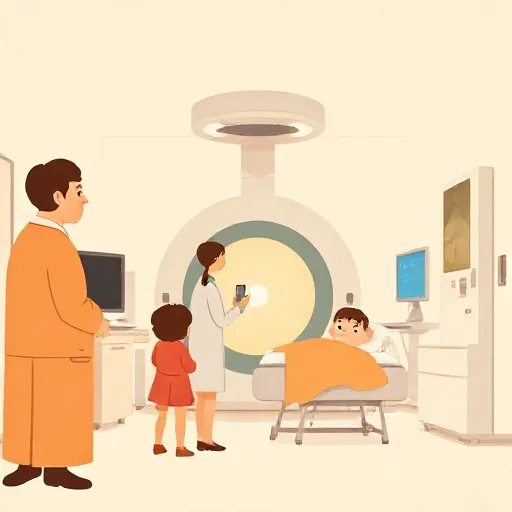
In the 1980s, a machine called the Therac-25 was designed to give cancer patients precise doses of radiation. But something went terribly wrong. Over two years, six people received massive overdoses, and three of them eventually died. When investigators tried to find out whose fault it was, they couldn’t point to a single person. The software had hidden errors. Technicians had learned to ignore cryptic warning messages. Managers had rushed the machine to market without enough testing. The chain of decisions was so tangled that no individual seemed to meet all the usual requirements for blame.
This case strikes at the heart of moral responsibility — the idea that a person (or group) deserves praise or blame because their voluntary actions had a morally important outcome, like helping or hurting someone. Philosophers who study responsibility say three main conditions usually need to be true: you must have caused the outcome, you must have been able to know what might happen, and you must have acted freely. The Therac-25 tragedy makes each of these hard to pin down. And it’s just one example of how computer technologies muddy our normal ways of deciding who is responsible.
The Tangled Web of Many Hands
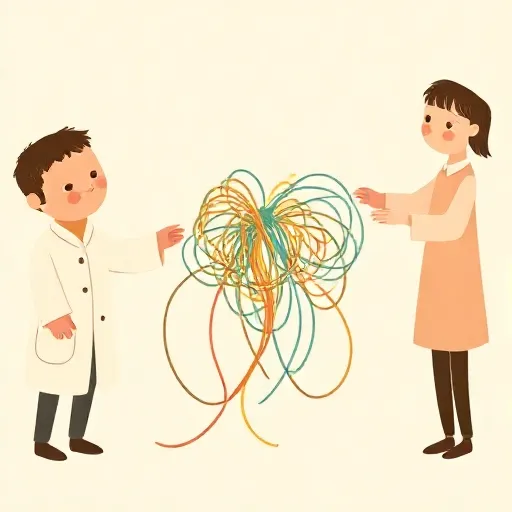
To hold someone morally responsible, there normally has to be a clear causal link between what they did and what happened. If you had no control over an accident, blaming you doesn’t make sense. But computers often hide those links. A plane crash caused by faulty software isn’t usually one person’s blunder. It’s the product of many tiny decisions by designers, engineers, managers, regulators, testers, and even users. Philosophers call this the problem of many hands: when many people contribute, it becomes hard to say exactly who did what.
The Therac-25 case shows this perfectly. The lethal overdoses were the result of software bugs, exaggerated claims about safety, bad interface design, and poor follow-up on earlier accident reports. No single person’s action would have killed anyone — it took the combination. More recently, the two crashes of Boeing 737 MAX planes in 2018 and 2019 highlighted similar tangles of design choices, training lapses, and company culture. In these tangled stories, someone might still be morally responsible, but it’s much harder to find the right someone and ask them to answer for what went wrong.
Computers also stretch human actions across time and space. A programmer can write code that affects people years later and continents away. A drone pilot flies a mission from a ground station thousands of miles from the aircraft. That distance can blur felt responsibility. The programmer never sees the face of the person harmed by her bug; the pilot may forget that real lives are at the edge of the screen. Technology mediates actions, carrying the intentions of its creators forward yet also being used in ways nobody predicted. That makes it tough to draw a neat arrow from one person to one outcome.
When Computers Hide the Truth
Even if you caused something, you’re only blameworthy if you could reasonably foresee the harm. Imagine you lend your bike to a friend, and they ride into a pond you didn’t know existed. You couldn’t have warned them, so you’re off the hook. Computers, though, can make it harder to know what will happen.
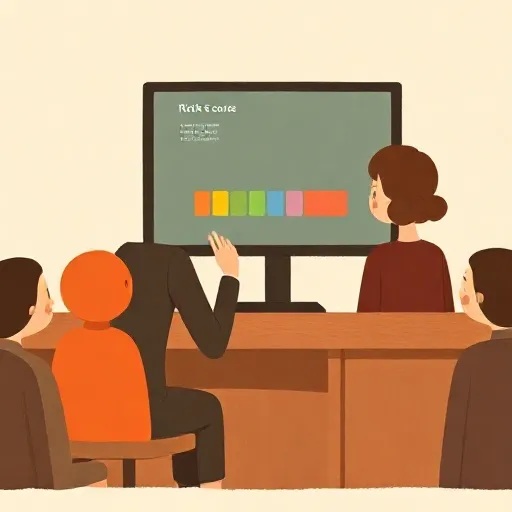
Many computer systems are opaque — users see only a fraction of what’s going on inside. For instance, in several U.S. states, judges use proprietary algorithms to predict whether a defendant will commit another crime. The judge sees a risk score but can’t see how the software arrived at that number. The algorithm might be biased, yet the judge isn’t equipped to question it. When we can’t understand the reasoning behind a machine’s suggestion, we’re at risk of automation bias: we either trust the machine too much or too little.
A famous tragedy unfolded in 1988, when the U.S.S. Vincennes, a missile cruiser, was equipped with the advanced Aegis tracking system. The system mistakenly identified an Iranian civilian airliner as a military jet. The crew, overconfident in the machine’s picture, shot the plane down, killing 290 people. Nearby warships had correctly identified it as civilian, but they didn’t speak up because they assumed the Vincennes’s high-tech system knew better. The computer’s opacity and the crew’s misplaced trust made them unable to see the real consequences of their action.
New technologies also create situations where we don’t yet have social rules to guide us. In the early days of the internet, a programmer released an experimental “computer worm” — a self-replicating bit of code — onto the network. It spread far faster than he expected, causing widespread disruption. At that time, nobody fully understood how such code would behave. Could the programmer be blamed for not foreseeing the mess? As we gain experience, our standards for what counts as negligence change, but the first time a new tech surprises us, the line is blurry.
Are We Still Choosing Freely?
The deepest condition for moral responsibility is freedom. We don’t blame someone who was forced to act by a gun to their head, or whose will was completely overpowered by a mental illness. But what counts as free choice when computers are involved?
Some technologies are designed to reduce human discretion. In many countries, decisions about taxes, student loans, or welfare benefits are now made almost entirely by algorithms. Street-level officials used to apply rules with personal judgment; now the computer applies the same formula to everyone, and the human employee can rarely change it. This moves responsibility upward to the managers and programmers who set the rules in the code, rather than the person you actually meet — if you meet anyone at all.
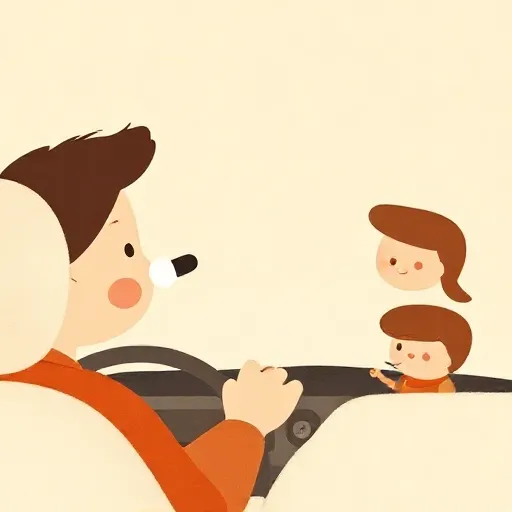
Other technologies steer behavior more softly. An alcohol lock forces a driver to pass a breath test before the car starts — no choice. A “smart” dashboard that shows real-time fuel use nudges the driver to drive more efficiently. Social media feeds and advertising use hyper-nudges: by gathering vast amounts of data about what you click and watch, algorithms can predict your habits and gently push you toward certain purchases, opinions, or moods — often without you noticing. When a website uses a confusing button (“dark pattern”) to trick you into buying insurance you didn’t want, critics ask: were you acting freely?
Some philosophers warn that building technology to enforce good behavior threatens human dignity — if we don’t choose, can our actions even be called moral? But others reply that rules, norms, and tools have always shaped our choices. A door that locks itself doesn’t cancel your freedom, it just sets a condition. The real worry is not any single gadget, but how a world full of invisible nudges might shrink the space in which we truly decide for ourselves.
Can a Robot Be a Moral Agent?
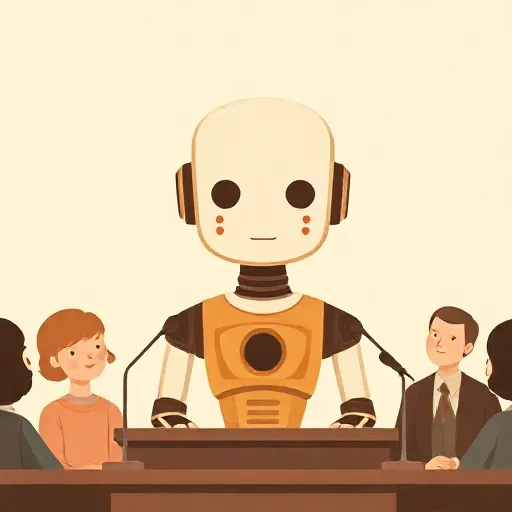
If computers cloud our standard reasons for blaming people, maybe we need to rethink who — or what — counts as a moral agent. In Western philosophy, moral agency has usually been reserved for humans. But as machines grow more complex, some thinkers say computers could one day be responsible too.
The philosopher Daniel Dennett (1942–2024) imagined a computer system that had higher-order intentionality — beliefs about its own beliefs, and the ability to reflect on what it ought to do, like the fictional HAL 9000 in 2001: A Space Odyssey. If such a machine existed, Dennett argued, holding it morally responsible would make sense. John Sullins (20th–21st century) later added that a robot could be a moral agent if it acted with significant autonomy, appeared intentional at a relevant level, and occupied a social role that carried duties (like a nurse robot). He thought even today’s modest robots could be seen as moral agents of a sort under certain descriptions.
Luciano Floridi (born 1964) and J. W. Sanders took a different path. They proposed separating accountability from responsibility. An artificial agent, they said, can be held accountable — like a dog that chews the furniture — even if it’s not morally responsible in the human sense. If describing the machine at a high level makes it look interactive, autonomous, and adaptive, we can treat it as a source of moral actions and correct it directly, without having to hunt down a human to blame. That spares us from twisting ourselves into knots trying to find a person behind every bad outcome.
Many critics push back hard. Deborah Johnson (20th–21st century) insists computers are not intentional beings; they have no mental states of their own, only the purposes installed by their designers. If we pretend they are moral agents, she argues, we let the real human decision-makers off the hook, turning attention away from those who create, choose, and deploy the technology. For Johnson, every action a computer takes is still connected to human intentions — the artifact just carries those intentions forward.
Peter-Paul Verbeek (20th–21st century) offers a middle path: moral agency is rarely purely human anyway. When you act with a phone, a car, or a medical device, your behavior is co-shaped by the tool. There are three “agencies” at work — yours, the designer’s, and the artifact’s — all braided together. So rather than asking “who alone is the agent?” we might think of responsibility as spread across a whole network of people and things.
Rethinking Blame in a Tech‑Filled World

Instead of only looking backward to find a culprit, some philosophers urge us to adopt positive responsibility — a forward-looking duty to prevent harm. Computer ethicist Donald Gotterbarn (20th–21st century) says professionals should focus on what they ought to do to avoid disaster, not on dodging blame when things break. If you build software that might be used in a hospital, you have a moral obligation to think about the room it will operate in, the people who will use it, and the accidents that could happen — even if no law demands it.
Helen Nissenbaum (born 1954) argued that many of our struggles with tech responsibility come from a weak “culture of accountability.” When organizations accept software bugs as inevitable, treat computers as scapegoats (“it was the machine’s fault!”), or claim ownership of code while disowning responsibility for its effects, they create a world where nobody has to answer. A strong culture of accountability means many people feel the weight of ownership — not just one unlucky operator — and are motivated to build safer, fairer systems.
Filippo Santoni de Sio (20th–21st century) and Jeroen van den Hoven (20th–21st century) developed the idea of meaningful human control. They say a whole sociotechnical system — hardware, software, people, and rules — should be designed so that human moral reasons can be tracked (the system acts in line with the values of relevant people) and traced (outcomes can be connected back to earlier human decisions). If a drunk driver causes an accident, we might trace responsibility to the earlier choice to drink, even if at the moment of the crash they weren’t in full control. Similarly, with technology, we can design it so that the chain of decisions stays visible and answerable.
Today, as you grow up with self-driving cars, AI homework helpers, and recommendation feeds that shape what you see, these questions aren’t distant philosophy. Who should answer when an autonomous delivery robot knocks over your neighbor’s fence? Should your favorite app explain why it really thinks you’ll like a certain video, or is a little mystery okay? The puzzle of moral responsibility and computers is a puzzle about the kind of world you want to live in — and that’s something you get to help figure out.
Think about it
- If a self-driving car swerves to avoid a pedestrian and crashes, injuring the passenger, who should be held responsible — the manufacturer, the programmer, the passenger, or nobody? Why?
- Imagine an AI tutor that nudges you toward certain opinions without you noticing. Would you still be making free choices? Where do you draw the line between helpful guidance and manipulation?
- Suppose a robot nurse makes a mistake and harms a patient, and its creators say, “It was just following its programming.” Does that excuse them from blame, or should they still have to answer? What would justice require?