
Should Justice Be the Same for Everyone, or Fit the Community?
The Curtain That Hides Who You Are
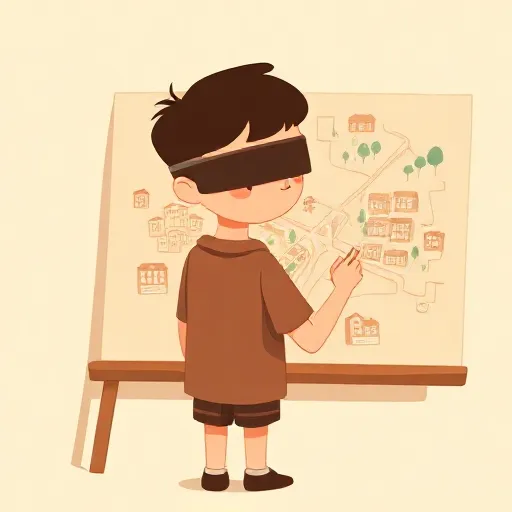
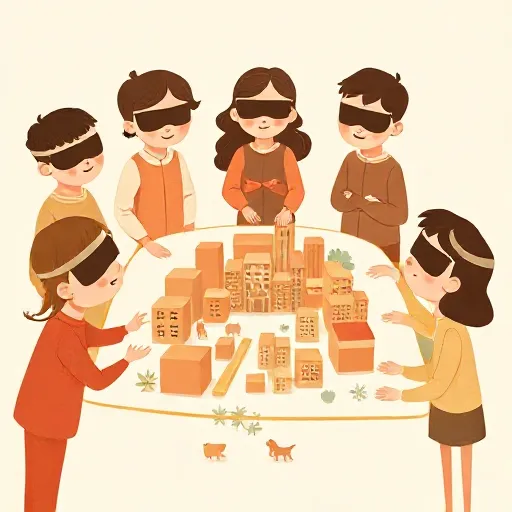
Close your eyes. Imagine you are about to be born, but you don’t know what kind of life you’ll land in. You could be rich or poor, athletic or sick, part of a big family or all alone. Now, design the rules of a whole society — its laws, its schools, its jobs. That’s the thought experiment the political philosopher John Rawls (1921–2002) called the original position. Behind a veil of ignorance, you don’t know anything about yourself. Rawls argued you would choose rules that treat everyone fairly, because you might end up on the bottom. For him, justice was a single, universal recipe that any rational person would pick.
For much of the twentieth century, liberal thinkers like Rawls believed that the right principles of fairness could be discovered by reason alone — a kind of Archimedean point outside any particular culture. This is liberal universalism: the view that basic rights and principles of justice apply to every human being, everywhere. But in the 1980s, a group of thinkers called communitarians pushed back. They said: you can’t design justice in a vacuum. Fairness grows from the history, habits, and relationships of real communities. A rule that feels right in a small fishing village might be nonsense in a mega‑city, and vice versa.
Justice Grows from the Ground Up
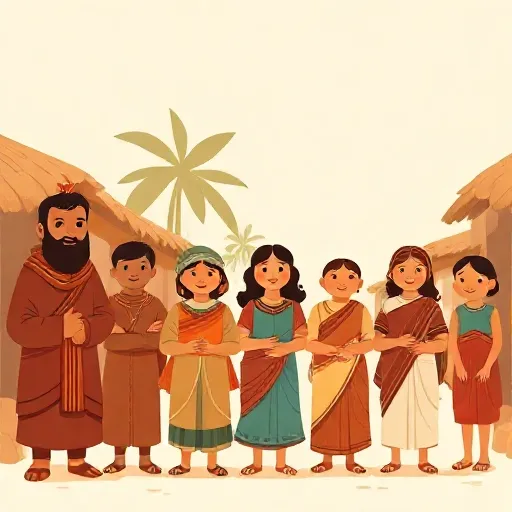
Several communitarian philosophers challenged Rawls. Michael Walzer (born 1935) argued that effective social criticism must speak the moral language of the people it addresses. He pointed to the Indian caste system as an example of a society whose members might accept its hierarchy as just “according to their own lights.” (He recognized that many Indians reject the caste system today.) Alasdair MacIntyre (born 1929) and Charles Taylor (born 1931) argued that even our deepest moral words — like “good” or “right” — can only be understood inside the traditions and stories of a specific community. You can’t step out of all contexts, they insisted, and judge every culture from nowhere.
The communitarians scored theoretical points. But they struggled to offer attractive alternatives to liberal democracy. Walzer’s praise of medieval guilds or MacIntyre’s admiration for tiny ancient city‑states felt out of place in a world of global trade and mass media. Nobody was inspired to replace modern freedoms with a rigid system of castes. So the debate simmered, but it didn’t topple liberal universalism — yet.
The Asian Values Face‑Off

In the 1990s, the argument got real‑world teeth. Several East Asian economies — Singapore, South Korea, Taiwan — were booming. Their leaders, especially Lee Kuan Yew (1923–2015) of Singapore, began to speak of “Asian values.” They claimed that family harmony, social order, and respect for authority mattered more for their people than Western‑style civil and political freedoms. The West, they said, was chaotic and crumbling; Asia was rising.
Many critics saw this as a convenient excuse for authoritarian rule. When the East Asian financial crisis hit in 1997–98, the “miracle” seemed to collapse. But the economies recovered, and the debate didn’t vanish. East Asian intellectuals offered subtler points, not just defending the status quo. They laid out three arguments for cultural particularism (the idea that standards of justice can legitimately vary by culture):
Different societies rank rights differently when they clash. In the U.S., people might sacrifice a right to universal health care to protect private choice. In China, people might restrict the right to form independent unions if that helps economic development. The order of importance is shaped by culture.
Rights are justified best from the inside. In East Asia, appealing to tight family ties may persuade people to accept democratic reforms, whereas abstract talk of “individual autonomy” falls flat. Social critics use the moral language their communities already share.
Cultural traditions can inspire distinctive institutions. The Confucian duty of filial piety — caring for elderly parents — leads governments to offer housing tax breaks or even create laws requiring financial support. The Chinese thinker Jiang Qing (born 1953) has proposed a parliament with a merit‑chosen “House of Exemplary Persons” that would sit alongside a democratic house.
These concrete ideas made the communitarian challenge stronger than the earlier dreams of medieval villages.
Are You a Chooser or a Member?

Underneath the politics, there was a deeper fight about what a person really is. Michael Sandel (born 1953) and other communitarians charged that liberal thinkers had an overly individualistic picture of the self. Rawls seemed to imagine people as free agents who pick their life plans like items on a menu. But, Sandel said, many of our deepest commitments — to our family, our religion, our history — were never chosen. They are constitutive attachments: they make us who we are. You didn’t choose to love your parents. You didn’t decide to feel loyal to your hometown.
Liberals replied that we don’t need to choose everything, but we must be able to question and revise any attachment if it becomes harmful. The real political need is not a perfect philosophy of the self, but practical rights. So the debate over the self faded — but it left a legacy. The insight that people have a vital need for community, not just personal freedom, stuck around. When the two clash — say, moving far away for a dream job versus staying close to care for an aging parent — communitarians lean toward preserving those ties, while liberals emphasize the right to choose.
Building Community in a Fragmented World
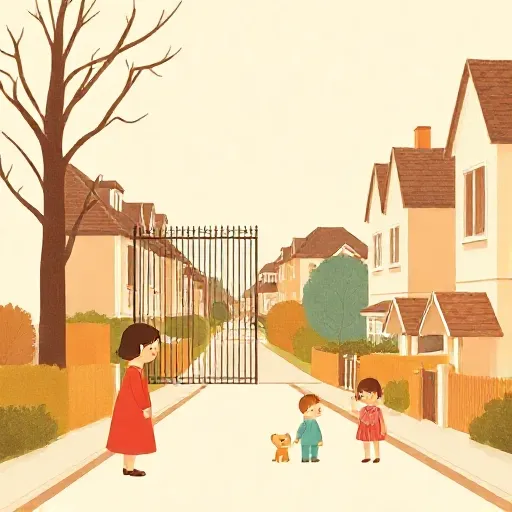
By the 1990s, a new wave of political communitarians — led by sociologist Amitai Etzioni (1929–2023) and legal theorist Mary Ann Glendon — turned from abstract theory to fixing what they saw as broken communities. They looked at rising loneliness, divorce, political apathy, and greed. They blamed both the political left (welfare states that replace family care) and the right (unregulated markets that treat everything like a deal). Their solution: promote three kinds of communities.
Communities of place — your neighborhood or home town. Policies might give local councils veto power over development that destroys a neighborhood’s character, or limit huge chain stores that push out family‑owned shops.
Communities of memory — nations and ethnic groups with a shared history. This can mean national service programs, or history lessons that build a common story. In a country with many nations inside it, such as Canada or Spain, minority groups also get room to protect their language and customs.
Psychological communities — face‑to‑face groups built on trust, like families, close‑knit workplaces, or schools. Examples include laws requiring long parental leave, or designing classrooms that reward group cooperation rather than individual competition.
The trouble is that these communities can pull in different directions. Devote more time to family, and you have less energy for political rallies. Boost workplace loyalty, and parents might never sit down for dinner (the Japanese even have a word, karoshi, for death from overwork). Still, sometimes communities reinforce each other. In Singapore, if people felt safer criticizing the government without fear of retaliation, they might feel more connected to the nation — not less. “New Urbanist” architects in the U.S. design walkable neighborhoods with public squares that let you know your neighbors while still being part of a big city. The trick is finding balances, and what works in one society may not work in another.
Why the Recipe Still Matters for You
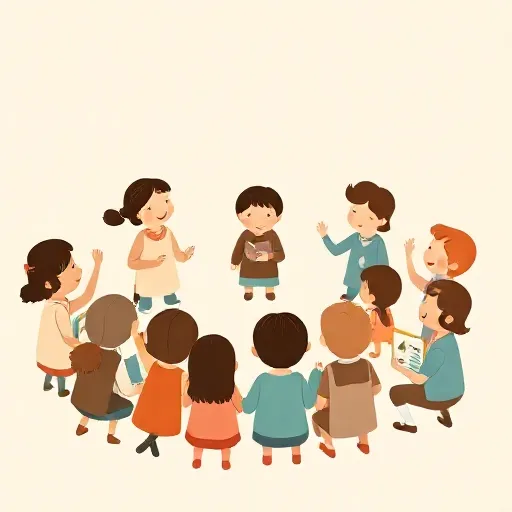
Is justice a single recipe that works in every zip code, or does it need local ingredients? The fight between liberals and communitarians is not just for professors. It shows up when your town decides to tear down an old building for a new highway, or when your school debates whether to celebrate a holiday that only some families observe. Liberal universalism pushes for rules that protect everyone equally, no matter where they come from. Communitarianism reminds us that “everyone” is made up of real people with roots, memories, and duties they never chose.
Next time you hear someone say “That’s not fair!” ask yourself: fair according to which community’s story? Maybe both sides are missing something — and the answer lives in the messy middle.
Think about it
- Your family believes you must spend every Sunday with relatives, but your best friend invites you on a once‑in‑a‑lifetime trip that day. Is this a conflict between community loyalty and individual choice? How should you think about it?
- If a small island nation decides it’s fair to limit who can move there to preserve its language and traditions, does that violate universal human rights, or is it protecting a community of memory?
- Think of a rule at your school that everyone follows. Does it exist because it’s universally good, or because it fits your school’s particular history? Could another school be just as fair with a different rule?