Can a Lump of Matter Really Think? The Fight That Shook 1700s England
The Pamphlet War Begins

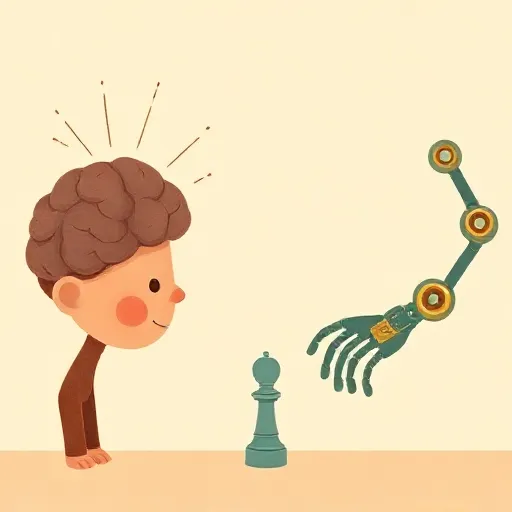
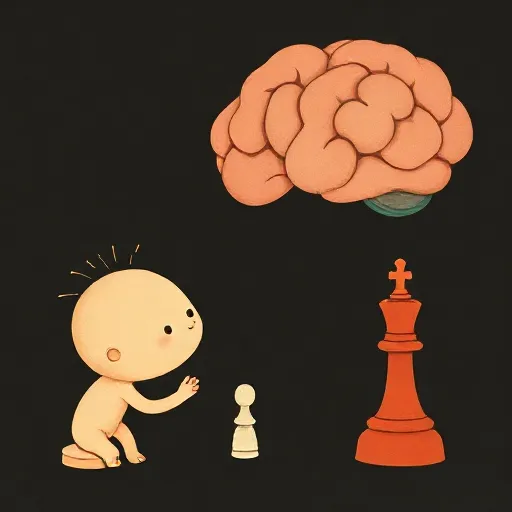
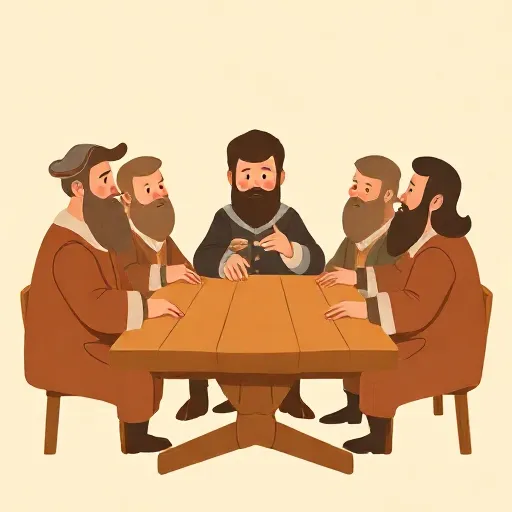
In 1707, a wealthy English gentleman named Anthony Collins (1676–1729) sat in his library and wrote a public letter that would start a firestorm. The letter was polite, but its message was explosive: he claimed that the most respected philosopher of the day, Samuel Clarke (1675–1729), was wrong about the mind. Clarke argued that thinking could never come from anything made of matter — you needed an immaterial soul, a non‑physical substance that cannot be divided into pieces. Collins disagreed. He thought a brain, made of countless tiny physical parts, could be organized in just the right way to produce real consciousness. This was the beginning of the Clarke–Collins controversy.
Collins was no ordinary troublemaker. He owned a huge library, loved the truth fiercely, and had been a friend of the great philosopher John Locke (1632–1704). Locke once wrote to him: “Believe it, my good friend, to love truth for truth’s sake is the principal part of human perfection in this world.” That devotion to truth pushed Collins to ask a question that still echoes: can a material organ like the brain actually think?
The Rose and the Brain: Emergent Properties
Collins’s key idea was that a whole can have properties that none of its individual parts possess. He pointed to a rose: the flower has the power to produce a sweet scent, but examine a single particle of the rose and you will find no smell there. The scent “emerges” only when countless particles are arranged into the plant’s shape. Philosophers today call these emergent properties — real features of a whole that are not present in the parts. Collins believed consciousness was exactly like that: a real property that pops into existence when brain cells are organized properly.
Clarke saw this as impossible. He argued that every real property must already be found, proportionally, in the parts. If a wall is two metres tall, the bricks and mortar must supply that height piece by piece. Consciousness, however, feels utterly unified — it does not come in pieces. Clarke insisted that something so indivisible could never arise from a heap of tiny material bits. He therefore declared that consciousness must belong to an immaterial soul, not to any physical system.
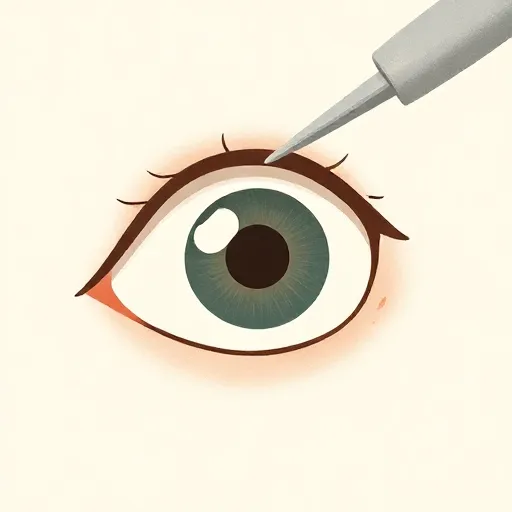
Collins struck back with an even sharper example: the power of an eye to see. A whole eye can contribute to vision, but if you remove the smallest piece, the power disappears completely. That, Collins said, shows a property of the whole that is not simply the sum of the parts — a real emergent property. He also studied reports of Chinese philosophy, where thinkers described the world in terms of changing functional wholes rather than fixed separate substances. To Collins, it was perfectly natural that the arrangement of matter could create something radically new: a thinking mind.
Who Are You, Really? Memory Without a Soul

The fight soon spilled over into a mystery we still puzzle over: what makes you the same person across time? Collins, following Locke, said the answer is consciousness — your continuous stream of thoughts, memories, and feelings — not an unchanging soul‑substance. But if the brain’s particles keep changing, how can a memory remain yours?
Collins offered a vivid answer. Suppose you remember visiting a market when you were five. Almost every atom in your body has been replaced since then, yet you still have that memory. How? Because you constantly “imprint” memories afresh onto your brain’s new material, like copying a song onto a new device. The organization — the pattern of your memories — survives even though the physical stuff changes, much as an oak tree remains the same tree while shedding old leaves and growing new ones.
Clarke objected that it is impossible to transfer a memory from one lump of matter to another; a genuine memory must belong to the same substance. Collins countered that this would make half your memories fake, because your brain’s particles are always in flux. His explanation, he thought, fit the facts far better than a mysterious immaterial soul.
The Clockwork Man: Do You Ever Choose Freely?

Collins did not stop at the mind‑body puzzle. In 1717 he published A Philosophical Inquiry Concerning Human Liberty, a slim book that argued something unsettling: none of your choices are free in the way you might imagine. Collins was a determinist — he believed every event, including every human decision, is rigidly caused by earlier events. He compared a person to a clock: the clock necessarily strikes the hour because its springs and weights force it to, and humans necessarily act the way they do because their desires, beliefs, and experiences force them.
If you choose chocolate ice cream over strawberry, Collins would say that choice was already determined by your tastes, your memories, and what seemed best to you at that moment. Could you have chosen strawberry instead? Not unless something in the chain of causes had been different. You might feel free, but that feeling just means no one is holding a gun to your head — you are free from external obstacles. This view is called compatibilism: freedom and determinism can go together, because real freedom is simply doing what you want without being pushed around from the outside.
Clarke attacked this idea furiously. He claimed that human beings have a special self‑moving power — a genuine ability to choose opposite actions in the very same circumstances. For Clarke, motives and reasons were like signposts, not chains; the soul actively decides which path to take. The two men never agreed, and the argument between determinists and defenders of free will has continued ever since.
Think for Yourself: The Right to Question Everything

Collins’s love of truth spilled into religion. In 1713 he published A Discourse of Free‑Thinking, which argued that every person has both a right and a duty to use their own reason when deciding what to believe — especially about God and the Bible. He pointed out that religious experts constantly disagree with one another. If even the supposed experts cannot agree, why should ordinary people simply accept whatever their local priest says?
He went further: Collins believed that governments should not force a single religion on their citizens. He admired the Chinese empire, which he thought allowed many beliefs to live side by side, and he called for a “universal liberty” of opinions. This made him many enemies. Church leaders accused him of being an atheist, though he insisted he was simply a free thinker — someone who follows the evidence wherever it leads. He even defended the use of ridicule and irony in arguments, saying that it was better to laugh at bad ideas than to imprison those who hold them.
Collins’s freethinking was part of a broader campaign. He tried to show that the Anglican Church’s claim to settle religious disputes was based on a forgery, and he challenged the idea that Old Testament prophecies predicted Jesus in a literal way. Whether you see him as a deeply honest deist or a hidden atheist, he consistently demanded that people think for themselves.
Why This 300‑Year‑Old Fight Still Matters
Collins stood at the crossroad of three enormous questions. First: can matter, arranged in the right way, produce a mind? Today’s neuroscientists search for exactly the kind of emergent properties Collins described, studying how billions of neurons might give rise to feelings and thoughts. Second: are your choices truly free, or are they predetermined by your brain chemistry and your past? Courts, schools, and families still grapple with this. Third: should you ever be punished just for questioning a belief? The right to speak freely — even mockingly — about religion remains hotly debated around the world.
Next time you feel you have made a completely free choice, pause and ask: what caused that decision? And when someone tells you to believe something simply because an authority says so, remember the man who filled his library, wrote dangerous letters, and insisted that your own reason is your best guide.
Think about it
- If a scientist could predict every choice you will ever make by watching your brain, would it still be fair to punish you for a bad decision?
- Should a person be allowed to make fun of a religious belief in a school debate, or does respect require a line that mockery cannot cross?
- If a computer made of billions of tiny circuits someday claims to feel happy or sad, would you believe it — or would you insist that real feeling requires something non‑physical?