What Is Art, Really? (And Why It's Not What You Think)
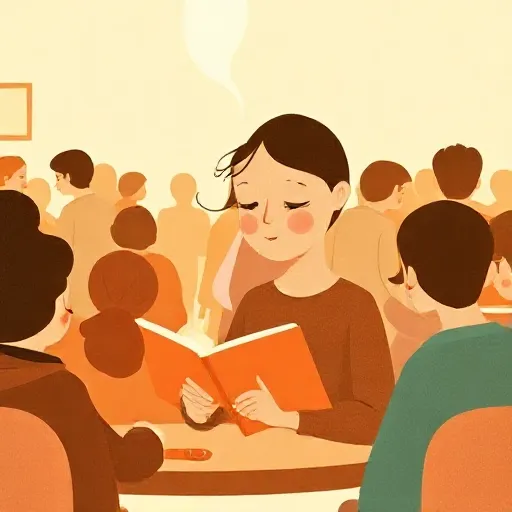
Imagine you’re sitting in class, and the teacher asks everyone to draw something that makes them feel happy. You pick up a crayon and start drawing—maybe a sunset, maybe your dog, maybe just splashes of yellow and orange that feel right. You’re not following a plan. You’re not trying to make something that will impress anyone. You’re just… making. The drawing comes out, and only when you’re done do you realize what you were trying to say.
Now imagine a different scenario. Your friend asks you to build a model airplane for a school project. You get out the instructions, cut the pieces, glue them together step by step. You know exactly what the finished product should look like before you start. Every move you make is aimed at that goal.
Are these two activities the same? Most people would call both of them “making things.” But a British philosopher named R. G. Collingwood thought they were radically different—and that confusing them had caused enormous damage to how we think about art.
Collingwood wrote a book in 1938 called The Principles of Art. He wasn’t trying to tell you what art you should like. He was trying to figure out what art is—what makes something a work of art in the first place, as opposed to just a well-made thing. His answer was surprising, and it still bothers people today.
The Six Things That Make Something a Craft
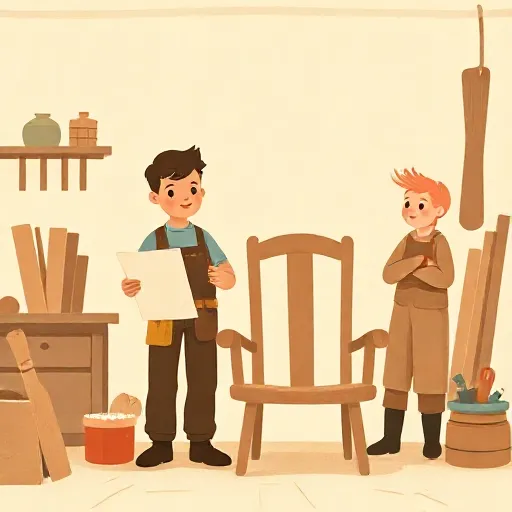
Collingwood started by looking at what he called “craft.” Craft is any activity where you have a clear plan and you’re trying to produce a specific result. Think of a carpenter building a table, a baker following a recipe, or an engineer designing a bridge. Collingwood noticed that crafts share six features:
- You can separate the means (what you do) from the ends (what you’re trying to achieve).
- You can separate planning from execution—you design first, then build.
- In planning, the end comes before the means; in execution, the means come before the end.
- You can tell the difference between the raw material and the finished product.
- You can distinguish form (the shape or design) from matter (what it’s made of).
- Crafts form hierarchies—one craft’s finished product becomes another’s raw material.
Not every craft has all six features, but the more an activity has, the more clearly it’s a craft.
Now here’s Collingwood’s daring claim: Art is not craft. A work of art doesn’t have to have any of these features. And if you define art using them, you’ll end up excluding things that are obviously art.
Think of a poet who suddenly has a poem come to mind, fully formed. There’s no planning separate from execution—the poem is the plan. There’s no clear distinction between means and ends. The words aren’t “raw material” that get shaped into a product, the way flour becomes bread. The poem just is what it is.
Collingwood wasn’t saying that art never involves craft. An opera requires massive planning, technique, and coordination. But those craft-features don’t make it art. They’re just the scaffolding. The art is something else.
This matters because many people—including famous philosophers like Plato and Aristotle—treated art as a kind of craft. They thought the artist was someone who used skill to produce a desired effect in an audience. Collingwood thought this was a deep mistake. The artist, he said, is not “a purveyor of drugs.” She’s not trying to produce a predetermined reaction, like making you feel sad or excited according to a recipe. She’s doing something much stranger.
Three Things That Are Often Confused with Art
Before Collingwood could say what art is, he had to clear away three things that are often wrongly called art.
Representation
You might think art is about representing things—a painting of a person, a story about real events, a song that sounds like birds. But representation, Collingwood said, is really a craft. You can decide in advance what you want to represent and then use skill to do it. If you want to paint a portrait of your grandmother, you know what she looks like before you start. That’s craft, not art.
Collingwood had an unusually broad idea of representation. It didn’t just mean looking like something. It could also mean capturing the feeling of something—like music that represents “lying in deep grass on a summer’s day watching clouds drift across the sky.” But even this is different from what Collingwood called “art proper.”
Magic
This sounds strange, but Collingwood had a specific meaning. Magic isn’t about spells or superstition. It’s about using art to produce useful emotions for practical purposes. A war dance makes warriors feel brave. Religious art makes believers feel pious. National anthems make people feel patriotic. These are all ways of using art to achieve real-world effects—to make people work harder, fight better, or feel more connected.
Again, this is craft. You know what emotion you want to produce, and you design the artwork to produce it. That doesn’t mean magic is bad—Collingwood thought it was vital to healthy societies. But it’s not art in the strict sense.
Amusement
This is the most common confusion. Amusement art aims to stimulate an emotion and then discharge it—to make you feel scared, then relieved; sad, then comforted. Most movies, novels, and plays are amusement art. You watch a horror film, get frightened, and then the fear goes away when the movie ends.
This has become the dominant way people think about art: “I liked it because it made me feel something.” But Collingwood thought this was treating art like a drug. The artist becomes a technician who knows how to push your emotional buttons. That’s craft, not art.
So What Is Art? The Strange Idea of Expression
If art isn’t craft, representation, magic, or amusement, what is it? Collingwood’s answer: Art is the expression of emotion. But this doesn’t mean what you might think.
When Collingwood says “expression,” he doesn’t mean letting your feelings out like a scream or a cry. That’s just betrayal of emotion—it can happen without you being aware of what you’re feeling. Expression, for Collingwood, is something much more active and mysterious.
Here’s his description of what it feels like to express an emotion:
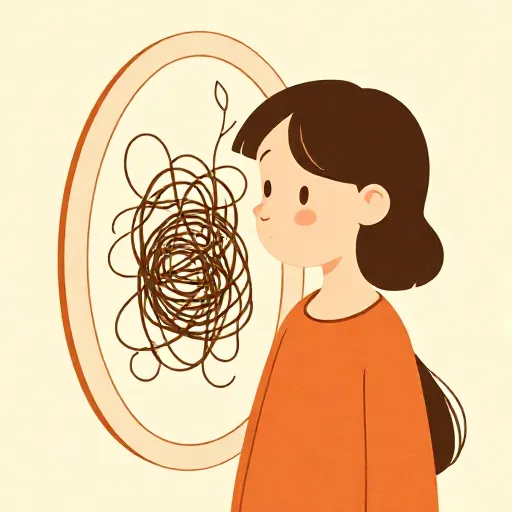
When a person expresses an emotion, he is conscious of a perturbation or excitement which he feels going on within him, but of whose nature he is ignorant. While in this state, all he can say about his emotion is: “I feel… I don’t know what I feel.” From this helpless and oppressed condition he extricates himself by doing something which we call expressing himself.
So expression is a process of discovery. You don’t know what you’re feeling until you express it. The poem, the painting, the piece of music—these aren’t packages containing a pre-existing emotion. They’re the making clear of something that was confused and vague inside you.
This is why art can’t be craft. In craft, you know the end before you start. In art, you can’t know the end, because the end is what you’re discovering. The artist doesn’t have a blueprint. She’s finding out what she means as she goes.
Three things follow from this:
First, expression makes you conscious. Before you express an emotion, you’re not really aware of what it is. The expression is what brings it into focus.
Second, expression individualizes. You can’t describe the emotion in general terms and call it art. “I feel sad” is a description, not an expression. The actual work of art captures this sadness, in this particular way, that’s different from any other sadness.
Third, expression brings relief. Not by getting rid of the emotion, but by making it clear. Your mind is “lightened and eased” because you now understand what you’re feeling. The emotion might even be stronger than before, but it’s no longer oppressive because you see it clearly.
Where Does the Artwork Actually Exist?
Here’s where Collingwood gets really weird.
If art isn’t about making a physical object—since that would be craft—then what is the artwork? The painting on the wall? The printed poem? The recorded song?
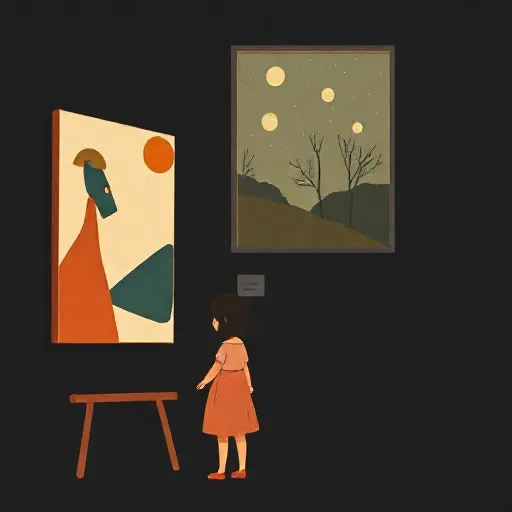
Collingwood said: No. The real work of art exists in your imagination.
Think about it. When you hear a tune, you’re not just hearing individual notes. You’re hearing a pattern, a shape, a whole that’s more than the sum of its parts. That pattern exists in your mind, not in the air. The physical sounds only help you reconstruct it.
A poet might compose an entire poem in their head without ever writing it down. That poem exists—it’s a real thing—even though nobody has ever heard or read it. The written version is just a way of helping other people reconstruct the poem in their own imaginations.
Collingwood called this “imaginative creation.” The artist creates something in her imagination, and the physical artwork—the canvas, the score, the printed page—is just a tool to help the audience recreate that imaginative experience in themselves.
This doesn’t mean artists don’t need physical materials. Most of us can’t hold a complex work of art entirely in our minds. The painter needs to see the canvas to develop the painting. The process is a back-and-forth between imagination and physical making. But the work itself is the imaginative experience, not the physical object.
This raises a problem: If the artwork is different in everyone’s imagination, how can two people argue about the same painting? If you see it one way and I see it another, we’re not disagreeing about the same thing—we’re just having different experiences. Collingwood never fully solved this problem, and philosophers still argue about it.
Language, Art, and Everyone Being an Artist
Collingwood had a very broad view of language. He didn’t just mean words. He meant any expressive behavior—gestures, sounds, movements. A baby’s voluntary cry, a dancer’s movement, a painter’s brushstroke—these are all “language” in his sense, because they’re ways of making emotions clear.
This led him to a startling conclusion: Everything you do, every conscious act, is in some sense a work of art. Every time you speak, every time you make a gesture, every time you intentionally express something, you’re doing what artists do. You’re taking a vague feeling and making it clear.
Most of these “artworks” are shallow and fleeting—you eat an orange, you say hello, you shrug. But sometimes, consciousness settles on something. You stare at a tree and really see it. A line of poetry comes to you. A melody pops into your head. These moments are closer to what we normally call art.
The difference between you and a professional artist is not a difference in kind but in depth and skill. The artist is someone who has these experiences more intensely and has learned how to preserve them—how to make an object that lets others recreate that experience for themselves.
This also means that art is inherently social. You can’t be an artist in isolation. The audience is not a passive receiver; they’re an active collaborator. When you understand someone else’s art, you’re not just watching—you’re using their work to recreate their imaginative experience in yourself. You’re speaking their language as if it were your own.
What’s Still Disputed
Collingwood’s theory is powerful but controversial. Here are the main problems philosophers still argue about:
The definition is too broad. If every conscious expressive act is art, then what’s the difference between a masterpiece and a sneeze? (Answer: a sneeze isn’t voluntary expression. But still—is everything you say really “art”?)
The artwork disappears. If the real artwork is in your imagination, then we can’t actually point to it and argue about it. That seems wrong. We argue about paintings all the time—about the same painting.
The line between art and craft is too sharp. Can you really never plan a work of art? What about artists who sketch first, revise, edit? Collingwood seems to think real art is completely unplanned, which doesn’t match how many artists actually work.
Is all language really expressive? Collingwood denied that there’s any such thing as purely factual, emotionless language. Even mathematical symbols, he said, express the “emotions of the intellect.” Not everyone agrees.
Despite these problems, Collingwood’s core insight—that art is about making emotions clear, not about achieving effects—has been hugely influential. It challenges us to think about what we’re really doing when we create or experience art. And it suggests that art isn’t a special, separate activity for gifted geniuses. It’s something everyone does, every day, whenever they try to make sense of what they feel.
Key Terms
| Term | What it does in this debate |
|---|---|
| Craft | Any activity where you have a clear plan and aim to produce a specific result; Collingwood says art is not craft |
| Expression | Making a vague emotion clear and conscious through creative activity; the heart of Collingwood’s theory of art |
| Magic | Using art to produce useful emotions for practical purposes (like courage or patriotism); craft, not art proper |
| Amusement | Using art to stimulate and discharge emotions for entertainment; craft, not art proper |
| Imaginative creation | Making something non-technically, consciously and voluntarily, without following a preconceived plan |
| Corrupt consciousness | When someone refuses to acknowledge or express what they truly feel; a kind of dishonesty to oneself |
Key People
- R. G. Collingwood (1889-1943): A British philosopher who argued that art is the expression of emotion, not the production of effects. He wrote The Principles of Art in 1938.
- Plato (c. 428-348 BCE): An ancient Greek philosopher who wanted to banish artists from his ideal republic because he thought they were corrupting, especially by providing mere amusement. Collingwood took this warning seriously.
- Aristotle (384-322 BCE): Plato’s student who treated art as a kind of craft or technique. Collingwood disagreed, though he admired him.
Things to Think About
-
If Collingwood is right that you can’t know what you’re expressing until you express it, how does this apply to things like writing essays, making videos, or even just talking to a friend? Are you discovering what you think as you go?
-
Collingwood says amusement art (like most movies) is just craft—it’s designed to push your emotional buttons. But can the same movie be both amusement and art? Can something be both craft and art at the same time?
-
If the real artwork exists in your imagination, and different people have different imaginations, does that mean there’s no such thing as a “wrong” interpretation? Or is there still something to get right?
-
Collingwood says even scientists express emotions when they use language. Is that true? Can you write a truly emotionless sentence? Should you even try?
Where This Shows Up
- How we talk about art today: When someone says a movie “manipulated” them emotionally, they’re echoing Collingwood’s complaint about amusement art.
- Music and poetry: When people say a song “captures exactly what I feel but couldn’t put into words,” they’re describing Collingwood’s idea of expression as discovery.
- School assignments: The difference between a “creative” project and a “craft” project in school—one where you follow instructions vs. one where you explore—maps onto Collingwood’s distinction.
- Arguments about interpretation: When people disagree about what a book or movie means, they’re wrestling with the problem Collingwood created by putting the artwork inside people’s heads.