Can a Whole Country Be Guilty? The Fight Over Collective Blame
The Poison Cloud Over Bhopal
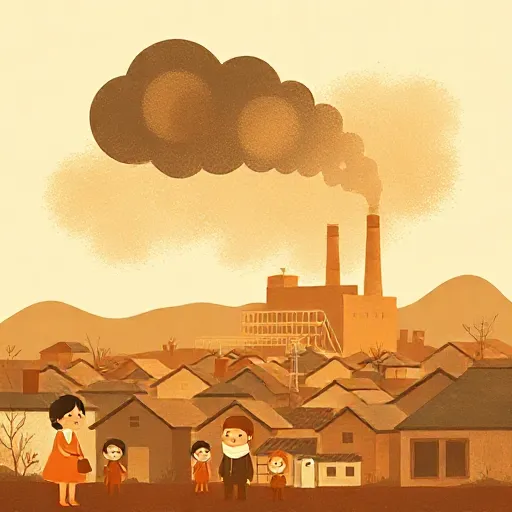
In December 1984, a pesticide plant in Bhopal, India, leaked a cloud of poisonous gas. Thousands of people died and many more were injured. The plant was owned by an American company called Union Carbide. Almost immediately, a tough question arose: Who is morally responsible for this suffering? The factory workers who ran the plant? The managers who had cut safety corners? Or the company itself, as a whole?
That question — can a whole group, like a company or a nation, be guilty of a wrong — lies at the heart of the puzzle philosophers call collective responsibility. Some thinkers say yes, groups can be blamed just like people. Others say no, only individual human beings can ever be truly guilty. The fight between them is not just an abstract game. It affects real trials, reparations for past injustices, and how we tackle giant problems like climate change.
Why Some Think Groups Can’t Be Guilty
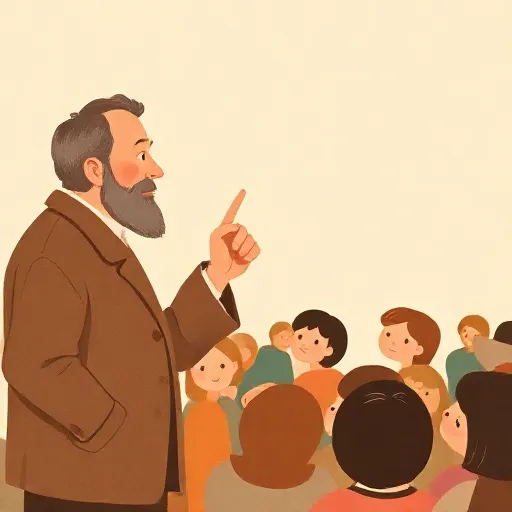
Many philosophers have insisted that only individuals, never groups, can be morally responsible — worthy of blame because they acted on purpose. This view is called methodological individualism: the idea that in the end every social event can be explained by the actions and intentions of individual people.
The German sociologist Max Weber (1864–1920) argued that groups simply cannot form intentions the way a single mind does. Without intentions, a group cannot really “act” at all, so it cannot be guilty. The Welsh philosopher H. D. Lewis (1908–1992) went further. He wrote:
Value belongs to the individual and it is the individual who is the sole bearer of moral responsibility. … Collective responsibility is … barbarous. (Lewis 1948)
For Lewis and other skeptics, blame always needs a bad intention — a will that chose the wrong thing. A corporation or a nation has no private thoughts, no feelings, no conscience. So how could it ever be wicked? Only the human beings inside it can be.
Critics like Stephen Sverdlik drive the point home by focusing on fairness. It would be unfair, they say, to blame someone for a result they never intended to bring about. Since a group lacks a mind of its own, it can’t intend anything at all.
The Case for Group Guilt: Acting with One Will

Not everyone accepts this. Some philosophers point out that we blame groups all the time in ordinary life. David Cooper, writing in the 1960s, noted that people feel anger at entire sports clubs or nations, not only at individual players or politicians. Cooper argued that such collective blame can’t always be broken down into blaming separate people, because a group can keep existing even when its members change.
Peter French, a contemporary philosopher, looked closely at organized groups like corporations. He said these are conglomerate collectivities — groups with decision‑making procedures, official roles, and rules. When a board of directors votes, a genuine group decision has been made. The group has formed an intention of its own. French argues that such groups are therefore proper targets of moral blame.
Margaret Gilbert developed the idea of a plural subject. When two or more people make a joint commitment — a shared promise to act together — they become, for that moment, a single “we” with a shared intention. It is not just that you intend something and I intend the same thing; we intend it as a body. This joint commitment gives the group a kind of responsibility that is more than the sum of its members.
Michael Bratman offers a gentler version. He says a shared intention exists when each person intends that the group do something, and each person’s sub‑plans fit together. Imagine a band planning a concert: the guitarist intends to learn the songs, the drummer intends to book the venue, and both rely on the other’s plan working. No magical group mind is needed — just interlocking intentions.
Even loosely connected crowds can sometimes be held responsible. The philosopher Virginia Held asked us to picture strangers standing around a crime. None of them alone can stop it, but they could if they quickly organized. Held argued that a “random collection of individuals” can be collectively responsible for failing to transform itself into a group that could act. In that case, the responsibility belongs to them as a group.
Blame Pie: Who Gets a Slice?

Even if you believe a group can be guilty, a new problem rushes in. How do you distribute that guilt among the group’s members? Is it fair to blame someone who didn’t directly cause the harm or who actively tried to stop it?
The German philosopher Karl Jaspers (1883–1969) introduced the idea of metaphysical guilt. After the crimes of Nazi Germany, Jaspers argued that all Germans shared a kind of guilt simply by belonging to a nation that committed evil and by not doing enough to resist it. This guilt wasn’t about what you personally did; it was about who you were part of.
Many modern thinkers find that too heavy. Joel Feinberg (1926–2004) said blame can be distributed only when all members share the same fault — for instance, all holding racist attitudes that lead to harm. Howard McGary argued that a person can escape blame by dissociating from the group’s bad actions: if you publicly protest and fight against the harm, you shouldn’t be held responsible for it.
But some push back. Juha Raikka has claimed that even dissenters might not fully clean their hands if they cannot remove themselves from the system that causes harm. In a society that pollutes the air, for example, just objecting might not be enough to avoid some share of responsibility if you still benefit from the polluting system.
These arguments play out in heavy real‑world fights. Are all white Americans collectively responsible for the legacy of slavery? Are all men responsible for sexism? No simple answer commands complete agreement, and the demands of fairness pull philosophers in different directions.
Fixing Tomorrow: A Different Kind of Responsibility

So far we have looked at backward‑looking collective responsibility — blame for harm already done. But there is also forward‑looking collective responsibility, which is about who should step up to prevent future harm or fix a bad situation.
This second kind of responsibility is less demanding. It does not require proving that a group had a wicked intention. It only requires that the group is able to do something and that we can reasonably expect it to act. The late political philosopher Iris Marion Young (1949–2006) argued that deep‑seated problems like poverty and racism are often caused by social structures — patterns no single person designed. Only groups, she said, can take forward‑looking responsibility to reshape those structures.
David Miller applied the idea to relations between countries. Even if a wealthy nation did not directly cause another nation’s poverty, it might still have a forward‑looking responsibility to help, because it is best positioned to make a difference. Robert Goodin put the point bluntly: we often assign responsibilities to groups simply because that is the most effective way to get things done. If a community needs a playground fixed, it makes sense to say the whole school community is responsible, not just the child who broke the swing.
This way of thinking hits close to home. Big challenges like climate change, online bullying, and polluted rivers will not be solved by lone heroes. They demand that we figure out which groups should act — and how to make sure they do. The debate over collective responsibility, then, is not only about pointing fingers at the past. It is about building a fairer world that starts with you, your friends, and your whole community.
Think about it
- If your whole class gets punished because a few students were noisy, is that fair? What if the class could have stopped them but chose not to?
- Should a country pay money to the descendants of enslaved people, even if no one alive today was a slaveholder?
- When a river is polluted by many small farms, is it right to force all farmers to help clean it, even those who used safe methods?