Do All Humans Count Equally? The Puzzle of Severe Brain Differences
Maya’s Question: Does Leo Count as Much as I Do?
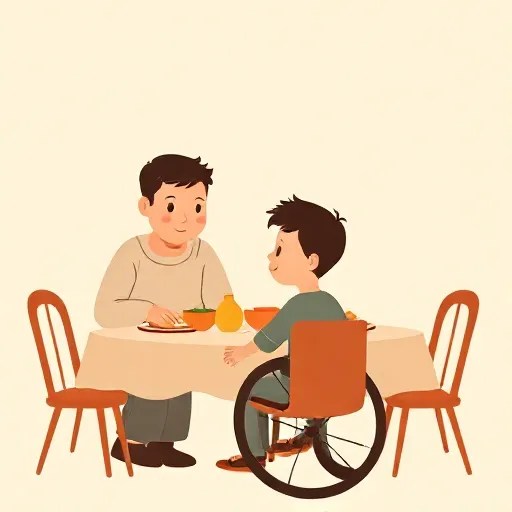
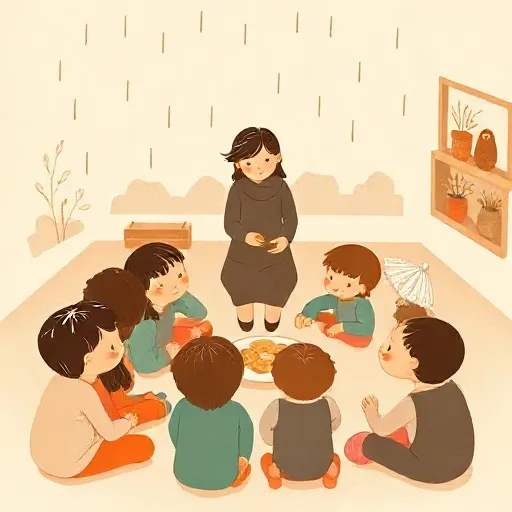
Maya’s older brother Leo cannot talk or feed himself. He will never go to school or hold a job. One evening over spaghetti, Maya looks at her dad and asks, “Does Leo have the same right to be here as I do?” She isn’t trying to be mean; she genuinely wants to know if all human lives are equally valuable. That question sits at the heart of a fierce debate among philosophers about moral status—the idea that some beings count more than others in our moral choices.
You might think the answer is obvious: of course Leo counts just as much. But many philosophers argue that to have equal worth, a being needs certain mental abilities. If those abilities are missing, some humans might fall into a category called radical cognitive disability—a profound limitation in the capacities that are thought to make someone a full person. The term is carefully defined, and philosophers disagree about whether any real human fits it exactly. Still, the question forces us to ask: what gives any of us the highest kind of moral standing, labelled full moral status?
Full moral status is not about being nice. It’s about having the strongest rights and protections. Most adults have it; rocks and teapots do not. For many thinkers, full moral status is a threshold concept and a range concept. Imagine a roller coaster sign: “You must be this tall to ride.” Being one centimetre too short bars you, but being a metre taller than the bar doesn’t make you more allowed to ride—you’re either in or out. In the same way, if you reach the threshold of the needed mental ability, you have full moral status, and no extra brainpower gives you extra status. The puzzle is whether Leo, or anyone with a radical cognitive disability, clears that bar.
The Brain-Only Test: Self-Awareness and Reasoning
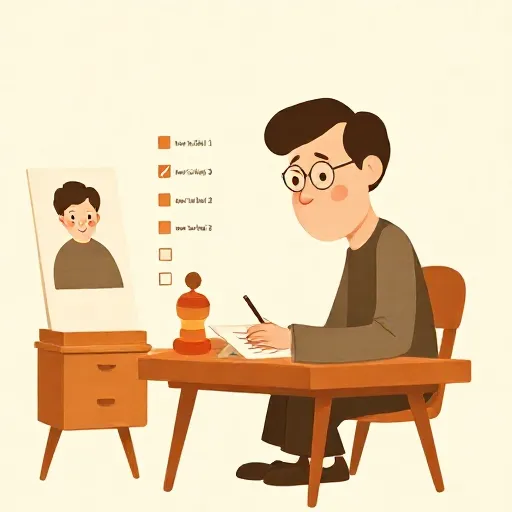
The most influential approach to moral status looks only at what goes on inside an individual’s mind. It asks whether a being possesses self-consciousness (an awareness of yourself as a person who exists through time) and practical rationality (the ability to think about what to do and act for reasons). Immanuel Kant (1724–1804) argued that the capacity to govern your own actions gives you dignity and demands respect. Today, philosophers like Jeff McMahan (born 1954) build on that idea, claiming that full moral status belongs to anyone who can understand themselves as a continuing self and make choices based on reasons.
These abilities seem to come in degrees. A baby gradually learns to recognise itself in a mirror and to plan. A teenager with a brain injury might lose some of that capacity. Yet the threshold and range features create a sharp line. If you never reach a certain level of self-awareness or rationality, you don’t get full moral status—no matter how close you came. And once you’re above the line, extra intelligence doesn’t give you extra rights. That’s surprising, because in everyday life we might admire smart people, but we don’t think they have more moral worth.
McMahan and others acknowledge that this view would deny full moral status to some humans with severe cognitive impairments. To them, that’s a straightforward conclusion: if a human lacks the mental powers that make us persons, then they are not persons in the full moral sense. They often add that many non-human animals, like chimpanzees or dolphins, might qualify for some intermediate status, while cows and mice would rate lower. The picture becomes a graded ladder, not a simple “human = top, animal = bottom.”
Why Exclusion Feels So Wrong
If you follow the brain-only view, you are forced to accept some deeply unsettling possibilities. Suppose Leo is classified as lacking full moral status. Then, in principle, using him in harmful medical experiments might be no worse than using a lab rat with similar mental abilities. Most people, even those who defend the brain-only view, find that idea shocking. Eva Kittay (born 1946), whose own daughter has a severe cognitive disability, insists that there is simply no good reason to put any human being outside the circle of equal worth.
McMahan does not want to see disabled humans treated badly. He suggests that we should greatly improve how we treat animals instead, raising their protections so that we don’t have a huge gap between the treatment of a chimp with some self-awareness and a human who lacks it. But he admits that full convergence would still let us do things to a human with no consciousness at all that would horrify most families. The thought experiment alone shows how uncomfortable the logic becomes.
The problem is that the brain-only view makes moral standing depend on facts about a person’s mind, and we care deeply about someone simply because they are human. Even philosophers who accept the view often look for ways to avoid its harshest results without giving up the core idea.
Widening the Circle: Potential, Proxies, and Human Bonds

Some philosophers try to widen the circle by arguing that you don’t need to actually have self-awareness right now; it’s enough to have the potential to develop it. But many human beings with radical cognitive disabilities never had that potential, and even a fertilised egg could be said to have potential—yet most people don’t think an embryo has full moral status. Others point to the genetic basis for moral agency: if your genes could, in a different environment, build a reasoning mind, you count. This move still gives full status to early embryos and some argue it’s just as tricky as potential.
Another strategy is to let someone else’s mind stand in for yours. Imagine a trustee who helps a person with a severe disability form preferences and make decisions—a kind of “mental prosthesis.” Francis and Silvers (writing in the 2000s) suggest that this could allow someone to meet the threshold for moral agency through another person’s reasoning. But critics ask: whose choice is it really, and could we do the same for a smart dog? If we can, then the floodgates open.
Some thinkers shift the focus from individual capacities to relationships. T. M. Scanlon (born 1940) claims that the “tie of birth” gives us a powerful reason to treat all humans as equals, even those who cannot reason. Stephen Mulhall (born 1962) and Cora Diamond (born 1937) go further, arguing that the very idea of a human being is thick with moral meaning. We don’t first see a biological creature and then decide it deserves respect; recognising someone as human already includes seeing them as a fellow creature who makes a claim on us. For these humanist thinkers, Leo simply is one of us, sharing in the common life of eating, touch, and care—his disability is a misfortune, not a lowering of rank. Species membership, they say, is not a prejudice like racism; it’s more like the loyalty you feel toward your family, which even an outsider can understand.
Bernard Williams (1929–2003) added that we judge other beings from our human perspective. We value reason and self-awareness because those are our species’ characteristic gifts. If we met intelligent aliens, we might extend moral recognition, but we could still feel a special bond with our own kind—a partiality that isn’t just blind bias. Still, these group-based views face a boundary question: does a newly conceived embryo count? What about a human-like being created in a lab? The “thick” concept of a human being might not have sharp edges.
Why the Answer Shapes Your World
This isn’t just a puzzle for professors. It affects what laws we pass about medical decisions, how we organise schools, and how we feel about the person in the wheelchair at the park. Some researchers notice that when we treat people with severe brain differences as full members of our moral community—talking to them, including them, presuming they can respond—they often develop more than anyone expected. Treating someone “as if” they have full status can be self-fulfilling, drawing out capacities that tests missed.
The debate also touches on how we treat non-human animals and future intelligent machines. If you base moral status on mental capacities, a super-smart AI might one day claim higher status than a human infant. If you base it on being human, you need to explain why membership in a biological group carries such moral weight. As you sit in your classroom or around your dinner table, you’re already living inside this argument. The way you treat a classmate who communicates differently, or a sibling who will never speak, reflects an answer—whether you’ve said it out loud or not.
Think about it
- If you could measure a person’s self-awareness perfectly, would it be fair to give extra rights to those who score higher?
- A chimpanzee can learn sign language and show signs of empathy. Should we treat a chimp that communicates like a human toddler as having equal moral status to a human with a severe brain injury? Why or why not?
- Suppose your closest friend one day lost all memory and the ability to reason due to an accident. Would they still have the same moral worth to you? Would it matter if others saw them differently?