You See a Zebra. Do You Know It’s Not a Mule?
The Zoo and the Disguised Mule
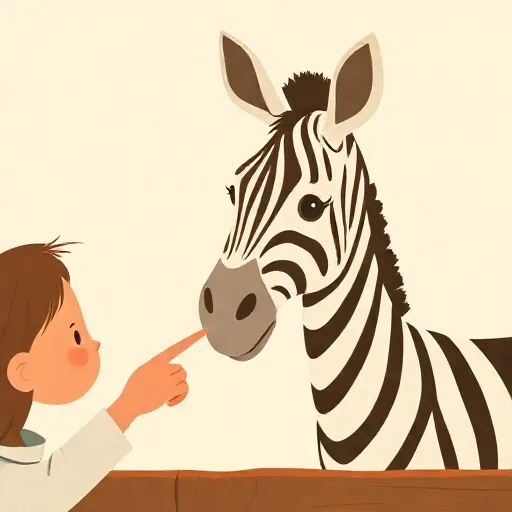
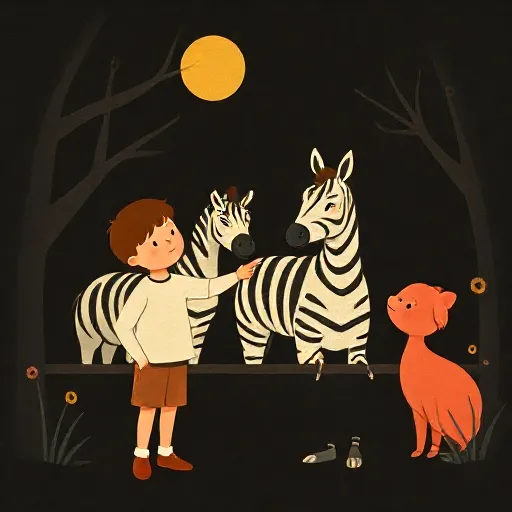
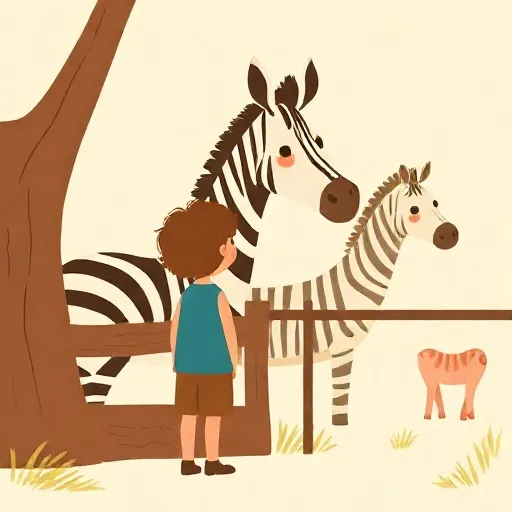
Imagine you’re at the zoo. You see an animal with black and white stripes standing in a pen marked “Zebra.” You believe it’s a zebra. Then a strange thought pops into your head: what if the zoo put a mule in a striped costume? You realize that if it’s really a zebra, then it can’t be a cleverly disguised mule. So you deduce: “This animal is not a disguised mule.” Do you know that? Most of us would say yes. But philosopher Fred Dretske (1932–2013) said no. His answer launched a long fight over a principle called knowledge closure — the idea that you can extend your knowledge by logical deduction. If you know one thing, and you see that it forces another thing to be true, do you automatically know that second thing? This article explores whether the rule really holds, and what’s at stake if it doesn’t.
A Simple Rule (That Isn’t So Simple)
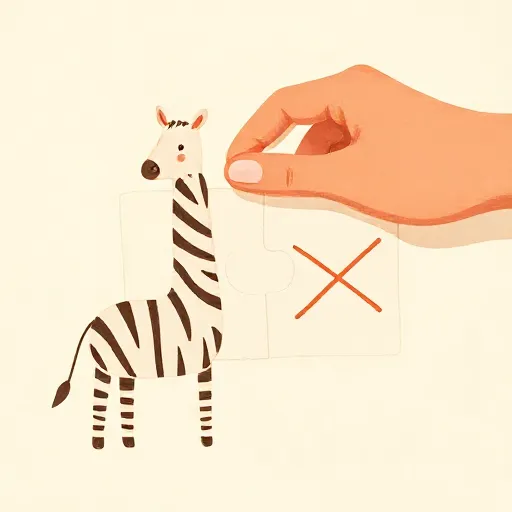
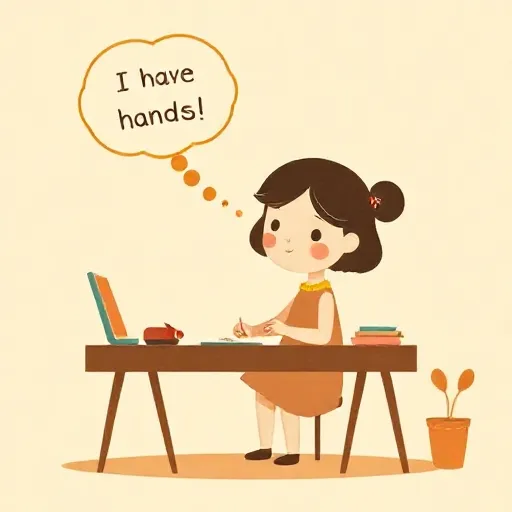
At first glance, closure seems obvious. You know it’s raining; if you realize that “it’s raining” entails “the ground is getting wet,” then you seem to know the ground is getting wet, too. The simplest version of the closure rule says: if you know something (call it p) and p entails another thing (q), then you know q. But that’s too crude. You might know p but never notice that it entails q. Or you might make a mistake while reasoning. A more careful version, often called K, says: If, while you know p, you believe q because you know that p entails q, then you know q. You must be aware of the logical connection and base your new belief on it. The philosopher G.E. Moore (1873–1958) used a similar rule to argue against skeptics. He knew he had hands; he saw that having hands entails he was not dreaming; so he concluded he knew he was not dreaming. But not everyone was convinced that deduction always gives you knowledge. K itself became the center of a storm.
Dretske’s Challenge: Tracking the Truth
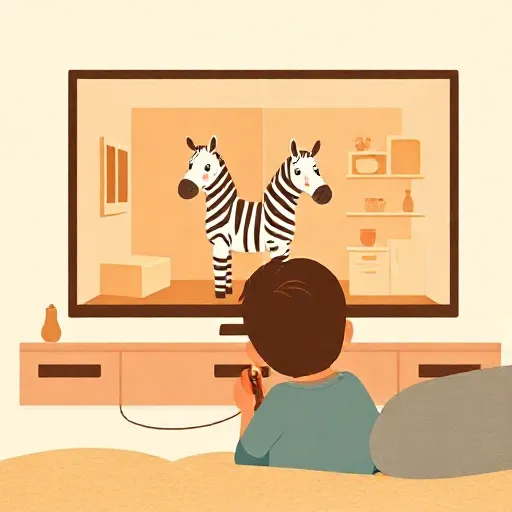
To understand Dretske’s objection, you need to see what he and Robert Nozick (1938–2002) thought knowledge required. They defended a tracking condition. Roughly: you know something only if your belief “tracks” the truth — that is, if the thing were false, you wouldn’t believe it. Think of a motion sensor that turns on a light. It tracks motion: if there were no movement, the light wouldn’t come on. Now apply this to the zoo. You believe “that’s a zebra” because you have zebra-like visual experiences. If it weren’t a zebra (say, the cage were empty), you wouldn’t have those experiences, so you wouldn’t believe it was a zebra. Your belief tracks the truth, so you know it’s a zebra. Now consider your deduced belief: “It’s not a disguised mule.” What if that were false? If the animal were a disguised mule, your experiences would be exactly the same; you’d still see black and white stripes. So you would still believe it’s not a mule, and you would still deduce “not a mule.” Your belief does not track — in the possible world where it’s a mule, you’d still believe it’s not. Therefore, Dretske says, you don’t know it’s not a mule. But you do know it’s a zebra, and you believe the non-mule conclusion because you see the entailment. That breaks K: the rule says you should know it’s not a mule, but tracking says you don’t. So closure fails.
This view has a surprising cost. If you know “zebra” and “zebra” is equivalent to the conjunction “zebra & not-mule,” then by a simple logical step you could know the conjunction. But Nozick had to deny that knowledge is closed under simplification — so you might know the whole conjunction yet not be able to know “not-mule” by itself. Many philosophers found that odd.
A Safer Way to Know
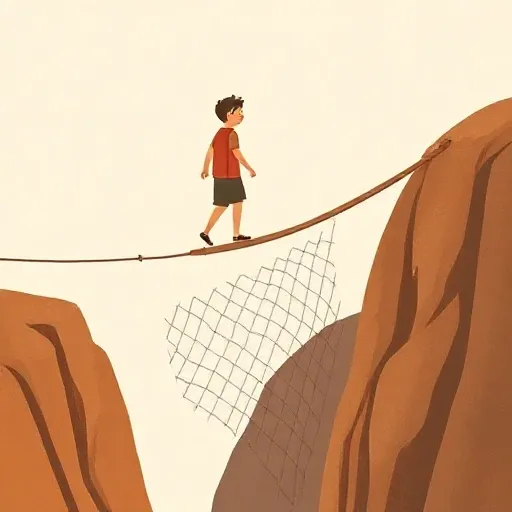
Philosophers who wanted to keep closure offered a different condition for knowledge called the safety condition (defended by Ernest Sosa, born 1940, among others). Instead of tracking, the rule says: your basis for belief must be a safe indicator of the truth. That means: in all nearby possible worlds where you have that basis, your belief is true. It’s not enough that you’d be right in the actual world; you must not be easily wrong. Think of a reliable alarm that only rings when there’s fire. In close worlds where the alarm rings, fire is present — that’s safety. Now back to the zebra. Your basis for believing “zebra” is your zebra-like visual percepts. In any nearby world where you have those percepts, the animal really is a zebra (not a mule). So your percepts safely indicate “zebra,” so you know it. What about “not a mule”? The world where it’s a disguised mule is remote — not nearby. Your actual percepts safely indicate that it’s not a mule. And when you deduce “not a mule” from “zebra,” your basis is still those safe percepts plus the logical link. So you know it’s not a mule. Safety preserves closure: if a reason safely indicates p, it safely indicates anything p entails. Knowledge is closed under known entailment after all.
Why This Matters: Brains in Vats and Lotteries
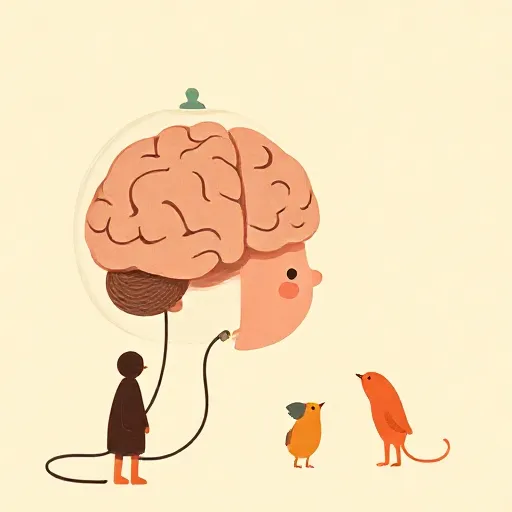
The fight over closure isn’t just about zoo animals. It has huge consequences for a puzzle called skepticism. Imagine a scary possibility: maybe you’re not really reading this; you’re just a brain in a vat, hooked up to a supercomputer that feeds you all your experiences. You probably think you don’t know that you’re not a brain in a vat. But if you know you’re reading a screen, and that entails you’re not a brain in a vat, then by K you would know you’re not a brain in a vat. That forces a choice: either give up ordinary knowledge (like knowing you’re reading), or accept that you know the skeptical scenario is false. Dretske and Nozick chose the first route: reject closure. They said you can know you’re reading a screen but you don’t know you’re not a brain in a vat, because your belief in not being a vat doesn’t track — if you were a brain in a vat, you’d still believe you weren’t. Safety theorists take the second route: they keep closure. They argue the brain-in-a-vat scenario is a far-off, remote possibility. Your ordinary experiences safely indicate you’re not a brain in a vat, since in all nearby worlds where you have those experiences, you really aren’t one.
There’s another challenge from lottery propositions. You know you won’t buy a luxury villa tomorrow because you lack the money. Suppose you also know the conditional: if you win the lottery tonight, you’ll buy the villa. If you know you won’t buy it and you know the conditional, you could deduce that you won’t win the lottery. But do you really know you won’t win? The odds are vanishingly small, but many feel you don’t know you’ll lose — you could get lucky. So if closure holds, you would know you’ll lose, which seems wrong. Many philosophers respond by saying that mundane knowledge like “I won’t buy a villa” is based on safe indicators — things like your bank balance, not mere high probability — so you really do know it. But the lottery loss itself is known only if you can settle it with a safe indicator, which you can’t just from probability. So closure doesn’t force you to know the loss in the first place. The puzzle sharpens our sense of when a belief counts as real knowledge.
Why It Still Matters
You don’t need a philosophy degree to care about closure. Every time you connect two facts — “If my phone is dead, I can’t call you” — and then act on the conclusion, you rely on the idea that deduction preserves knowledge. If Dretske is right, there might be limits: you might know your phone is dead but not know you can’t call, if the connection between the two could fail in some tricky way. That seems strange. But if safety theorists are right, your ordinary reasoning is generally reliable, and you can even know things about far-off skeptical scenarios. Philosophers continue to argue because our understanding of knowledge itself changes depending on the answer. So next time you see a zebra at the zoo, ask yourself: do you really know it’s not a disguised mule? Your answer might pull you into one of the deepest debates in philosophy.
Think about it
- If a virtual reality game made everything seem completely real, could you ever know that you weren’t inside it? Would that change your confidence in everyday facts?
- When a math teacher shows you a proof step by step, do you always end up knowing the conclusion? Can you think of a case where following the steps didn’t make you feel like you knew the answer?
- Suppose your friend says, “I know I’m not dreaming because I can pinch myself and feel it.” If a dream could mimic the feeling perfectly, does that argument still work? Why or why not?