Who Bears the Risk for Tomorrow’s Cures?
The Scurvy Experiment: A Doctor’s Dangerous Question
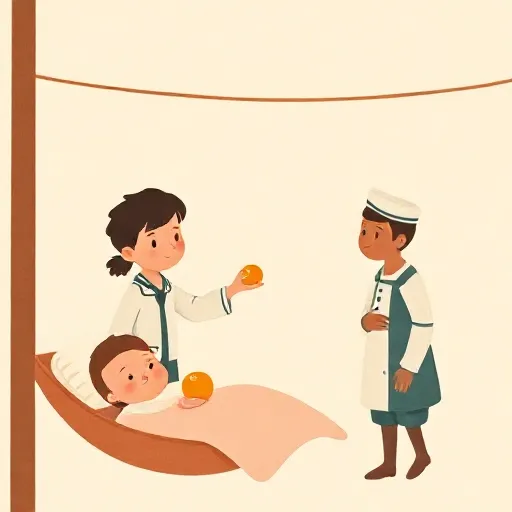
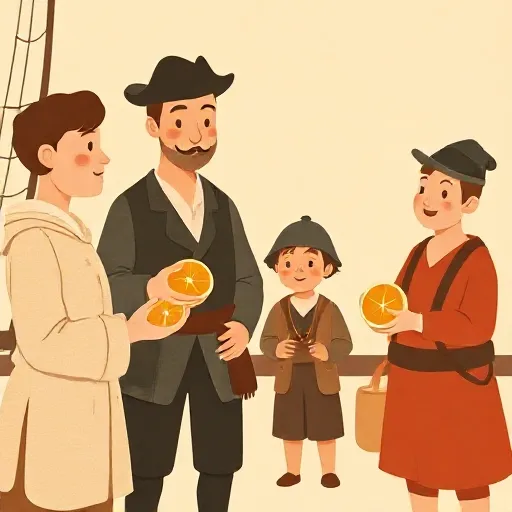
On May 20, 1747, aboard the British warship HMS Salisbury, ship’s surgeon James Lind faced a problem. Scurvy, a disease we now know comes from a lack of vitamin C, was killing more sailors than enemy cannonballs. Lind, like many doctors of his time, had no idea which of the popular treatments — cider, vinegar, sea water — actually worked.
Instead of guessing, Lind turned 12 sailors into the subjects of an experiment. He chose men who were all suffering from scurvy, made sure they ate the same meals, and divided them into pairs. One pair got two oranges and a lemon each day. Another pair got sea water. Within a week, the orange-eaters were back on their feet. The others grew weaker; some were dying.
The test worked beautifully for science. But it left behind a deeply uncomfortable question: Did Lind sacrifice those sailors who received useless, even harmful, treatments just so future crews might stay healthy? Clinical research — studying people to find better ways to treat or prevent illness — has been wrestling with that same tension ever since.
What Exactly Is Clinical Research?
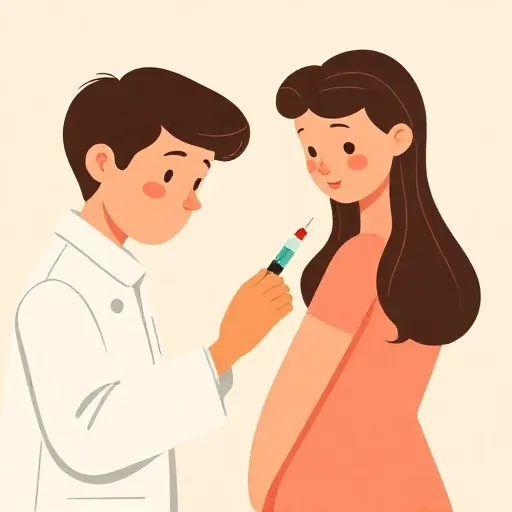
Clinical research does not treat patients the way a family doctor does. Its goal is to produce generalizable knowledge — information that can improve care for people who are not yet sick, sometimes not even born. Most new treatments take 10 to 15 years to develop and pass through several phases.
Phase 1 studies test an experimental drug in a small group, often healthy volunteers who have no illness to treat. Researchers are looking for a safe dose and watching for harm. These volunteers take on risks but can expect essentially no personal health benefit.
Later, Phase 2 and Phase 3 studies involve patients. Phase 3 trials often randomly assign hundreds or thousands of people to get either the new treatment or the current standard — sometimes a placebo, a pill with no active medicine. Even here, the study adds purely research procedures, such as extra blood draws or scans, that are done only to collect data.
These features create what ethicists call net risks: risks that are not balanced out by a chance of improving your own health. Net risks come in three flavors. Absolute net risks happen when a procedure offers no real benefit at all — like a research biopsy on a healthy volunteer. Relative net risks occur when a study gives you a treatment that is probably worse than what you could get elsewhere, such as comparing a cheap drug with a more effective expensive one. Indirect net risks pop up when the experimental drug makes other medicines you take less effective. All of them raise the same core worry: Is it ever fair to use a person as a means to help faceless future patients?
A History of Abuses, a History of Rules

The question feels even sharper when you look at the past. During World War II, Nazi doctors performed horrifying experiments on prisoners. The global response produced the Nuremberg Code in 1947, often called the first formal ethical guidelines for human research. Its first principle: the informed consent of every participant is “essential.”
But if consent is essential, what about research on children, or on people with advanced dementia? They cannot give consent themselves. The Declaration of Helsinki (1964) allowed someone’s legal representative to give permission for them, opening the door to studies that could help those very groups. The 1972 public revelation of the Tuskegee syphilis study — in which poor Black men were lied to and denied treatment for 40 years — spurred the United States to create strong federal regulations. Today, most countries require an independent ethics committee to approve every study, and they place special limits on the risks children can be exposed to.
Yet those limits are not absolute. Some pediatric studies with no chance of benefit and more-than-tiny risks can still be approved under narrow circumstances. The rules try to protect individuals from exploitation without blocking the very research that children themselves need. Exactly where to draw that line is still hotly debated.
When Coins Choose Your Treatment
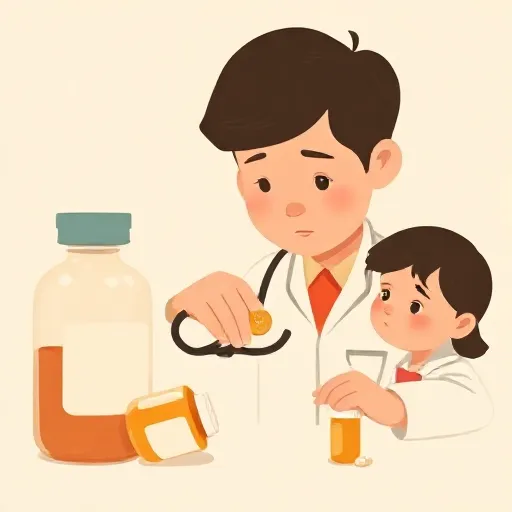
A family doctor who flips a coin to pick your medicine would be accused of malpractice. Yet clinical researchers do exactly that when they run randomized trials. Many ethicists have tried to square this circle with the idea of clinical equipoise, introduced by Benjamin Freedman in 1987.
Clinical equipoise says that randomization is morally okay when the community of experts is genuinely uncertain which treatment is better. If the data do not favor the new drug or the old one, then tossing a coin seems as good a method as any other. Lind himself believed sea water was useless, but because the wider medical world still argued about it, his trial could be seen as testing a collective uncertainty rather than ignoring his duty to each sailor.
Critics point out that even when equipoise holds for the group, it may not hold for a particular patient. Someone with weak kidneys might be at higher risk from a drug metabolized by the kidneys, making one arm of the trial clearly worse for him. And equipoise does nothing to justify the extra research procedures — those blood draws and questionnaires that help science but do nothing for the person in the bed. The dilemma, it seems, does not go away so easily.
Is Saying “Yes” Enough?

If someone freely agrees to a risky study, why should anyone stop them? This libertarian starting point — informed consent is both necessary and sufficient — sounds simple and respectful. But almost no one in research ethics accepts it as the whole story.
One reason is that people often misunderstand what they are agreeing to. Studies show that many volunteers in randomized trials do not grasp that their treatment is chosen by chance, not by a doctor’s judgment. If understanding is shaky, consent cannot carry all the moral weight.
A deeper reason is that there are things we simply should not do to people even if they say yes. Imagine a study that deliberately infects healthy volunteers with a dangerous virus to speed up vaccine research. Most people, ethicists included, would call that wrong regardless of how perfect the consent forms are. This suggests that our responsibilities to protect participants — and limits on what researchers may do — go beyond respecting a signature.
Some philosophers argue that we already accept many activities that impose risks on others for a benefit, from factory work to speeding ambulances. If we regulate clinical research far more strictly, they say, that is an unjustified research exceptionalism. Perhaps paying participants a fair wage, like workers, would fix the fairness problem. Others reply that turning volunteers into paid risk-takers might make exploitation worse, especially for people who are poor. The debate is alive.
Whose Goals Are You Serving?
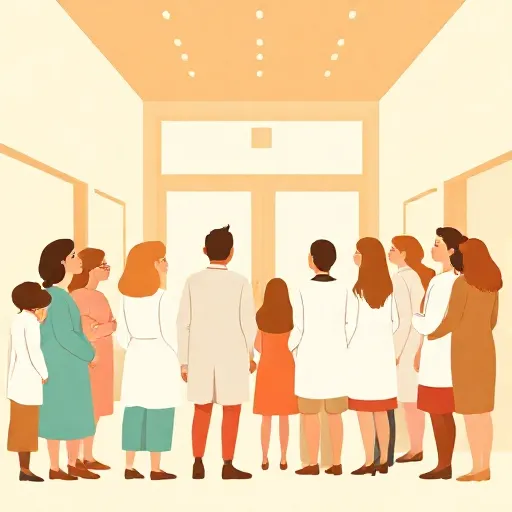
The philosopher Hans Jonas took an even stricter view. In a famous 1969 essay, he argued that medical progress is “gratuitous” — a nice extra, not a moral emergency. Our children have no right to new miracle cures, Jonas said, but they do have a right not to be harmed by experiments done in their name. Therefore, he claimed, research is only ethical when participants truly make the study’s purpose their own. Jonas thought that meant you can share the goal of curing Alzheimer’s only if you yourself have the disease.
That standard is demanding. Many people care deeply about fighting a disease that affects their family or community, even if their own bodies are healthy. And as Jonas’s critics note, his approach might still leave us without a clean justification for some kinds of research that seem clearly valuable.
The most recent twist on the whole debate is the call for a learning health care system. In this model, the sharp wall between research and ordinary care is torn down. Every patient visit generates data that can systematically be used to improve treatments, and everyone is both a potential participant and a future beneficiary. The idea is that if we all chip in a small amount of risk — an extra questionnaire, anonymized data from our records — the old worry about sacrificing a few for the many may fade. But learning systems raise their own questions: Should you be told when your data is used? Can you opt out? And who guarantees that the risks, however tiny, are distributed fairly?
Why It Still Matters
Lind’s sailors could not have imagined electronic health records, multinational drug trials, or algorithms that comb through medical data while you sleep. Yet the question their story pressed into the world is precisely the one we still face. When you get a vaccine, take an allergy pill, or even use a simple painkiller, someone — many someones — faced risks in a clinical trial so that those treatments would be safe and effective for you.
So this is not just a story about scientists in labs. It is about the bargain every society makes with its future. Your generation will decide how much risk it is acceptable to ask from willing adults, how to protect people who cannot consent, and whether sharing data from a routine check-up is a civic duty or a privacy invasion. The ethics of clinical research turns out to be a conversation about fairness across time, and you are already part of it.
Think about it
- If a study could cure a childhood disease but required giving an experimental drug to healthy kids, what would you want to know before deciding? Who should get the final say?
- Should patients who never volunteer for studies still get to benefit from the results, or is that unfair to the volunteers who took the risk?
- Your doctor wants to use the information from your regular check-ups to make treatments better for others. Would you want to be asked first, or is it all right for that to happen automatically?