Climate Detectives: How We Solved the Mystery of a Warming Earth
A 150-Year Global Thermometer
In 1896, Swedish chemist Svante Arrhenius (1859–1927) sat down with a pen and paper and did a strange calculation. If humans burned enough coal to double the carbon dioxide in the air, he figured, the whole planet might get several degrees warmer. He didn’t imagine it would happen soon. But he had just invented the idea of human-caused climate change. The real detective work began later.
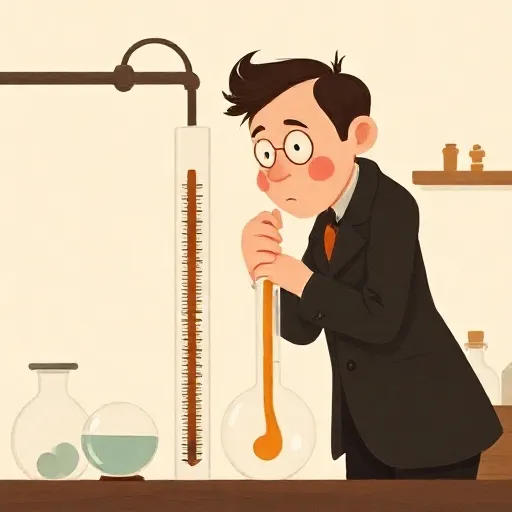
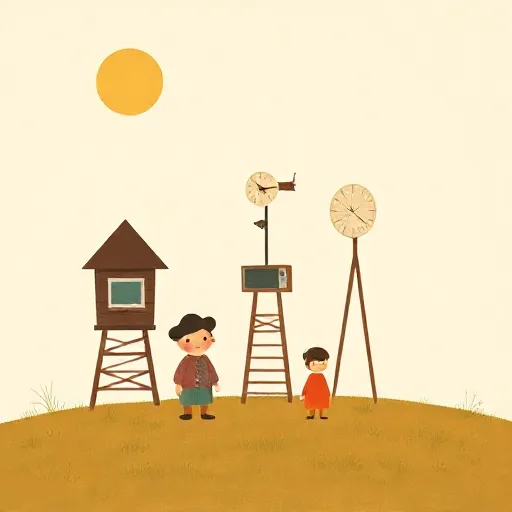
Today, scientists know that Earth’s surface has warmed by about 1°C since Arrhenius’s time. But how do you measure the temperature of an entire planet? You can’t just stick a thermometer out the window and call it a day. You need thousands of them, spread across continents and oceans, recording day after day for decades. That’s what a global network of land-based weather stations has been doing since the mid-1800s. They measure near-surface temperature, pressure, rain, and humidity.
However, those station records are messy. Some thermometers were moved next to a building and started reading warmer. Others broke and were replaced with a different model. Sometimes observations happened at a new time of day. To make things worse, many old records only existed on paper, so scientists had to digitize them — sometimes with the public’s help.
Turning all this into a reliable global temperature curve is like taking a jigsaw puzzle where many pieces are missing or warped. Researchers at NASA, the University of East Anglia, and the U.S. National Centers for Environmental Information each merge millions of measurements, throw out obvious errors, and homogenize the data to remove jumps that came from instrument changes or station moves. They then average the results onto a world grid. Despite different recipes, all three groups get almost the same answer: the planet has been warming, especially since the 1950s. In the early 2010s, a skeptical group called Berkeley Earth did its own independent analysis with even more station records and a fresh method. It confirmed the same warming.
So the fever chart is real. But thermometers only cover a tiny slice of Earth’s history. To know if today’s warming is unusual, we need to travel much further back in time.
Messages from Ancient Ice and Trees

Climate detectives don’t have a time machine, but they have proxy indicators: natural objects that recorded what the weather was like long ago. Tree rings, for example, grow wider in warm, wet years and thinner in cold or dry ones. Deep ice cores drilled in Greenland and Antarctica contain tiny bubbles of ancient air, trapping a sample of the atmosphere from hundreds of thousands of years ago. The shells of fossilized plankton on the sea floor, lake sediments, and even old coral skeletons also hold clues.
Each type of proxy has its quirks. Tree rings can be influenced by rainfall and soil quality, not just temperature, so teasing out a single variable is hard. Ice cores exist only at the poles. And because the thermometer record only goes back about 150 years, scientists must calibrate the proxies by matching their recent patterns to real temperature readings — and hope the relationship held in the distant past.
Still, by combining many kinds of proxies, researchers have built paleoclimate reconstructions that estimate past temperatures across whole regions and centuries. The most famous of these is the “hockey stick” graph — a long, nearly flat shaft representing a slow cooling over a thousand years, then a sharp upward blade starting around 1900. It suggests that the late 20th century was probably the warmest period in at least a millennium. The hockey stick was based on tree rings, ice cores, and other proxies, and later studies using different methods have supported that same blade-like jump. But as we’ll see, it also sparked fierce arguments.
Reconstructing the past is one thing. Predicting the future requires an entirely different tool: a virtual Earth.
Climate in a Supercomputer
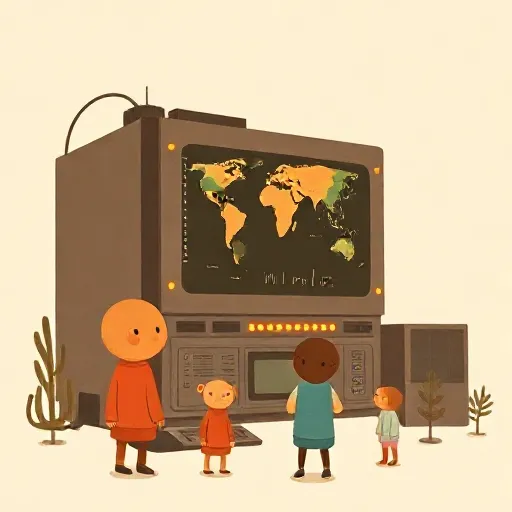
You can’t run a controlled experiment on the whole planet — you can’t add extra greenhouse gases to one Earth and leave another untouched to compare. So scientists turn to climate models: mathematical simulations of the atmosphere, oceans, land, and ice that churn inside supercomputers.
The simplest models treat Earth as a single point and calculate its energy balance. But modern general circulation models (GCMs) and Earth system models (ESMs) are monsters of code — sometimes more than a million lines. They slice the planet into a three-dimensional grid and use the equations of fluid motion to simulate winds and currents every few minutes. Because even the fastest computers can’t resolve every cloud, these models parameterize sub-grid processes: they use approximate formulas to estimate how things like cloud formation or rainfall behave, based on the larger-scale variables the model does track.
Building a model is like engineering a virtual world. Scientists tune parameters — adjustable knobs — so the model’s past climate matches real observations. This tuning is often done by hand, relying on expert judgment, and it raises a philosophical question: if a model is tuned to match the 20th century, can we trust its predictions for the 21st? Some philosophers argue that success without tuning would give stronger evidence. But models are still our best way to estimate how a warming world will behave.
Crucially, GCMs and ESMs also let scientists run what-if worlds: simulations where greenhouse gases are held constant, or where only natural factors change. These experiments are the key to solving the next piece of the puzzle.
The Search for a Human Fingerprint

How can we know that the observed warming isn’t just a natural swing? The climate system has its own internal variability — slow changes from ocean currents, for example, that can nudge global temperature up or down for a decade. To prove humans are responsible, scientists need to do two things: detection (showing that the change is too big to be just natural noise) and attribution (showing which outside forces caused it).
Detection starts by estimating how much temperatures might have wobbled without any human interference. Since the real world is messy, researchers often use GCM simulations with pre-industrial levels of greenhouse gases to estimate that natural wobble. Then they check if the observed warming is far outside that range. It is: by 2013, the Intergovernmental Panel on Climate Change (IPCC) concluded that the probability that recent warming was just internal variability was less than 1%.
Attribution goes further. Scientists simulate the climate with only natural forces (like volcanoes and solar changes) and then with human forces added. The model output gives a fingerprint — a unique pattern of warming across the globe and through the atmosphere. They then look for that fingerprint in the real observations. A statistical technique uncovers the best mix of natural and human influences that matches what we see. According to the IPCC, it is extremely likely (more than 95% probability) that more than half of the warming since 1950 comes from greenhouse gases we emitted.
Not everyone thinks this evidence is airtight. Philosophers like Joel Katzav, drawing on the work of Deborah Mayo (born 1950), have asked whether the claim has passed a truly severe test — a test it would probably fail if it were false. They point to remaining uncertainties about internal variability. But other researchers counter that even if those uncertainties were larger, the human signal would still be clear. The debate continues: it’s a live philosophical argument about how strong evidence needs to be.
When the Evidence Is Questioned

Science rarely progresses without quarrels. Over the past decades, several high-profile controversies have tested climate science in public.
In the 1990s, satellite measurements of the troposphere (a layer of the atmosphere 8–12 km up) seemed to show no warming, contradicting models. For a while, skeptics used this to argue that climate change was a fiction. But later, scientists found errors in the satellite data and the weather balloons they were compared to. Corrected measurements now show warming, though some discrepancy remains — a reminder that observations are never perfect.
The hockey stick reconstruction also came under heavy attack. Critics argued that the statistical methods and proxy data were flawed. Climate scientists double-checked the work, corrected some procedures, and produced new, longer reconstructions using a wide variety of proxies — all pointing to the same blade-like recent warming. Even so, the argument hasn’t fully ended.
Then came Climategate. In 2009, thousands of private emails were stolen from the University of East Anglia and posted online. A few sentences, read out of context, were used to claim that scientists had manipulated data and suppressed dissenting research. Numerous independent investigations later found no fraud, though they did note that scientists could have been more open with their data. In some countries, the episode reduced public trust in climate science — despite the exoneration.
Finally, the “hiatus” : between the late 1990s and early 2010s, global surface temperature rose more slowly, and some critics declared that warming had stopped. In reality, climate models had always shown that such decade-long pauses happen naturally. Extra heat was being absorbed by the oceans. Since 2014, surface temperatures have risen sharply again. Each controversy forced scientists to refine their methods and explain their reasoning more carefully.
These battles show that climate science is a living, self-correcting enterprise. But they also reveal how hard it is to turn a planet-sized puzzle into something every person can trust.
Why This Detective Work Matters for You

You might wonder: if the science is still debated, why should any of it matter to me right now? Because decisions are already being made — about building sea walls, planting crops that can survive heat, or switching to electric buses — and those decisions rely on the same detective work you’ve just read about.
The IPCC was created in 1988 to give governments a clear picture of what scientists know and don’t know. Every few years, hundreds of volunteer researchers review thousands of studies and assign confidence levels using calibrated language. A conclusion they call likely means they are at least 66% sure; very likely means 90% or more. This framework helps world leaders weigh risks, but philosophers note that it also sidesteps the question of how certain we should be before we act.
Projections of future warming come in ranges: under a high-emissions scenario, global temperature might rise between 3°C and 5°C by 2100. Those numbers aren’t wild guesses — they come from running many different GCMs and seeing where they agree. Still, each model gives a slightly different answer because they represent clouds, oceans, and ice differently. How much should we trust those numbers? Some philosophers say ensemble projections only tell us what is possible given our knowledge, not what is probable. Others argue that if most models agree on a yes/no question, that’s a good sign.
Then there are local questions that affect your own town. Global models are too coarse to show how your neighborhood will change. Scientists use downscaling — statistical tricks or finer regional models — to zoom in. But downscaling adds another layer of uncertainty.
So the climate detective story is not yet a tidy confession. It’s a mountain of clues, an army of patient researchers, and a family of supercomputer models that together say: the planet is warming, and we are the main driver. Philosophy helps us ask how strong that case really is, and what we should do when we can’t be perfectly certain. In the end, the most important question is not “Are we entirely sure?” but “What kind of future do we want to build, knowing what the detectives have found?”
Think about it
- If a climate model says your town will get much hotter in 50 years, but the model might be wrong, should your city start building more cooling shelters now? Why or why not?
- Scientists use data from tree rings and ice cores to figure out past climate. If we discovered tomorrow that tree rings are not reliable temperature records, how would that change your confidence in global warming?
- When people disagree about climate change, is it always because one side is ignoring evidence? What other reasons might someone have for doubting the science?