Why Would Someone Choose to Go to Jail?
The Night Thoreau Went to Jail
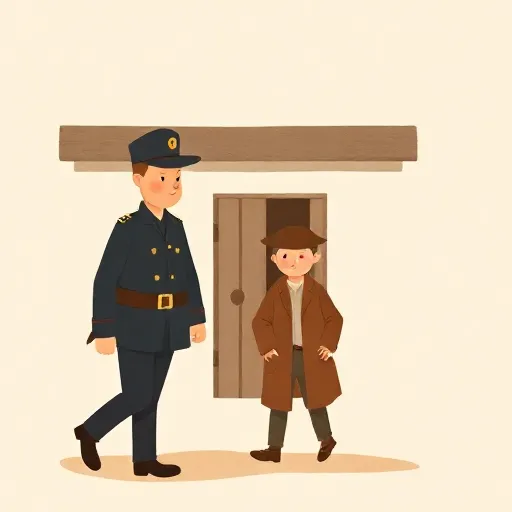
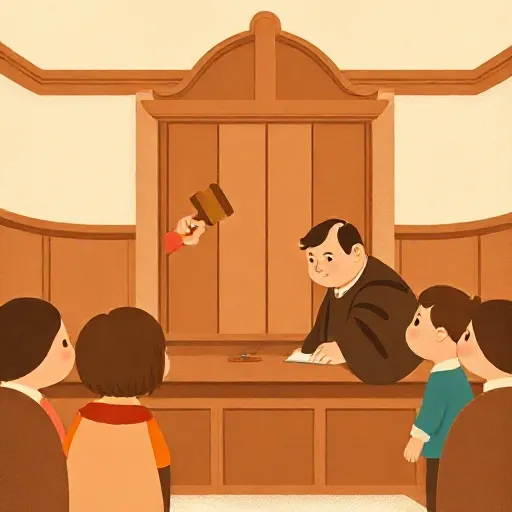
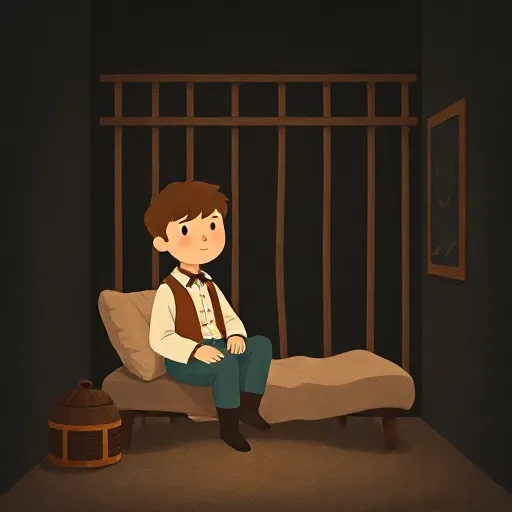
One evening in 1846, in Concord, Massachusetts, a constable named Sam Staples asked Henry David Thoreau (1817–1862) to pay his overdue poll tax. Thoreau refused. Staples led him to the town jail. Thoreau spent the night in a cell.
Thoreau didn’t end up there by accident. For years he had refused to pay that tax. The money, he believed, would support slavery, the war against Mexico, and the mistreatment of Native Americans. His night in jail was a deliberate act. Soon after, he delivered a public lecture, later published as an essay, “Resistance to Civil Government.” After his death the essay was renamed “Civil Disobedience.”
Philosophers now use that term — civil disobedience — for a particular kind of lawbreaking: an act that is principled, done openly and on purpose, not to gain something for yourself but to protest what you see as a serious injustice. The person who does it isn’t trying to get away with a crime. She wants to send a message, and she is usually willing to face the consequences.
That basic idea, you might notice, is already quite complicated. What exactly makes disobedience “civil”? Must it always be non-violent? Must you always get caught? And when, if ever, is breaking the law the right thing to do?
What Makes a Protest “Civil”?
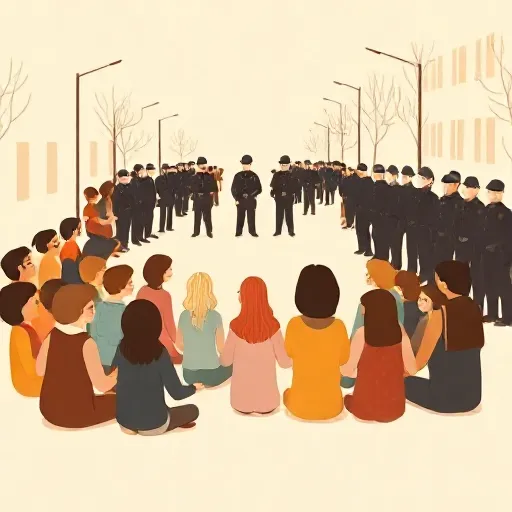
Thoreau thought of “civil” as meaning a matter between citizens and their government. Today most philosophers and activists take “civil” to mean something closer to civility — a kind of self-restraint that makes it possible for people with deep disagreements to live together. Over time, a set of features came to define what counts as civil disobedience.
First, the act must be a breach of law. Rosa Parks broke a city rule when she refused to move to the back of a bus. Climate activists who block a road are also breaking a law, even if the law they are really protesting is a government’s failure to act on climate change. Philosophers call the first kind direct civil disobedience (you break the very law you oppose) and the second indirect (you break one law to protest another). Both are generally accepted, because not every injustice can be confronted head-on.
Second, civil disobedience is conscientious. It’s not a random crime or an act of selfishness; it flows from sincerely held moral or political beliefs. Even if the person’s beliefs turn out to be unreasonable, what matters is that she genuinely holds them and acts from them. Her motives are public-spirited, not hidden.
These two features alone don’t settle what makes the act civil. For that, philosophers have proposed several further marks, and they argue about every one of them.
The act must be communicative — it is a kind of symbolic speech meant to address the majority’s sense of justice. As the philosopher John Rawls (1921–2002) put it, civil disobedience addresses the sense of justice of the majority of the community. It’s not just about stopping a pipeline; it’s a plea for the public to reconsider.
Many insist that civil disobedience must also be public. In the strongest versions, this means you announce your plan beforehand, commit the act openly, and don’t hide your identity. Rawls and the philosopher Hugo Bedau (1926–2012) argued that secrecy would ruin the communicative purpose. Others disagree. What about Edward Snowden, who leaked secret government documents covertly but then publicly claimed responsibility? If he had given advance warning, he would have been stopped before he could do anything. For thinkers like the philosopher Kimberley Brownlee (21st century), the only real publicity requirement is a willingness to claim responsibility afterward.
The Great Non-Violence Debate
Perhaps the most heated argument involves non-violence. For Rawls, violence is incompatible with civil disobedience because it obscures the message. You can’t reason with someone while you’re hurting them. But critics point out that violence doesn’t always ruin communication. When protesters under the Black Lives Matter banner burned a police car or pulled down a Confederate statue, the action was undeniably violent against property — yet the message against racism was loud and clear.
The debate gets even trickier. What counts as violence? Physical force that causes injury, sure. But psychological harm, like harassment or humiliation, can also injure people. And what about property damage? Smashing the window of a store is different from, say, a pacifist hammering the nose cone of a warhead. Some philosophers think property damage is a third category, distinct from both violence and non-violence. Others argue that limited, symbolic property destruction can still stay within the bounds of non-violence. Mahatma Gandhi (1869–1948), who is often remembered as the champion of absolute non-violence, himself made fine distinctions: he thought certain fasts were coercive and violent, while others were persuasive and permissible. In practice, Martin Luther King Jr. (1929–1968) came to see that non-violent protest often had a coercive side — creating a crisis so tense that it forced officials to negotiate.
Then there is non-evasion: the expectation that you accept your punishment. For many, this is the proof that you respect the legal system as a whole, even as you break one of its rules. But not everyone agrees you have to turn yourself in. If the punishment is extremely harsh, evading it doesn’t suddenly make your protest an ordinary crime. The philosopher Ronald Dworkin (1931–2013) argued that accepting punishment is a smart strategy, not a moral duty — and that judges should often respond with leniency.
When Is Breaking the Law the Right Thing to Do?
Most philosophers start from the idea that in a reasonably just society, we have a general moral duty to obey the law. If so, civil disobedience looks like a puzzle: how can it ever be justified?
Rawls offered three famous conditions. First, the protest must target a serious and long-standing injustice, something any reasonable person can recognize as a violation of widely shared principles of justice. For Rawls, racial segregation qualified; economic inequality did not. Second, civil disobedience must be a last resort — after legal methods like voting, petitions, and court challenges have been tried and have failed. Third, minority groups with similar grievances should coordinate their protests so they don’t overwhelm society or undermine each other.
Each condition has drawn sharp criticism. Restricting targets to “recognized” injustices excludes people who are trying to change what the majority considers just in the first place — like early abolitionists or animal-rights activists. The “last resort” condition is also slippery: you could always try legal channels one more time, so it’s hard to know when you’ve really reached the end. And coordination sounds sensible in theory, but what if other groups won’t or can’t cooperate? Should that silence you?
Many contemporary philosophers have stepped back from the assumption that lawbreaking needs an especially high bar. Some see civil disobedience as a valuable, even necessary, part of a healthy democracy. It can put neglected issues on the agenda, challenge powerful interests, and make public debate more inclusive. The German philosopher Jürgen Habermas (20th century) called how a state treats civil disobedience a “litmus test” for the maturity of its political culture.
Meanwhile, political realists stress effectiveness. Drawing on Gandhi and King, the scholar Karuna Mantena (21st century) argues that Gandhi didn’t embrace non-violence because violence is always wrong, but because he believed it would produce a more just and stable political result. Recent research has indeed found that non-violent campaigns are often more successful than violent ones at toppling dictatorships.
Should the State Punish Civil Disobedients?
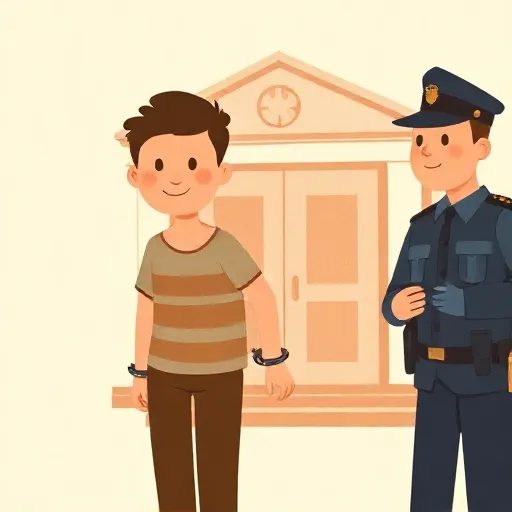
If you believe civil disobedience is sometimes justified, a practical question follows: what should the state do about it?
One view is that the law must be applied equally. A person who breaks a trespass law for political reasons has broken the same rule as someone who does it for private gain. Failing to punish the first person might weaken respect for the law and encourage others to disobey. On this logic, civil disobedients might even deserve harsher treatment, because their act is more public and can spread more widely.
The opposite view has gained a lot of ground. Dworkin argued that the state has a “special responsibility” to protect the civil disobedient and soften her predicament whenever possible. Prosecutors can decide not to press charges. Judges can give light sentences or even dismiss cases after hearing the protester’s reasons. This isn’t about saying the law doesn’t matter. It’s about recognizing that some lawbreaking serves a public good.
Dworkin also defended a limited right to civil disobedience grounded in freedom of conscience. It’s not an absolute right — the state may still stop and punish you — but it means that when you follow a sincere, deeply held conviction against an unjust law, you don’t owe society an apology for acting as you did. The philosopher Joseph Raz (1939–2022) offered a different account: a right to civil disobedience exists mainly in illiberal regimes, where people have to reclaim their political-participation rights by force because the law doesn’t protect them. In a liberal democracy, he thought, legal channels are already available.
Today, some philosophers go further. Brownlee argues that the right to object on the basis of sincere conviction stands on its own, separate from participation rights. And the political theorist William Smith (21st century) has proposed a “policing philosophy” of accommodation, where the police cooperate with protesters to help them carry out their demonstration effectively and safely — a radical departure from the riot gear and mass arrests that many governments still resort to.
Why This Matters Now
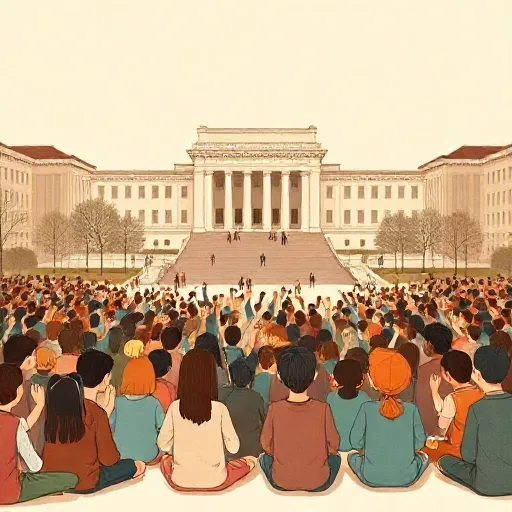
In your own lifetime, you have seen students walk out of school, activists block bridges, and protesters occupy public squares. Some call these acts inspiring. Others call them dangerous or disrespectful. The labels people choose — peaceful protest or riot, civil disobedience or lawlessness — are not neutral. They shape whose voices get heard and whose get silenced.
The arguments you’ve just read don’t provide one tidy answer. They give you a language for thinking through the messiness: Is the action a genuine attempt to communicate a pressing injustice? Does its method, even if disruptive, stay within the bounds of what a democracy can tolerate? What should the police or the courts do when confronted with a crowd that is breaking the law but not trying to harm anyone?
Thoreau spent one night in jail because his aunt paid the tax the next morning, much to his annoyance. The philosophical questions his protest sparked have outlasted him by a century and a half. They show no sign of going away.
Think about it
- If a friend broke a school rule to protest what she thought was an unfair policy, would you consider her act brave or reckless? How would you decide?
- Can smashing a window or blocking a road ever be a genuine attempt to reason with others, or does it always drown out the message?
- If the government almost never punishes people who commit civil disobedience, would that make the law stronger or weaker in the long run?