Are You a Citizen, or Just a Bystander?
What Does It Mean to Be a Citizen?
It is a Wednesday evening. The town council is about to vote on a new curfew for anyone under sixteen. Outside, a small group of teenagers wave signs and chant. Inside the hall, some adults sit quietly, waiting to hear what the mayor decides. Who is acting like a citizen? The protester? The listener? Both? Neither?
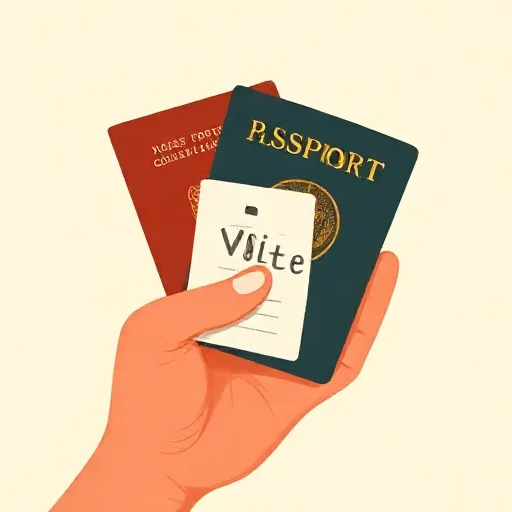
The answer is not simple because the idea of citizenship itself is not simple. Political thinkers see at least three different layers. The first is citizenship as a legal status. This means you have a set of rights — like the right to go to school, to speak freely, to be protected by the law. You do not need to help write the laws; you just need to follow them and be shielded by them. It is the version you carry in your passport.
The second layer is citizenship as political agency. Here, a citizen is not just a person who obeys rules but someone who helps shape them. You might vote, join a protest, run for student council, or argue about a new law. You are actively part of the “who decides.” The third layer is citizenship as membership — a feeling of belonging to a bigger “we.” This is the squishiest part, but it matters. If enough people feel a deep sense of attachment to the same community, the whole group becomes more sturdy. However, that feeling can also be uneven; not everyone inside a country feels equally at home.
These three layers do not sit neatly on separate shelves. The rights you hold can influence how much you dare to speak up, and speaking up can make you feel more at home. Still, philosophers often argue about which layer counts most. Two old models pull citizenship in opposite directions.
Two Old Ways of Seeing Citizenship
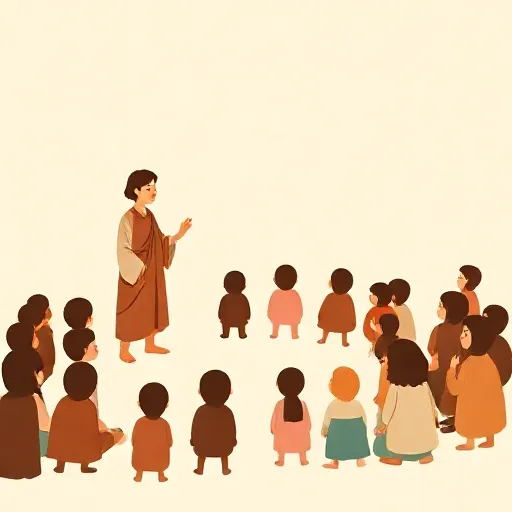
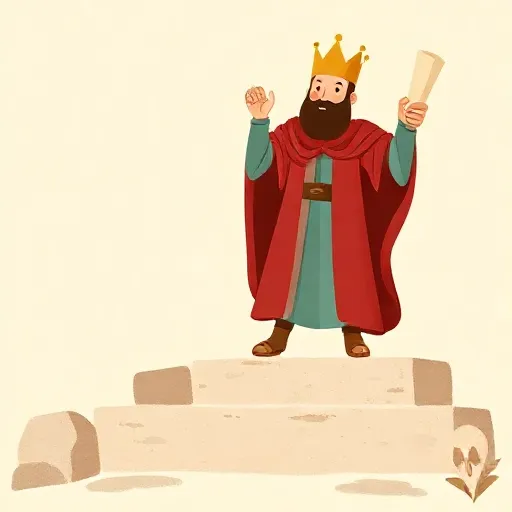
The first model is the republican one, with roots in ancient Athens and the writings of Aristotle (4th century BCE). For him, a citizen was someone “capable of ruling and being ruled in turn.” You did not just vote once every few years. You took turns holding office, speaking in the assembly, and judging cases. Centuries later, Jean-Jacques Rousseau (1712–1778) argued that citizens become truly free only when they help write the laws themselves, through what he called the general will. In this picture, being a citizen is like being a player on the field, not a spectator in the stands. Political activity is central to your life and your sense of who you are.
The second model is the liberal one. Its roots lie in the Roman Empire, which expanded by granting legal rights to conquered peoples far from Rome. Over time, citizenship shifted from “participating in making the rules” to “being protected by the rules.” The thinker Michael Walzer (born 1935) described this as an “important but occasional identity.” You are a citizen when you need a passport or when a police officer must respect your rights. Most of the time, though, you are busy with private life — family, friends, work, hobbies. In the liberal model, politics is important mostly because it guards your personal freedom. You hand the work of lawmaking to representatives.
At first glance, the two models seem like a clear choice. Are you a full-time political actor or a part-time rights-holder? The French thinker Benjamin Constant (1767–1830) pointed out a problem for republicans: modern countries are enormous and crowded. In a giant state, one ordinary person’s voice seems to count for almost nothing. It can feel more sensible to invest your energy in your private world. Yet Constant also worried that if citizens never practice politics, they may lose the will to defend their own liberties when needed. Walzer suggested the two models might need each other. Sometimes you must be a private citizen; sometimes you must become an active one. The trick is knowing when to switch.
The Hidden Line Between Home and Politics
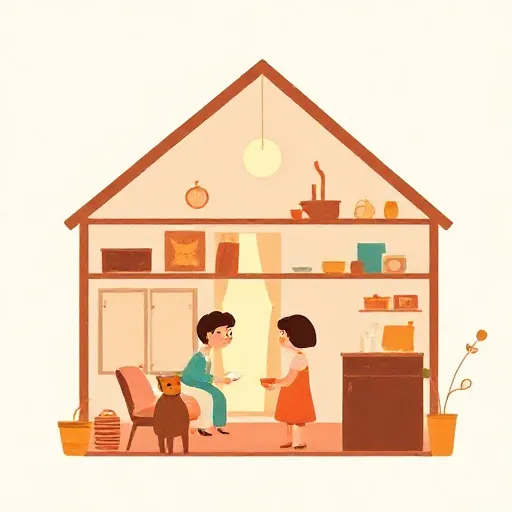
Both the republican and liberal models once rested on a rigid split between a public sphere and a private sphere. In the classical version, the public realm was the place of freedom and equality where male citizens debated the common good. The private household was the realm of necessity — cooking, cleaning, raising children — and it was seen as naturally unequal. Women, associated with that world, were shut out of citizenship.
Starting in the 1970s, feminist thinkers attacked this split as a story that hid a political decision. The line between public and private, they argued, was drawn by the very men who benefited from keeping it. Susan Moller Okin (1946–2004) asked republicans a sharp question: which is more likely to produce citizens who can treat one another as equals — dealing with everyday life part of the time, or treating most people like servants? An equal family, she suggested, is a much better school for equal citizens than a household that runs like a tiny dictatorship.
The liberal model had its own blind spot. It prized the private sphere as a zone of freedom, but it often treated “woman’s sphere” as a kind of male property, with wives described as naturally subordinate. The feminist point was not simply to add women to old models. It was to see that laws about childcare, safety, and work do not stay outside the front door. They shape who can show up and speak. The boundary between public and private is itself something citizens can challenge and redraw.
One Rule for All — or Different Rules for Different Groups?
After the Second World War, many democracies embraced a universalist model of citizenship. The idea was simple: give every citizen the same bundle of civil, political, and social rights. T.H. Marshall (1893–1981) famously argued that adding social rights — like welfare and healthcare — helped the working class become full members of British society. The same story seemed to play out elsewhere. Fairness meant treating everyone identically.
By the late 1980s, critics were pushing back. Iris Marion Young (1949–2006) pointed out that identical treatment can hide a tilt. When laws are difference-blind, they often carry an invisible bias in favor of the majority group’s habits, holidays, and ways of speaking. Asking everyone to “just be the same” can mean forcing minorities to act like the majority. In practice, that can create extra burdens, not equality.
Young and others proposed a differentiated model of citizenship. In some cases, equal respect might actually require different treatment — special representation rights for underrepresented groups, exemptions for religious practices, or public support for minority languages. Will Kymlicka (born 1962) and Wayne Norman grouped these demands into three baskets: special representation rights (temporary boosts to help disadvantaged voices be heard), multicultural rights (helping immigrant groups keep and pass on parts of their culture), and self-government rights (giving national minorities more power over their own affairs). The first two are really about inclusion. Only the third can pull a group toward separation.
The debate is live. Critics worry that too much focus on difference can make people retreat into their own corners, weakening the sense of a shared “we” that makes citizens willing to sacrifice for one another. Supporters reply that refusing to recognize difference when it hurts is just another way of saying “you’re not really one of us.” They also note that the evidence does not show that multicultural policies kill support for welfare states. The argument is not settled, but it is everywhere — in fights over school uniforms, religious symbols, and who gets to tell the nation’s story.
Why This Is Your Fight Too
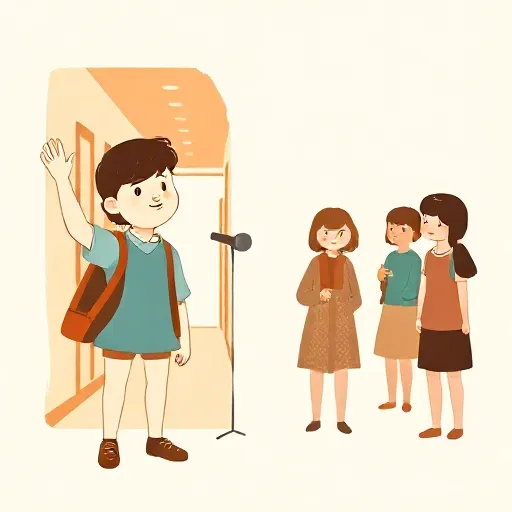
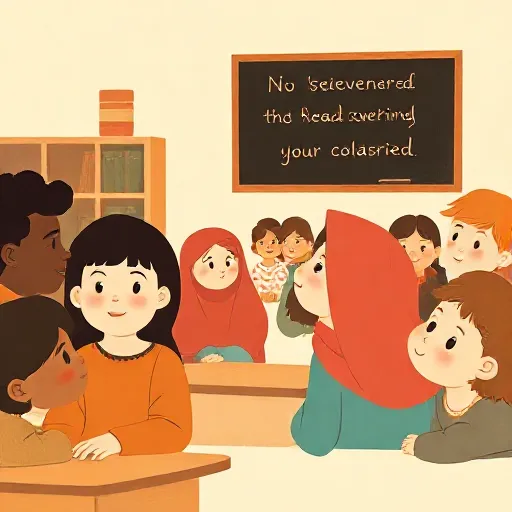
You might not vote yet, but you already live inside these questions. Think about your school. Does it have a rule that applies to everyone in exactly the same way? Maybe it forbids hats, or requires a standard haircut, or sets one way to celebrate holidays. A universal rule sounds fair. But if it bumps into a student’s religious practice or makes some feel invisible, is it still fair? This is the tension between universal and differentiated citizenship, playing out in the cafeteria.
The republican model asks whether you are just following school rules or whether you help shape them. Joining a student council, speaking up in a class meeting, or even posting a thoughtful message in a group chat are small forms of political agency. The liberal model reminds you that rights matter even when you choose to stay quiet — but someone must protect those rights, and that someone is often a citizen who decides to stop being private.
And the hidden line between public and private? That line runs through your own life. Decisions made in a government building can affect who does the housework in your home, or whether a family member can take time off work when someone is sick. Noticing those connections is the first step toward seeing yourself as a citizen, not just a bystander. The arguments that Aristotle, Constant, Okin, and Young wrestled with are not dusty museum pieces. They are the invisible architecture of the rooms you walk through every day.
Think about it
- If your school has a rule that forbids all hats, does it treat everyone equally, or could it ignore the needs of some students?
- Imagine a class where a few students always dominate the discussion. Are the quiet ones still being good citizens just by sitting and listening?
- Can a person be a citizen without ever voting or speaking out about laws? Why do you think so?