Why a Roman Senator Bet His Life on Philosophy
A Senator in the Storm
Rome, 63 BCE. A man named Marcus Tullius Cicero (106–43 BCE) has just become consul, the highest office in the republic. Before the year is out he uncovers a plot to burn the city and overthrow the government. He acts fast, arresting the conspirators, and for a moment he is hailed as the saviour of Rome. But the methods he used to stop the plot are legally shaky, and his enemies push back. Four years later he is driven into exile, his house burned, his name spat on. By the time he dies—murdered on the orders of a rival general in 43 BCE—the republican system he loved is already crumbling into dictatorship.
That long plunge from hero to outlaw forced Cicero to ask a question that felt anything but abstract: Can philosophy actually help when a country is coming apart? He bet everything on the answer being yes. For the rest of his life, he wrote philosophy not to escape politics but to rescue it.
Philosophy as a Rescue Mission
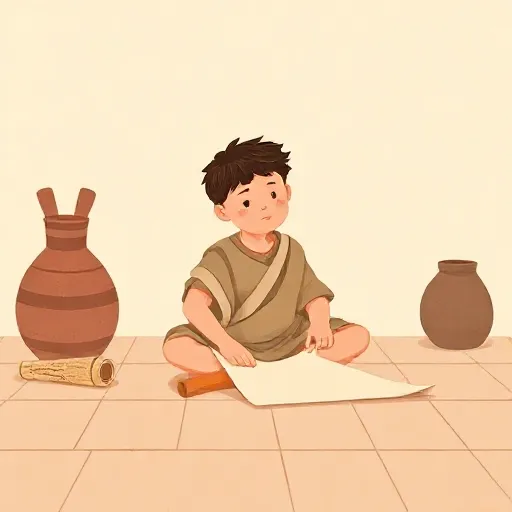
Most Roman senators thought writing philosophy was a waste of time. Let Greeks do that. Real Romans ran armies and passed laws. Cicero disagreed. He was convinced that philosophy could change how people live and make whole societies better. That belief is why you still read Cicero today: he insisted that big ideas only matter if they can walk around in the real world.
He set himself an enormous task—to take the entire Greek philosophical tradition and bring it into Latin, not as a copy, but as a live conversation. He admired Plato deeply, yet his own most original works were soaked in Roman soil. His dialogue The Republic does not imagine a perfect city in the clouds; it argues that the best state already largely exists in the actual customs and institutions of Rome. His book The Laws asks what norms would keep those real institutions just, not what rules a god-king might hand down from nowhere.
Cicero’s core instinct was that ideas have to be tested against the traditions that shape who people already are. If a theory cannot look a Roman senator—or your neighbour—in the eye, something is wrong with the theory, not just with the audience.
Never Certain: The Skeptic’s Toolbox
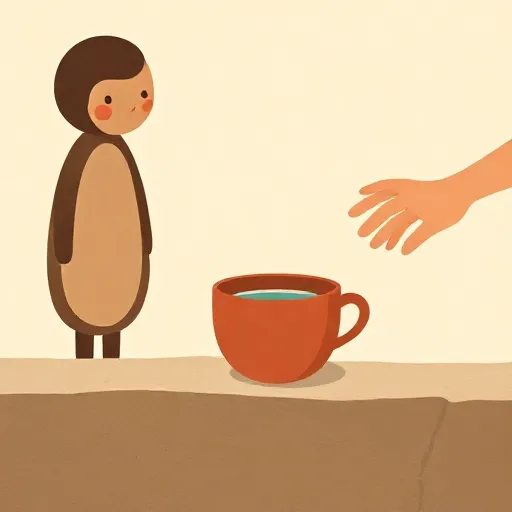
If Cicero thought philosophy could save the republic, he also thought it had a fatal weakness: philosophers love to pretend they have found the final answer. He followed a tradition called Academic scepticism, which taught that certainty is almost always a mistake. The wisest person is the one who can survey all sides of a debate and say that this view seems more plausible than that one—but they might be wrong.
This wasn’t a lazy position. The sceptic still has to act. Imagine you pick up a glass of tap water. It looks clear, smells normal, and you have no reason to distrust the pipes. Do you know with absolute certainty it’s safe? No. But you approve the impression that it’s healthy and drink. If a radio report later warns of contamination, that plausibility gets blocked—what the sceptic Carneades called an “unimpeded” condition disappears—and you put the glass down. You never needed certainty; you only needed reasons that kept looking solid.
Cicero embedded this sceptical method in his writing by using dialogue form. Instead of lecturing, he staged debates. One character lays out the Epicurean view, then the Stoic view, then a sharp critic tears into both. Cicero rarely tells you which side he endorses. He expects you to be a participant, not a passenger. The worst thing you can do, he suggests, is to treat any doctrine—even his own sceptical one—as beyond question.
The Ancestor Test: When Ideas Crash Into Traditions
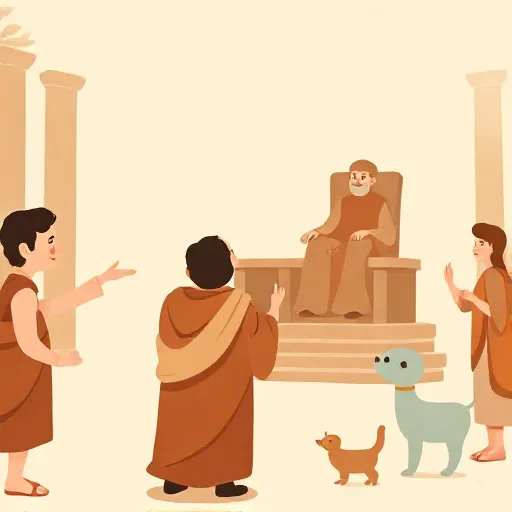
Cicero puts his method to work in On Moral Ends, where he examines the three most popular ethical theories of his time. Two of them get a spanking that still stings.
First, Epicureanism: the teaching of Epicurus (341–270 BCE) that pleasure is the highest good. Cicero invents a scene where an Epicurean named Torquatus is defending the theory. Cicero challenges him with his own family history: Torquatus’s famous ancestor executed his own son for military cowardice. How can that be motivated by pleasure? Torquatus squirms and tries to reinterpret the ancestor’s act as a long-term play for security—really, deep down, pleasure. But notice what he doesn’t do: he never simply says, “My ancestors were wrong.” Cicero has cornered him: ancestral honour still carries a weight that pleasure calculations cannot erase. If a theory forces you to pretend your own moral heroes were just confused pleasure-seekers, maybe the theory is the one that’s confused.
Next he turns to Stoicism, which holds that virtue is the only good and everything else—health, money, even life—is merely “indifferent.” The Stoic spokesman Cato the Younger (95–46 BCE) lays out the doctrine. Then Cicero counters: picture a Stoic lawyer addressing a Roman jury, trying to argue that banishment and poverty aren’t really evils. The court would laugh. Or imagine a general rallying the Senate while Hannibal is camped outside the gates—could he announce that defeat, enslavement and death are “indifferents”? In practice, Cicero argues, Stoics just use ordinary words in public but retreat to their own private vocabulary in their books. That isn’t a small gap; it’s hypocrisy built into the theory. If a philosophy of action cannot be spoken aloud in the places where action actually happens, what good is it?
The Priest and the Sceptic: Religion Between Reason and Tradition

The same tension erupts in Cicero’s dialogue On the Nature of the Gods, but this time it’s about the gods themselves. Two competing theologies are presented: the Epicureans paint the gods as blissful beings who never lift a finger to create or govern anything; the Stoics insist the gods actively steer the universe to favour Rome. Then the sceptical character Cotta—who also happens to be a Roman priest—responds.
Cotta is shocking. He announces that as a priest and a nobleman, he accepts the gods on the strength of ancestral tradition. He needs no argument. But when a philosopher like the Stoic Balbus asks him to agree with Stoic theology, Cotta refuses and demands strict rational proof. He drives a wedge between reason and tradition, claiming they belong to different realms. Philosophy is for the study; religion is for the city. He even lets slip that some clever people think gods were invented to keep the masses orderly—and then says it would be dangerous to say that loudly.
Is Cotta a hypocrite? Partly. But Cicero is doing something more interesting. He is showing that religion is not a free-floating product of reason. It is woven into customs, rituals, ancestral stories and shared identity. If you put tradition on trial by reason alone, you might end up with no religion—and maybe no community. Yet if you silence reason, you’re abandoning honesty. The dialogue never dissolves that knot. Instead it invites you to ask: how many of your own beliefs did you arrive at by pure reasoning, and how many came from the “hearsay” of parents, teachers and the places you grew up? And is that actually a problem?
Why Cicero’s Refusal to Settle Still Matters

You’ve never lived through a Roman civil war. But you know what it’s like when a big idea runs into a stubborn reality: a family rule that makes no sense in a new situation, a friend’s moral rule that crumbles the moment it hurts, a tradition that feels important even though you can’t prove it’s true.
Cicero doesn’t hand you a tidy list of correct answers. He hands you a habit: never stop testing, never pretend you’re perfectly certain, and never throw away the messy human world just to keep a theory tidy. Centuries later, the eighteenth-century philosopher David Hume learned from him, and the twentieth-century thinker Bernard Williams—even though he once called Cicero “third-rate”—ended up defending a very similar picture of philosophy: one that cares about lived experience, mistrusts excessive technicality, and knows that integrity often means owning the questions, not pretending to own the answers.
The next time you’re in an argument where both sides seem partly right, remember that a Roman senator once put his life on the line not for being the loudest, but for being the most willing to say, “I’m still thinking.”
Think about it
- Think of a family custom or a rule at your school that you follow. If you couldn’t give a logical proof that it’s the right rule, does that mean you should drop it? Why or why not?
- Is it ever better for a leader to admit they aren’t sure than to act as if they know the truth? Can you imagine a situation where admitting uncertainty would make things worse?
- If you had to defend a moral belief—say, “lying is wrong”—would you rather test it with abstract reasoning or by watching how it plays out in real stories? Can you have one without the other?