Can a Bad King Lose the Right to Rule? Ancient China’s Big Argument
Heaven’s Message: Why the Shang Lost the Throne

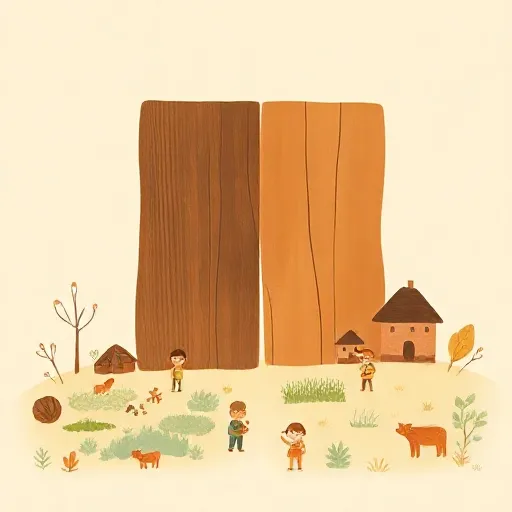
Around 1046 BCE, the Zhou people overthrew the Shang dynasty. To explain why they were now in charge, they told a striking story. Heaven — the god they worshipped — had taken its Mandate of Heaven away from the Shang kings. The Shang had become cruel and corrupt, so Heaven transferred its favor, like a teacher handing a class monitor badge to a different student. But how did the Zhou know? They pointed to oracle‑bone divination. A turtle shell was heated until it cracked, and the pattern of cracks was read as Heaven’s judgment. For the first time in China, a ruler’s authority was said to depend on his virtue — his moral goodness, not just his army.
For a while the Zhou ruled directly, but as the kingdom splintered into the Warring States period (roughly 475–221 BCE) the old formula started to crack. Thinkers now asked: If a ruler is bad, does he really lose his mandate? And what matters more — being a good person, or having clear, impartial rules that even a so‑so leader can follow? That question would drive Chinese political thought for the next two thousand years.
Ruling by Example: The Gentle Breeze of Virtue
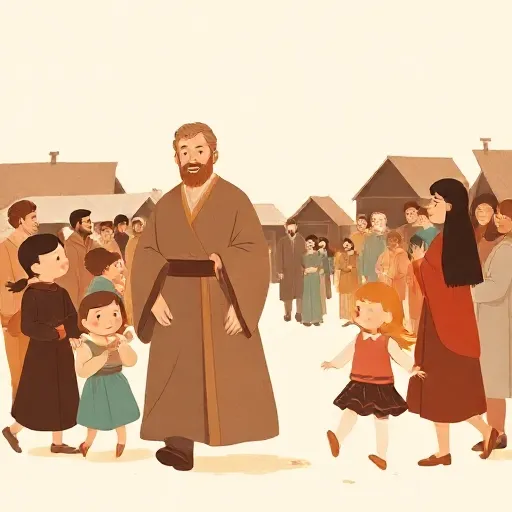
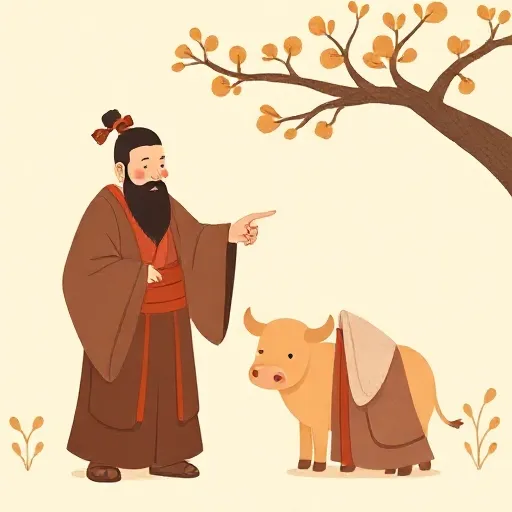
The Analects, a collection of sayings linked to Confucius, gives one of the earliest answers. When asked what government needs most, Confucius said: “Enough food; enough weapons; the people having confidence in the ruler.” And of these, confidence came first. A ruler wins that confidence by showing he genuinely wants what is good for the people — not by threats.
The text puts it in a famous image: “Lead them with government and regulate them by punishments, and the people will evade them with no sense of shame. Lead them with virtue and regulate them by ritual, and they will acquire a sense of shame — and moreover, they will be orderly.” In other words, force makes people sneaky; a good example makes them want to do right. The ruler’s moral virtue works like the wind on grass: it bends the people without a shove.
A century later, the Mencius went even further. It gave the policy a name — humane government (renzheng) — and insisted that a ruler should love his people as a parent loves a child: feeding them, teaching them, and being a living role model. If the ruler only calculated selfish “benefit,” his subjects would learn to do the same. True order, Mencius argued, comes from a genuine, generous heart, not a cold ledger.
The Scale, Not the Sage: When Rules Replace Character
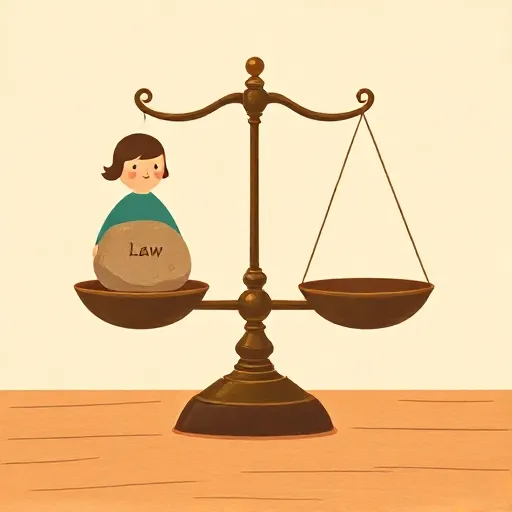
Not everyone agreed that goodness could run a state. Across the same centuries, a rival camp stressed standards (fa) — public, objective rules that tell everyone exactly what to do, and what punishment or reward will follow. The Book of Lord Shang was blunt: “The greatest benefit to the people is order.” People are short‑sighted and selfish, it argued, so a wise ruler does not appeal to their hearts but builds a system where doing the state’s work is the only path to safety or promotion.
The Han Feizi, written in the third century BCE, sharpened this idea. Its author wanted to make the ruler like a scale: it settles what is light and heavy without making any decision itself. Just as a compass lets anyone — even a beginner — draw a perfect circle, a system of fixed fa lets an average ruler govern well. Virtue and wisdom are rare, Han Feizi pointed out; most rulers are ordinary, so they need objective standards, not saintliness. The result was a cold, efficient vision: the ruler sets the standards, checks results against job descriptions, and disposes rewards and punishments exactly as the scale tips. No need for love, just a well‑built machine.
Xunzi’s Middle Way: Rituals That Transform Us
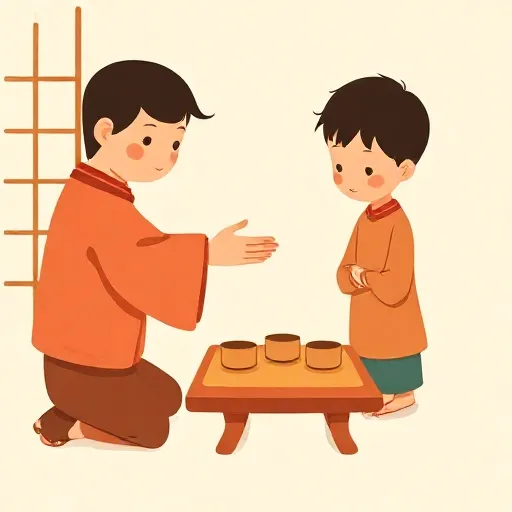
A third giant, Xunzi (born around 310 BCE), tried to hold both sides together. He agreed that people are full of unruly desires. Left alone, they would grab, fight, and cause chaos. But Xunzi did not think punishment alone could fix this. Instead, he put his trust in ritual (li): the carefully taught rules for how to behave at meals, ceremonies, funerals, and audiences. Practicing rituals, he argued, reshapes a person’s character over time — it builds a sense of shame and propriety that no dangling reward or threat could ever install.
At the same time, Xunzi remained a champion of good people over naked rules. Even the best standards, he said, are vague; you need skilled and wise magistrates to apply them correctly, to balance one against another when they conflict, and to change them when times change. As he put it, “There are people who create order; there are no standards creating order of themselves.” So Xunzi’s answer was: build institutions, yes — but never imagine they can run without a cultivated human hand.
The Neo‑Confucian Tug‑of‑War: Inner Sage or Outer King?
A thousand years later, during the Song dynasty (960–1279), thinkers reopened the debate with a sharper lens. For them, the key question was which comes first: the character of the ruler and his officials, or the institutions and laws? Those we can call character‑centered argued that only morally transformed people can make a good society. The government should be a school for virtue, starting with the emperor. Philosophers like Zhu Xi (1130–1200) made famous the chain from the ancient Greater Learning: first investigate things, then make your intentions sincere, then rectify your heart, then cultivate yourself, then regulate your family, and only then put the state in order. Politics and ethics, they said, were two sides of the same coin.
But other voices pushed back. Hu Hong (1106–1161) used a boat analogy: when chaos has wrecked the vessel, it is no use praising the steersman — you must rebuild the boat first. Huang Zongxi (1610–1695) went further, arguing in his essay “On Standards” that rules designed with the people’s interests in mind are loose and open, leaving room for goodness to grow, while selfish rulers pile up layer after oppressive layer of enforcement, making the state a machine that crushes human virtue. So even the friends of character admitted that good institutions were essential; the fight was about which was truly first.
Why It Matters: Leaders Who Break the Rules
The old dispute did not vanish. In the twentieth century, the philosopher Mou Zongsan (1909–1995) took a fresh look. He argued that morality and politics must be “dialectical” — they grow from the same root but become independent. A ruler’s personal virtue does not give him permission to break the law. Even a sage must obey a constitution. The political world, Mou said, has its own limits, and the highest moral duty is to respect those limits. So the moral hero does not override the rules; she works to make them fair.
That is a lesson that reaches right into your own school and home. You might have a teacher who is wise and kind, but if she changed the grades on a whim to be “nice,” you’d feel uneasy. You want both: a good heart and a transparent standard. Two thousand years of Chinese political thought show that neither side alone is enough — and that the real work is building a world where virtue and law pull together, not apart.
Think about it
- If a leader does genuinely good things but secretly breaks the rules to do them, should she still be trusted?
- Imagine a school with no written rules, only a kind principal. What might go well, and what might go wrong?
- Should a judge ever ignore the law to show mercy, or does that harm what it means to be fair?