
Can a Computer Ever Truly Understand What You Say?
The Man Who Understood Nothing

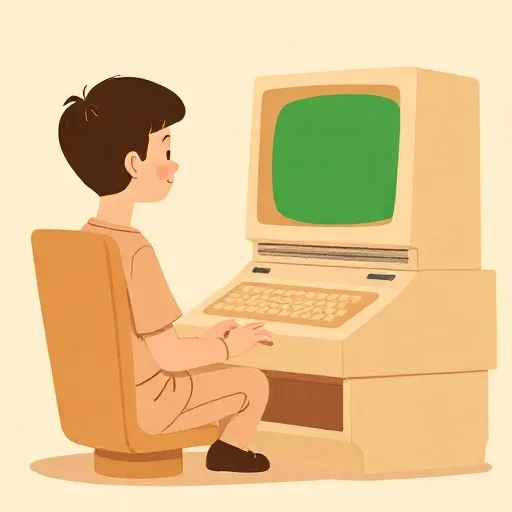
Imagine you agree to a strange experiment. You lock yourself in a room with no windows. Spread out on a table are thousands of cards printed with beautiful but baffling Chinese symbols. Beside them sits a thick instruction manual written in English. Every few minutes, a piece of paper slides under the door with even more Chinese scribbles. Your job is simple: find the matching shapes in the manual, follow the steps, copy the required response onto a fresh slip, and push it back out. You do this for hours. Unbeknownst to you, the incoming slips are questions in Chinese, and your outgoing slips are perfectly sensible answers. From the outside, you seem to speak and understand Chinese fluently. But inside the room, you haven’t understood a single word. You’ve just been pushing shapes around.
This is the Chinese Room, a thought experiment dreamed up by philosopher John Searle (born 1932) in 1980. Searle used it to attack a claim many artificial intelligence researchers were making in the late 1970s: that a properly programmed digital computer could literally understand language, not just fool people. He wanted to show that no amount of clever symbol shuffling can produce real meaning. The Chinese Room has sparked a fierce debate ever since.
Could a Computer Really Have a Mind?
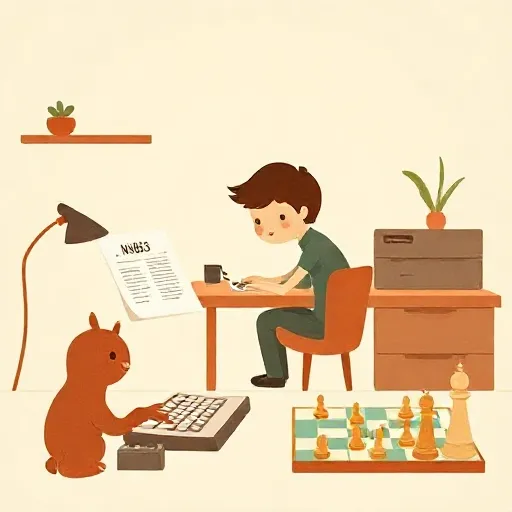
In the 1950s, mathematician Alan Turing (1912–1954) proposed a famous test. If a computer could chat with a person via text so skillfully that the person couldn’t tell it was a machine, we would have to call it intelligent. This is Strong AI — the view that a properly programmed computer isn’t just simulating a mind; it actually is one. It would really understand the sentences it reads and writes, not just parrot them.
Searle disagreed. He saw early programs that could answer simple questions about going to a restaurant, built by researcher Roger Schank and his team. Those programs used a syntactic approach: they treated words as empty symbols to be matched and rearranged according to rules, never touching what the words meant. Searle argued that this is just what a computer does — manipulate symbols based on their shape, not their sense. The Chinese Room was his proof that syntax alone can never give you semantics (meaning). You can shuffle Chinese characters perfectly and still be totally clueless.
Who’s Really Understanding? The Many Minds in the Room
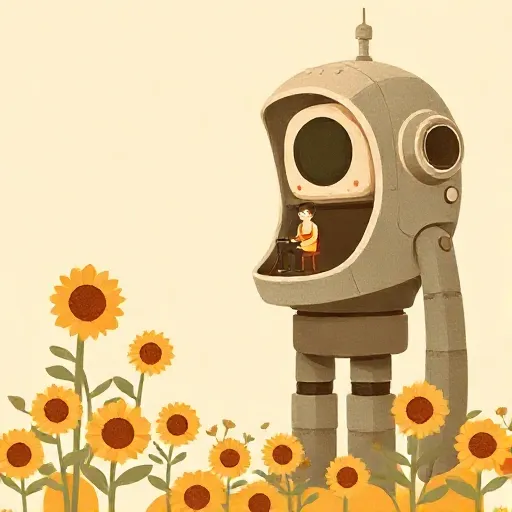
Many philosophers pushed back. The first major objection, which Searle called the Systems Reply, goes like this: the person in the room is just one part of the whole system. The system includes the manual, the stacks of cards, the scratch pads, the pencil — the entire setup. While the human operator doesn’t understand Chinese, the system as a whole might. Think of your own brain: no single neuron knows English, but your brain collectively does.
Searle had a comeback. He could memorize the whole manual and all the card stacks, do everything in his head, and then walk outside. He would be the entire system. Yet, he insisted, he still wouldn’t know what the Chinese word for “hamburger” means. He’d just have a lot of rules rattling around.
Then there’s the Virtual Mind Reply. Some say running the right program doesn’t make the computer understand — it creates a new mind, different from both the hardware and the human operator. Think of a video game character who has its own personality, memories, and dialogue, even though it runs on the same console as other characters. If the Chinese Room generates a fluent Chinese speaker, that mind might not be you, even though you’re doing all the legwork. So your cluelessness doesn’t prove no understanding exists — only that it belongs to a different thinker. Searle’s critics note that his answers to the questions (“How tall are you?” “What did you have for breakfast?”) would obviously not be Searle’s answers, but someone else’s entirely.
Could a Robot Do Better?

Another reply, the Robot Reply, suggests putting the computer inside a robot body with cameras, microphones, and arms. The robot could explore the world, see a hamburger, touch one, even eat one. Then, the argument goes, its internal symbols would become connected to real things. It might actually know what “hamburger” refers to. Searle wasn’t impressed. He said all those camera feeds are just more symbols — streams of digits on a ticker tape. Inside the room, you’d get those digits too, and they’d be just more shapes to process.
But many philosophers think this misses something crucial. A computer isn’t a paper manual; it’s a complex electronic causal machine. Its states can be causally linked to the outside world. A robot that slinks past a table and beeps “that’s my lamp” might have states that genuinely indicate the lamp — a primitive form of aboutness, or intentionality. This view, called semantic externalism, holds that meaning depends on those causal connections, not just on what an internal rulebook says. So maybe, just maybe, the robot could grow real understanding.
From Symbols to Meaning: The Deep Problem
The Chinese Room argument points to a larger mystery. Searle insists that any program is just a set of formal rules — rules that care only about the shape of the symbols, not what they mean. But human minds are filled with mental contents: when you think about your best friend or your favorite snack, your thought is about something. That “aboutness” is intentionality. Searle draws a hard line: original intentionality comes only from biological brains; words on a page or data in a machine have only derived intentionality — meaning we borrow from our own minds.
His critics see it differently. They argue that intentionality can arise in any system that processes information in the right way, whether it’s made of neurons, silicon, or even water pipes. The real battle isn’t just about computers and Chinese — it’s about whether the mind is a kind of computation at all. If Searle is right, the entire computational theory of mind collapses: no amount of information processing can make a machine aware of what it’s doing. If he’s wrong, thinking might be a very special kind of symbol manipulation after all.
Why It Still Matters (Even If You’re Not a Robot)
Today you can talk to your phone and get a pretty good answer. Giant language models like ChatGPT write poems, argue legal cases, and explain philosophy. When asked, “Do you understand English?” one such model replied, “Yes, I understand English words and can process and respond to them.” But when pressed with Searle’s argument, it then declared, “Searle’s argument does apply to systems like ChatGPT … ChatGPT doesn’t truly understand meaning in the human sense.” So an AI that claims to understand also claims not to understand — right in the same conversation. It’s an electronic version of the Chinese Room operator in a hoodie.
The debate leaves us with a dizzying question. If a system can do everything a fluent speaker does — chat, joke, give advice, describe sunsets — but there’s still no vivid feeling of understanding inside, does that difference matter? Evolution, after all, selects for behavior, not for hidden inner light. If a brainless simulation of understanding helps you survive just as well as the real thing, why would nature ever bother to cook up real consciousness? The Chinese Room forces us to ask what, exactly, we are when we understand something — and whether our machines could ever meet us there. The argument hasn’t been settled, but it keeps the door open for wonder.
Think about it
- If you had a friend who answered every question exactly like a person, but you later found out he was just following a giant rulebook inside his head, would you still think he really understood you?
- Imagine a robot that can learn about the world through its own sensors and use language just as well as you can. If it insisted it felt lonely, would you believe it? Why or why not?
- What would have to be different for a machine’s “hello” to mean something, rather than just be a noise programmed to come out at the right time?