Why Didn’t Ancient China Invent Modern Science?
A Young Scholar’s Shocking Claim

In 1922, a Chinese student named Fung Yu-lan (1895–1990) wrote an essay while studying in New York with the famous philosopher John Dewey. The title was blunt: “Why China Has No Science.” His answer was even bolder. He did not say that Chinese thinkers were not clever, or that they tried and failed. Instead, he argued that China never developed modern science because, according to its own deepest values, it never needed to.
That thought shocked readers—and it started a debate that is still alive a century later. Fung was not insulting China; he was asking a puzzle. Why did Europe in the 1500s and 1600s create a new kind of science, the one that gave us laboratories, laws of motion, and the steam engine, while China—home to brilliant inventors, long before—did not? To explain, Fung looked all the way back to the ancient Chinese philosophers and the choices they made about what matters most.
Daoist Gardeners and Mohist Engineers
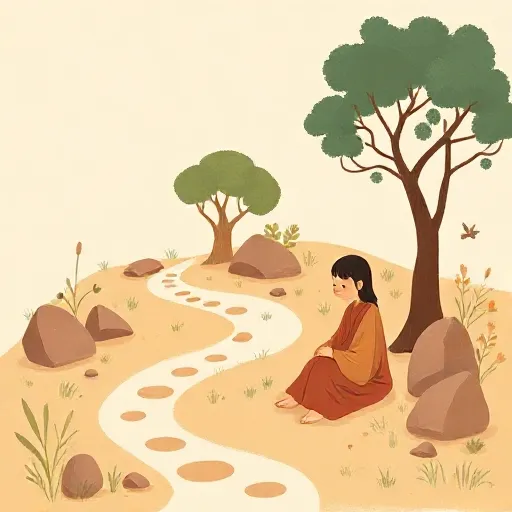
Fung said two rival tendencies appeared during China’s Warring States period (475–221 BCE). One he called the nature tendency, and the other the art (or human-made) tendency. The Daoists pushed the nature tendency to the extreme. They looked at a mountain, a forest, or a flowing river and said: it is already perfect. Trying to reshape it, they thought, only messes things up. A good life meant learning to fit yourself into the natural flow, not fighting it.
The Mohists went the opposite way. They were all about utility—what works, what helps people. If nature gave them a swamp, they wanted plans to drain it. If reasoning could make ideas clearer, they built careful definitions and even early forms of logic. Fung saw them as “scientific” in spirit. Where Daoists were like gardeners who trust the wild to grow, Mohists were like engineers who build bridges.
Then came Confucians, who tried to find a middle path. But even inside that tradition, Fung found both flavors. Mencius (372–289 BCE) leaned toward nature: we should nurture the good seeds already inside us. Xunzi (313–238 BCE) leaned toward art. He wrote that it is better to “control nature and use it than to follow and admire it.” Fung called that almost the same as the European thinker Francis Bacon’s idea that knowledge is power.
And then, Fung pointed out, something dramatic happened. After the Qin Empire unified China in 221 BCE, the “art” tendency—the engineering, nature-tinkering, Mohist style of thinking—almost disappeared. Buddhism spread into China, and it, like Daoism, was an extreme nature philosophy. Later, Neo-Confucian thinkers in the Song dynasty (960–1279 CE) blended Daoism, Buddhism, and Confucianism into a new system. A famous line from the classic Great Learning said that a wise person must “investigate things” to extend knowledge. But while European scholars at the same time were investigating falling stones, rays of light, and the organs of animals, Chinese Neo-Confucians took “things” to mean the movements of the heart-mind. They taught brilliant techniques for understanding and calming your inner life, but they left the physical world alone. While Europe built lenses and levers, China built schools of the mind.
A Scientist Digs Up the Missing Pieces
That might have been the whole story if not for a British scientist named Joseph Needham (1900–1995). Needham was an embryologist by training, but he became obsessed with a different question: what if China did have science, just not the kind that Fung recognized? Starting in the 1950s, Needham and a huge team of researchers began publishing volume after volume of Science and Civilisation in China. They found a buried world. China had invented paper, printing, the compass, and gunpowder—often called the Four Great Inventions—but also the mechanical clock, chain drives, advanced iron-casting, deep drilling, and a stunning array of medical and astronomical records. Needham’s message was clear: Chinese science was real and it flourished for centuries.
Needham saw the Daoists very differently from Fung. Instead of mystical hermits who ignored nature, he painted them as nature-watchers and experimenters. He called Daoism “scientific, democratic, and politically revolutionary.” On this view, China had its own scientific tradition, rooted in careful observation of the world. So why, he still had to ask, didn’t the kind of scientific revolution that swept Europe happen in China? That puzzle came to be called the Needham problem.
Later historians, especially Nathan Sivin, pushed back against both Fung’s simple “no science” picture and Needham’s idea that all Chinese science was Daoist. Sivin showed that much of the technical knowledge — the know-how for casting iron or diagnosing an illness — came from ordinary artisans and recipe masters, not from the Daoist schools. Daoist monks sometimes wrote those things down, so later scholars gave them credit. Many of the Daoist masters, Sivin noted, wanted to unite with the divine, not to run controlled experiments. They used existing tools and tricks, but they usually didn’t improve them. Meanwhile, the people who actually invented things often left no written records at all.
Philosophers vs. the Recipe Masters
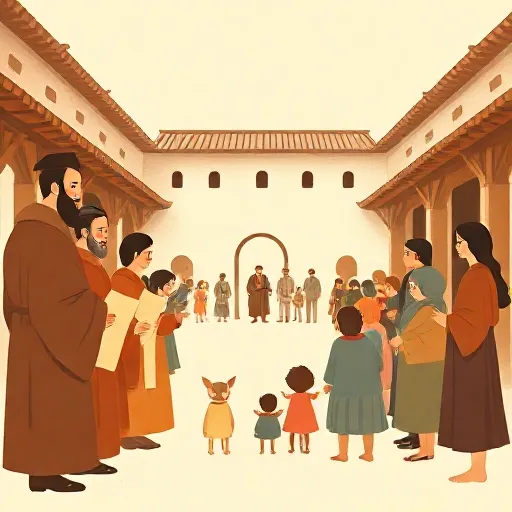
To understand how philosophy and science drifted apart, we can look at a library catalog from the Han dynasty (206 BCE–220 CE). It divided knowledge into six big sections. The first two included the Masters — the texts of what we now call Chinese philosophy: Confucians, Daoists, Mohists, Legalists, and others. The later sections listed works on Numbers and Techniques (astronomy, calendars, divination) and Recipes and Methods (medicine, longevity, sexual arts). Strikingly, the first half was compiled by scholars, the second half by technical experts — a court astronomer and an imperial physician. The arrangement itself told a story: broad, universal wisdom sat at the top, while hands-on, specialist knowledge sat lower.
According to Sivin and other historians, the early Chinese sciences grew from an unusual mix. Ru (Confucian) ideas merged with the tools of fang shi — “recipe masters” who could predict eclipses, read weather omens, and prepare herbal medicines. Both groups used the same cosmic ideas: qi (the energy-and-matter that makes up everything), yin and yang (complementary forces), and the Five Agents (wood, fire, earth, metal, water — dynamic phases, not just substances). A doctor would map these onto the human body; a philosopher would use them to talk about harmony in the state.
But the two groups aimed at very different goals. Philosophers argued that the person with a flexible, all-seeing mind was superior to somebody stuck in one narrow skill. Many texts from that period mock specialists for knowing only a sliver of the Way. That attitude had consequences. Over time, a gap opened. Literary elites cultivated their minds; technical experts cultivated their crafts. The crafts did not stop — medicine grew, calendars improved, alchemists tinkered — but they rarely sat at the center of what educated people considered the highest learning. So if we ask whether Chinese philosophy opposed science, the answer is more subtle: much of philosophy simply looked in a different direction.
What Counts as Science, Anyway?
The fight between Fung’s story and Needham’s story forces us to ask a deeper question: what makes something a science? If science means forming hypotheses and testing them in a lab, then much of ancient Chinese medicine — with its talk of qi channels and yin-yang pulses — doesn’t look like science. But if you measure it by careful tracking of symptoms, compiling enormous herb guides, and centuries of practical healing, it’s hard to dismiss. The same goes for Chinese astronomy. Court astrologers kept detailed records of eclipses and star positions for political reasons, but those records are so precise that modern scientists still use them to track the slowing of Earth’s rotation.
Some thinkers today argue that Chinese philosophy actually contributed a different kind of science — a qualitative science that valued the whole person and the whole environment, rather than taking things apart into separate pieces. Others reply that a science which never mathematizes and never seeks to control nature is, in the end, a different enterprise entirely. It is a live and unsettled debate. What the evidence does show is that the period of the Han dynasty was a crossroads: many paths were open, and some of them led toward something we might well call science, but the social and intellectual choices made by the ruling elite slowly pushed philosophy away from the workshop and toward the meditation hall.
Why a 100-Year-Old Essay Still Bothers Us

Fung Yu-lan’s essay had a sharp edge. He claimed that Chinese thinkers preferred the certainty of their own perception, and that they valued enjoyment over power. That’s why, in his view, they saw no need for the kind of science that Bacon and Descartes invented in Europe — a science that promised control over nature. Even if Fung oversimplified, he put his finger on a real tension. Every culture, and every person, decides what is worth knowing. Do you want to understand the volcanoes on Mars, or the storms in your own mind? Do you value building a faster phone, or learning to sit with your thoughts for an hour?
The historian Joseph Needham showed that the choice was never that clean. In every age, Chinese farmers, healers, and craft workers were busy understanding and reshaping their world. The philosophers may have written poems about the heart-mind, but that didn’t stop someone from inventing the fishing reel or mapping the stars. The question is not whether a whole civilization “had” science, but what kinds of knowledge it put on center stage — and what it pushed to the wings. That same question sits on your desk right now.
Think about it
- If you could pick between perfect self-control — never getting angry or anxious again — and building a robot that could clean the oceans, which would you choose, and why?
- Some people say that traditional Chinese medicine isn’t science because it uses ideas like qi and yin-yang. Others point out that it has kept millions of people healthy for thousands of years. How would you decide where to draw the line between science and something else?
- Fung argued that the Chinese ideal was to enjoy the world, not to overpower it. Can you think of something in your life that you enjoy without needing to explain how it works? Could a whole society be happy with less technology and more of that feeling?